
Planning a los angeles family vacation guide feels overwhelming once you realize how spread out this city actually is. Hollywood, Santa Monica, Beverly Hills, and Venice Beach each sit 20 to 40 minutes apart in good traffic, and kids don’t have patience for a car full of confused adults staring at Google Maps. Without a plan, you’ll burn your first day just figuring out logistics instead of making memories.
This guide gives you a straightforward answer: which neighborhoods to prioritize, how many days you actually need, and how to sequence attractions so you’re not crisscrossing the city twice a day. You’ll get a realistic daily itinerary built around nap schedules, meal timing, and the attention spans of kids under 12.
We’ve spent years driving families through this exact maze at Another Side Tours, so we know where the itinerary breaks down. Below you’ll find our tested approach to family-friendly attractions, transportation options that skip the parking headaches, and tips for keeping everyone fed, rested, and happy while you see the best of LA.
What to know before planning your LA family trip
Los Angeles isn’t one city you visit, it’s a collection of neighborhoods that happen to share a zip code system. Understanding this sprawl is the single most important thing before you book a hotel or buy a single ticket. Families who treat LA like a compact city (think Chicago or Boston) end up spending half their vacation in a rental car, cranky kids in the back seat, watching the GPS recalculate. The city covers over 500 square miles, and the attractions your kids actually want to see, the Hollywood sign, Santa Monica Pier, Universal Studios, Griffith Observatory, are scattered across that entire footprint.
Distances between major family attractions
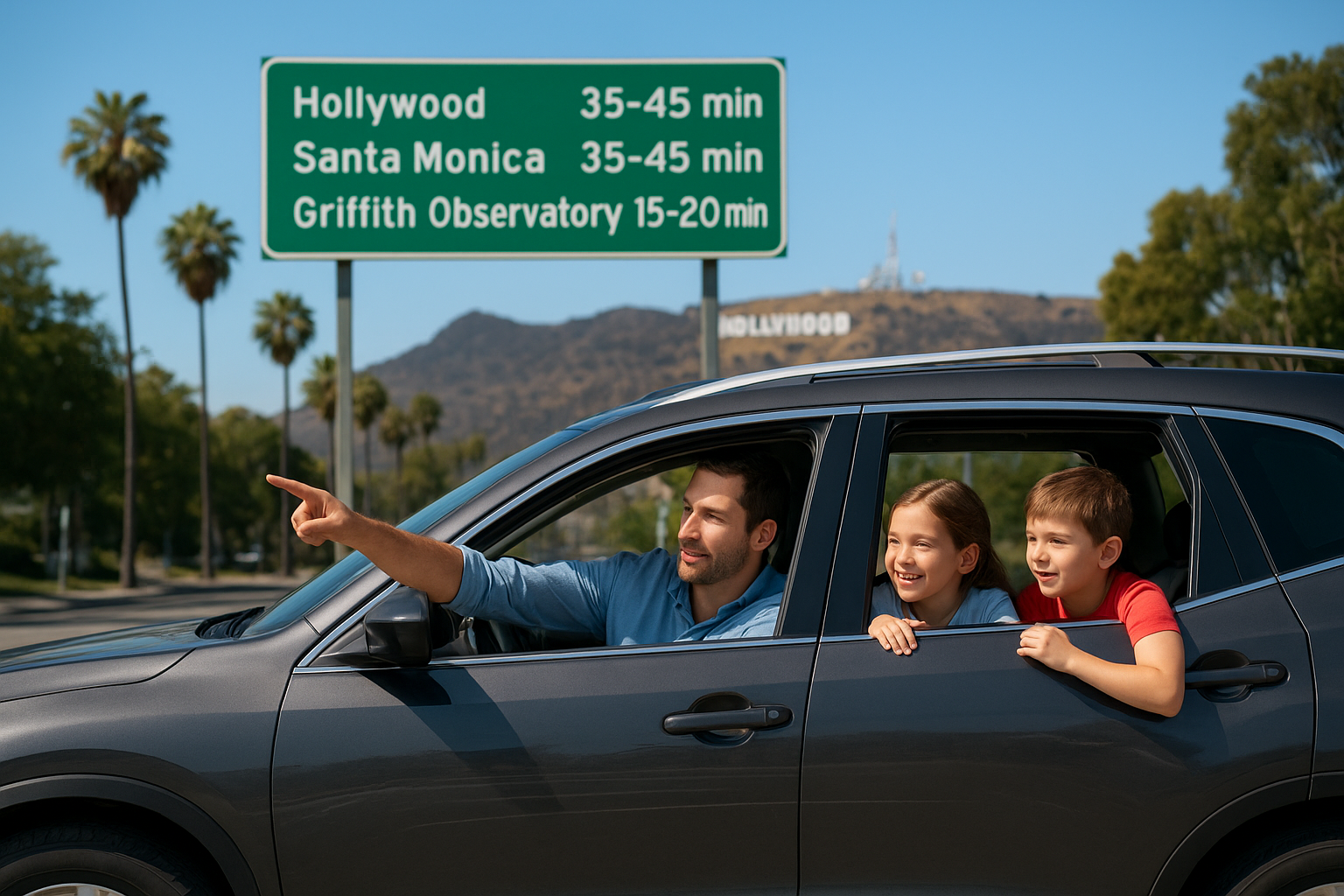
Before you plan anything else, look at how far apart things really are. This table shows drive times in normal daytime traffic, not rush hour, which can double these numbers easily.
| From | To | Drive Time |
|---|---|---|
| Hollywood | Santa Monica | 35-45 min |
| Beverly Hills | Universal Studios | 25-30 min |
| Santa Monica | Venice Beach | 10-15 min |
| Hollywood | Griffith Observatory | 15-20 min |
| Downtown LA | Santa Monica | 40-50 min |
Pick a home base and build your days around it, don’t bounce across the city every morning.
Traffic dictates your schedule, not the other way around
Traffic in LA isn’t a minor inconvenience, it’s a planning constraint you build your whole trip around. Rush hour runs roughly 7 to 10 am and 3 to 7 pm on weekdays, and a 20-minute drive can stretch to 50 minutes if you hit it wrong. Schedule your must-see attractions for mid-morning or early afternoon when roads clear out, and treat the first and last hour of daylight as travel time rather than sightseeing time. If your itinerary has you driving across town during evening rush hour with hungry kids in the car, rewrite it now while you still can.
Age changes everything about your plan
Toddlers, elementary-age kids, and teenagers need fundamentally different itineraries, even in the same city. A trip built for a 4-year-old with an early bedtime looks nothing like one built for a 14-year-old who wants Instagram content and celebrity homes. Consider these age-based priorities as you start sketching your days:
- Toddlers and preschoolers (0-4): shorter outings, stroller-friendly locations, built-in nap windows, and attractions with shade and bathrooms nearby
- Elementary age (5-10): interactive experiences like tide pools at Santa Monica or hands-on science museums, plus one "big" activity per day rather than three
- Tweens and teens (11-17): photo-worthy spots, studio tours, and enough independence that they’re not just trailing behind parents all day
LA isn’t as walkable as you’d hope
Unlike New York or San Francisco, Los Angeles wasn’t built for walking, and that catches a lot of families off guard. Sidewalks disappear in some neighborhoods, and the distance between a parking spot and an attraction entrance can be longer than the attraction itself. Santa Monica and Venice have genuinely walkable stretches along the beach, and parts of Hollywood work fine on foot, but you’ll still need a car, rideshare, or booked transportation to move between neighborhoods.
You’ll need more time than a typical city trip
Most families underestimate how many days LA actually requires. Where a European capital might take three days to hit the highlights, LA’s spread-out geography means you need five to seven days to see Hollywood, the beaches, and at least one studio or theme park without rushing every single day. Trying to compress this into a long weekend usually means cutting sleep, skipping meals, or abandoning half your list, none of which work well with kids along for the ride.
Step 1. Pick the best time to visit with kids
Timing your trip well can save you more headaches than any itinerary trick. Choosing the right season affects everything from hotel prices to how long you’ll wait in line at Universal Studios, and it changes how comfortable your kids will be walking around outside for hours at a time. Get this decision right first, because it shapes every other choice you’ll make about neighborhoods, activities, and budget.
Weather patterns you need to plan around
Los Angeles doesn’t have brutal winters, but it does have a real dry season and a real marine layer that rolls in most mornings near the coast. Summer runs hot and dry inland, often hitting 85-95°F in the Valley and Hollywood, while the beach areas stay 10-15 degrees cooler thanks to ocean breeze. Spring and fall offer the best balance: mild temperatures, less haze, and fewer 100-degree days that make outdoor attractions miserable for young kids.
| Season | Avg High (°F) | Crowd Level | Best For |
|---|---|---|---|
| Winter (Dec-Feb) | 65-70 | Low | Budget travel, mild days |
| Spring (Mar-May) | 70-75 | Moderate | Comfortable sightseeing |
| Summer (Jun-Aug) | 80-95 | High | Beach days, longer daylight |
| Fall (Sep-Nov) | 75-80 | Moderate | Fewer crowds, warm ocean |
School breaks drive the crowds, not the calendar
Every family with kids travels during the same windows: winter break, spring break, and summer vacation. That means Universal Studios, the Santa Monica Pier, and Griffith Observatory get packed with lines that eat into your day exactly when you’re already worried about nap schedules. If your kids aren’t tied to a school calendar yet, or you can pull them out for a few days, September through early November and late January through March give you shorter lines and lower hotel rates.
Skip the school-break crowds when you can, and you’ll get twice as much done in half the time.
Our recommendation for most families
If you have flexibility, aim for late September through early November. The weather stays warm enough for beach days in Santa Monica, crowds thin out after Labor Day, and hotel rates drop noticeably compared to summer. If summer is your only option because of school schedules, book your biggest attractions (Universal Studios, any studio tour) for weekday mornings and save beach afternoons for when the sun is highest and safest for swimming.
Step 2. Choose a family-friendly neighborhood to stay in
Your hotel location determines how much of your trip you spend in a car versus on the beach or in line for a ride. Picking a home base near the attractions your kids care most about cuts your daily drive time in half compared to staying somewhere generic near the airport or downtown. Since you already know LA doesn’t work like a compact city, treat this decision as the anchor for every itinerary choice that follows.
Santa Monica works for beach-focused families
Santa Monica gives you walkable streets, a pier with rides built for younger kids, and easy access to the beach without a car ride first thing in the morning. You’re close to Venice Beach too, just a 10 to 15 minute drive, so you can string beach days together without repacking the car each time. The tradeoff is distance from Hollywood and Universal Studios, both 35 to 45 minutes away depending on traffic.
Hollywood puts you near the big-ticket attractions
Staying in Hollywood cuts your drive time to Griffith Observatory, the Walk of Fame, and several studio tours down to 15 to 25 minutes. This works well for families prioritizing celebrity culture, movie history, or a Universal Studios day, since you’ll spend less time commuting and more time in line for rides. Hollywood hotels tend to sit closer to restaurants and shops too, which matters when you’ve got hungry kids and no interest in another drive.
Beverly Hills suits families wanting comfort and quiet
Beverly Hills offers quieter streets, larger hotel rooms, and a central location that splits the difference between the beach and Hollywood. It costs more on average, but if you’re traveling with very young kids who need consistent nap schedules, the calmer neighborhood pace helps more than you’d expect.
Compare your options at a glance
| Neighborhood | Best For | Distance to Beach | Distance to Hollywood | Price Level |
|---|---|---|---|---|
| Santa Monica | Beach days, walkability | 0-10 min | 35-45 min | $$-$$$ |
| Hollywood | Studio tours, landmarks | 35-45 min | 0 min | $$ |
| Beverly Hills | Comfort, central location | 25-30 min | 15-20 min | $$$-$$$$ |
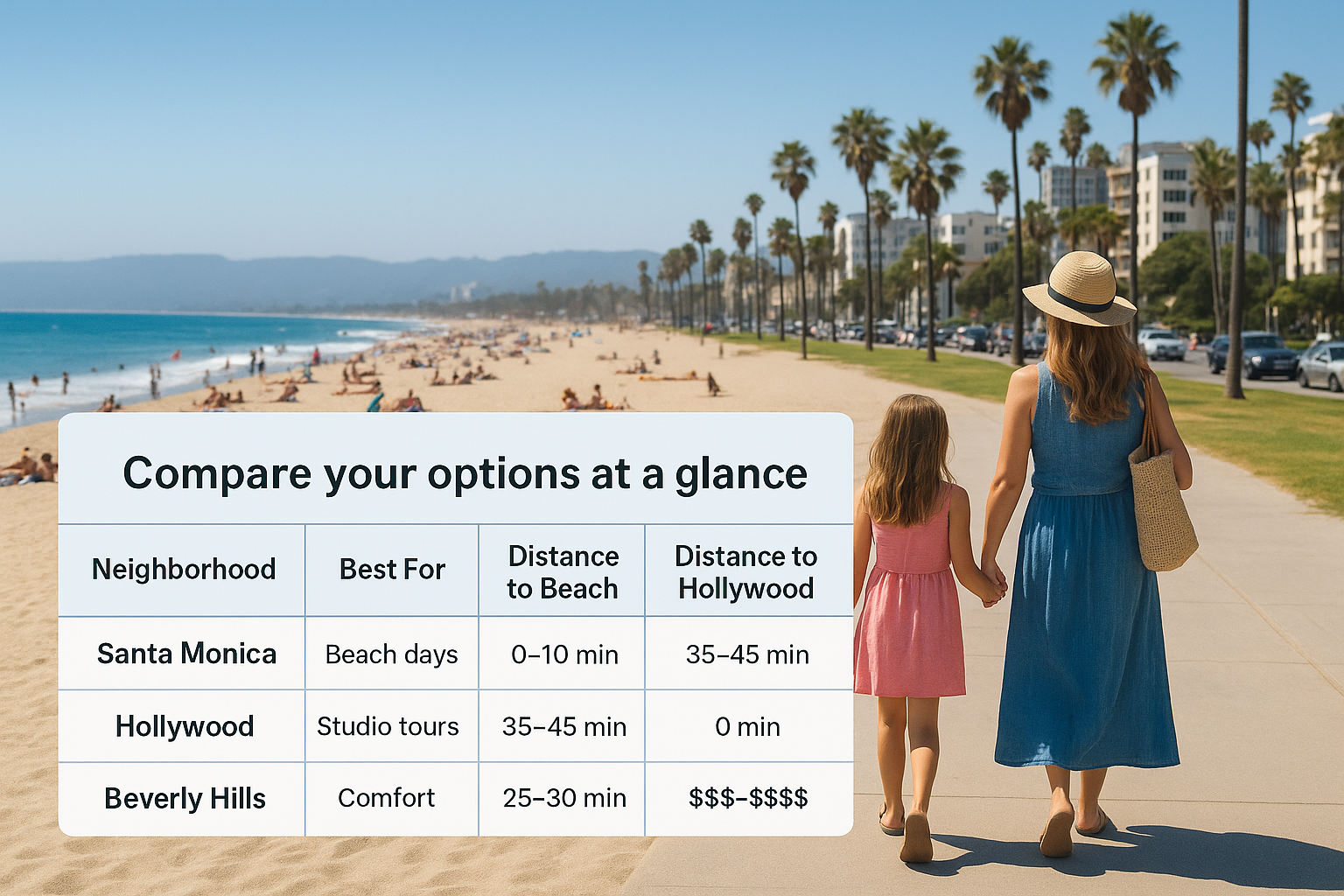
Choose the neighborhood closest to what your kids will remember most, not the one with the shortest flight-to-hotel drive.
Whichever neighborhood you pick, book something within walking distance of at least a grocery store or pharmacy. You’ll need snacks, sunscreen, and the occasional emergency diaper run more often than you’d think, and a five-minute walk beats a fifteen-minute drive every time.
Step 3. Map out a kid-friendly itinerary
Once you’ve picked a neighborhood, the next job is sequencing your days so you’re not backtracking across the city. Grouping attractions by location matters more than grouping them by theme, since a museum and a beach might both interest your kids but sit 40 minutes apart. Build your itinerary around geography first, then layer in the specific stops that matter to your family.
Build around one big activity per day
Kids under 12 run out of steam faster than adults expect, so plan one major attraction per day and treat everything else as filler around it. A morning at Universal Studios followed by an afternoon at Griffith Observatory sounds efficient on paper, but it usually means a meltdown by 3 pm and a wasted evening. Pick the single thing your kids are most excited about, schedule it for late morning after breakfast, and let the rest of the day flow around naps, meals, and downtime.
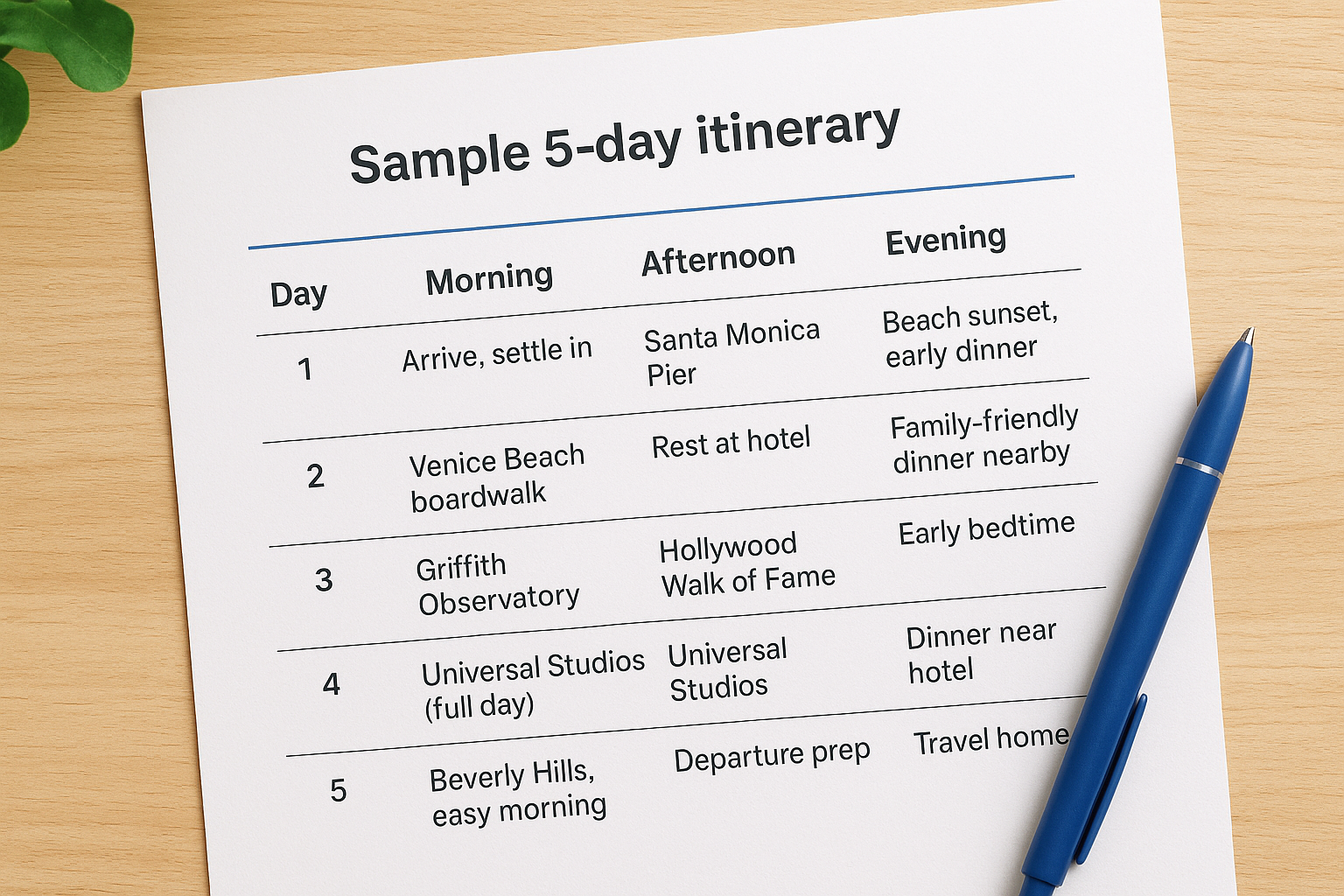
Sample 5-day itinerary
Here’s a starting template you can adjust based on your kids’ ages and your home base. Notice how each day stays anchored to one part of the city instead of jumping around.
| Day | Morning | Afternoon | Evening |
|---|---|---|---|
| 1 | Arrive, settle in | Santa Monica Pier | Beach sunset, early dinner |
| 2 | Venice Beach boardwalk | Rest at hotel | Family-friendly dinner nearby |
| 3 | Griffith Observatory | Hollywood Walk of Fame | Early bedtime |
| 4 | Universal Studios (full day) | Same | Dinner near hotel |
| 5 | Beverly Hills, easy morning | Departure prep | Travel home |
Anchor every day to one neighborhood and one main event, everything else is optional.
Leave buffer time for meltdowns
Every itinerary needs slack built in, because something will run long, someone will need a bathroom break, or a toddler will simply refuse to move. Padding your schedule with 30 to 45 minutes between activities keeps a delayed lunch from wrecking your afternoon plans. Skip the temptation to fill every hour with a new attraction; realistic pacing matters more than cramming in one extra stop, especially with younger kids who need downtime to reset between outings. If you’re working with a professional guide or booked tour, ask upfront how much flexibility exists in the schedule so you’re not locked into a pace that doesn’t match your family.
Step 4. Book tours and activities kids will love
Booking the right tours before you land saves you from standing in a parking lot arguing about where to go next. Kids don’t care about efficiency, they care about whether the next hour is going to be fun, so pick activities that match their attention span instead of your bucket list. Guided options also solve the parking and navigation headaches that eat into family time, since someone else handles the logistics while you focus on the kids.
Why a guided tour beats winging it with kids
Driving yourself to five different attractions means five different parking searches, five sets of walking directions, and zero context about what you’re actually looking at. A private guided tour puts a local expert in charge of the route, the timing, and the stories your kids will actually remember, like why the Hollywood sign almost got torn down twice. At Another Side Tours, we build family itineraries around this exact problem, sequencing stops so you’re not backtracking across the city with tired kids in tow.
A guide who knows the shortcuts and the stories saves you more time than any app ever will.
Tour types that actually work for families
Not every tour format suits every age group, so match the format to your kids before you book.
- Private vehicle tours: best for toddlers and elementary-age kids who need a place to sit, snack, and nap between stops
- Small group tours: good for families with older kids who want interaction but still need a relaxed pace
- E-bike or Segway tours: better suited to tweens and teens who can handle balance and longer stretches outdoors
- Studio lot combinations: popular with kids who already know the movies and shows filmed nearby
Timing your bookings around naps and meals
Book morning tours for younger kids, since energy and patience both drop fast after lunch. Late morning start times, around 9 or 10 am, give you a full night’s sleep first and still leave the afternoon open for a nap or pool time back at the hotel. Afternoon tours work better for teens who’d rather sleep in, so match your start time to your kids’ actual schedule instead of the tour company’s default slot. If you’re booking more than one activity in a day, leave at least two hours between them so a tour running long doesn’t blow up your next reservation.
Step 5. Plan how you’ll get around the city
Getting around Los Angeles with kids means choosing between a rental car, rideshare apps, or booked transportation, and each option comes with tradeoffs that matter more once you’re juggling car seats and nap schedules. Transportation planning deserves its own slot in your prep, not an afterthought you figure out at the airport, because the wrong choice turns a 20-minute trip into an hour of frustration with tired kids in the back seat.
Renting a car works if you’re staying multiple nights
A rental car gives you the most flexibility, especially if you’re staying five or more nights and want to come and go on your own schedule. You’ll need a car seat for younger kids, which most rental agencies offer for an extra daily fee, though bringing your own often saves money over a week-long trip. Parking costs add up fast though: expect $15 to $40 a day at hotels and attractions, on top of whatever you’re already paying for the car itself.
Rideshare apps solve short trips without the parking headache
Uber and Lyft work well for short hops between a hotel and a nearby attraction, especially in walkable areas like Santa Monica or Hollywood where parking is scarce and expensive. Keep in mind that rideshare companies don’t provide car seats, so you’ll need to bring a portable one if you’re traveling with a toddler and plan to rely on rideshare for your trip. This option works best as a supplement to a rental car, not a full replacement, since costs climb quickly with multiple trips a day across a spread-out city.
Booked transportation removes the guesswork entirely
A private vehicle tour or transfer service handles the driving, parking, and route planning for you, which matters most on days packed with multiple stops. Booked transportation also means someone experienced with LA traffic patterns is making the calls about which route beats rush hour, instead of you guessing while three kids ask when you’ll arrive.
Let someone else handle the driving on your busiest days, and you’ll actually enjoy the ride instead of dreading it.
Compare your transportation options
| Option | Best For | Car Seat Included | Avg Daily Cost |
|---|---|---|---|
| Rental car | Multi-day trips, flexibility | No (extra fee) | $60-$100 + parking |
| Rideshare | Short trips, walkable areas | No | $15-$40 per ride |
| Private tour/transfer | Busy days, multiple stops | Sometimes | $150-$400 |
Whatever you choose, plan your transportation method before you land, not after you’re standing at the rental counter with cranky kids and a flight delay behind you.
Step 6. Set a realistic family travel budget
Money runs out faster than most families expect once you add up hotels, meals, parking, and tickets for everyone. Budgeting realistically before you book anything keeps you from cutting your trip short or maxing out a credit card on day four. Los Angeles can work for a tight budget or a generous one, but you need to know which trip you’re planning before you land, not after.
Where the money actually goes
Hotels and food eat the biggest share of a family travel budget, but tickets and transportation add up faster than people plan for. A family of four visiting Universal Studios can spend $600 or more on admission alone, and that’s before parking, lunch, or souvenirs. Build your budget around these categories instead of guessing at a single daily number:
| Category | Daily Estimate (Family of 4) | Notes |
|---|---|---|
| Hotel | $200-$450 | Higher in Santa Monica, Beverly Hills |
| Meals | $100-$180 | Sit-down dinners cost more than counter service |
| Attractions/tickets | $100-$300 | Theme parks push this higher |
| Transportation | $60-$150 | Depends on rental car vs rideshare vs tours |
| Extras (souvenirs, snacks) | $30-$60 | Easy to underestimate |
Set a daily cap and stick to it
Add up your categories and set a firm daily number before you leave home, then track spending against it each evening. Setting a daily cap keeps small purchases, an extra snack here, a souvenir there, from quietly blowing your week’s budget. Families who track spending daily catch overages while there’s still time to adjust the next day’s plans, instead of discovering the damage after the trip’s over.
A daily cap you actually check beats a total budget you only look at once.
Where families overspend without noticing
A few costs sneak up on almost every family, and knowing them ahead of time helps you plan around them instead of getting surprised.
- Parking fees: $15-$40 a day at hotels and attractions, often not included in ticket prices
- Resort or destination fees: many LA hotels tack these on separately from the room rate
- Impulse food purchases: theme park snacks and drinks cost double what you’d pay elsewhere
- Add-on tickets: fast passes, photo packages, and upgrades at attractions like Universal Studios
Booking tours and transportation ahead of time helps here too, since a fixed price for a private vehicle tour beats guessing at daily rideshare costs or getting hit with surprise parking fees at every stop.
Step 7. Pack and prepare for LA’s weather and pace
Packing for LA trips up more families than they expect, mostly because the weather looks simple on paper but shifts throughout the day in ways that catch people off guard. Packing smart means planning for a morning marine layer, a hot afternoon, and a cool evening, sometimes all in the same 12 hours. Get this part right and you’ll spend less time running back to the hotel for a forgotten jacket or a missing pair of shoes.
Layers matter more than any single outfit
Mornings near the coast start cool and gray, often in the low 60s, then burn off into sunny afternoons that push temperatures 15 to 20 degrees higher by early afternoon. Dress kids in layers they can shed as the day warms up, a t-shirt under a light jacket works better than a heavy sweater you’ll end up carrying by 11 am. Evenings cool back down fast once the sun drops, so keep that jacket in the car or stroller rather than leaving it back at the hotel.

Build a packing list around your actual itinerary
Match what you pack to what you’ve booked, not to a generic vacation checklist. If you’ve got a beach day and a studio tour on the same trip, you need swimsuits and sunscreen alongside comfortable walking shoes and layers for an air-conditioned soundstage.
- Sunscreen (SPF 30+): reapply every two hours outdoors, especially at the beach or Griffith Observatory
- Comfortable walking shoes: flip-flops work at the beach but fail everywhere else, especially Universal Studios
- Reusable water bottles: tap water is safe, and refilling beats buying $5 bottles at every attraction
- A light jacket or hoodie per person: for the morning marine layer and cool evenings
- Portable phone charger: navigation apps and photos drain batteries fast on full sightseeing days
- Snacks for the car: protein bars and fruit prevent meltdowns between meals better than promises of "we’ll stop soon"
Pack for three different temperatures in one day, because that’s exactly what LA gives you.
Prepare kids for the pace, not just the packing list
Beyond what’s in the suitcase, prepare your kids for a trip that moves differently than a typical vacation. Managing expectations ahead of time, telling them about car rides between stops, the walking involved at some attractions, and the fact that not every hour is a theme park, cuts down on complaints once you’re actually there. A quick conversation the night before about the next day’s plan, including what’s fun and what’s just travel time, helps kids pace themselves instead of burning out energy on the first stop of the morning.
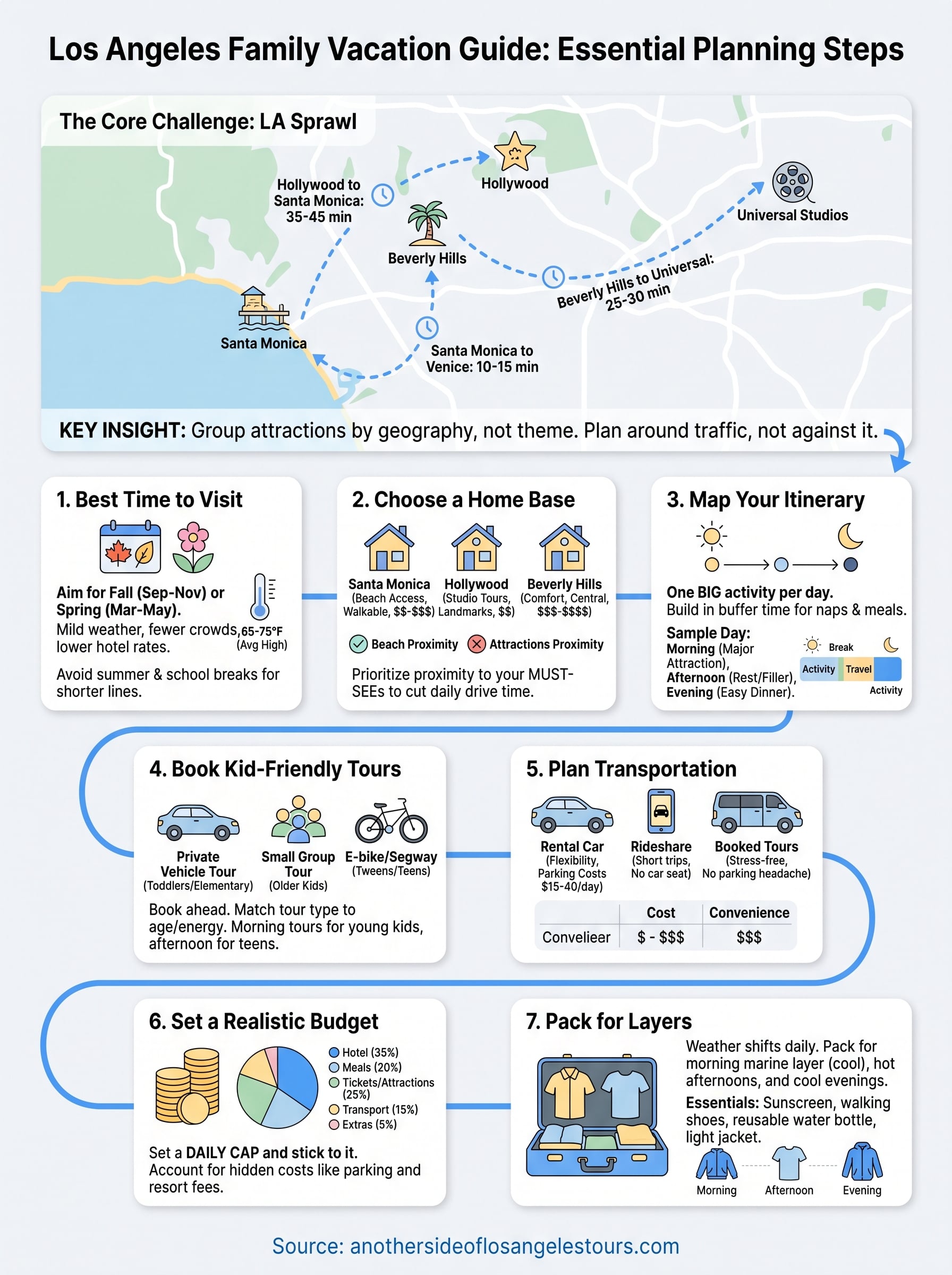
Getting ready for your family’s LA trip
A good Los Angeles trip with kids comes down to sequencing, not luck. Pick your home base, build your days around one big activity, and leave enough buffer for naps, meals, and the inevitable meltdown. Get the neighborhood, timing, and transportation right, and the rest of the trip falls into place on its own.
Budget realistically, pack for three temperatures in one day, and book the tours that match your kids’ ages instead of your own bucket list. None of this requires luck, just planning ahead of time instead of figuring it out on day one with tired kids in the back seat.
If you’d rather skip the parking searches and let a local expert handle the route, book a private family tour and spend your vacation actually enjoying the city instead of navigating it.