Los Angeles gives photographers more to work with than almost any other city, ocean views, mid-century architecture, neon-lit streets, and golden-hour light that actually lives up to the hype. But knowing where to take photos in Los Angeles isn’t as straightforward as pointing your camera at the Hollywood Sign and calling it a day. The best spots require a bit of local knowledge to find and time right.
That’s exactly the kind of thing our guides at Another Side Tours help visitors discover every day. We’ve led over a million tours through LA’s neighborhoods, and our team knows which corners, rooftops, and stretches of coastline deliver the shots worth keeping. Some of our tours, like our Instagram-focused photo tours, are built specifically around these locations.
Below, you’ll find six spots across the city that consistently produce great photographs, whether you’re shooting on a professional camera or just your phone. We’ve included a mix of iconic landmarks and lesser-known locations, along with practical tips on when to visit and what makes each spot worth the trip.
1. Another Side Tours Instagram Photo Tour
Our Instagram photo tour is the most direct answer to the question of where to take photos in Los Angeles. A local guide takes you to a curated set of high-impact locations across the city, and the entire experience is built around giving you images worth keeping rather than just checking off landmarks.
What you’ll shoot on the route
The tour covers a rotating mix of street murals, architectural backdrops, and neighborhood scenes selected for visual variety. You’ll hit spots across Hollywood, the Arts District, and other key areas, including corners of the city that most visitors walk right past without knowing what they’re missing.
- Rotating murals and painted walls with strong color
- Architectural details and framing opportunities
- Open scenic views for wide shots
How a local guide helps you get better photos faster
Your guide knows exactly where to stand and when light hits each location. Instead of spending fifteen minutes figuring out the right angle, you walk into a spot already knowing where to set up. Local knowledge replaces trial and error, which means you leave each stop with a frame you’d actually use.
A guide who shoots these locations regularly cuts your setup time dramatically and helps you avoid the angles that look flat on screen.
Best times of day to schedule for light and crowds
Morning sessions starting between 8 and 10 a.m. give you softer light and far fewer people in your background. Midday sun creates harsh shadows and flat images, so earlier or late afternoon slots consistently produce better results across most of the stops on the route.
What to bring and how to prep for a smooth shoot
Bring a fully charged battery or portable power bank before the tour starts, and wipe your lens clean. A polarizing filter helps cut glare at locations near water or glass, and it works on both cameras and phone lenses with the right adapter.
How to customize stops for your style and goals
You can request specific neighborhoods or visual styles when you book. Whether your focus is street art, architecture, or open scenic views, the guide adjusts the route to match what you actually want to shoot that day.
2. Griffith Observatory
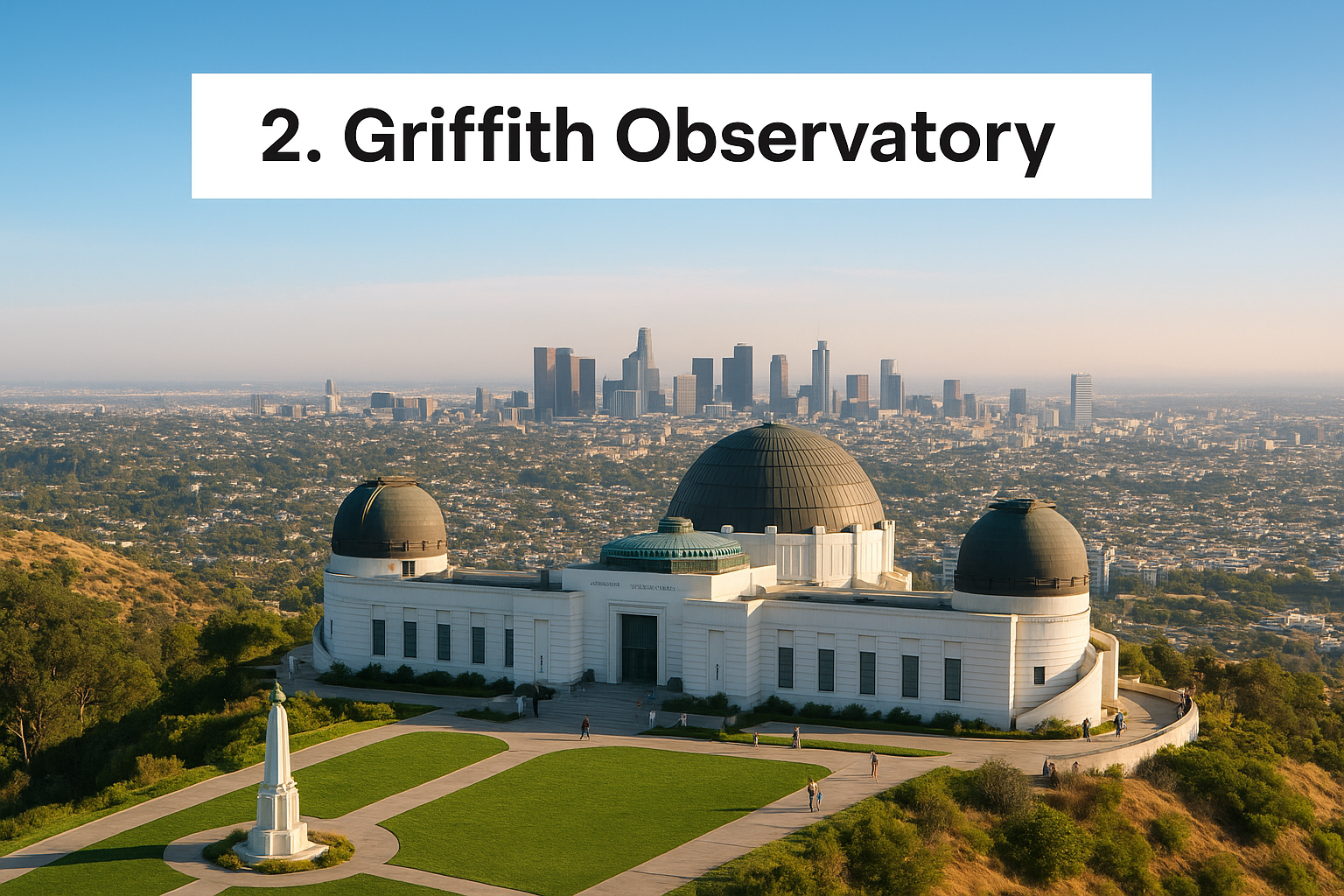
Griffith Observatory sits above Hollywood on the south slope of Mount Hollywood, and it delivers some of the most recognizable views in the city. The building’s Art Deco copper domes and the unobstructed sight line to the LA skyline make this a location worth scheduling regardless of what else is on your itinerary.
Classic shots to get from the terraces and lawn
The front lawn gives you a full-facade view of the observatory with the city spread across the background. From the east and west terraces, you get angled compositions that include both a dome and downtown in the same frame, which the dead-center crowd rarely finds.
Best sunrise and sunset vantage points in Griffith Park
Arrive at sunrise and the east terrace catches warm directional light on the building’s face while the crowds are still thin. Sunset produces strong color from the west-facing overlooks higher along the trail toward the peak.
Sunrise at Griffith consistently outperforms sunset for one reason: you get better light on the building and almost no one in your shot.
Parking, shuttles, and the easiest ways to arrive
Parking at the observatory fills quickly on weekends. The DASH Observatory shuttle runs from the Los Feliz neighborhood and drops you directly at the entrance, so you skip the lot and arrive fresh.
Photo settings and composition tips for skyline haze
LA’s atmospheric haze softens distant backgrounds naturally. Shoot between f/5.6 and f/8 to keep the building sharp while the skyline stays readable, and a polarizing filter reduces the worst of the midday wash.
Nearby bonus spots for variety in one stop
The trails toward Mount Hollywood’s peak put the observatory below you for a completely different angle. The Bronson Canyon area nearby adds rugged terrain and the famous cave tunnel used in older Hollywood productions, giving you genuine variety in a single outing.
3. Hollywood Sign
The Hollywood Sign ranks near the top of any list of where to take photos in Los Angeles, but a clean, well-framed shot takes more planning than just showing up. Your viewpoint choice makes the difference between a sharp, compelling image and a distant, muddy one.
Best no-hike viewpoints for clean sign photos
Lake Hollywood Park on Mulholland Dam Road gives you a clear view of all nine letters with a clean hillside foreground and no trail required. Another strong option is the Mulholland Highway pullout near Derbyshire Drive, which offers an elevated angle without any significant walking.
Best hike options for wider shots and fewer crowds
Brush Canyon Trail via Bronson Canyon adds elevation and puts you above the sign’s sightline for a wider, more dramatic perspective. Mount Lee Drive via the Hollywoodland trailhead is the closest legal approach and delivers an overhead composition that most visitors never find.
The overhead angle from Mount Lee Drive completely reframes the sign and produces shots that look nothing like the standard tourist version.
Timing for clear air, softer light, and fewer people
Arrive before 8 a.m. on weekdays for the best combination of clear air, soft morning light, and thin crowds. Santa Ana wind days naturally clear the haze and sharpen the letters against the sky.
Rules, closures, and safety basics for trail shooting
Stay on marked trails only and respect all posted closure signs. Drone flights over the sign require proper permits, and violations carry real penalties.
Nearby add-ons for a full Hollywood photo loop
Pairing the sign with Griffith Observatory and Bronson Canyon covers multiple distinct backdrops in a single morning. Both locations sit within a short drive, making the loop efficient without feeling rushed.
4. Urban Light at LACMA
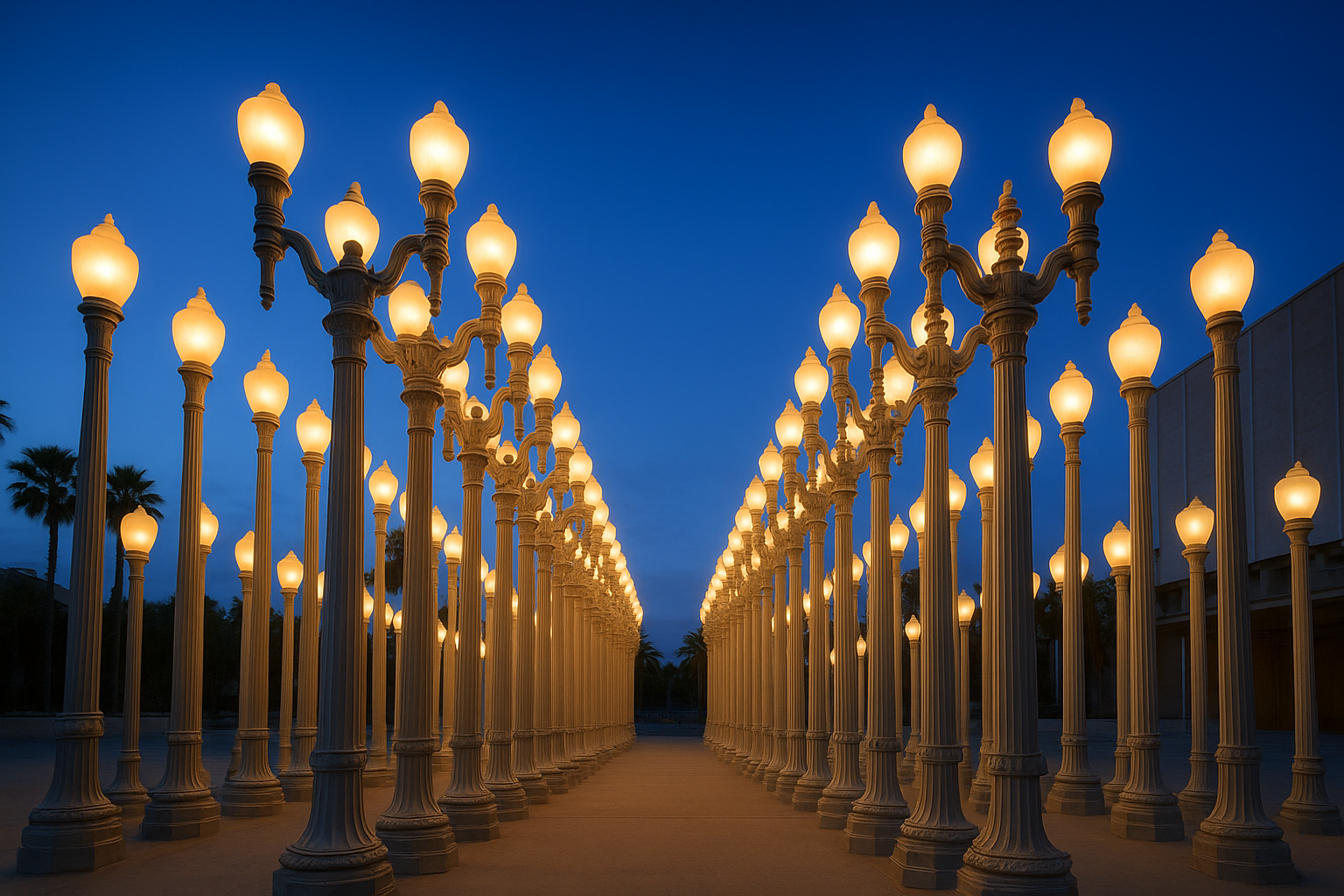
Chris Burden’s Urban Light installation at the LA County Museum of Art features 202 restored cast-iron street lamps arranged in a precise grid on Wilshire Boulevard. The symmetry and warm lamp glow make this one of the most photographed spots for where to take photos in Los Angeles.
Best angles inside the lights for depth and symmetry
Walk into the grid rather than shooting from the edge. Point your camera down one of the lamp rows from a low position to create strong leading lines and natural depth that pull the viewer’s eye straight through the frame.
Day vs night: when the lamps look best on camera
Blue hour, about 20 minutes after sunset, gives you the strongest contrast between warm lamp glow and the cooling sky. Daytime shots work, but the lamps lose impact when ambient light overpowers them.
Blue hour is the single best window here. The lamps glow, the sky still holds color, and the contrast between warm and cool tones makes the installation look exactly as dramatic as it should.
Parking, transit, and how to avoid peak crowd times
The Metro E Line stops at Wilshire/Western, a short walk away. If you drive, street parking on Sixth Street costs less than the lot. Weekday mornings stay noticeably quieter than weekend afternoons.
Posing and etiquette so you don’t block other shooters
Keep your setup time short at each row so others can move through. Avoid anchoring in the center of a lane while other photographers wait behind you for a clear frame.
Nearby architecture and street backdrops on Miracle Mile
Wilshire Boulevard’s Miracle Mile offers Art Deco facades and wide sidewalks ideal for street photography. The Petersen Automotive Museum, directly across the street, adds a completely different visual texture with its stainless steel exterior.
5. Santa Monica Pier
Santa Monica Pier sits at the end of Colorado Avenue and ranks among the most recognizable settings for where to take photos in Los Angeles. The Pacific Park Ferris wheel and the pier’s weathered wooden planks frame beautifully against the open Pacific, giving you strong daytime and low-light photography options in one location.
Must-have pier shots and where to stand for them
Stand at beach level below the entrance ramp to capture the full pier structure arching overhead. From the end of the pier, turn back toward shore for a wide composition that places the Ferris wheel against the Santa Monica Mountains in the distance.
Golden hour and blue hour timing for the Ferris wheel
The Ferris wheel faces west toward the Pacific, so sunset light hits it directly. Position yourself on the beach south of the pier about 40 minutes before sunset for the warmest, most even glow on the structure.
Blue hour extends your shooting window by another 20 minutes and turns the wheel’s neon lights into the dominant color in the frame.
Crowd strategies for cleaner frames on busy days
Weekday mornings before 10 a.m. keep the pier nearly empty. On weekends, shoot from the beach rather than the deck to avoid foot traffic cutting through your frame at the worst moments.
Beach-level angles, reflections, and shoreline compositions
Wet sand near the water’s edge creates reflections of the pier structure above. Shooting at low tide gives you a longer reflective surface and more natural foreground interest to work with.
Nearby spots within walking distance for more variety
Palisades Park on the bluff directly above the pier adds tree-lined paths and ocean-view benches that contrast well with the pier’s energy and give your shoot a quieter finishing location without requiring a drive.
6. Venice Beach and Venice Canals
Venice Beach delivers two completely different photo environments within a few blocks of each other. The boardwalk’s murals and street performers contrast sharply with the quiet, tree-lined Venice Canals just inland, making this one of the most versatile stops for where to take photos in Los Angeles.
Venice Sign photo tips and traffic-safe positioning
The Venice Sign on Windward Avenue sits above active vehicle traffic, so position yourself on the sidewalk directly beneath it rather than stepping into the street. A low angle looking straight up keeps the sign sharp with the sky as a clean background.
Venice Canals composition ideas and best bridges to use
The Carroll Canal footbridges offer the tightest, most photogenic framing of the waterway and surrounding cottages. Shoot from bridge level rather than the canal bank to reduce foreground clutter and let the water lead naturally through your frame.
The Carroll Canal bridges give you both reflection and architecture in a single shot, which is genuinely hard to find anywhere else in the city.
Best times to shoot for calm water and softer light
Early morning before 9 a.m. keeps wind low and water still, sharpening reflections considerably. Overcast mornings reduce harsh shadows on the narrow canal paths and spread even light across the cottage facades.
Street photography etiquette on the boardwalk
Ask street performers before photographing them up close, as many expect a small contribution. Keep your camera ready but unobtrusive to avoid disrupting ongoing performances or creating unnecessary friction with vendors.
Nearby add-ons like Abbot Kinney and hidden side streets
Abbot Kinney Boulevard, a short walk from the canals, offers colorful storefronts and well-maintained sidewalks that photograph cleanly in both morning and late afternoon light.
Quick Wrap-Up
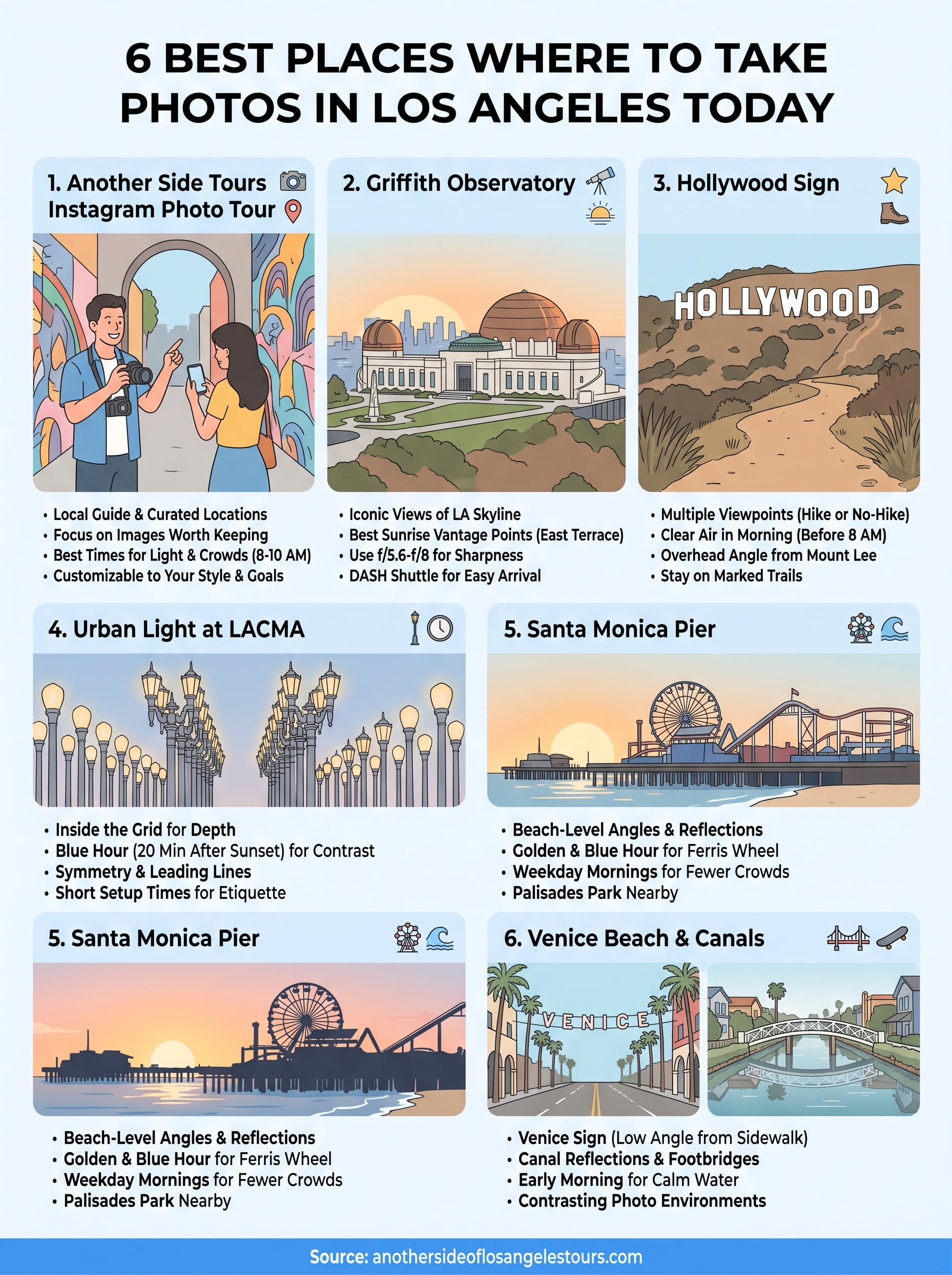
Los Angeles rewards photographers who know where to look and when to show up. The six locations covered here, from the Venice Canals to Griffith Observatory, give you a strong starting point whether you’re working with a phone or a full camera kit. Each spot has its own rhythm, and knowing the right timing and angle makes a real difference in what you walk away with.
If you want to cover the best spots efficiently without spending your trip figuring out logistics, our guided tours handle that work for you. A local expert who knows where to take photos in Los Angeles cuts your planning time down and gets you into the right position faster than going solo. Check out our Los Angeles sightseeing tours to find an option that fits your schedule and shooting goals.