Los Angeles sprawls across 500 square miles of coastline, canyons, and concrete, and most visitors barely scratch the surface. They hit the Hollywood sign, snap a photo on the Walk of Fame, and sit in traffic wondering what all the fuss is about. But the real LA? It lives in the taco stands tucked under freeway overpasses, the Art Deco theaters most people walk right past, and the neighborhoods that never make it onto a generic bus tour route. If you’re searching for the top things to do in Los Angeles, you need more than a basic checklist, you need context for what makes each spot worth your time.
At Another Side Tours, we’ve guided over a million guests through this city. Our local expert guides spend every day showing visitors the LA that exists beyond the clichés, from iconic landmarks to places most tourists never find on their own. That firsthand experience across every corner of the city is exactly what shaped this list. We didn’t just pull together 16 crowd-pleasers and call it a day. We mixed the must-sees with genuinely under-the-radar spots that give you a fuller, more honest picture of what Los Angeles actually is.
Whether you’ve got a packed weekend or a full week to explore, this guide covers classic attractions and hidden gems across the city, organized so you can build a real itinerary, not just a wish list. Each pick includes the kind of detail that helps you decide what’s actually worth your time and what you can skip.
1. Another Side Tours guided sightseeing tour
Before diving into the full list of the top things to do in Los Angeles, it’s worth starting here. A guided tour from Another Side Tours reframes the entire city for you, turning a confusing sprawl into something that actually makes sense. You stop guessing and start experiencing.
What makes it different from DIY LA sightseeing
Renting a car and following Google Maps gets you to the address, but it doesn’t tell you why a neighborhood matters or what you’re actually looking at. Another Side Tours guides are local experts who give every stop context, history, and the kind of insider detail you’d only know if you lived here. You spend your time learning, not navigating.
The difference between seeing a building and understanding what it means to a city is almost always the quality of your guide.
Tour styles to choose from
Another Side Tours offers private tours, small group tours, Segway tours, e-bike tours, and limousine experiences. You pick the format that fits your travel style and group size, whether you want a relaxed ride or something more active.
What you can see on a half-day vs full-day tour
A half-day tour (roughly 3 to 4 hours) covers core highlights like Hollywood, Beverly Hills, and Sunset Strip. A full-day tour (up to 7 hours) adds depth with neighborhoods like Los Feliz, Silver Lake, or a custom route built around your interests.
Pickup, routes, and how to avoid traffic traps
Most tours include pickup from your hotel or central location, which immediately removes one of LA’s biggest headaches. Your guide plans the route around real-time traffic conditions, so you’re not sitting on the 101 during peak hours watching your day disappear.
What to bring and how to plan for photo stops
Pack a charged phone or camera, comfortable shoes, and a light layer since coastal areas cool down fast. Guides build photo stops into every tour, so you won’t feel rushed past the shots you came for.
Typical pricing and what affects total cost
Tours start around $75 per person for group experiences and go up to $1,996 for private limousine options. Group size, tour length, and the type of experience you choose are the main factors that affect your total.
2. Hollywood Walk of Fame and Chinese Theatre
The Hollywood Walk of Fame runs along Hollywood Boulevard and draws millions of visitors each year. You’ll find over 2,700 stars embedded in the sidewalk, each honoring a different figure from film, television, music, radio, and theater. It’s one of the top things to do in Los Angeles precisely because it carries genuine cultural history, even if the surrounding area feels chaotic on busy days.
What to expect so you do not feel disappointed
The Walk of Fame is a real piece of Hollywood history, but the surrounding block runs loud, crowded, and commercial. Street performers in costume will approach you and expect tips for photos, so go in knowing that. Managing expectations upfront means you actually enjoy the stars instead of feeling caught off guard by everything around them.
The stars themselves are the attraction here, not the noise surrounding them.
Best time of day to go for crowds and photos
Early morning before 9 a.m. gives you the best light and the fewest people on the sidewalk. Midday foot traffic turns the boulevard into a slow shuffle, so if you want clean photos of specific stars, arriving early makes a real difference.
Must-see stops within a few blocks
TCL Chinese Theatre sits right on the boulevard and lets you match your hands and feet against celebrity imprints in the concrete courtyard. The Dolby Theatre, home of the Academy Awards, is also within easy walking distance.
Smart ways to handle parking and transit
Metro Red Line stops at Hollywood and Highland, putting you directly at the action without parking stress. If you drive, the Hollywood and Highland parking structure is the most convenient option nearby.
How long to budget and what it costs
Plan 1 to 2 hours for a relaxed walk. The sidewalk itself is free. TCL Chinese Theatre charges for interior tours, typically around $20 per person.
3. Griffith Observatory and Griffith Park views
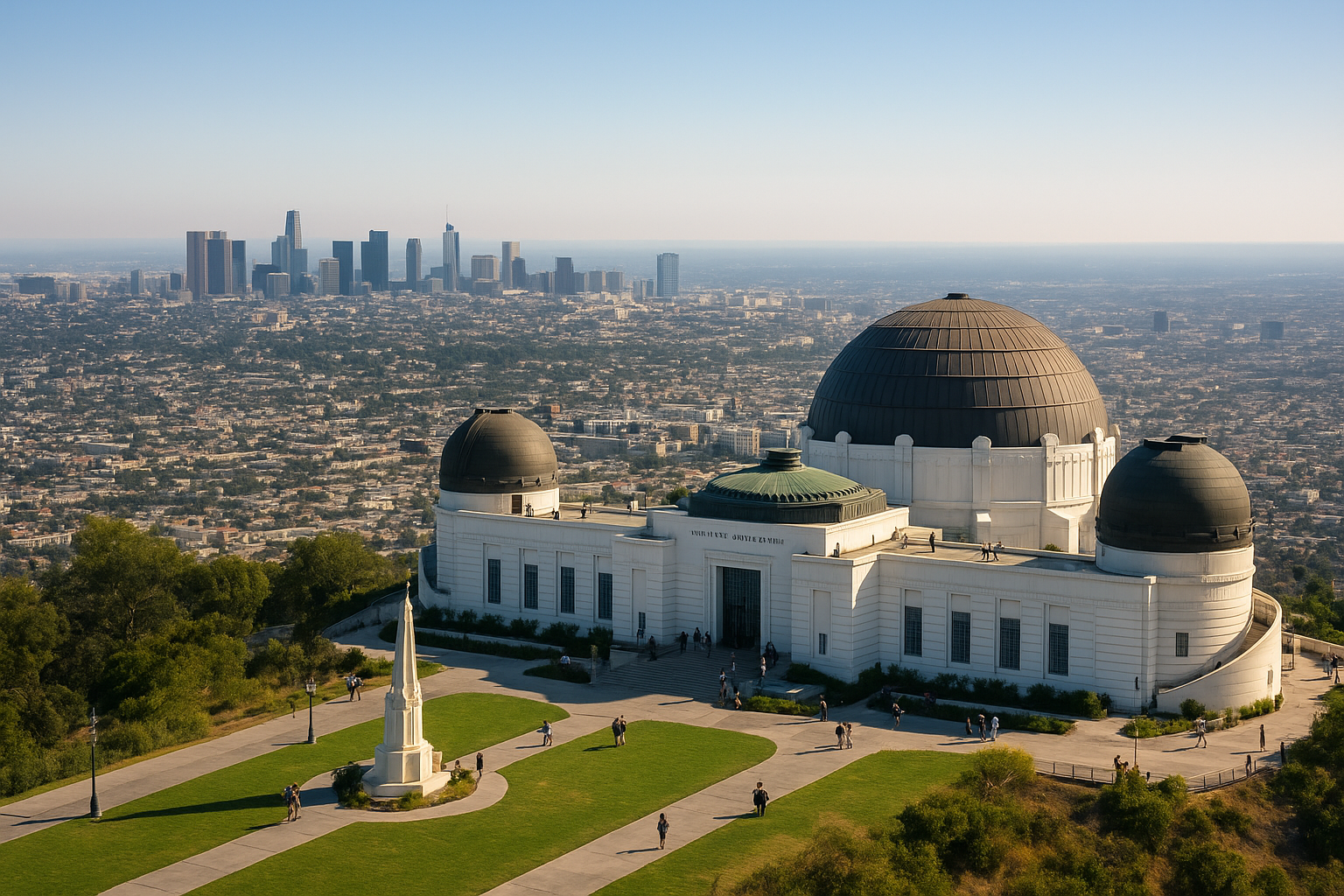
Griffith Observatory sits on the southern slope of Mount Hollywood and gives you one of the most iconic views in the entire city. It’s a working observatory, a free museum, and the best spot to get your bearings in Los Angeles, all wrapped into a single hilltop destination that belongs on any list of the top things to do in Los Angeles.
Best viewpoints and where to stand for skyline photos
The front lawn terrace facing south gives you a sweeping view of the LA basin, and on clear days you can see all the way to the Pacific. For the Hollywood Sign, walk to the east side of the building and look northeast. Arrive early in the morning for the clearest air and the fewest people crowding the railing.
The view from Griffith Observatory is one of the few places in LA where the whole city suddenly makes geographic sense.
Easy visit vs hike options
You can drive or take the shuttle directly to the observatory without hiking a single step. If you want more, the trails through Griffith Park range from short paved paths to longer routes like the Mount Hollywood Trail, which adds about 3 miles round trip.
Parking strategy and shuttle basics
Parking near the observatory fills fast, especially on weekends. The DASH Observatory shuttle runs from the Los Feliz area and drops you at the front door, which is the easiest option if you’re visiting between late morning and evening.
Planetarium shows and what requires a ticket
Admission to the observatory building is free. Planetarium shows inside the Samuel Oschin Theater require a ticket, typically $7 to $10 per person, and they sell out on busy days, so book ahead online.
How long it takes and what it costs
Plan 2 to 3 hours for a full visit that includes the exhibits, the viewpoints, and a planetarium show. The building itself costs nothing to enter.
4. Getty Center art and gardens
The Getty Center sits on a hilltop in Brentwood and combines world-class art collections with architecture and gardens that make it a destination on their own. It earns its place among the top things to do in Los Angeles because the experience works on multiple levels, whether you care about Impressionist paintings, landscape design, or sweeping views of the city and coastline.
What you should see even on a short visit
Start with the Central Garden, designed by artist Robert Irwin, before stepping into any of the galleries. Inside the main pavilions, prioritize the Impressionist and Post-Impressionist collection, which includes works by Van Gogh, Monet, and Cézanne that anchor the permanent galleries.
The Getty’s permanent collection alone justifies the visit, even if you skip every temporary exhibition on campus.
How reservations and entry work
Admission is free, but parking requires payment. Timed reservations are not always required, but booking your arrival window online during peak summer months saves time at the entrance gate and avoids capacity hold-ups.
Getting there, parking, and on-site transit
Parking costs $20 per vehicle and fills quickly on weekends. A complimentary tram connects the arrival plaza to the museum level once you park. Metro Bus Line 761 also serves the Getty from Westwood if you prefer skipping the drive entirely.
Best spots for views and photos
From the North Pavilion terrace, you get clear sightlines toward the Pacific on cloudless days. For the most photographed shot on campus, head to the Central Garden’s azalea bowl near the reflecting pool at the base of the garden path.
How long to plan and what it costs
Plan 2 to 3 hours for a visit that covers the permanent collection and the garden at a comfortable pace. Entry is free, and the $20 parking fee is the only guaranteed cost unless you arrive by bus.
5. Santa Monica Pier and beach bike path
Santa Monica sits at the western end of Route 66 and packs both the iconic pier and one of the best bike paths in Southern California into a single coastal visit. Whether you’re checking off one of the top things to do in Los Angeles or just looking for a relaxed half-day by the water, this stretch rewards a full afternoon.
What to do on the pier beyond the obvious
Beyond the Pacific Park amusement rides and the Ferris wheel, the pier holds a free trapeze school, a small aquarium beneath the deck, and live music on weekends during summer. Walking to the end of the pier gives you an unobstructed view back toward the Santa Monica Mountains.
That view looking back at the mountains from the pier end is one of the cleanest panoramic shots you can get without hiking anywhere.
Best beach stretches for a relaxing visit
South of the pier, the wide sandy stretch near Muscle Beach stays lively but rarely feels as packed as the pier area itself. North of the pier, the beach quiets down and works better if you want open space.
Bike path route ideas: Santa Monica to Venice
The 22-mile Marvin Braude Bike Trail connects Santa Monica to Venice and beyond. Rent a bike near the pier for around $15 to $25 per hour and ride south to Venice Beach in roughly 20 minutes.
Food, bathrooms, and quick safety tips
Public restrooms sit at multiple beach access points, and the pier has permanent facilities near the arcade building. Keep your valuables secured in a bag and stay aware of fast-moving cyclists if you’re walking anywhere near the trail edge.
Time, parking, and budget planning
Plan 2 to 4 hours depending on whether you bike. Parking in the city-owned structures on 2nd and 4th Streets runs roughly $3 to $15 depending on how long you stay. The pier and beach are free to access.
6. Venice Beach boardwalk and canals
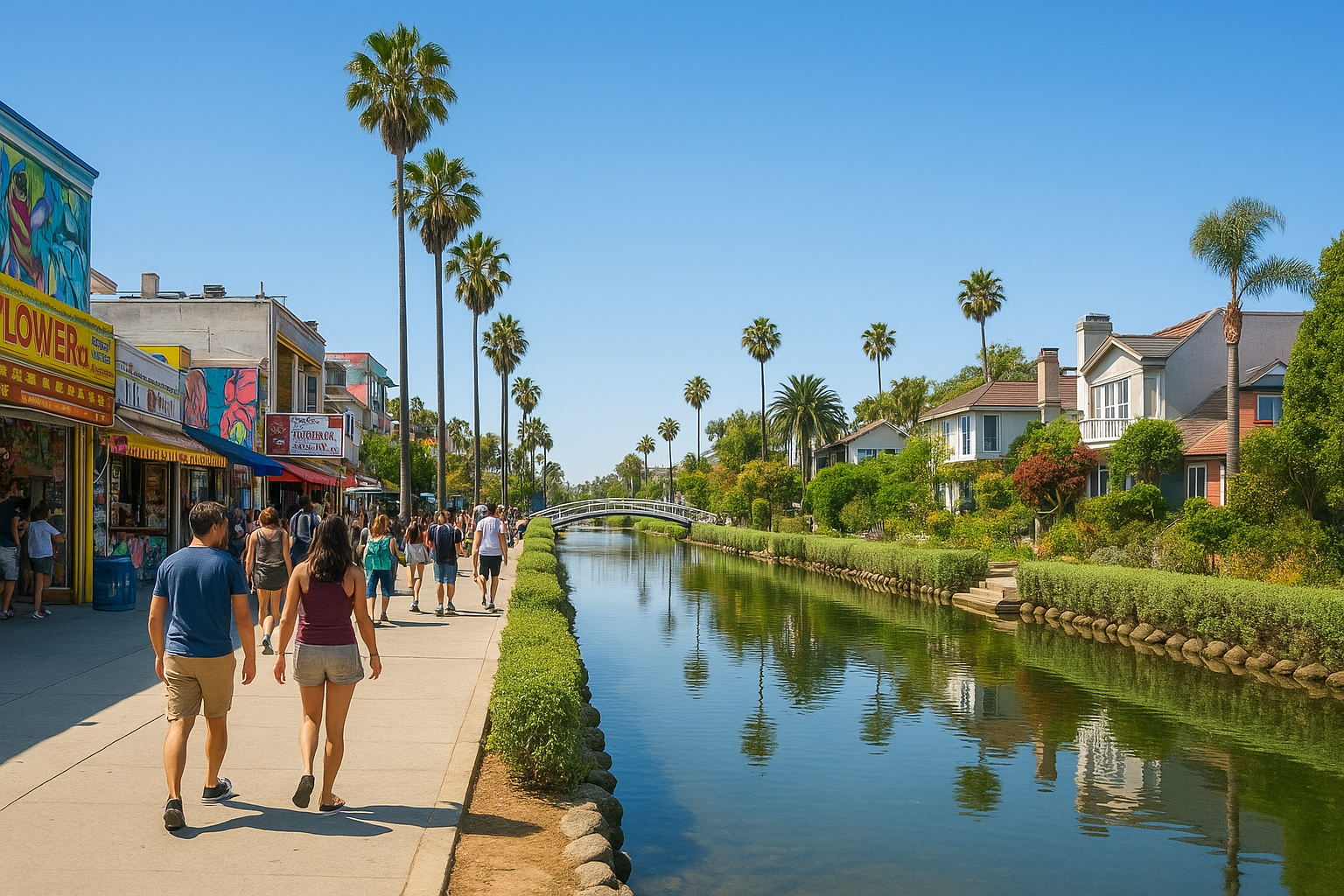
Few places in LA pack as much contrast into a small area as Venice Beach, where a loud, colorful boardwalk sits just blocks from quiet canals. Both belong on your list of top things to do in Los Angeles, and knowing how to sequence your visit makes the difference between a great afternoon and a frustrating one.
How to do Venice without the overwhelm
Venice works best when you pick a direction and commit to it rather than wandering aimlessly through the crowds. Start at the boardwalk, walk south toward the skate park, then cut inland toward the canals before the afternoon crowds build. Arriving before 10 a.m. on weekends gives you the most breathing room.
Boardwalk highlights worth your time
The Ocean Front Walk boardwalk rewards a full south-to-north pass. Key stops worth your time include:
- Muscle Beach: open-air gym with a genuine place in LA history
- Venice Skate Park: free to watch, positioned right at the edge of the sand
- Artist booths and murals concentrated between Windward Ave and the skate park
The skate park sits at the sand’s edge with the ocean behind it, making it one of the more visually striking spots in the city.
Venice Canals walk: where to enter and what to see
A few blocks east of the boardwalk, the Venice Canals Historic District offers a complete change of pace. Enter from Eastern Canal Court and follow the footbridges for the clearest views of the restored canal homes and gardens lining the water.
Best times to visit and how to stay aware
Weekend mornings before 11 a.m. give you the best mix of activity and manageable crowds. Keep your bag zipped and close on the boardwalk, especially through the busiest stretches near the performance stages.
How long it takes and what it costs
Plan 2 to 3 hours to cover both the boardwalk and canals at a comfortable pace. The boardwalk and canals are free to access, and nearby parking lots typically run $10 to $20 depending on the time of day.
7. Beverly Hills and Rodeo Drive stroll
Beverly Hills earns its spot among the top things to do in Los Angeles not just because of its famous zip code, but because the streets themselves tell a story about wealth, design, and old Hollywood glamour that still feels distinct from the rest of the city. You can cover the core of it on foot in a couple of hours.
What to see even if you do not want to shop
Rodeo Drive rewards a walking pass even if you have zero interest in buying anything. The architecture, window displays, and landscaping along the two-block luxury corridor between Santa Monica Boulevard and Wilshire Boulevard give you a concentrated dose of Beverly Hills style without spending a dollar.
Best streets for classic Beverly Hills photos
Walk one block east to Brighton Way or Dayton Way for the clean, tree-lined sidewalks that photograph better than the busier sections of Rodeo. The Beverly Hills city sign at the corner of Rexford and Santa Monica Boulevard is the standard photo stop most visitors want.
The side streets one block off Rodeo consistently give you cleaner, less crowded photos than the main strip.
How to pair it with nearby attractions
The Grove and the Original Farmers Market sit about 10 minutes east by car, making Beverly Hills a natural first stop on a mid-city loop. You can also add Sunset Strip as a quick northward detour on the same outing.
How long to plan and what it costs
Plan 1 to 2 hours for a relaxed walk. Street parking exists on residential blocks, and public parking structures off Rodeo charge roughly $1 to $3 per hour.
Quick etiquette and safety notes for visitors
Shops along Rodeo welcome browsers, but staff inside luxury boutiques will engage you quickly, so walk in knowing that. Keep bags secured on your body and stay on designated crosswalks along the busier intersections near Wilshire.
8. The Grove and Original Farmers Market
These two spots share a wall and make up one of the most practical and enjoyable stops in mid-city Los Angeles. The Original Farmers Market dates back to 1934, while The Grove opened next to it in 2002. Together they give you a full visit that covers food, browsing, and people-watching without burning an entire day.
Why this combo works for first-time visitors
Both destinations sit on the same block, which means one parking stop covers both. You can spend an hour in the Farmers Market eating your way through the stalls, then walk directly into The Grove for shopping or a stroll without moving your car. It’s one of the more efficient combinations on any list of the top things to do in Los Angeles.
Starting at the Farmers Market and moving into The Grove keeps you from rushing either side of the visit.
What to eat and how to pick a good time to go
The Original Farmers Market stalls cover everything from fresh produce and baked goods to international food counters. Du-par’s for pancakes and Magee’s for nuts are two longtime anchors worth finding. Weekday mornings before noon give you the best access to seating and fresher stock.
Shopping and photo spots you should not miss
The Grove’s central fountain and outdoor trolley make for clean photos, especially in the late afternoon light. Check the fountain show schedule posted near the main entrance.
Parking tips and how long to plan
The Grove’s parking structure validates with most purchases. Plan 2 to 3 hours for both destinations comfortably.
Typical spend ranges for food and shopping
Budget $15 to $30 per person for a solid Farmers Market meal. Shopping at The Grove varies widely depending on the stores you visit.
9. Downtown LA: markets, books, and landmarks
Downtown LA packs more variety per block than almost any other neighborhood on this list of top things to do in Los Angeles. Within a 15-minute walk, you can move from a historic Victorian atrium to a psychedelic used bookstore to a century-old Mexican marketplace without touching your car.
Grand Central Market: what to eat and when to arrive
Grand Central Market on Broadway has operated since 1917 and delivers one of the city’s best cheap eats experiences. Arrive before noon on weekdays to avoid the lunch rush and actually find a seat. Egg Slut, Sarita’s Pupuseria, and Horse Thief BBQ are reliable go-tos across different price points.
Bradbury Building: how to visit and what to know
The Bradbury Building sits directly across Broadway from Grand Central Market. Its ornate Victorian atrium opens to visitors during business hours, and you can photograph the ironwork at no cost.
Few buildings in LA reward five minutes of your time as generously as the Bradbury.
Angel’s Flight and Bunker Hill: quick add-on loop
Angel’s Flight railway connects Hill Street to Bunker Hill above in under two minutes. The round-trip fare is $1, making it one of the most photogenic and affordable stops in downtown.
The Last Bookstore: what to look for and photo spots
The Last Bookstore on Spring Street fills two floors with used books, vinyl, and an upstairs labyrinth of installations built from stacked books. Budget 30 to 45 minutes here.
Optional extensions: Olvera Street and Union Station
Add Olvera Street for a walk through LA’s oldest neighborhood, then step into Union Station next door for one of the most beautiful interiors in the city, free to enter.
Safety, transit, and timing for a smooth day
Take the Metro Red or Purple Line to Pershing Square or Civic Center to skip downtown parking entirely. Plan 4 to 5 hours to cover all six stops without feeling rushed.
10. Museum Row: LACMA, Academy, and Tar Pits
Wilshire Boulevard between Fairfax and Curson hosts three distinct institutions within a short walk of each other, making this stretch one of the most efficient cultural stops on any list of the top things to do in Los Angeles. You can cover all three in a single day if you plan your time carefully before you arrive.
How to choose based on your interests
Your priorities determine where you start. Art collections draw you to LACMA, cinema history pulls you toward the Academy Museum, and prehistoric science lands you at the Tar Pits. Most visitors find that picking two institutions to explore fully beats rushing through all three.
LACMA: what to prioritize if you only have 2 hours
The Los Angeles County Museum of Art holds over 150,000 objects across multiple buildings. Focus on the Broad Contemporary Art Museum wing and the permanent collections covering ancient and modern works. The free outdoor installation "Urban Light" at the entrance gives you one of the most recognizable photo spots in the city.
Spending two focused hours at LACMA beats four hours of wandering without direction.
Academy Museum: must-see exhibits for film fans
The Academy Museum of Motion Pictures opened in 2021 and covers the full history of filmmaking, from early Hollywood through modern blockbusters. The Oscars experience on the top floor and the rotating special exhibitions are the standout draws for anyone serious about film.
La Brea Tar Pits: outdoor walk vs museum visit
The outdoor tar pit grounds are free to walk and genuinely interesting, with active excavation pits you can observe up close. The indoor museum adds fossil context and costs around $15 per adult, making it a solid add-on rather than a requirement.
Tickets, reservations, and how to do all three efficiently
LACMA and the Academy Museum each charge $25 for adults. Book both online in advance to avoid lines at the door. Plan your visit on a weekday morning when all three sites run noticeably quieter than weekends.
11. Universal Studios Hollywood
Universal Studios Hollywood is a working film studio and theme park that gives you access to rides, live shows, and a backlot tram tour all in one ticket. It ranks consistently among the top things to do in Los Angeles for visitors who want a full-day entertainment experience built around film and television.
Who it’s best for and who should skip it
Universal works well for families with kids, Harry Potter fans, and anyone who wants a structured high-energy day without much planning. If you’re primarily interested in LA’s cultural history, architecture, or food scene, this park won’t be the best use of your time or budget.
The Wizarding World of Harry Potter alone justifies the visit for fans of the franchise.
What to prioritize if you only have one day
Focus on the Wizarding World of Harry Potter and the Studio Tour tram ride first thing in the morning when lines are shortest. The Jurassic World ride and Revenge of the Mummy attraction fill up fast by mid-morning, so hit those second.
Express passes vs standard entry
Express passes cut wait times significantly on busy days and cost roughly $80 to $150 on top of your base ticket. On slower weekdays, standard entry handles most of the park without the added expense.
Best times to arrive and how to reduce wait times
Arrive at least 30 minutes before opening to clear the entrance line early. Weekday visits between January and March see the lowest crowds of the year across the entire park.
Budget checklist for tickets, food, and extras
Plan your spending before you arrive so nothing catches you off guard at the gate or inside the park.
- Admission: $109 to $139 per adult depending on the date
- Express Pass: $80 to $150 per person
- Food and drinks: $30 to $60 per person on average
- Parking: $30 to $50 depending on arrival time
12. Warner Bros Studio Tour Hollywood
The Warner Bros Studio Tour in Burbank takes you behind the scenes of a real, working Hollywood studio rather than putting you on rollercoasters. It earns its spot among the top things to do in Los Angeles because the experience is genuinely different from anything else in the city.
What makes this different from a theme park
This tour runs on an active production lot where current film and television projects shoot throughout the year. You move through working soundstages and backlot streets rather than themed entertainment zones, which gives the visit a more authentic, behind-the-scenes character than a traditional theme park.
What you typically see on a standard tour
Your guide walks you through backlot street sets, costume and prop archives, and soundstages used for active productions. The specific locations vary depending on what’s shooting that week, which means no two visits are identical.
Seeing a set mid-production makes the filmmaking process feel tangible in a way that museum displays never quite replicate.
Best for movie lovers: sets, props, and photo moments
The Friends Central Perk set and the DC Universe exhibit consistently rank as the highest-traffic photo stops on the lot. Batman costumes, original film props, and full-scale set pieces fill the exhibition spaces between outdoor walking sections.
Ticket options and how to pick the right time slot
Standard tours cost around $70 per adult and run on a fixed schedule throughout the day. The Classic Tour covers the core lot in about three hours, while specialty add-ons like the Stage 48 experience cost extra.
How long it takes and what it costs
Plan 3 to 3.5 hours for the standard experience. Parking costs roughly $15 on-site, and booking your slot online in advance guarantees your preferred departure time.
13. Malibu beaches and Pacific Coast Highway drive
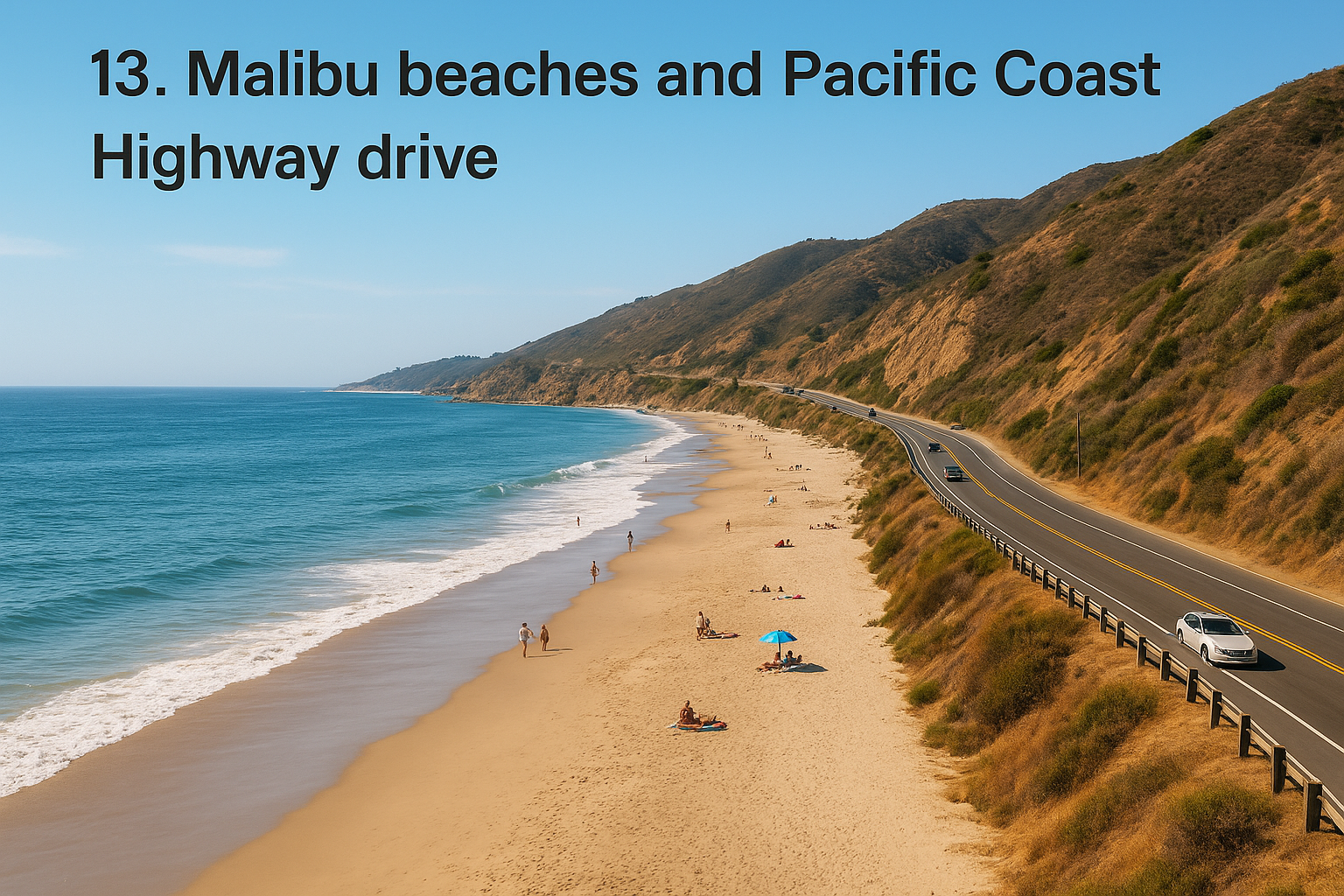
Malibu stretches 27 miles along the Pacific Coast Highway and gives you some of the most accessible ocean scenery in Southern California. A PCH drive counts as one of the genuinely great top things to do in Los Angeles because the road itself is the attraction, not just the destination at the end of it.
Best Malibu beaches for your vibe
Your best beach depends on what you want from the day. Zuma Beach suits families and those who want wide open sand with lifeguards and full facilities. El Matador State Beach rewards anyone after dramatic sea stacks and cove scenery, though the steep trail down requires some footing.
El Matador gives you the kind of coastal landscape that stops most people mid-sentence.
Easy scenic stops you can do without hiking
Point Dume State Preserve offers a short bluff walk with sweeping ocean views and whale-watching potential in winter months. Malibu Lagoon State Beach near the pier lets you watch surfers and shorebirds from a flat, paved path.
How to plan around traffic and beach parking
Leave before 9 a.m. on weekends to avoid the PCH backup that builds through mid-morning. State beach parking fees run $8 to $12 per vehicle at most lots.
Where to eat with ocean views
Nobu Malibu sits directly over the water for a splurge, while Malibu Farm at the pier offers a more casual lunch with the same ocean backdrop at lower prices.
Ideal time needed and typical costs
Plan 4 to 5 hours for a drive plus two beach stops. Outside of parking and food, the road and most beaches cost nothing to access.
14. Pasadena: The Huntington and Old Town
Pasadena sits about 30 minutes northeast of downtown LA and combines two genuinely different experiences into one satisfying day trip. The Huntington Library and Old Town Pasadena pair naturally together and give you a welcome break from the coastal crowds that dominate most lists of the top things to do in Los Angeles.
The Huntington highlights: gardens, art, and tea time
The Huntington’s 120 acres hold a dozen distinct gardens alongside rare book collections and rotating art exhibitions. The Japanese Garden and the Desert Garden draw the most visitors, but the Rose Garden and Chinese Garden reward anyone willing to walk the full grounds. Afternoon tea in the Rose Garden Tea Room requires a reservation and delivers one of the more distinctive experiences in the area.
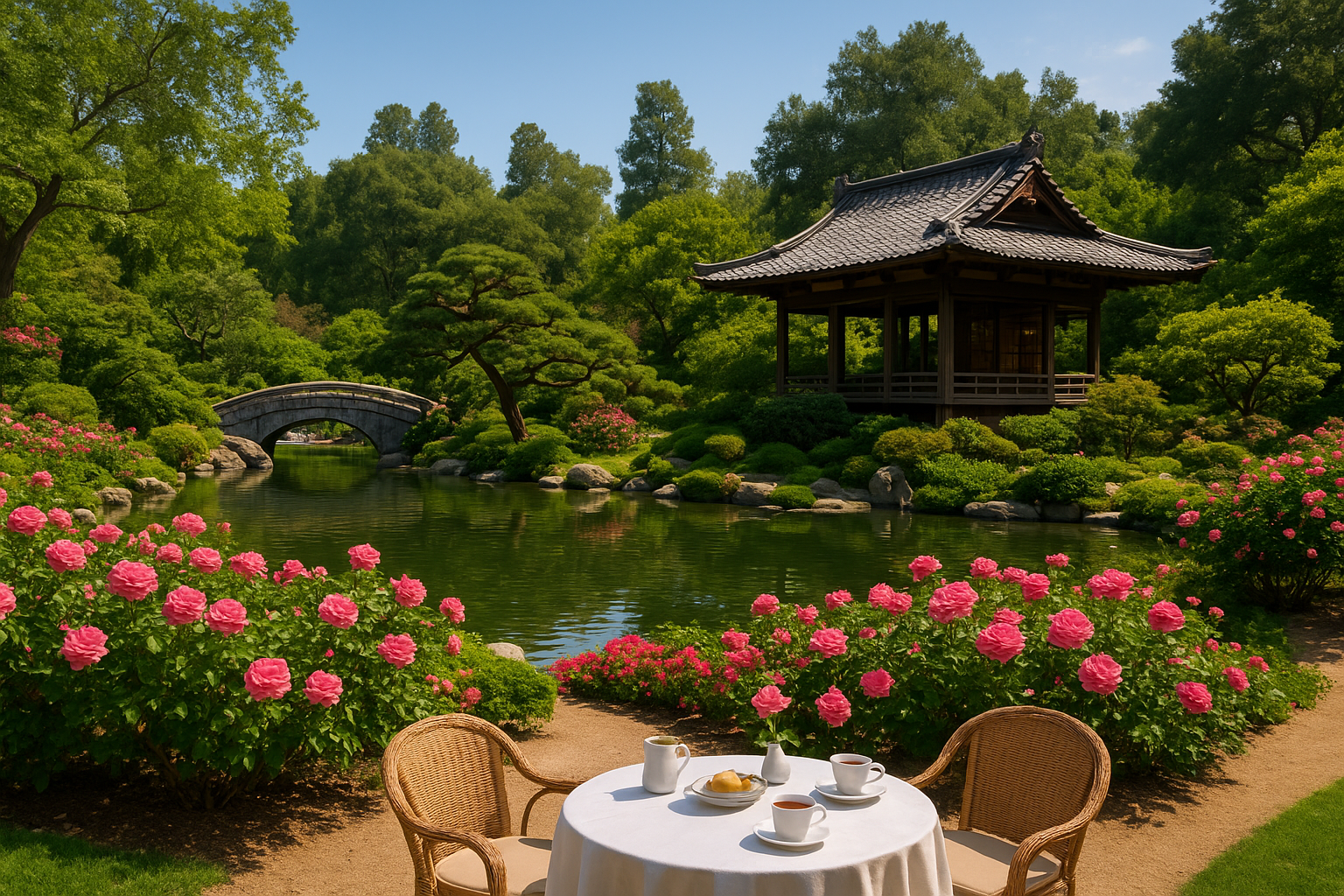
Spending two hours on the grounds before stepping inside any building is the right way to approach the Huntington.
How to plan your route so you do not rush it
Start with the Japanese Garden when it opens, then loop through the botanical sections before entering the art galleries. Reserving your entry time online in advance prevents capacity delays at the gate on weekends and keeps your morning moving without friction.
Old Town Pasadena: what to do after the gardens
Colorado Boulevard runs through the heart of Old Town and offers independent restaurants, bookstores, and outdoor seating within easy walking distance. One Colorado courtyard hosts local shops and a relaxed atmosphere that contrasts well with a morning at the Huntington.
Add-on for architecture fans: the Gamble House
The Gamble House, a short drive from Old Town, is a landmark example of American Arts and Crafts architecture. Guided tours run on weekends and last about an hour, making it a clean add-on if your schedule allows.
Tickets, timing, and transportation tips
Huntington admission runs $29 for adults, with lower rates for students and children. Plan a full day to cover both the Huntington and Old Town comfortably. The Metro A Line reaches Pasadena from downtown LA and removes parking from the equation entirely.
15. Long Beach: Queen Mary and waterfront
Long Beach sits about 30 miles south of downtown LA and gives you a completely different pace from the rest of the city. The combination of a historic ocean liner, a walkable waterfront, and one of the country’s top aquariums makes it a solid addition to any list of the top things to do in Los Angeles, especially if you want a day that feels nothing like the Hollywood corridor.
Queen Mary: what to do on board and what to skip
The RMS Queen Mary is permanently docked in Long Beach Harbor and open for self-guided exploration. Focus your time on the engine room, the sun deck, and the historic stateroom exhibits, which give you the clearest picture of the ship’s transatlantic history. Skip the paranormal-themed additions if that’s not your interest.
Walking the original teak decks of a ship that crossed the Atlantic over 1,000 times makes the scale of her history feel real.
Waterfront walk: Shoreline Village and photo stops
Shoreline Village sits a short walk from the Queen Mary and offers a relaxed strip of shops and restaurants with clean sightlines back toward the ship and harbor. The lighthouse replica at the village entrance is the standard photo stop for the area.
Aquarium option for families and rainy days
The Aquarium of the Pacific sits directly on the waterfront and works particularly well for families or overcast days when beach visits lose their appeal. General admission runs around $37 for adults and $27 for children.
Getting there from LA and parking strategy
Metro A Line connects downtown LA to Long Beach and removes the parking issue entirely. If you drive, harbor-area lots near the Queen Mary charge roughly $25 for a full day.
Time and budget planning
Plan 5 to 6 hours to cover the Queen Mary, the waterfront walk, and either the aquarium or a meal at Shoreline Village. Queen Mary admission runs approximately $35 per adult, with aquarium tickets adding to the total if you include both.
16. Catalina Island day trip
Catalina Island sits 22 miles off the coast of Los Angeles and offers one of the most distinct day trips on any list of the top things to do in Los Angeles. The town of Avalon feels nothing like the mainland, with golf carts replacing cars and turquoise water replacing the freeway horizon.
How to get there: departure points and ferry timing
The Catalina Express ferry departs from Long Beach, San Pedro, and Dana Point, with Long Beach offering the most frequent schedules. Round-trip tickets run approximately $82 for adults, and the crossing takes about 75 minutes. Book your departure and return times online before you go, since popular summer sailings sell out early.
Best things to do in Avalon in a single day
Avalon’s main drag along Crescent Avenue gives you restaurants, shops, and direct waterfront access within a few minutes of the ferry terminal. Walk up to the Wrigley Memorial and Botanical Garden for a quieter, elevated perspective on the island’s interior landscape.
Avalon operates on foot and golf cart, which makes the entire town feel genuinely unhurried in a way that nowhere on the mainland does.
Water activities vs sightseeing: how to choose
Snorkeling, kayaking, and glass-bottom boat tours all depart from the Avalon beach area and suit visitors who want to see the kelp forests and marine life below the surface. If you prefer staying dry, the inland zip line tour and scenic tram ride cover the island’s rugged back country without getting wet.
What to pack and how to plan for weather
Pack sunscreen, a light wind layer, and comfortable walking shoes since the ferry deck and Avalon’s hilly streets both catch ocean breeze. Temperatures on the island run 5 to 10 degrees cooler than inland LA, so even warm summer days benefit from a layer in your bag.
Total time and typical costs
Plan 8 to 10 hours door to door for a full day trip that includes the ferry, a few hours in Avalon, and at least one water or land activity. Budget $150 to $200 per person when you factor in ferry tickets, food, and one paid activity.
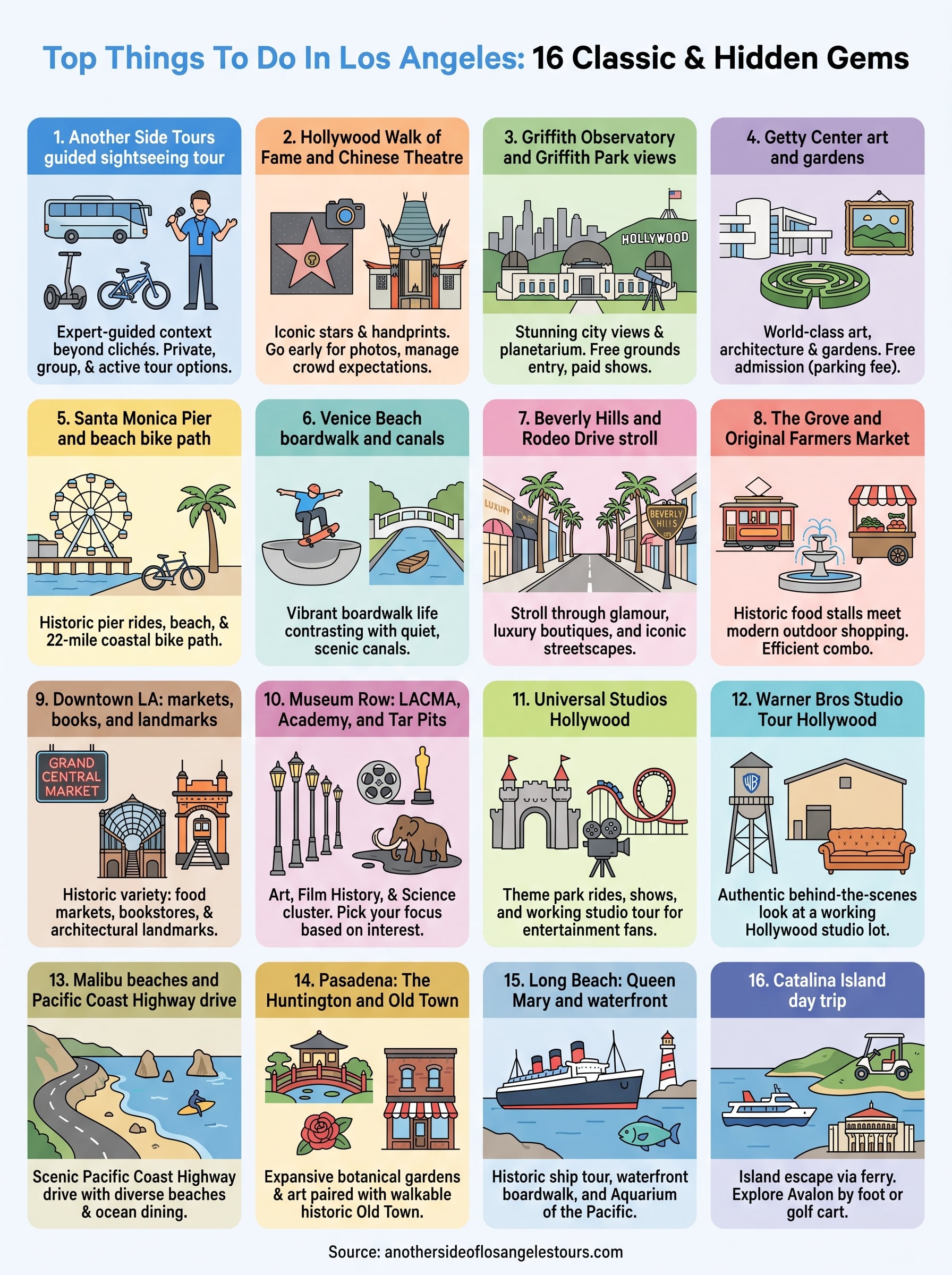
Next steps for your LA itinerary
Los Angeles rewards the visitors who treat it as a city worth understanding, not just photographing. This list of the top things to do in Los Angeles gives you a foundation across iconic landmarks, cultural institutions, and lesser-known corners of the city, but turning that list into an actual itinerary takes one more step. Group your stops by geography to reduce drive time and keep your days from feeling scattered. Pair Museum Row with The Grove. Stack Downtown with a Griffith Observatory visit. Run Malibu and Santa Monica on the same coastal day.
If you want someone to handle the routing, context, and local knowledge for you, a guided tour removes the guesswork entirely. Another Side Tours offers private and group options built around your schedule and interests. Book a Los Angeles sightseeing tour and let a local expert show you the city the way it deserves to be seen.