Los Angeles sprawls across 500 square miles, and that’s the problem. You’ve got maybe four or five days here, a list of neighborhoods you’ve seen in movies, and no real sense of how far apart any of them actually are. Searching things to do in los angeles area usually turns up the same 40 attractions with zero guidance on which ones deserve your limited time.
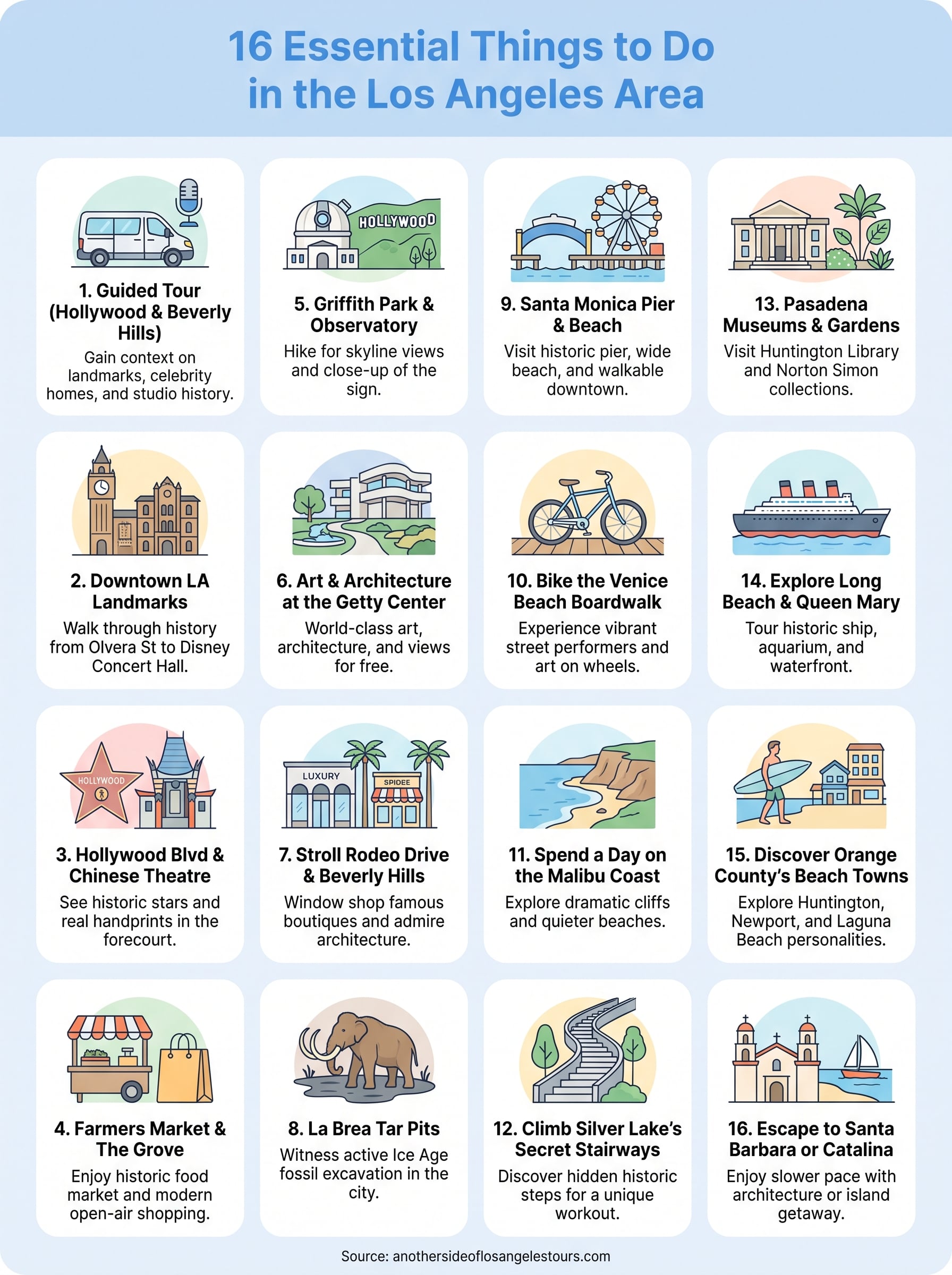
This guide cuts through that. We’re covering 16 spots and experiences that actually earn a spot on your itinerary, from the obvious ones like Griffith Observatory and Santa Monica Pier to the hidden gems locals actually visit, plus a few day trip options for when you want out of the city entirely. Each entry includes what makes it worth the drive and roughly how much time to budget.
We’ve spent years running guided tours through Hollywood, Beverly Hills, and the greater LA area, so this list reflects what visitors consistently love, not just what shows up on postcards. Whether you’re planning a self-guided route or want a local expert handling the logistics, you’ll walk away knowing exactly where to point the car next.
1. Take a guided tour of Hollywood and Beverly Hills
Starting your trip with a guided tour solves the biggest problem visitors face: not knowing what they’re looking at. Hollywood and Beverly Hills are packed with landmarks that look ordinary until someone explains the history behind them, and that’s exactly the gap a local guide fills. This is also the single best answer to things to do in los angeles area for anyone landing with no plan and only a few days to work with.
What to expect
Most tours run three to four hours and combine a vehicle route with walking stops through Hollywood Boulevard, the Sunset Strip, and residential Beverly Hills. Guides point out celebrity homes, explain how the studio system shaped the neighborhoods you’re driving through, and stop at overlooks for photos. Another Side of LA Tours runs these as small group or private outings, with private vehicle, Segway, and e-bike options depending on how much walking you want to do.
Why it’s worth it
A good guide turns a drive-by into an actual story. You’ll learn why certain mansions matter, which studio lots are still active, and where the neighborhood’s reputation actually came from instead of guessing based on what you’ve seen in movies.
A guided tour trades hours of guesswork for a few hours of context you’ll actually remember.
Group tours typically run $75 to $150 per person, while private tours scale with group size and vehicle type:
| Tour type | Group size | Typical price range |
|---|---|---|
| Small group tour | Shared, up to 14 | $75-$120 per person |
| Private vehicle tour | 1-6 guests | $400-$900 total |
| Segway or e-bike tour | 1-8 guests | $100-$160 per person |
| Limousine tour | 1-10 guests | $900-$1,996 total |
Good to know before you go
Before booking, check pickup logistics and timing:
- Pickup is often included from hotels in the Hollywood, Beverly Hills, and Downtown areas, which saves you a rideshare fee both ways.
- Book at least a day ahead during peak season (June through August), since small group slots fill fast.
- Wear comfortable shoes even on vehicle-based tours, since most include walking stops at the Chinese Theatre and Rodeo Drive.
- Groups of three or more usually qualify for a per-person discount, so it’s worth grouping up with fellow travelers if you’re solo.
2. Explore downtown LA’s historic landmarks
Downtown LA rarely makes anyone’s shortlist, which is exactly why it’s worth carving out an afternoon. This is where the city actually started, and the mix of Art Deco towers, Gold Rush-era buildings, and modern architecture packs a lot of downtown history into a few walkable blocks.
What to expect
Plan a loop that hits Union Station, one of the last great train stations built in America, then walk to Olvera Street for the oldest part of the city and a taste of LA’s Mexican heritage. From there, Grand Central Market offers lunch from a dozen vendors, and the Bradbury Building next door has an interior atrium that looks nothing like its plain brick exterior. Angels Flight, the world’s shortest funicular railway, connects the historic core to Bunker Hill and Walt Disney Concert Hall.
Why it’s worth it
Nowhere else in LA shows you a century of the city’s growth in one walk. You’re standing where the pueblo began, then five minutes later staring up at Frank Gehry’s stainless steel curves.
Downtown LA is the only neighborhood where you can walk from the 1800s to the present in under an hour.
Good to know before you go
A few practical notes make this stop easier:
- Metro’s B Line drops you close to Union Station, avoiding downtown parking hassles entirely.
- Grand Central Market gets crowded by noon, so arrive by 11 a.m. for shorter lines.
- Weekdays feel calmer than weekends, when Olvera Street draws bigger crowds.
3. Walk Hollywood Blvd and the TCL Chinese Theatre
Hollywood Boulevard gets mocked for being touristy, and parts of it are, but skipping it means missing one of the most photographed stretches of pavement in the country. The Walk of Fame and the forecourt at TCL Chinese Theatre are worth an hour even if you’ve already seen a hundred photos of them.
What to expect
You’ll walk several blocks of sidewalk stars honoring actors, directors, and musicians, then reach the TCL Chinese Theatre, where handprints and footprints of stars going back to the 1920s are pressed into the concrete forecourt. The Dolby Theatre, home to the Academy Awards, sits right next door inside the Hollywood and Highland complex. Street performers dressed as superheroes and film characters work the crowd for tips, and vendors sell maps claiming to show celebrity homes.
Why it’s worth it
This stretch is genuinely the historical heart of the film industry, not a manufactured attraction. Real stars have left real handprints here since Sid Grauman started the tradition in 1927, and that history holds up even with the crowds around it.
The stars underfoot are real history, even if the guy in the Batman costume charging for photos isn’t.
Good to know before you go
A little planning keeps this stop enjoyable instead of overwhelming:
- Go before 10 a.m. to photograph the forecourt without a crowd blocking every angle.
- Skip paying street performers unless you actually want the photo, since tips are expected and not optional once you pose.
- Parking runs $10-20 in nearby lots, so factor that into a quick visit.
4. Shop and dine at the Original Farmers Market and The Grove
Pairing an old-school food market with an open-air shopping center sounds like an odd combination, but it works. The Original Farmers Market has operated at Third and Fairfax since 1934, and it now shares a parking lot with The Grove, a polished retail complex built decades later.
What to expect
Wander the Farmers Market’s covered stalls for produce, spices, and food counters selling everything from gumbo to fresh crepes. Grab a stool at one of the communal tables and eat elbow-to-elbow with locals doing their weekly shopping. Next door, The Grove offers a trolley that loops the property, a dancing fountain, and anchor stores alongside smaller boutiques, making it an easy stop if you want outdoor shopping without driving to a mall.
Why it’s worth it
Few stops give you this much variety in one parking lot. You get a working farmers market with nearly a century of history sitting right beside a shiny modern shopping center, and both feel authentically LA in their own way.
One parking lot, two eras of Los Angeles: pick whichever version of the city you’re in the mood for.
Good to know before you go
A few tips make the visit smoother:
- Lunch here beats dinner since food stalls close earlier than restaurant hours.
- Parking validation is available at both properties if you shop or eat past a minimum amount.
- Weekends bring bigger crowds, so weekday mornings offer more breathing room.
5. Hike Griffith Park and visit the observatory
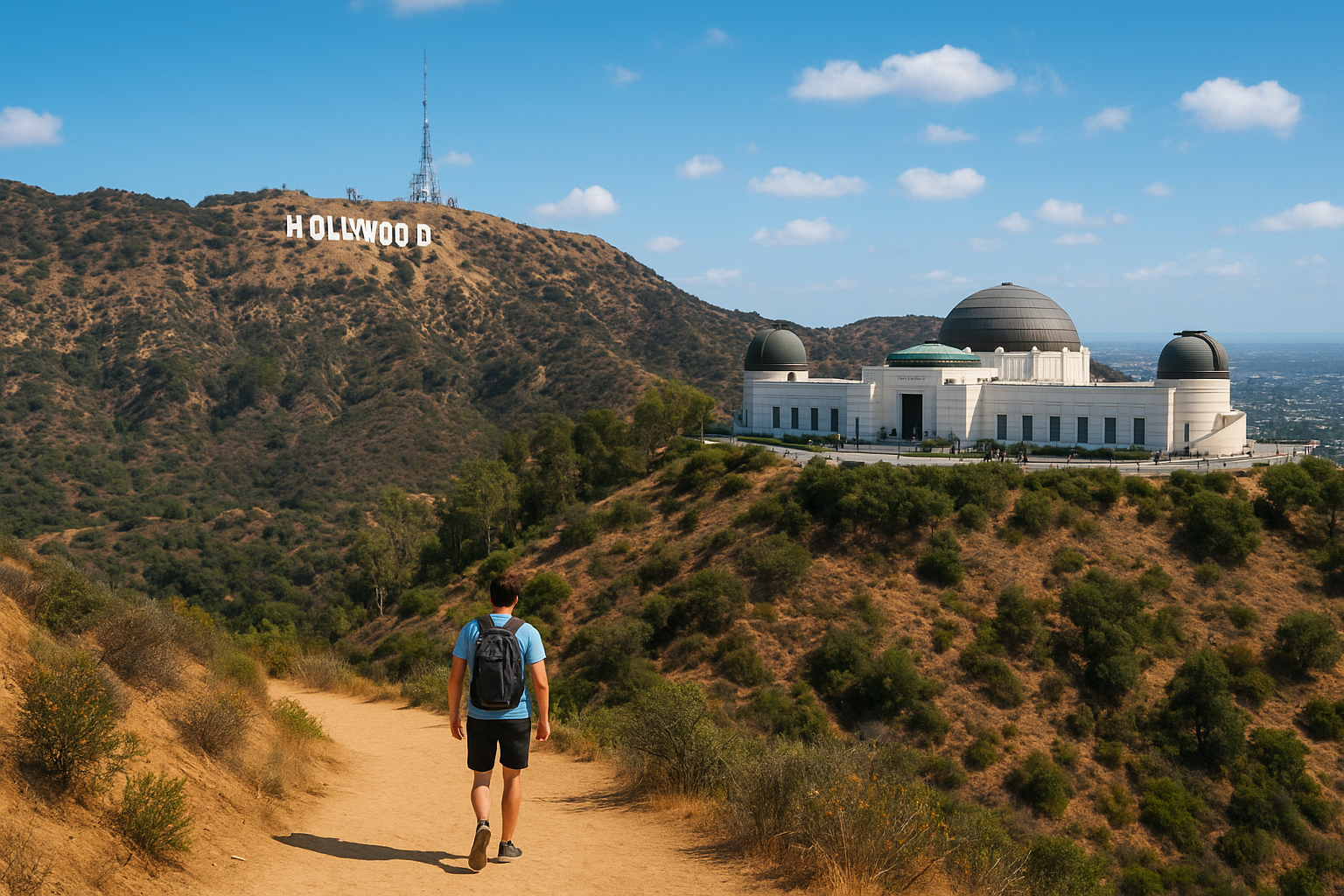
Griffith Park gives you the rare combination of a real hike and a postcard view, all within city limits. At over 4,300 acres, it’s one of the largest urban parks in the country, and the Griffith Observatory sitting near its peak has become the unofficial symbol of LA views.
What to expect
Most visitors tackle the trail up to the Hollywood Sign viewpoint, a moderate 3 to 6 mile round trip depending on which trailhead you pick, then continue to the observatory grounds for free telescope viewing and skyline views that stretch to the ocean on clear days. Inside, exhibits on space and astronomy are free, though the planetarium show carries a small ticket price. Sunset draws the biggest crowds, when the whole city starts glowing below you.
Why it’s worth it
Nowhere else lets you hike a real trail, see the Hollywood Sign up close, and catch a free planetarium-quality view of the galaxy in one afternoon.
Griffith Park is the only spot in LA where a hike, a landmark, and a skyline view all show up on the same trail.
Good to know before you go
A little timing planning goes a long way here:
- Parking fills by mid-morning on weekends, so arrive early or plan to walk uphill from a side street.
- Bring water and sun protection, since most trails offer little shade.
- Sunset visits require patience, as the observatory lot and nearby streets get congested fast.
6. See art and architecture at the Getty Center
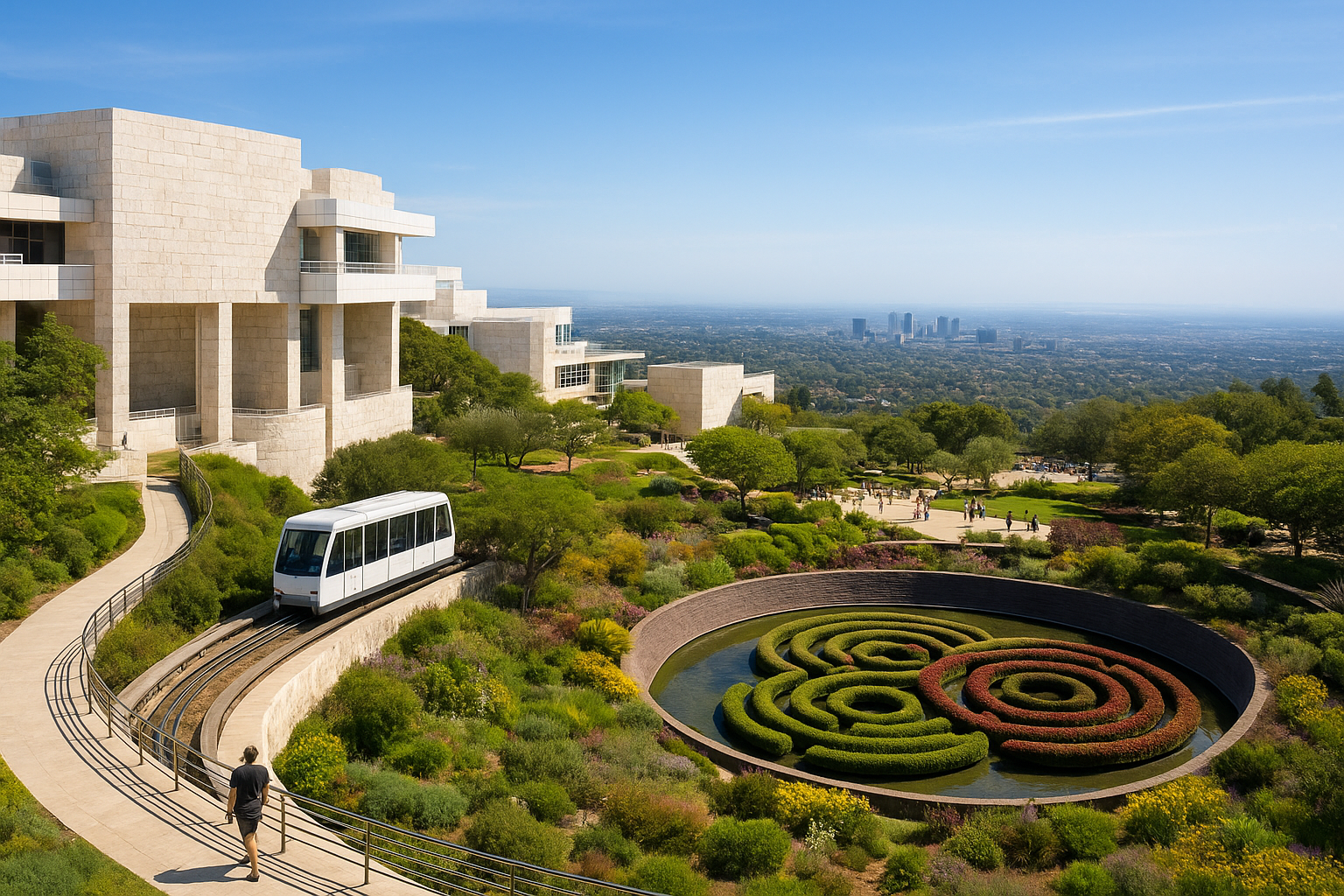
Perched above the 405 freeway, the Getty Center proves that a free museum can still feel like a splurge. Richard Meier’s white travertine buildings, the tram ride up the hill, and gardens overlooking the city make this one of the few things to do in los angeles area that combines art, architecture, and views in a single stop.
What to expect
Visitors ride a driverless tram from the parking garage up to the museum campus, which sits on a hilltop with panoramic views stretching from downtown to the ocean. Inside, the collection covers European paintings, photography, and decorative arts, including works by Van Gogh and Monet. Outside, Robert Irwin’s Central Garden changes with the seasons, and the plaza itself doubles as a lookout point worth the trip alone.
Why it’s worth it
Getty admission costs nothing, which is rare for a collection this significant. You’re getting a world-class museum, a designed landscape, and one of the better free views in the city, all without buying a ticket.
The Getty proves the best view in LA doesn’t always come with an admission fee.
Good to know before you go
A few details help you plan the visit:
- Parking costs $25 per car, the only fee involved unless you add a special exhibition.
- Reserve a timed entry online in advance, especially on weekends when slots fill.
- Budget three hours minimum to see the galleries and gardens without rushing.
- The Getty Villa in Malibu is a separate location, so don’t confuse the two when booking.
7. Stroll Rodeo Drive and Beverly Hills
Rodeo Drive gets treated like a museum for luxury shopping, and that’s basically the right way to see it. You don’t need a shopping budget to enjoy the three blocks that made Beverly Hills famous worldwide, since the storefronts, architecture, and people-watching are the real draw for most visitors.
What to expect
Walk the stretch between Wilshire and Santa Monica Boulevards, where flagship stores for Chanel, Gucci, and Louis Vuitton sit inside buildings designed to look as expensive as their contents. Two Rodeo Drive, a curved cobblestone lane tucked just off the main strip, feels like a European movie set and photographs better than the main drag. Beyond the shops, the surrounding residential streets hold some of the city’s most recognizable celebrity homes, though you’ll get more context on those with a guide than wandering solo.
Why it’s worth it
Few streets anywhere pack this much recognizable brand power into a ten-minute walk. It’s an easy add-on if you’re already exploring Beverly Hills, and the architecture alone justifies the stroll even if you never step inside a store.
You don’t need a shopping bag to get the full Rodeo Drive experience, just a camera and comfortable shoes.
Good to know before you go
A few notes before you park and walk:
- Parking garages near Beverly Drive offer the first two hours free, cheaper than street meters.
- Weekday mornings mean quieter sidewalks and better photos without crowds in the frame.
- Window shopping is normal here, so don’t feel pressured to buy anything to justify the walk.
- Pair it with lunch in the Golden Triangle, which has far more affordable options than the boutiques suggest.
8. Step back in time at the La Brea Tar Pits
Driving down Wilshire Boulevard, you wouldn’t expect an active fossil excavation site sitting between office buildings, but that’s exactly what the La Brea Tar Pits offer. Sticky asphalt has bubbled up here for tens of thousands of years, trapping mammoths, saber-toothed cats, and dire wolves that scientists still dig up today, making this one of the more unexpected Los Angeles attractions on this list.
What to expect
Start outside at the tar pools, where bubbles of methane still rise through black asphalt and life-size mammoth sculptures mark where a mastodon actually got stuck. The adjoining George C. Page Museum displays over a million fossils pulled from the pits, including full skeletons of dire wolves and the museum’s only saber-toothed cat skull found with a full skeleton attached. Weather permitting, you can watch paleontologists working an active excavation pit through viewing windows, real fieldwork happening in the middle of the city.
Why it’s worth it
No other city has an active Ice Age fossil site sitting in its museum district. It’s a rare chance to watch real science unfold outdoors rather than behind glass.
Few cities let you watch actual scientists dig up Ice Age fossils on a lunch break.
Good to know before you go
A few practical notes before visiting:
- Budget 90 minutes to cover the outdoor pits and the museum without rushing.
- Combine it with the Petersen Automotive Museum, just across the street.
- Parking is shared with LACMA next door, so arrive early on weekends.
9. Relax at Santa Monica State Beach and Pier
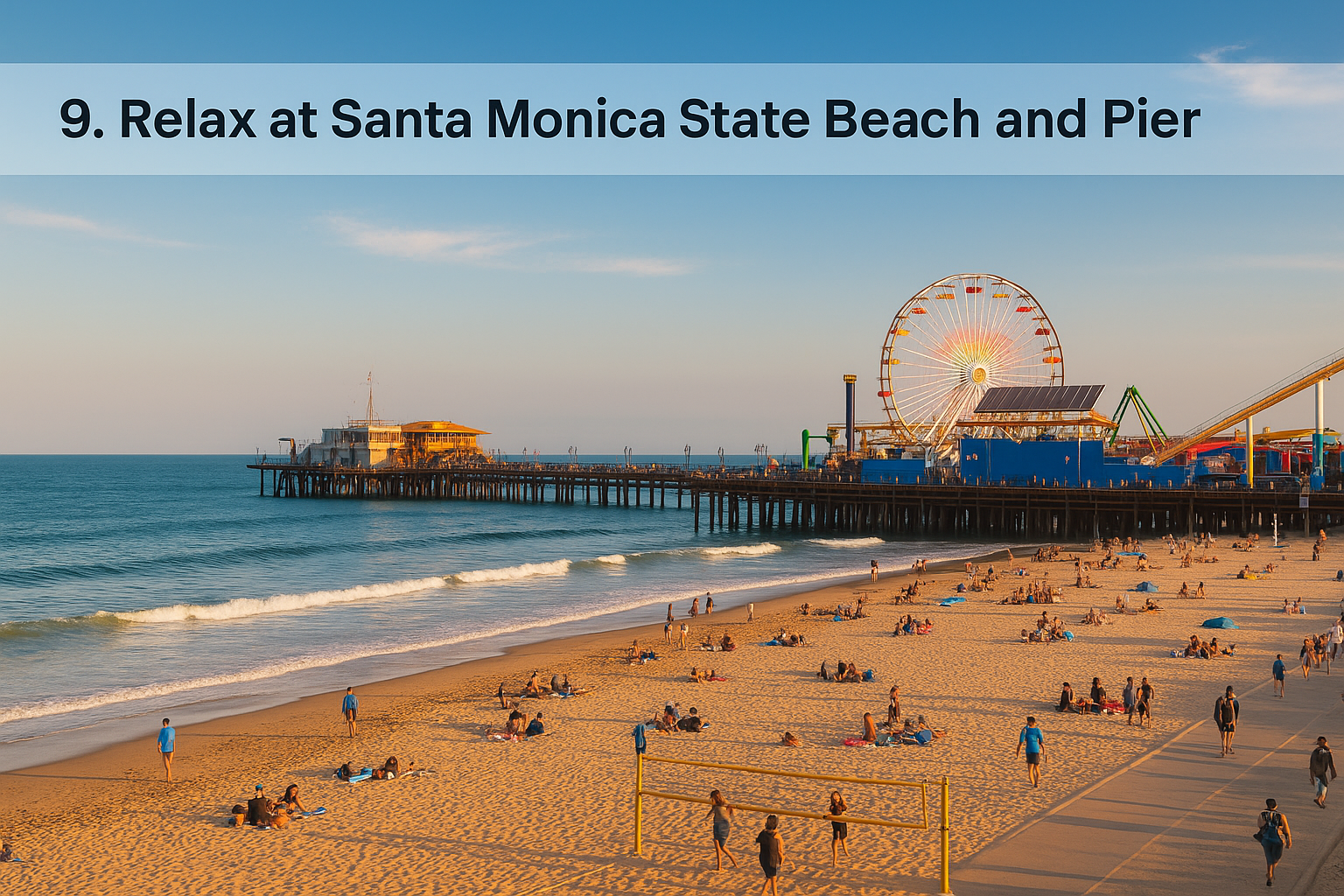
Santa Monica marks the western edge of the city, where the 10 Freeway literally ends at the Pacific. Its wide sandy beach and historic pier make it one of the most photographed Los Angeles attractions, and it’s an easy stop whether you’re spending an afternoon or building a whole beach day around it.
What to expect
The pier itself holds Pacific Park, a small amusement park with a solar-powered Ferris wheel that lights up after dark, plus an arcade and a handful of food stands selling churros and corn dogs. Below the pier, the beach stretches wide enough for volleyball courts, sunbathers, and a paved path that runs both directions along the coast. Third Street Promenade sits a few blocks inland, offering shops, restaurants, and street performers if you want a break from the sand.
Why it’s worth it
Santa Monica gives you the classic California beach postcard without needing a car once you’re there. You get the pier, the beach, and a walkable downtown all within a ten-minute stroll of each other.
Santa Monica packs the beach, the pier, and the boardwalk into one walkable stretch, no driving required once you park.
Good to know before you go
A few details help the visit run smoothly:
- Parking lots along the beach charge $10-25 depending on the day and season, cheaper than pier-adjacent structures.
- Sunset draws crowds, so grab a spot on the sand or pier by late afternoon if you want an unobstructed view.
- The Ferris wheel operates seasonally with limited hours on weekdays, so check ahead if that’s the main draw.
- Metro’s E Line runs straight to Santa Monica, a solid option to skip parking entirely.
10. Bike the Venice Beach Boardwalk
Just south of Santa Monica, Venice trades polish for personality. The Venice Beach Boardwalk is where LA’s weirder, more creative side shows up in full force, and renting a bike is the easiest way to cover its full length without your feet giving out.
What to expect
The boardwalk stretches roughly three miles from Santa Monica down to Marina del Rey, passing Muscle Beach’s outdoor gym, street vendors selling everything from henna tattoos to incense, and the skate park where locals pull off tricks for a crowd that gathers without being asked. Rental shops line the entrance near Windward Avenue, renting cruisers and beach bikes by the hour or the day. Further along, the canals of Venice offer a quieter detour if you want a break from the boardwalk’s energy.
Why it’s worth it
Nowhere else in the city packs this much street performance, art, and people-watching into one flat, bikeable path. It’s the rare LA spot that feels unscripted.
Venice Beach doesn’t perform for tourists, it just happens to be great theater anyway.
Good to know before you go
A few notes before you grab a bike:
- Bike rentals run $10-20 for a few hours, cheaper than most guided options.
- Weekends get packed, so weekday mornings offer the clearest path and best photos.
- Watch for pedestrians, since the path gets crowded fast near the skate park and Muscle Beach.
- Lock up carefully if you stop for food, since bike theft happens along busier stretches.
11. Spend a day on the Malibu coast
Malibu stretches along the coast northwest of Santa Monica, and it rewards anyone willing to drive further than the usual beach stops. This isn’t one beach but a string of them, each with its own personality, making it one of the better day trip options if you want ocean views without the Venice crowds.
What to expect
Pacific Coast Highway is the spine of the trip, connecting Zuma Beach‘s wide open sand to Point Dume’s bluffs, where a short trail climbs to a lookout over the whole coastline. El Matador Beach hides down a cliffside staircase and rewards the effort with dramatic rock formations that make it one of the most photographed spots in the area. If you want culture mixed in, the Getty Villa sits right off PCH and houses the same collection’s ancient Greek and Roman art in a recreated Roman country house.
Why it’s worth it
Malibu shows you a completely different California coastline than the boardwalks further south. Fewer crowds, dramatic cliffs, and a slower pace make it feel like leaving LA entirely without actually driving that far.
Malibu trades boardwalk energy for cliffs and quiet, proof that LA’s coastline isn’t just one beach repeated.
Good to know before you go
A few things make the drive smoother:
- Parking at Zuma and Point Dume costs $10-12, often cheaper than smaller unmarked lots.
- El Matador’s stairs are steep, so skip it if you’re traveling with limited mobility.
- Traffic on PCH backs up badly on summer weekends, so leave early or aim for a weekday.
12. Climb Silver Lake’s secret stairways
Silver Lake hides one of LA’s best-kept secrets in plain sight: a network of public staircases built in the 1920s and 30s when streetcars, not cars, connected the hillside neighborhoods. Locals still use these hidden staircases as shortcuts, and stringing several together makes for one of the best free workouts and neighborhood tours in the city.
What to expect
Most visitors start near the Music Box Steps, made famous by the Laurel and Hardy film of the same name, then link up nearby staircases like the Micheltorena Stairs for a loop past bungalows, drought-tolerant gardens, and the occasional mural. Routes run anywhere from a quick 30-minute climb to a two-hour neighborhood walk if you chain several staircases together with a map. Silver Lake Reservoir sits nearby too, offering a flat paved loop if your legs need a break from all the steps.
Why it’s worth it
This is Silver Lake at its most authentic, quiet residential streets rather than a packed attraction. You get exercise, architecture, and a genuine neighborhood feel that most tourist stops can’t offer.
The best views in Silver Lake come free with a set of stairs and a little sweat.
Good to know before you go
A few notes before lacing up:
- Download a stairway map beforehand, since these steps aren’t marked on standard navigation apps.
- Mornings stay cooler, ideal before LA’s afternoon heat sets in.
- Wear real shoes, as several staircases are steep, uneven, or lack handrails.
- Respect residential quiet, since these stairs run directly past people’s homes.
13. Take a day trip to Pasadena’s museums and gardens
Pasadena sits about 15 minutes northeast of downtown, close enough for a half-day trip but distinct enough to feel like a different city entirely. Tree-lined streets, Craftsman architecture, and a cluster of world-class museums make this one of the more rewarding day trip options if you want culture without fighting Westside traffic.
What to expect
The Norton Simon Museum anchors most visits, with a collection spanning Rembrandt to Picasso in a building small enough to see in two hours. A short drive away, the Huntington Library pairs rare manuscripts and a Gutenberg Bible with 120 acres of themed gardens, including a Japanese garden and a desert collection of cacti that photographs beautifully. Old Pasadena, the historic downtown strip, fills the gap between museum stops with restored 1920s buildings now holding restaurants and shops along Colorado Boulevard.
Why it’s worth it
Few day trips pack this much art and horticulture into one afternoon. You get serious museum collections and genuinely stunning gardens without the crowds that swarm bigger Westside attractions.
Pasadena gives you museum-grade art and garden-grade peace, minutes from downtown traffic.
Good to know before you go
A few notes before you head out:
- The Huntington requires timed tickets on weekends, so book ahead online.
- Budget a full day if you want both museums plus lunch in Old Pasadena.
- The Gold Line Metro connects downtown LA directly to Old Pasadena, skipping parking entirely.
- Spring visits catch the Huntington’s rose garden and camellias at their best.
14. Explore Long Beach and the Queen Mary
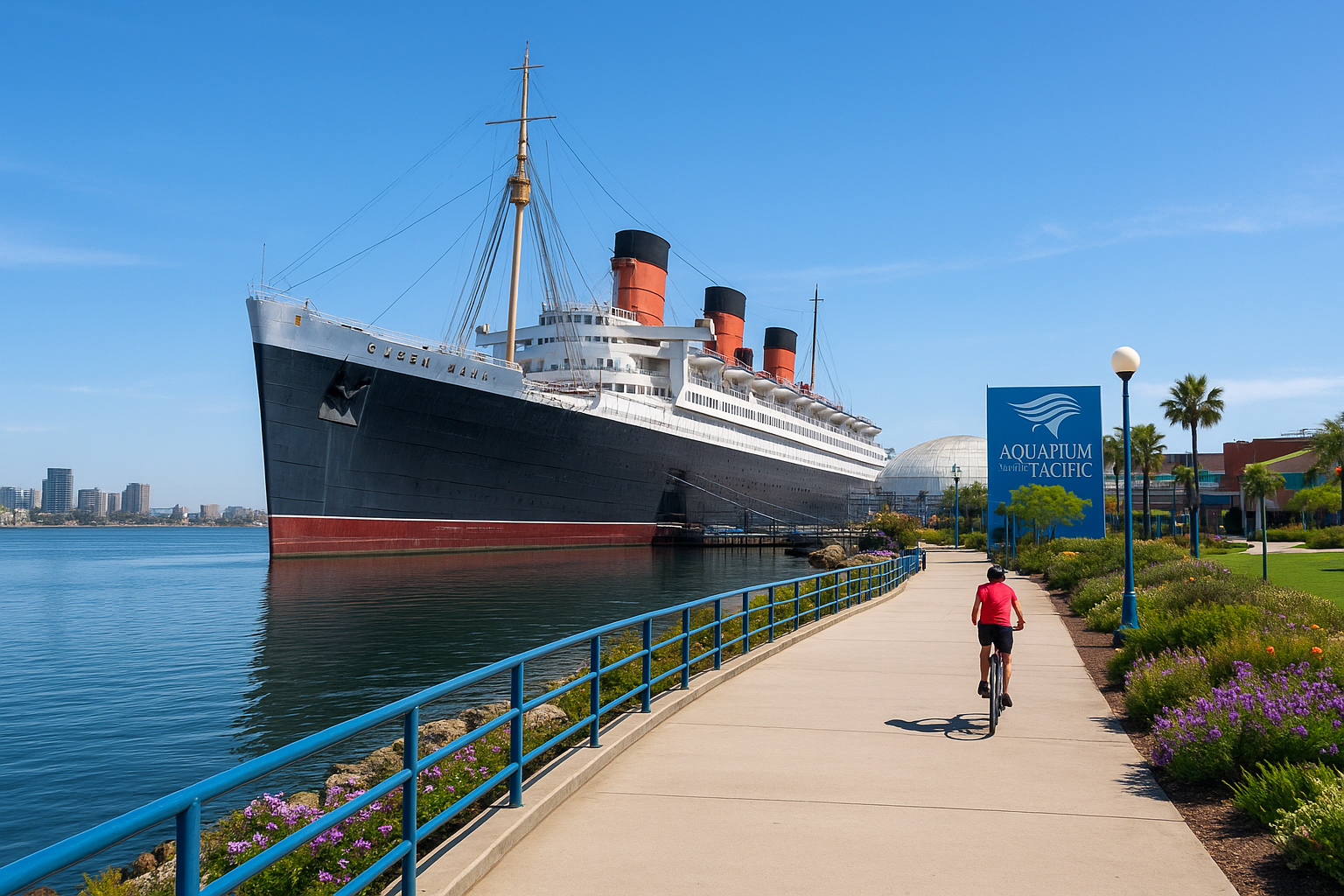
Long Beach sits about 25 miles south of downtown LA, and it rarely makes a first-timer’s list, which is a mistake given how much it packs into one waterfront. The retired ocean liner Queen Mary dominates the harbor here, permanently docked as a floating hotel and museum, and it anchors a stop that mixes maritime history with a genuinely walkable downtown.
What to expect
Tour the Queen Mary’s decks, engine room, and staterooms to see how transatlantic travel worked in the 1930s, when the ship carried royalty and movie stars across the ocean. A short walk away, the Aquarium of the Pacific houses thousands of marine species in exhibits organized by ocean region, a solid stop if you’re traveling with kids. Downtown Long Beach itself has a walkable waterfront promenade, Shoreline Village’s shops and restaurants, and rentable bikes if you want to cover more ground along the water.
Why it’s worth it
Few stops combine a genuine historic landmark with a modern aquarium and a walkable waterfront this well. It’s a full day of variety without needing a car once you’ve parked.
The Queen Mary gives you a floating slice of 1930s glamour that no photo of the ship from shore can capture.
Good to know before you go
A few notes before booking:
- Queen Mary tours range from self-guided walkthroughs to paid ghost tours after dark.
- Parking runs $10-20 near the waterfront, cheaper on weekdays.
- Combine tickets for the Queen Mary and Aquarium of the Pacific to save on individual admission.
15. Discover Orange County’s beach towns
South of Long Beach, the coastline shifts into Orange County, and three towns in particular reward the extra drive. Huntington Beach, Newport Beach, and Laguna Beach each have their own personality, and stringing them together makes for one of the best full-day day trip options on this list if you want more coastline without doubling back through LA traffic.
What to expect
Huntington Beach earns its "Surf City USA" nickname with a pier packed with surfers year-round and a wide, easy beach for beginners. Newport Beach adds Balboa Island’s tiny walkable streets and the classic Balboa Fun Zone ferris wheel, plus a harbor worth a slow drive along Pacific Coast Highway. Laguna Beach closes out the trip with cliffside coves, tide pools at low tide, and an art gallery scene that’s earned the town a reputation as Orange County’s creative capital.
Why it’s worth it
This stretch shows a version of Southern California beach culture that’s calmer and less crowded than Venice or Santa Monica. You get surf towns, harbor views, and artsy coves all in one drive, each town different enough to justify the stop.
Orange County proves the best beach towns near LA aren’t always inside city limits.
Good to know before you go
A few notes before you head south:
- Budget a full day if you want to hit all three towns without rushing.
- Parking meters run higher in Laguna during summer weekends, so arrive early.
- Tide pools at Laguna are best an hour before or after low tide, so check a tide chart first.
16. Escape to Santa Barbara or Catalina Island
When a half-day trip isn’t enough, two options push further out and reward a full day or overnight stay. Santa Barbara sits about 90 minutes up the coast, while Catalina Island sits offshore, reachable only by boat or helicopter, and each gives you a genuinely different pace than anything in the city.
What to expect
Santa Barbara offers Spanish colonial architecture downtown, a mission worth walking through, and State Street’s restaurants a few blocks from the water. Catalina requires a ferry from Long Beach or San Pedro, roughly an hour each way, dropping you in Avalon, a small harbor town with golf carts instead of cars, snorkeling spots, and a hillside casino building that never actually housed gambling.
Why it’s worth it
Both destinations solve the same problem: they get you fully out of the LA sprawl without a multi-day trip. Santa Barbara feels like a slower, more polished version of the coast, while Catalina feels like leaving the mainland entirely, right down to the golf carts replacing traffic.
Santa Barbara and Catalina both deliver the same thing, distance from LA without the drive to match.
Good to know before you go
A few practical notes before committing to either trip:
- Catalina ferries run $75-90 round trip per person, and booking ahead matters on summer weekends.
- Santa Barbara parking downtown is metered but manageable outside peak season.
- Both work better as overnights than rushed day trips, especially Catalina once you factor in ferry schedules.
- Traffic on the 101 toward Santa Barbara backs up on Friday afternoons, so leave early if you’re driving up.
Planning your time in LA
Sixteen stops is plenty for one trip, so don’t try to force all of them into a long weekend. Pick a home base near the Westside or Hollywood if you’re focused on the classics, or downtown if museums and day trips matter more to you. Group nearby stops together (Hollywood with Griffith Park, Santa Monica with Venice, Pasadena on its own half-day) and you’ll cut driving time dramatically compared to bouncing across the map.
If you’re short on time or just don’t want to manage logistics, that’s exactly the gap a guided tour fills. A local guide gets you through Hollywood and Beverly Hills efficiently, with the history included, instead of burning a day figuring out parking and traffic yourself. Ready to build a route that actually fits your trip? Book a private Los Angeles tour and let a local expert handle the rest.