Los Angeles covers over 500 square miles of coastline, canyons, and urban sprawl. For a first-time visitor, that sheer size creates a real problem: how do you narrow down the best things to see in Los Angeles when everything from Hollywood to the beach cities is pulling you in different directions? A poorly planned day can mean hours lost in traffic heading to something that wasn’t worth the drive.
At Another Side Tours, we’ve guided over a million tours through this city. That experience has given us a sharp sense of which spots genuinely deliver for visitors, and which ones are better skipped entirely. We’ve watched first-timers light up at certain landmarks and look disappointed at others, and those reactions have shaped this list.
Below, you’ll find 14 places in LA that are worth your limited vacation time, with honest notes on what to expect and how to make the most of each stop. Consider this your no-fluff planning guide to the city.
1. Another Side Tours guided LA sightseeing tour
Before getting into individual landmarks, it’s worth acknowledging the biggest challenge facing first-time visitors: Los Angeles has no obvious center. Without a plan and local knowledge, you can easily burn half a day stuck in traffic between two attractions that are theoretically close together. Starting your trip with a guided tour solves that problem immediately.
Why a guided tour helps in LA
A guided tour removes the logistics burden that defeats most first-timers. Your guide handles route planning and parking, so you spend your time actually seeing the city rather than circling a block in Hollywood. When you’re trying to cover the best things to see in Los Angeles in just a few days, that efficiency matters.
Local knowledge is the real product you’re buying when you book a guided tour in LA.
What you’ll see and how the route works
Most Another Side Tours itineraries connect iconic neighborhoods like Hollywood, Beverly Hills, and West Hollywood in one efficient outing. Your guide moves between stops with contextual stories about the landmarks, the neighborhoods, and the history behind them. The sequencing isn’t random either; the route is timed to avoid the worst congestion and hit each area when conditions actually work in your favor.
Which tour style to pick
Another Side Tours offers several formats depending on how you want to move through the city:
- Private vehicle tours for groups who want full control of pace and questions
- Segway or e-bike tours for a more active experience in walkable areas
- Limousine tours for a comfortable, full-day option covering multiple neighborhoods
Tour options and typical pricing range
Prices start around $75 per person for shorter Segway or walking experiences and reach up to roughly $1,996 for full private limousine packages spanning several hours across the city. Group discounts apply for parties of three or more, which brings the per-person cost down significantly for families or small groups traveling together.
Practical details for first-timers
Schedule your tour early in your trip rather than as a final-day afterthought. Starting with a guided overview helps you spot which neighborhoods deserve a return visit on your own time. Most tours also include pickup from your hotel, so you don’t need to sort out directions before you’ve even oriented yourself to the city.
2. Griffith Observatory and Griffith Park
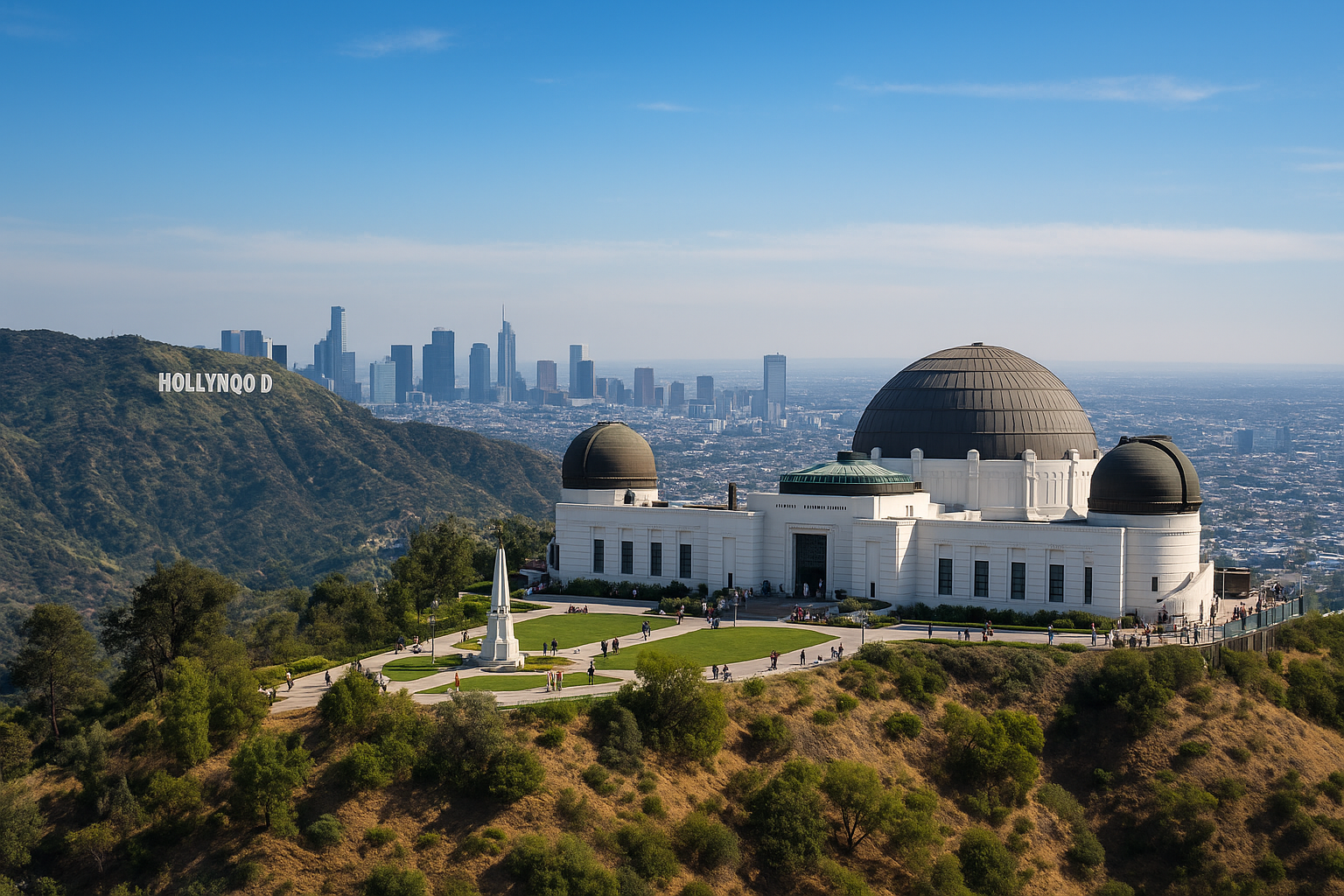
Griffith Observatory sits on the southern slope of Mount Hollywood inside Griffith Park, one of the largest urban parks in the United States. For first-timers, it delivers two things at once: a genuine science museum and one of the most dramatic vantage points anywhere in the city.
What makes it a must-see
The observatory is free to enter, which makes it an easy win on any itinerary. When you’re building your list of the best things to see in Los Angeles, Griffith consistently earns its place because the views alone justify the trip, even before you step inside.
The view of the Hollywood Sign and the LA skyline from the observatory’s front lawn is one of the most photographed angles in the entire city.
Best viewpoints and things to do
Walk the exterior terrace first to take in the skyline, then head inside for the planetarium shows, the Foucault pendulum, and the Tesla coil exhibit. The roof deck offers a clear look toward downtown LA and the Pacific on a clear day.
How long to budget
Plan for two to three hours if you want to catch a planetarium show. A quick visit to the terrace and a lap through the main hall takes about 45 minutes.
Parking, shuttles, and timing tips
Parking fills up fast on weekends and holidays. The DASH Observatory shuttle runs from the Los Feliz area and saves you the hunt for a spot. Arrive before 10 a.m. to beat the crowds.
Good add-ons nearby
Griffith Park trails like the trail to the Hollywood Sign start close by, and the Greek Theatre is just down the hill if you’re visiting during concert season.
3. Hollywood Walk of Fame and TCL Chinese Theatre
Hollywood Boulevard is one of the most visited stretches of road in Los Angeles, and for good reason. The Walk of Fame and TCL Chinese Theatre together give you a concentrated dose of Hollywood history without requiring a car or a schedule.
What makes it iconic
The Walk of Fame runs for about 1.3 miles along Hollywood Boulevard and Vine Street, with over 2,700 stars embedded in the sidewalk honoring figures from film, television, music, and radio. TCL Chinese Theatre, open since 1927, is famous for its celebrity handprints and footprints in the concrete forecourt, which draw visitors who want to match their hands to those of Hollywood legends.
Standing in the forecourt of TCL Chinese Theatre and lining up your hands with a star’s prints is one of those small moments that lands differently in person than it does in photos.
What to do beyond the sidewalks
Look up from the sidewalk stars occasionally. The El Capitan Theatre across the street screens Disney films in an ornate historic venue. The Dolby Theatre, just steps away, hosts the Academy Awards each year and offers guided tours when no events are scheduled.
How long to budget
Two hours covers a comfortable walk of the star-studded stretch, the forecourt, and a look inside a nearby theater. Add another hour if you plan to tour the Dolby Theatre.
Safety, crowds, and timing tips
Weekday mornings are noticeably calmer than weekend afternoons. Stay aware of your belongings in crowded areas, and be cautious with costumed characters who will ask for tips.
Good add-ons nearby
Hollywood and Highland, a large shopping and entertainment complex, sits right at the heart of the Walk of Fame. The Hollywood Museum, housed in the historic Max Factor Building one block away, is worth a stop for any fan of classic films and is one of the best things to see in Los Angeles for movie history buffs.
4. Universal Studios Hollywood
Universal Studios Hollywood combines a working film and TV studio with a full-scale theme park, which makes it genuinely different from most attractions on this list. It earns a spot among the best things to see in Los Angeles because it delivers entertainment and actual behind-the-scenes access in the same visit.
What makes it worth the ticket
The draw here is the combination of big-budget rides and real studio infrastructure. You’re walking through backlots where productions actively film, not just themed decorations. That layer of authenticity sets it apart from other parks.
The Studio Tour is the single feature that no other theme park in the country can replicate.
Rides, shows, and the studio tour game plan
Head to the Studio Tour tram ride first thing in the morning before lines build up. After that, prioritize The Wizarding World of Harry Potter and the Jurassic World ride, both of which draw the longest queues by midday. Check the app for show times and schedule those around your rides rather than improvising.
How long to budget
A full day of eight to nine hours lets you cover the major rides, catch one or two live shows, and complete the Studio Tour without rushing. Trying to do it in half a day means making hard cuts.
Ticket, timing, and crowd tips
Buy tickets online in advance to avoid same-day pricing. Weekday visits in the off-season are noticeably less crowded than summer weekends. Express passes reduce wait times substantially if your schedule is tight.
Good add-ons nearby
CityWalk, the outdoor shopping and dining strip at the park entrance, is worth a walk after your visit. The Hollywood Bowl is about ten minutes south and pairs well with an evening concert if you’re visiting during its summer season.
5. Santa Monica Pier and Santa Monica State Beach
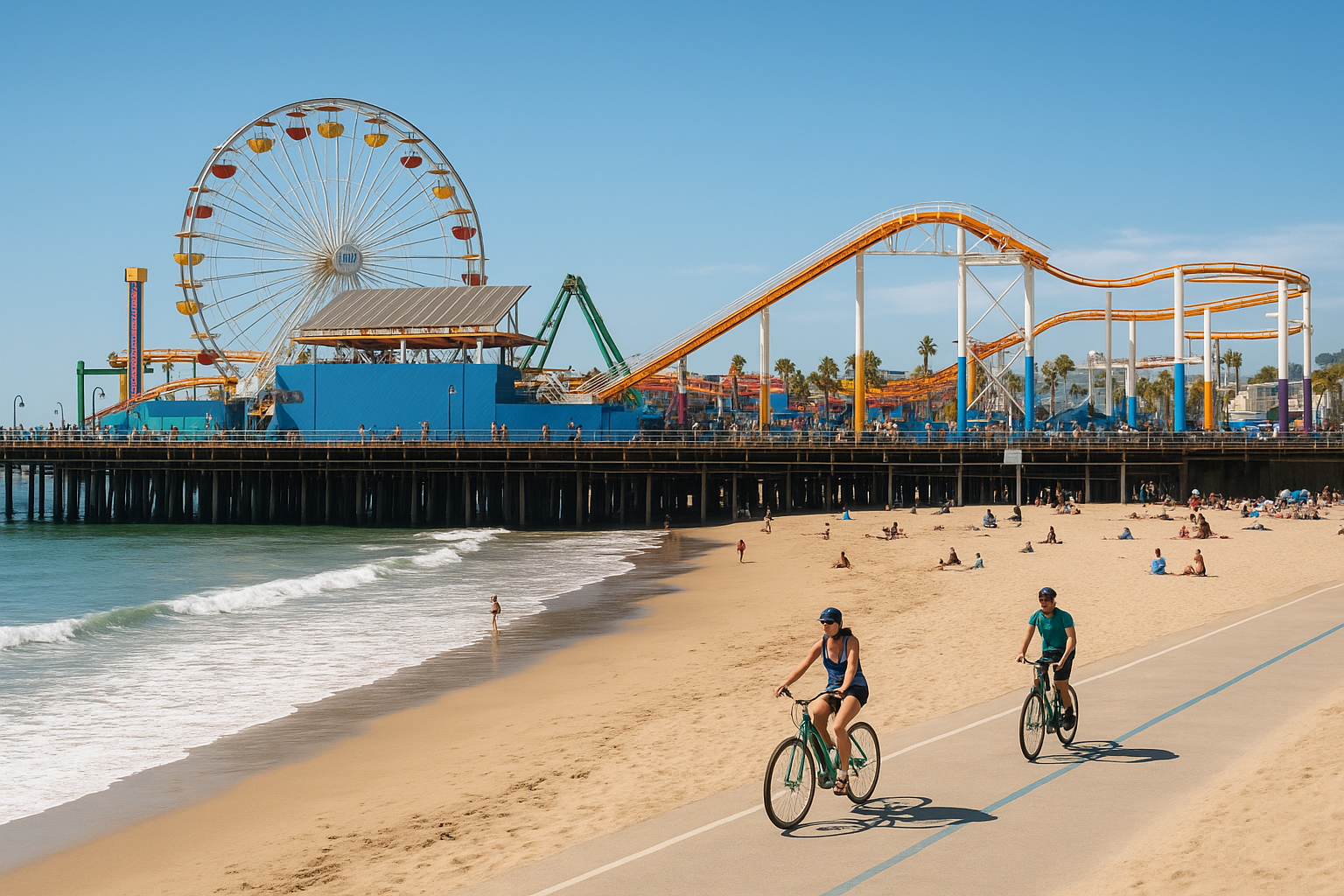
Santa Monica delivers the classic California beach experience that many first-time visitors picture before landing in LA. The pier sits at the western end of Route 66, which gives it a symbolic weight beyond its rides and seafood stalls, and the broad sandy beach stretching in both directions handles crowds without ever feeling completely overrun.
What makes it a first-timer classic
The pier is one of those rare LA landmarks that works on multiple levels: it’s photogenic, walkable, free to enter, and surrounded by enough activity to fill a few hours without any planning at all. When you’re mapping out the best things to see in Los Angeles, Santa Monica earns its spot because it’s immediately accessible and genuinely enjoyable.
Pacific Park, the small amusement park on the pier, has a Ferris wheel with views stretching from Malibu to the Palos Verdes Peninsula on a clear day.
Best things to do on the pier and nearby
Walk the pier, then head down to the beach bike path, which runs 22 miles along the coast. Rent a bike or rollerblade at one of the nearby rental shops and head toward Venice for a straightforward and scenic half-hour ride.
How long to budget
Two to three hours covers the pier, a beach walk, and lunch at one of the waterfront restaurants. Add an hour if you rent a bike.
Parking, transit, and bike path tips
Parking structures on 2nd and 4th Streets offer reasonable rates. The Metro E Line drops you at Colorado and 4th Street with no traffic hassle.
Good add-ons nearby
Third Street Promenade, a pedestrian shopping street three blocks east, makes an easy follow-up before heading back toward Hollywood or Beverly Hills.
6. Venice Beach and the Venice Canals
Venice Beach packs more personality per block than almost anywhere else in LA. The Boardwalk draws street performers, muralists, bodybuilders, and vendors into one concentrated stretch, while just a few blocks inland, the Venice Canals offer quiet waterways lined with footbridges and well-kept gardens. The contrast between the two makes Venice worth more than a quick pass-through.
What makes it unique
This neighborhood ranks among the best things to see in Los Angeles because it delivers two very different experiences within easy walking distance of each other. The Boardwalk energy and the canal stillness together show a side of LA that no other neighborhood can match.
Few places in the city shift from loud and commercial to calm and residential as quickly as Venice does.
What to see and where to walk
Start at the Boardwalk and work south toward Muscle Beach, then cut inland along Dell Avenue to reach the canals. The canal loop runs about a mile past arched footbridges and small boats. Key stops along the way include:
- Muscle Beach Outdoor Gym
- The Venice Canals footbridge loop
- The murals along Ocean Front Walk
How long to budget
Two to three hours covers both the Boardwalk and the canal loop at a relaxed pace. Add another hour if you plan to browse Abbot Kinney Boulevard, the retail and dining street one block east.
Safety, timing, and parking tips
Weekday mornings are noticeably calmer than weekend afternoons on the Boardwalk. Street parking fills fast, so use the lot on Windward Avenue near the beach. Keep your valuables secured and stay on the main path after dark.
Good add-ons nearby
Santa Monica Pier sits a short bike ride north along the beach path, making the two stops a natural pairing for a single half-day outing along the coast.
7. The Getty Center
The Getty Center sits on a hilltop above Bel Air, and the building itself earns your attention before you even walk inside. The architecture, the gardens, and the views of Los Angeles combine to make this one of the best things to see in Los Angeles, regardless of how much you care about art museums.
What makes it a can’t-miss museum
Admission to the Getty is completely free, which makes it an easy addition to any itinerary. The collection spans European paintings, decorative arts, and photography across several connected pavilions, and the quality is consistently high. Few museums anywhere offer this combination of world-class art and no admission cost.
The Getty’s hilltop position gives you one of the clearest panoramic views of the LA Basin, stretching from downtown to the Pacific on a clear day.
Best art, gardens, and views to prioritize
Start with the Central Garden designed by Robert Irwin, then work through the Impressionist and Post-Impressionist paintings in the North Pavilion. Van Gogh’s "Irises" is the single most-requested piece in the collection and worth finding early before tour groups arrive.
How long to budget
Budget two to three hours for a focused visit covering the main pavilions and the garden. Spending a full afternoon is easy if you slow down and use the audio guide.
Reservations, parking, and arrival tips
Parking reservations are required and cost $25 per car. Book your spot in advance at getty.edu before your visit day. The tram from the parking structure takes you up the hill in about five minutes.
Good add-ons nearby
The Getty Villa in Malibu covers Greek and Roman antiquities and makes a natural companion visit if you’re spending time on the west side of the city.
8. Beverly Hills and Rodeo Drive
Beverly Hills is one of those names that carries a global reputation, and the reality mostly holds up. Rodeo Drive and the surrounding streets deliver a concentrated stretch of luxury retail and grand architecture that makes it one of the best things to see in Los Angeles even if you never set foot inside a store.
What makes it iconic
The three-block stretch of Rodeo Drive between Santa Monica Boulevard and Wilshire Boulevard is the visual centerpiece. The storefronts are immaculate, the landscaping is deliberate, and the street itself has appeared in enough films that it registers immediately. Walking it costs nothing, and the Beverly Hills Civic Center a block east adds a Spanish Colonial building worth photographing.
Beverly Hills rewards walkers who slow down and actually look at the architecture rather than treating it as a backdrop.
What to do if you don’t want to shop
Head to Beverly Gardens Park, which runs along Santa Monica Boulevard for nearly two miles and includes the famous pink-lit Beverly Hills sign at the corner of Santa Monica and N. Beverly Drive. The Paley Center for Media on Wilshire offers free screenings from its archive of television and radio history if you want a sit-down break.
How long to budget
One to two hours covers Rodeo Drive on foot and a pass through the park. Add another hour if you plan to visit the Paley Center.
Getting there and parking tips
Public parking structures on Dayton Way and Brighton Way off Rodeo offer the first two hours free. The Metro D Line connects Beverly Hills to downtown without any parking hassle.
Good add-ons nearby
The Los Angeles County Museum of Art sits about ten minutes east on Wilshire and pairs naturally with a Beverly Hills visit as part of a broader Wilshire Corridor loop.
9. LACMA and the Academy Museum of Motion Pictures
These two museums sit within a short walk of each other on Wilshire Boulevard and together cover both fine art and cinematic history in a way that earns them a spot among the best things to see in Los Angeles. You get two world-class institutions in one manageable block.
Why these belong on a first trip
LACMA is the largest art museum on the West Coast, with a collection spanning ancient artifacts through contemporary installations. The Academy Museum of Motion Pictures, which opened in 2021, traces the full history of filmmaking from silent-era costumes to modern visual effects, making it the most significant film-focused museum in the country.
The combination of these two museums gives you a cultural depth that few other city blocks in Los Angeles can match.
What to prioritize if you only have a few hours
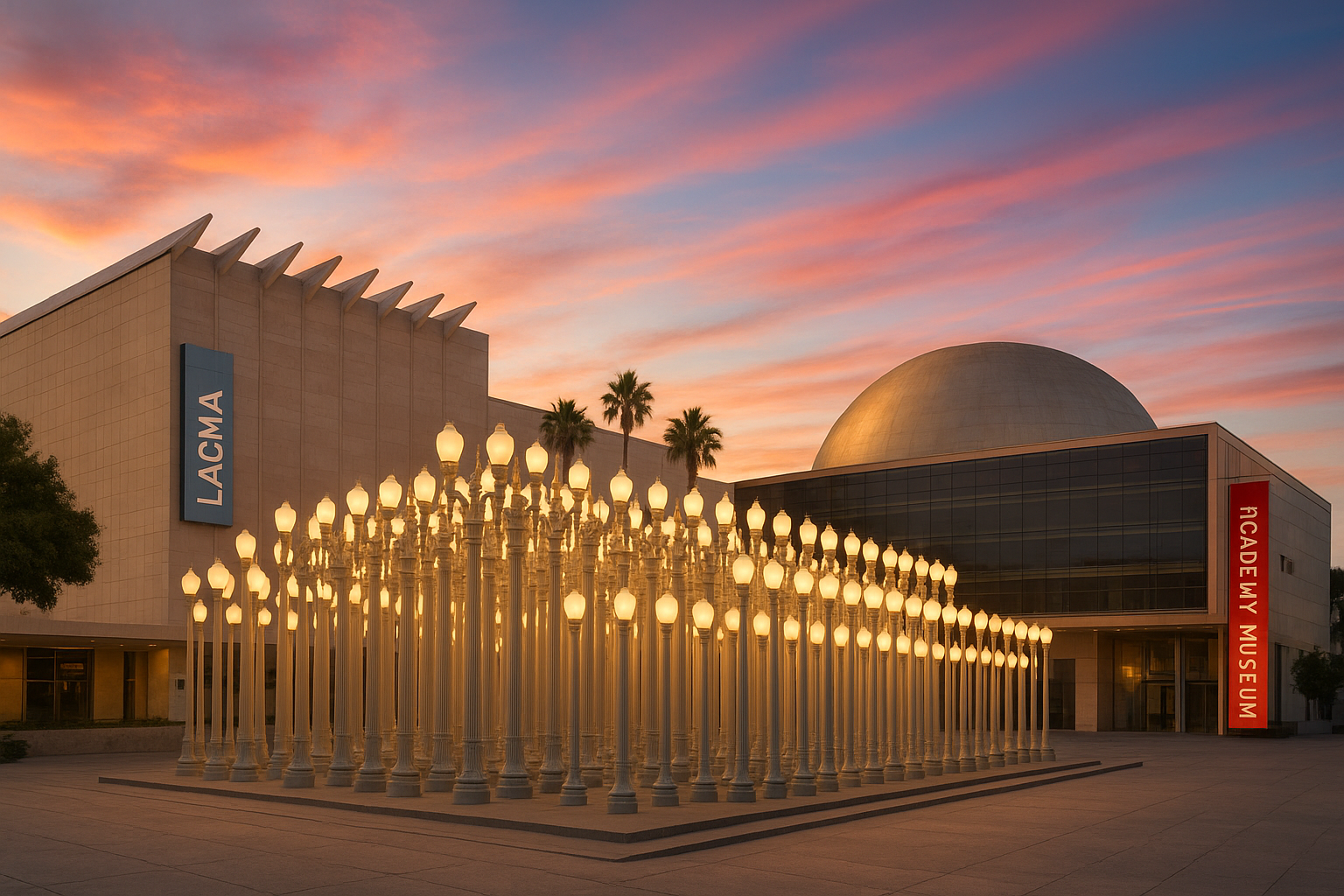
At LACMA, head straight for the Urban Light installation of 202 restored antique street lamps at the entrance, then move inside toward the Broad Contemporary Art Museum wing. At the Academy Museum, the Spielberg Family Gallery on the ground floor provides a strong overview before you commit to other floors.
How long to budget
Budget two hours per museum if you want to cover the main highlights. Visiting both in one day is manageable, but plan for a four to five hour block with a break in between.
Tickets, timing, and photo tips
LACMA tickets start at $25 for adults, and the Academy Museum charges $30. Book both online in advance, especially on weekends. The Urban Light installation is best photographed in the early evening when the lamps glow against the fading sky.
Good add-ons nearby
The La Brea Tar Pits sit directly beside LACMA and make a natural next stop on the same block without any driving required.
10. La Brea Tar Pits and museum
The La Brea Tar Pits occupy a stretch of Hancock Park in the middle of Wilshire Boulevard, making them one of the most accessible natural wonders in the city. Active asphalt seeps still bubble up from the ground today, exactly as they have for tens of thousands of years, which puts this firmly among the best things to see in Los Angeles if you want something genuinely unlike anything else on your itinerary.
What makes it surprisingly memorable
Most visitors arrive expecting a minor curiosity and leave more engaged than they expected. The Page Museum displays thousands of Ice Age fossils recovered directly from the pits, including dire wolves, saber-toothed cats, and mammoths trapped in the asphalt during the Pleistocene era.
The bones on display weren’t shipped in from distant digs but pulled from the exact ground beneath your feet, which gives the whole experience an immediacy that most natural history museums can’t match.
What to see in the park and museum
Walk the outdoor tar pit area first to watch the seeps up close, then move inside. The Fishbowl Lab lets you observe paleontologists actively cleaning and cataloging fossils through a glass wall, which makes the science feel live rather than archived.
How long to budget
One to two hours covers the outdoor grounds and the main museum galleries at a comfortable pace. Budget closer to two hours if you visit with children who want time at the activity stations.
Best timing and family tips
Weekday mornings keep crowds manageable and give kids more space at the hands-on fossil stations inside. Admission is $20 for adults and free for children under five.
Good add-ons nearby
LACMA sits directly next door, and the Academy Museum is a short walk east along Wilshire, making all three stops a natural single-day loop.
11. Downtown LA highlights
Downtown LA often gets skipped by first-timers focused on Hollywood and the coast, but it belongs on your itinerary. The neighborhood packs art, architecture, and food into a walkable grid that delivers some of the best things to see in Los Angeles without requiring a car between stops.
Why downtown belongs in your plan
Downtown gives you a side of LA that contrasts sharply with the beach cities and entertainment districts. The high concentration of museums and historic buildings in a compact area makes it unusually efficient for sightseeing, which is rare in a city built around driving.
Grand Central Market alone is worth the trip downtown, combining a century-old food hall with vendors representing cuisines from across Latin America, Asia, and beyond.
The must-see stops to hit in one loop
A single Bunker Hill loop connects several strong stops in quick succession:
- Grand Central Market on Broadway for food and atmosphere
- Angels Flight Railway, the short funicular climbing to Bunker Hill
- Walt Disney Concert Hall, Frank Gehry’s stainless steel landmark just north
How long to budget
Two to three hours covers the core stops at a comfortable pace. Extending to a full half-day opens up time for the Bradbury Building and Little Tokyo just east of Broadway.
Getting around, parking, and safety tips
Metro rail lines converge downtown, making it the easiest part of LA to reach without a car. If you drive, parking structures on 4th and Hill Streets offer flat-rate weekend pricing. Stick to well-lit streets after dark.
Good add-ons nearby
Little Tokyo, two blocks east, offers Japanese restaurants, shops, and the Japanese American National Museum, worth an hour of your time before heading back toward Hollywood.
12. The Broad museum
The Broad sits in the heart of downtown LA’s Bunker Hill, directly across Grand Avenue from Walt Disney Concert Hall. Its porous concrete-and-glass exterior is distinctive enough to spot from a distance, and the collection inside makes it one of the best things to see in Los Angeles for anyone with even a passing interest in contemporary art.
What makes it a top modern-art stop
This museum holds over 2,000 works from the collection of philanthropists Eli and Edythe Broad, with a focus on postwar and contemporary pieces from artists like Jeff Koons, Cindy Sherman, Jean-Michel Basquiat, and Roy Lichtenstein. Few private collections of this scope are publicly accessible without an admission charge.
The sheer density of recognizable work in one building makes The Broad one of the most rewarding single-floor museum experiences in the city.
What to see inside and around the building
Reserve time for Jeff Koons’s "Tulips" and the Infinity Mirrored Room by Yayoi Kusama, which requires a separate timed reservation booked well ahead. Outside, the Broad’s vaulted entrance and plaza face Walt Disney Concert Hall directly, creating one of the strongest architectural pairings in downtown.
How long to budget
One to two hours covers the main gallery floor at a comfortable pace. Securing a Kusama Infinity Room ticket adds roughly 30 minutes to your visit, so factor that in when planning the rest of your day.
Tickets, lines, and timing tips
General admission is free, but tickets are timed and require advance reservations online. Weekday morning slots fill up more slowly than weekend slots, so book early if your schedule allows any flexibility.
Good add-ons nearby
Walt Disney Concert Hall sits directly across the street and rewards a slow walk around its stainless steel exterior regardless of whether you plan to attend a performance inside.
13. Hollywood Sign viewpoints and hike options
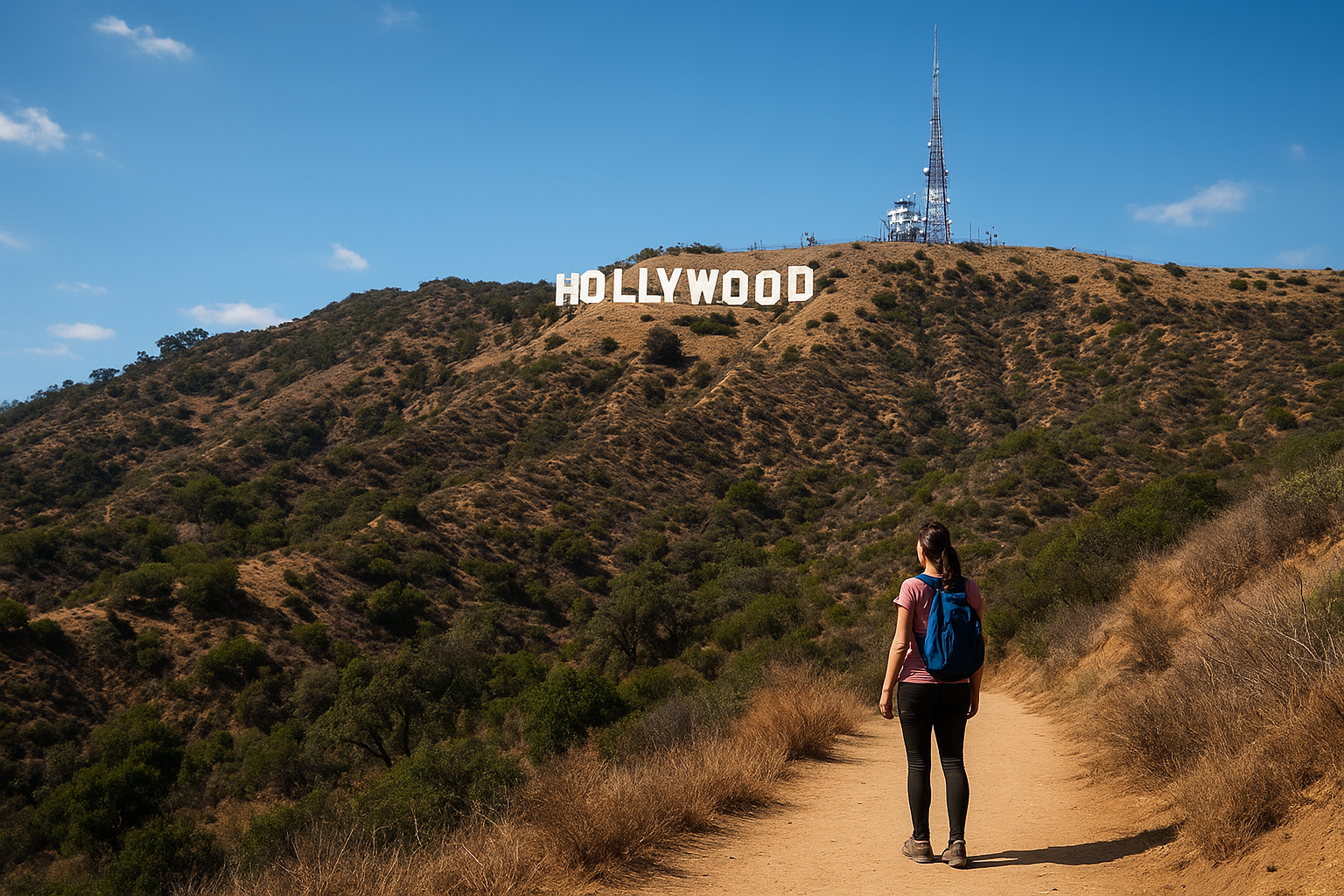
The Hollywood Sign ranks among the most recognized landmarks in the world, and seeing it in person belongs on any list of the best things to see in Los Angeles. You have multiple options ranging from a quick parking lot stop to a multi-mile trail, so your energy level and available time both factor into which approach makes the most sense.
The best ways to see the sign
You don’t need to hike to get a strong view. Lake Hollywood Park on Canyon Lake Drive puts you almost directly below the letters and requires only a ten-minute walk from the parking area. The Griffith Observatory lawn also delivers a clear sightline that includes the full hillside, which works well if you’re combining both stops in one morning.
Lake Hollywood Park gives you one of the closest and most direct angles on the sign without a trail permit or significant elevation gain.
What to expect on popular hike routes
The Brush Canyon Trail from the Bronson Canyon entrance is the most straightforward hiking route to the sign’s base, covering roughly 4.5 miles round trip with moderate but consistent elevation gain. The trail is well-marked and maintained, though it stays largely exposed with limited shade throughout the climb.
How long to budget
Two hours covers the Lake Hollywood viewpoint comfortably with time for photos. The Brush Canyon Trail requires three to four hours if you want to reach the gate directly behind the sign.
Heat, water, and safety tips
Carry at least two liters of water per person and start before 9 a.m. in summer to avoid peak heat. Wear closed-toe shoes and sunscreen, as the trail surface is rocky and uneven throughout the upper section.
Good add-ons nearby
Griffith Observatory sits a short drive from the Lake Hollywood viewpoint, making both stops a natural pairing for a single morning in the hills above Hollywood.
14. Malibu highlights for a half-day or day trip
Malibu stretches 27 miles along the Pacific Coast Highway northwest of Santa Monica, and it earns its place among the best things to see in Los Angeles because it trades urban density for open coastline and dramatic cliff scenery. A half-day trip from central LA is enough to feel the shift in pace.
What makes Malibu worth the drive
The combination of surf beaches, seafood, and coastal hiking in one continuous stretch of highway sets Malibu apart from the busier beach cities to the south. The Santa Monica Mountains run right to the water’s edge in several spots, creating a landscape that looks nothing like the rest of the LA coastline.
Zuma Beach, about 30 minutes north of Santa Monica on PCH, consistently ranks as one of the cleanest and least crowded public beaches in Los Angeles County.
Beaches and the Malibu Pier essentials
Malibu Pier is the obvious anchor point for a first visit. The pier stretches over the surf at the mouth of Malibu Lagoon, and the Adamson House and Malibu Lagoon Museum just beside it traces the history of the entire Malibu coastline. Surfrider Beach directly below the pier is one of the most recognized surf breaks in California.
How long to budget
A half-day of three to four hours covers the pier, a beach walk, and lunch on PCH. Extending to a full day allows time for Zuma Beach and Point Dume State Preserve further north.
Driving and parking tips on PCH
PCH can slow significantly on summer weekends, so plan your arrival before 10 a.m. or after 3 p.m. Most beach access points charge $10 to $15 for day parking in state lots.
Good add-ons nearby
The Getty Villa in Pacific Palisades sits on the drive back toward Santa Monica and combines naturally with a Malibu trip if you reserved parking in advance.
Quick recap and next steps
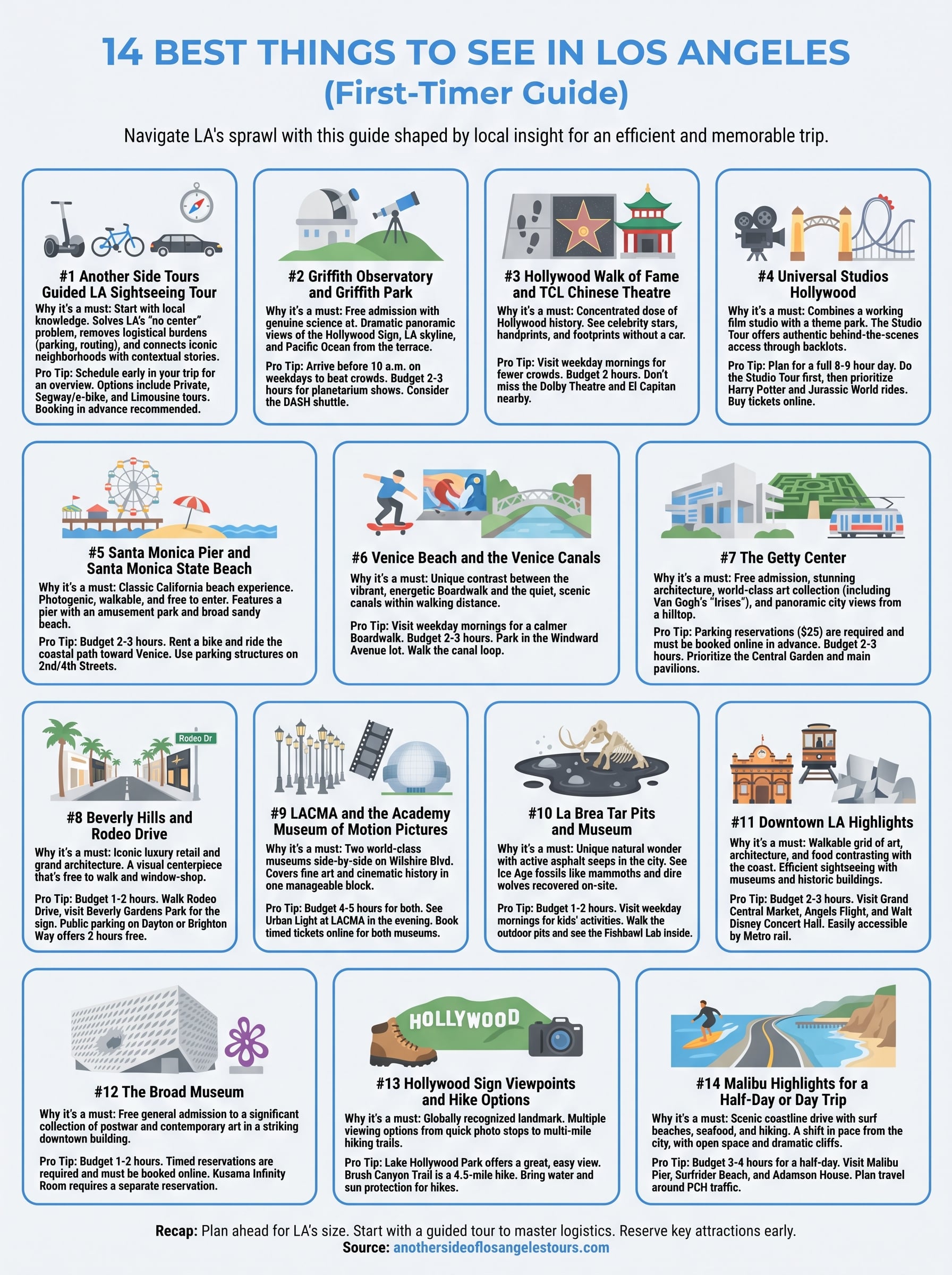
This list covers the 14 best things to see in Los Angeles that consistently deliver for first-time visitors. From the Hollywood Sign to Malibu’s coastline, each stop offers something distinct, and the city rewards visitors who plan ahead rather than improvising from a hotel lobby map.
Your biggest time-saver is starting with a guided tour that handles routing, parking, and local context from day one. That foundation makes every subsequent solo outing easier because you already know how the neighborhoods connect. Rather than piecing together an itinerary through trial and error, let an expert set the framework for you.
Booking a tour early in your trip means you spend less time figuring out logistics and more time actually experiencing the city. Browse the available options and reserve your spot through Another Side of Los Angeles Tours before your arrival date fills up the schedule.