Los Angeles is not a one-highway city, and figuring out how to get around Los Angeles as a tourist trips up even seasoned travelers. The freeways are famous for a reason, distances between neighborhoods stretch for miles, and public transit only covers part of the map. If you land at LAX planning to wing it, you’ll burn hours you could spend at the beach or on the Walk of Fame.
The good news: you don’t need to rent a car to see the city right. Between rideshare apps, the Metro rail system, bike shares, and guided tour transportation that handles the driving for you, there are real options depending on your budget, group size, and how many stops you want to hit in a day.
We’ve spent years shuttling visitors through Hollywood, Beverly Hills, and Santa Monica, so we know which methods actually save time and which ones sound convenient but leave you stuck in traffic. This list breaks down the seven best ways to move around LA, with honest notes on cost, speed, and when a private driver or small group tour beats doing it yourself.
1. Guided tours with a local expert
How it works
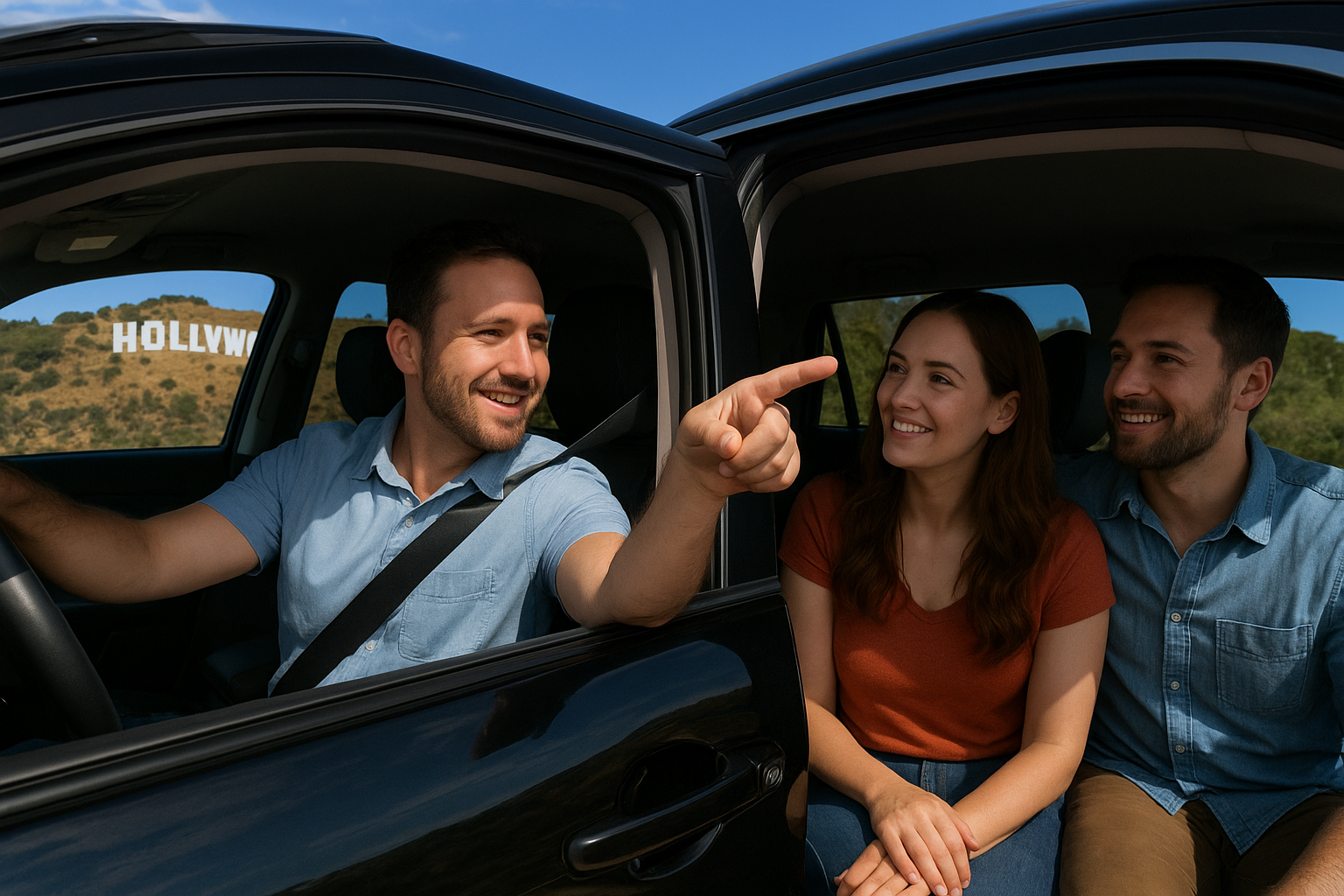
A guided tour puts a professional driver-guide behind the wheel while you sit back and actually see the city instead of squinting at a map app. Another Side Of Los Angeles Tours runs private vehicles, small group vans, e-bikes, Segways, and even limousine service, so the transportation method flexes to match the experience you want. You get picked up from your hotel or Airbnb, the guide handles every lane change and parking headache across Hollywood, Beverly Hills, and the greater LA area, and you spend your time listening to stories about the landmarks instead of hunting for freeway exits.
Who it’s best for
This option suits first-time visitors who don’t know LA’s layout, families who don’t want to coordinate multiple rideshares, and anyone who values context over convenience alone. It also works well for travelers with limited time, like a two-day layover before a cruise, since a guide can sequence stops efficiently instead of backtracking across town. Corporate groups and team-building outings benefit too, since custom itineraries can be built around a schedule rather than a fixed transit route.
A guide who knows the shortcuts and the stories turns a transportation problem into the best part of your trip.
Typical cost
Pricing depends heavily on tour type, group size, and duration. Here’s a rough breakdown based on common formats:
| Tour Type | Duration | Approximate Price |
|---|---|---|
| Small group walking or photo tour | 90 minutes to 2 hours | $75-$150 per person |
| Private vehicle tour | 3-4 hours | $400-$900 total |
| E-bike or Segway tour | 2-3 hours | $100-$180 per person |
| Limousine or luxury private tour | 4-7 hours | $900-$1,996 total |
Groups of three or more typically unlock discounted per-person rates, which makes guided tours more competitive with a rental car once you split the cost across the group.
Tips for tourists
Book your tour a few days ahead during peak season, since popular time slots fill fast around Hollywood and Beverly Hills. Ask about pickup and drop-off inclusion before you book, since not every tour operator covers hotel transportation. Confirm whether the tour is private or semi-private if you’re traveling with a mixed group, since sharing a van with strangers changes the pacing. Finally, mention any must-see landmarks when you book, most local guides will adjust the route to fit your priorities rather than sticking to a rigid script.
2. Renting a car
How it works
Renting a car gives you the freedom to set your own schedule and drive straight to any neighborhood without waiting on a pickup window. You grab the keys at LAX, Burbank, or a downtown location, then navigate the freeway system yourself using Google Maps or Waze to dodge the worst congestion. Rental car flexibility sounds great on paper, but Los Angeles freeways like the 405 and the 101 turn into parking lots during rush hour, and parking once you arrive at Hollywood or Santa Monica often costs more than the ride itself.
Who it’s best for
This option suits travelers who plan to venture outside the city core, maybe a day trip to Malibu or Joshua Tree, where transit and rideshare coverage thins out fast. It also works for road-trippers extending their visit into Orange County or up the coast, since a car removes the mileage limits of app-based rides. If your itinerary stays within Hollywood, Beverly Hills, and Santa Monica, though, a car often becomes a liability rather than a convenience.
A rental car buys you freedom on the freeway and a headache the moment you look for parking.
Typical cost
Expect $40-$90 per day for a standard rental, plus insurance, gas, and parking fees that add up fast in tourist zones. Hotel valet parking in Hollywood or Beverly Hills often runs $30-$50 per night on top of the rental rate.
Tips for tourists
Book well ahead during summer and holiday weeks, since rates spike and inventory disappears. Choose a hotel with free self-parking if you’re renting a car, and check the California DMV site for any state-specific driving rules before you hit the road.
3. Rideshare apps and taxis
How it works
Uber and Lyft dominate LA’s streets, and pulling up either app gets you a car in minutes from almost anywhere in Hollywood, Beverly Hills, or Santa Monica. You skip the parking search entirely, since the driver drops you at the curb and picks you up the same way. Traditional taxis still exist and wait at hotels and major attractions, but rideshare apps win on price transparency since you see the fare before you commit, unlike a metered cab that racks up charges in traffic.
Who it’s best for
Solo travelers and couples hopping between two or three spots in one day get the most value here, since you pay per ride instead of committing to a full day of driving. Visitors without a US driver’s license or anyone uncomfortable navigating LA freeways also lean on rideshare heavily, since the app handles the routing entirely.
Rideshare apps trade freeway stress for a fare that climbs fast once traffic sets in.
Typical cost
A short ride within Hollywood might run $10-$15, but crossing town from Santa Monica to Downtown LA during rush hour can hit $40-$60 once surge pricing kicks in. Airport trips add flat fees on top of the base fare.
Tips for tourists
Check surge pricing before you request a ride, since waiting 15 minutes often drops the price significantly. Set your pickup point at a clearly marked location, since some hotels and attractions restrict where cars can stop. Budget extra time during evening rush hour, since fares and wait times both spike between 4 and 7 p.m.
4. LA Metro rail system
How it works
The LA Metro rail network covers more ground than most visitors expect, with lines like the E Line running from Santa Monica through Downtown LA and the B Line connecting Hollywood to Union Station. Tap cards at every station let you load fare with a phone or a physical TAP card, and trains run roughly every 8 to 20 minutes depending on the line and time of day. Figuring out how to get around Los Angeles as a tourist without a car often starts here, since rail avoids surface traffic entirely and drops you within walking distance of major attractions like Universal Studios and the Arts District.
Who it’s best for
Budget travelers sticking close to rail corridors get the most out of this option, especially if your hotel sits near a station in Hollywood, Downtown, or Santa Monica. Groups willing to walk a few blocks from the nearest stop also do well here, since rail rarely drops you at the front door.
Rail beats traffic every time, but only if your itinerary actually follows the tracks.
Typical cost
A single ride costs $1.75, and a day pass caps fares at $5 no matter how many trips you take. Fare capping applies automatically when you tap with the same card.
Tips for tourists
Download the TAP app before your trip to skip the ticket machine line. Avoid late-night travel on less busy lines, and always check the last train time for your route before you commit to an evening plan.
5. Metro buses and DASH shuttles
How it works
Buses fill in the gaps that the rail lines skip, covering surface streets all across Hollywood, Beverly Hills, and Downtown LA. DASH shuttles run tighter neighborhood loops, like the Hollywood DASH that connects the Walk of Fame to the Hollywood Bowl, and they use the same TAP card system as the rail lines. Metro’s bus network stretches far beyond what the rail map shows, so checking a route planner before you head out saves you from guessing at a stop.
Who it’s best for
This option suits travelers staying within a single neighborhood who want short, cheap hops without waiting on rideshare surge pricing. Budget-focused visitors who already plan around the rail system often add buses to reach spots the trains don’t touch, like specific stretches of Melrose or the Beverly Hills shopping district.
Buses cover the streets rail can’t reach, but only patient travelers get the full benefit.
Typical cost
Standard Metro bus fare matches rail at $1.75 per ride, and the $5 day pass cap applies across both systems. DASH shuttles run even cheaper, often $0.50 to $1 per ride depending on the route, making them one of the lowest-cost ways to move around a busy tourist zone.
Tips for tourists
Check the LA Metro trip planner before you leave your hotel, since bus schedules shift more than rail schedules do. Give yourself extra buffer time, since surface traffic slows buses down during rush hour just like it does rideshare cars. Keep your TAP card loaded so you can switch between bus and rail without stopping to reload fare mid-trip.
6. Bikes and e-scooters
How it works
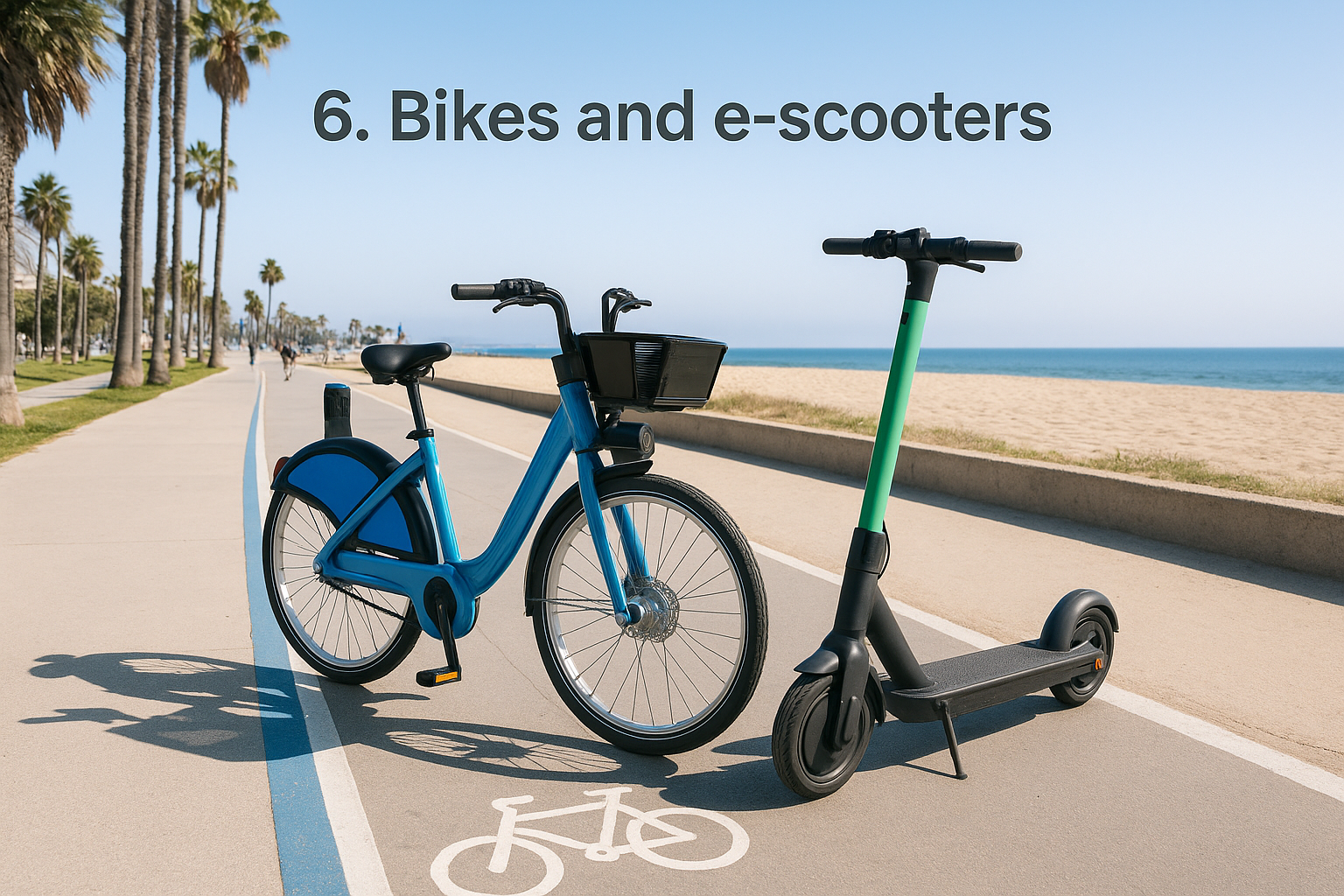
Dock-based bike shares and dropped e-scooters cluster along Santa Monica, Venice, and parts of Downtown LA, and you unlock them straight from an app like Metro Bike Share. Most rides run on flat rental apps that charge by the minute or offer day passes, so you grab a bike at one dock and leave it at another without circling back to your starting point. Dedicated bike paths along the Marvin Braude Bike Trail let you skip street traffic entirely, which matters in a city where cars rarely yield to two wheels.
Who it’s best for
Active travelers who want fresh air and ocean views get the most out of this option, especially anyone splitting a day between Santa Monica Pier and Venice Beach. Solo riders comfortable navigating bike lanes on their own also do well here, since e-scooters demand more attention than a guided ride does.
A beach bike path solves the how to get around Los Angeles as a tourist question better than any app once you’re near the water.
Typical cost
Expect $1 to unlock a scooter plus $0.30-$0.40 per minute, while Metro Bike Share day passes run around $5 for unlimited 30-minute rides.
Tips for tourists
Check battery level before you unlock anything, since dead scooters strand you blocks from your hotel. Stick to marked bike lanes near the beach, and avoid scooters after dark since street lighting thins out fast away from the boardwalk.
7. Walking in walkable neighborhoods
How it works
Los Angeles gets a bad reputation for sprawl, but a handful of neighborhoods reward you for leaving the car keys behind entirely. Third Street Promenade in Santa Monica, the Venice Beach boardwalk, and stretches of Hollywood Boulevard near the Walk of Fame all pack shops, restaurants, and landmarks close enough together that walking beats waiting for any app to summon a ride. You step out of your hotel, follow the sidewalk, and cover ground at your own pace instead of watching a driver circle the block.
Who it’s best for
This option suits travelers staying inside one dense pocket of the city for a full day, like a beach day in Santa Monica or a morning exploring the Grove and Fairfax district. Photographers and casual explorers who want to duck into shops on a whim also do well here, since walking lets you change plans mid-block without canceling a booked ride.
Walkable LA exists, you just have to pick the right three or four blocks to enjoy it.
Typical cost
Walking costs nothing beyond the shoes on your feet, which makes it the cheapest entry on this list by a wide margin.
Tips for tourists
Stick to neighborhoods built for foot traffic, since wandering outside them puts you on streets with no sidewalks and fast-moving cars. Carry water and sunscreen, since LA’s sun catches visitors off guard even in cooler months. Pair walking with a rideshare or Metro ride to reach the next pocket rather than trying to stitch neighborhoods together on foot alone.
Putting your LA transportation plan together
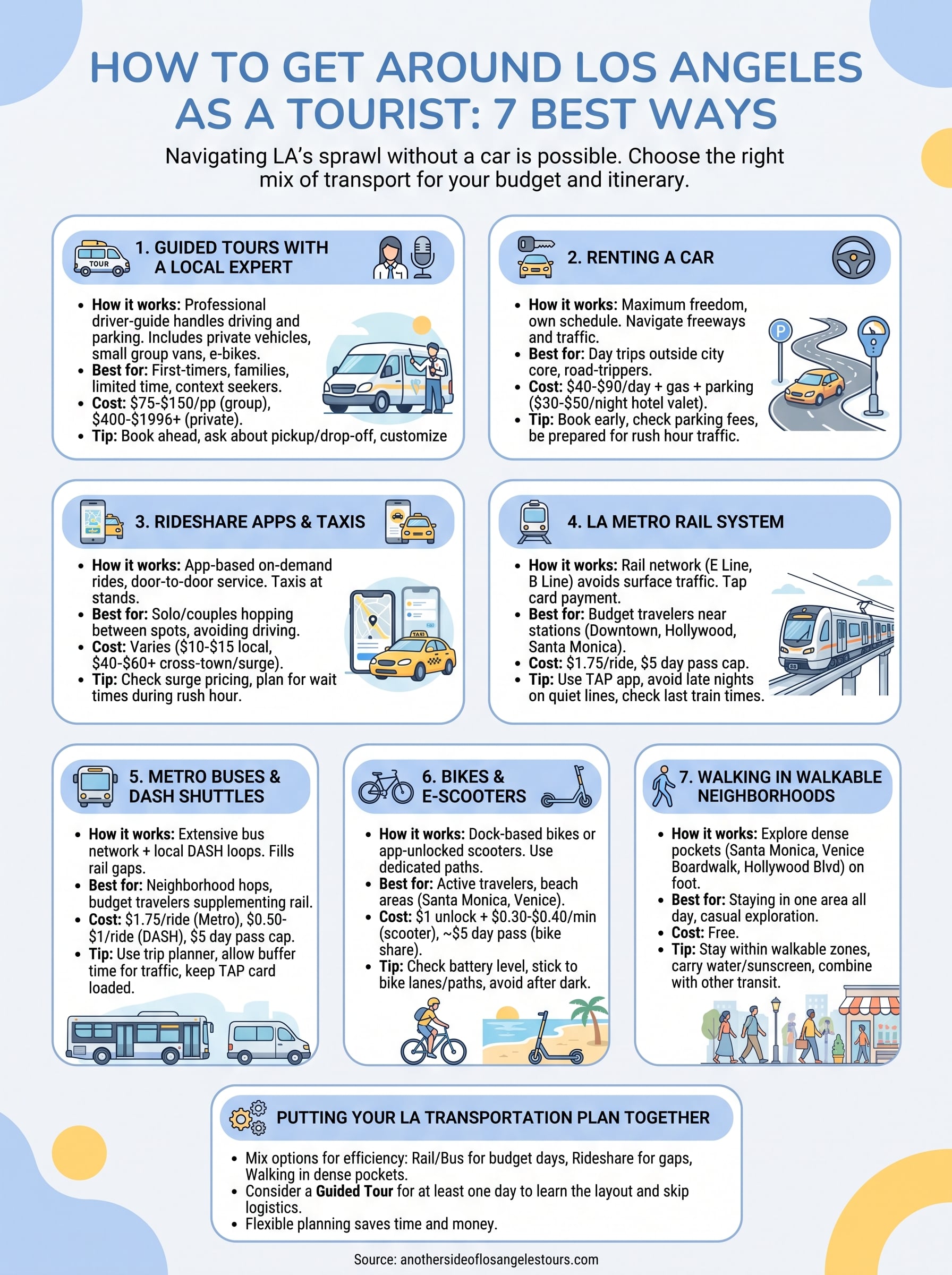
No single method wins every day of your trip. Mixing transportation options works better than picking one and forcing your whole itinerary around it. Rail and buses handle budget days near Downtown or Hollywood, rideshare fills the gaps between neighborhoods, and walking covers the dense pockets like Santa Monica or Venice once you arrive.
One answer solves most of the planning headache at once: book a guided tour for at least one day of your trip. A private driver handles the freeways, the parking, and the sequencing across Hollywood and Beverly Hills, while you focus on the landmarks instead of the logistics. That single day often teaches you the layout well enough to navigate the rest of your visit with confidence.
If you’d rather skip the guesswork entirely, book a private Los Angeles tour and let a local guide handle the driving, the routing, and the stories that make the city click.