You’ve seen the Hollywood Sign in a hundred photos, but you probably don’t know why it’s up there or what it originally advertised. Most visitors walk down Hollywood Boulevard, snap a picture at the Walk of Fame, and leave without learning the hollywood history facts that make this neighborhood more than a backdrop for selfies. That’s the gap we’re closing here.
This article pulls together the stories that actual Hollywood tour guides share on the ground, the details that explain how a quiet citrus-growing town became the center of the global film industry. You’ll learn about the real estate deal that started it all, the studio feuds, and the odd coincidences that shaped the neighborhood you’re walking through today.
We’ve led over a million tours through these streets, and the questions guests ask most often are about origins: who built what, why it’s named that, and what happened before the cameras arrived. Below are ten fascinating Hollywood facts we think you’ll want to know before your next visit, whether you’re planning a self-guided walk or joining one of our guided tours.
1. The Hollywood sign began as a real estate ad
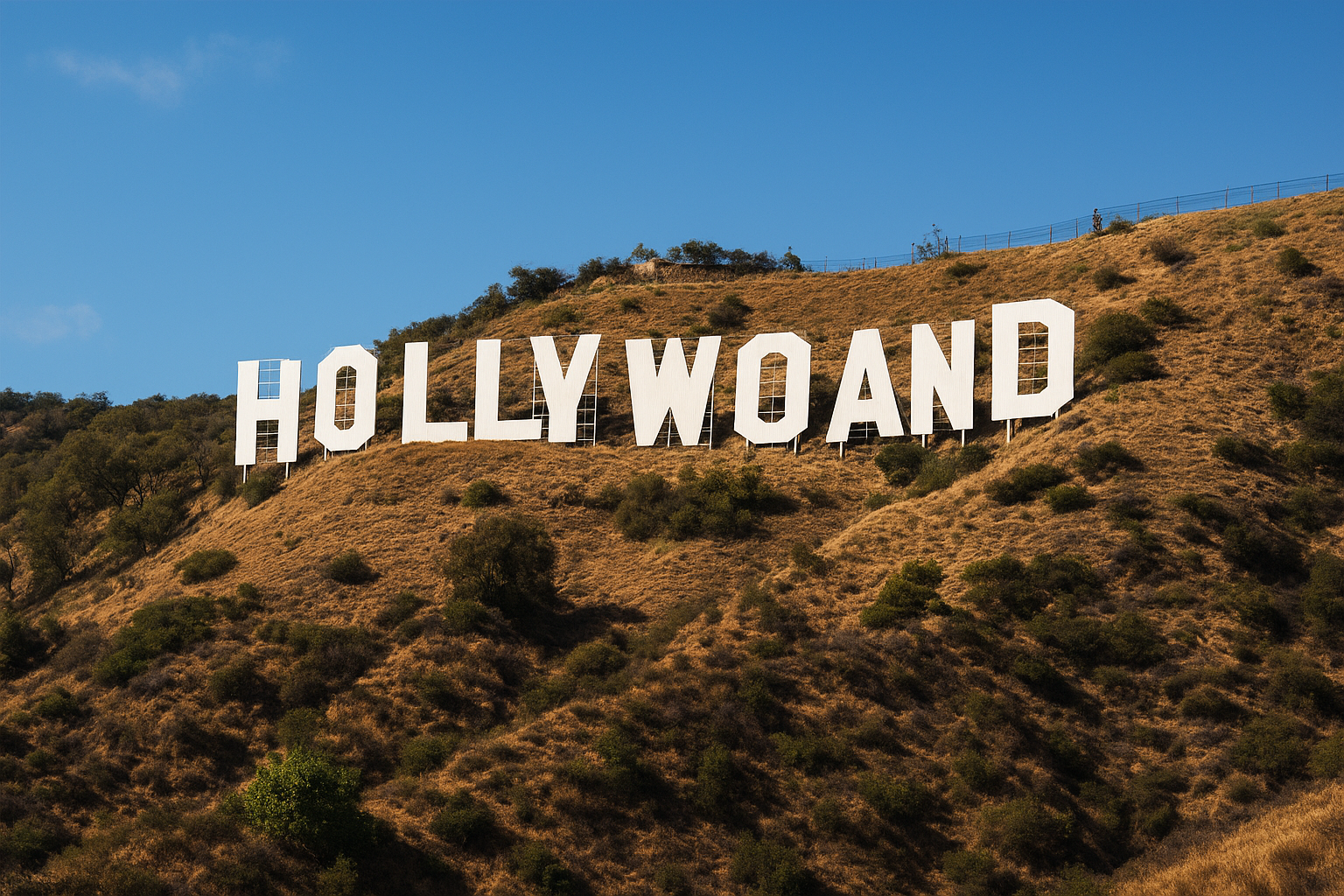
Most people assume the Hollywood Sign celebrates the movie business. It doesn’t. It started as a billboard for a housing development, and that origin story surprises almost every guest we walk past it.
The story behind it
Real estate developers H.J. Whitley, Harry Chandler, and Mack Sennett paid for the sign in 1923 to promote a luxury subdivision called Hollywoodland. The original sign read "HOLLYWOODLAND" in 45-foot-tall letters, lit by 4,000 light bulbs, and it was never meant to last more than a year and a half. Nobody in 1923 was thinking about tourism or landmarks. They wanted buyers for lots in the hills, and a giant illuminated advertisement seemed like the fastest way to get them.
The most photographed sign in America started life as a billboard for houses nobody remembers buying.
The "LAND" letters came down in 1949 after the Hollywood Chamber of Commerce took over maintenance and decided the shortened version better represented the growing film industry rather than one real estate deal.
A detail most people miss
Here’s what surprises most visitors: the sign nearly got torn down twice, once in the 1940s when it fell into disrepair, and again in 1978 when termites and rust had eaten through the original wood-and-sheet-metal letters. A fundraiser led by Hugh Hefner and members of the Motion Picture Academy paid for the steel replacement that still stands today.
Where to see it today
You can view the sign from several spots without hiking, including Griffith Observatory, the Hollywood Sign viewpoint on Mulholland Drive, and Lake Hollywood Park. If you want the close-up hike, Brush Canyon Trail gets you within a few hundred feet, though the fenced perimeter means you can’t walk right up to it.
2. Hollywood’s name has nothing to do with holly
Everyone assumes the neighborhood got its name from holly bushes growing wild in the hills. That guess is wrong, and it’s one of the more entertaining hollywood history facts we share on tours because the real answer involves a train ride and a random conversation.
The story behind it
Daeida Wilcox, wife of Hollywood’s founder H.J. Wilcox, picked the name in 1886 after meeting a woman on a train who described her summer home back east called "Hollywood." Daeida liked the sound of it and applied it to the couple’s new ranch property, with no holly plants involved anywhere in the naming process.
A chance conversation on a train gave Hollywood its name, not the plant that shares it.
A detail most people miss
Most guests don’t realize the Wilcox ranch sat on land now covered by studios and sound stages. Daeida later donated parcels for churches and schools, shaping the neighborhood long before cameras showed up.
Where to see it today
The Hollywood Heritage Museum, housed in the old Lasky-DeMille Barn near the Hollywood Bowl, displays artifacts and photos tied to the Wilcox family and the area’s earliest days.
3. Film pioneers fled to Hollywood to escape Edison
Most visitors think filmmakers picked Hollywood for the weather. Sunshine helped, but the real reason involves a patent war and a East Coast monopoly. This is one of the hollywood history facts guests find hardest to believe.
The story behind it
Thomas Edison controlled camera and projector patents through the Motion Picture Patents Company, a trust that sued or shut down anyone filming without a license. Independent producers in New Jersey and New York faced legal threats and sometimes physical intimidation from Edison’s enforcers. California sat far enough from Edison’s reach, and Los Angeles courts proved less friendly to his lawsuits, so filmmakers packed up and headed west.
Hollywood grew into a film capital partly because it sat far enough from Edison’s lawyers to film in peace.
A detail most people miss
Early studios kept lookouts posted to watch for process servers, and some producers moved gear onto trains bound for Mexico if agents got too close.
Where to see it today
The corner of Sunset and Gower, once called Gower Gulch, marks where several early independent studios set up shop specifically to dodge Edison’s reach.
4. The studio system once controlled every star
Actors today negotiate their own deals, choose their own projects, and speak freely to the press. That freedom didn’t exist for most of Hollywood’s first fifty years, and the story behind it is one of the more revealing hollywood history facts we cover on tours.
The story behind it
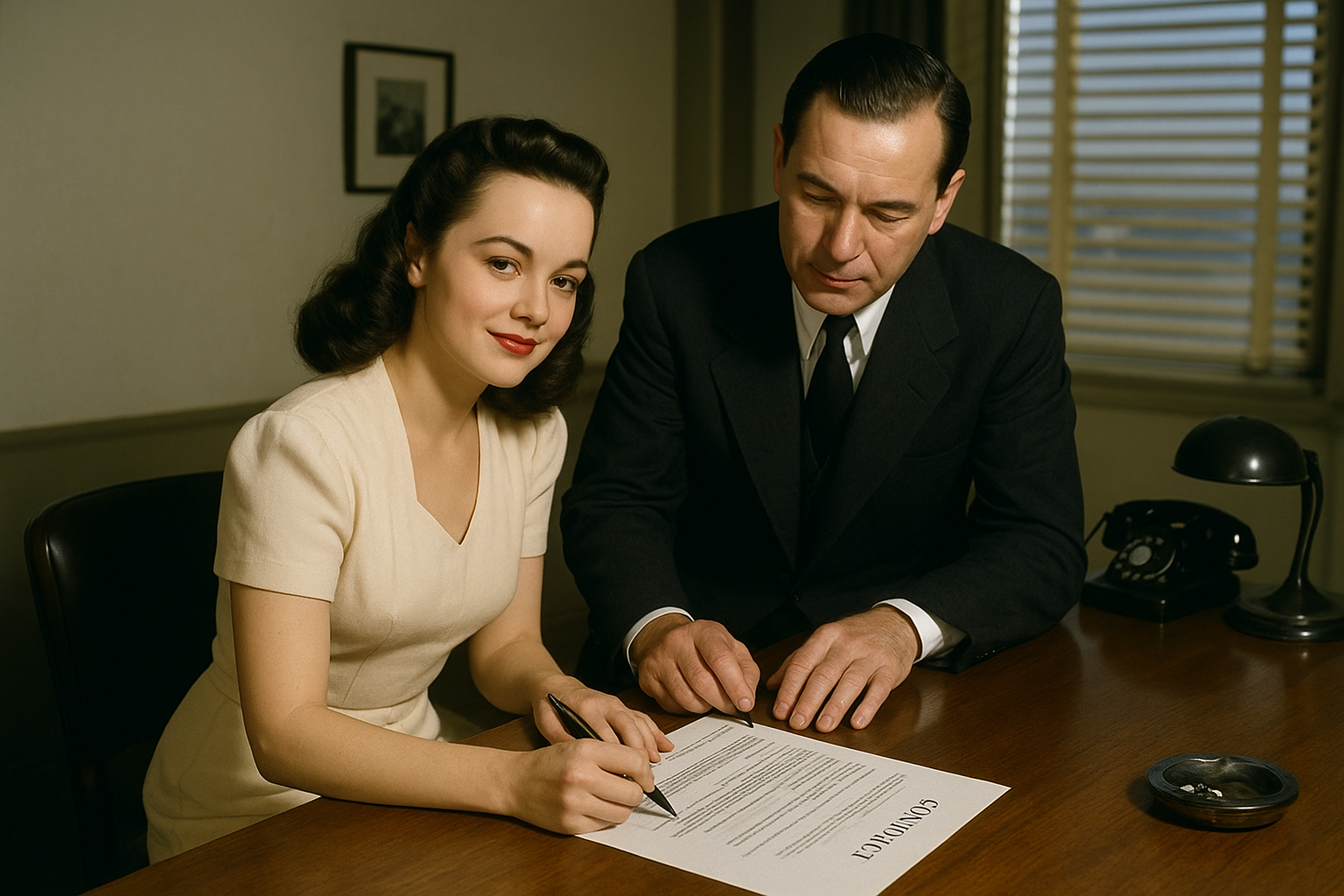
From the 1920s through the 1950s, major studios like MGM, Warner Bros., and Paramount signed actors to exclusive long-term contracts that dictated everything from roles to romances. Studios controlled publicity, arranged fake marriages to hide affairs, and could suspend an actor’s pay for refusing a part. This arrangement, known as the studio system, gave a handful of executives near-total power over careers.
A handful of studio executives once decided who America fell in love with on screen.
A detail most people miss
The system started cracking after actress Olivia de Havilland sued Warner Bros. in 1943 and won, a ruling that capped contract lengths and gave performers leverage they’d never had before.
Where to see it today
The Warner Bros. Studio Tour in Burbank walks you past the same lots where contract stars once reported for twelve-hour days under studio control.
5. A time capsule sits beneath the Walk of Fame
Millions of visitors walk over this spot every year without knowing it’s there. Buried beneath the pavement near the Walk of Fame sits a sealed capsule, and it’s one of the hollywood history facts most locals don’t even know.
The story behind it
The Hollywood Walk of Fame opened in 1958, and organizers buried a time capsule during the dedication ceremony to mark the occasion. Inside sit photographs, newspaper clippings, and mementos meant to show future generations what Hollywood looked like at its mid-century peak. The Hollywood Chamber of Commerce planned the capsule as a gift to whoever walks these sidewalks decades later.
A sealed piece of 1958 Hollywood still waits underground for someone to dig it up.
A detail most people miss
Records on the exact location and opening date grew fuzzy over the decades, and even Chamber staff have struggled to pin down precisely where it sits along the boulevard.
Where to see it today
You won’t find a marker pointing to the capsule itself, but the stretch of Hollywood Boulevard between Gower and La Brea holds the oldest stars and the general area where the 1958 dedication took place.
Hollywood’s story keeps unfolding
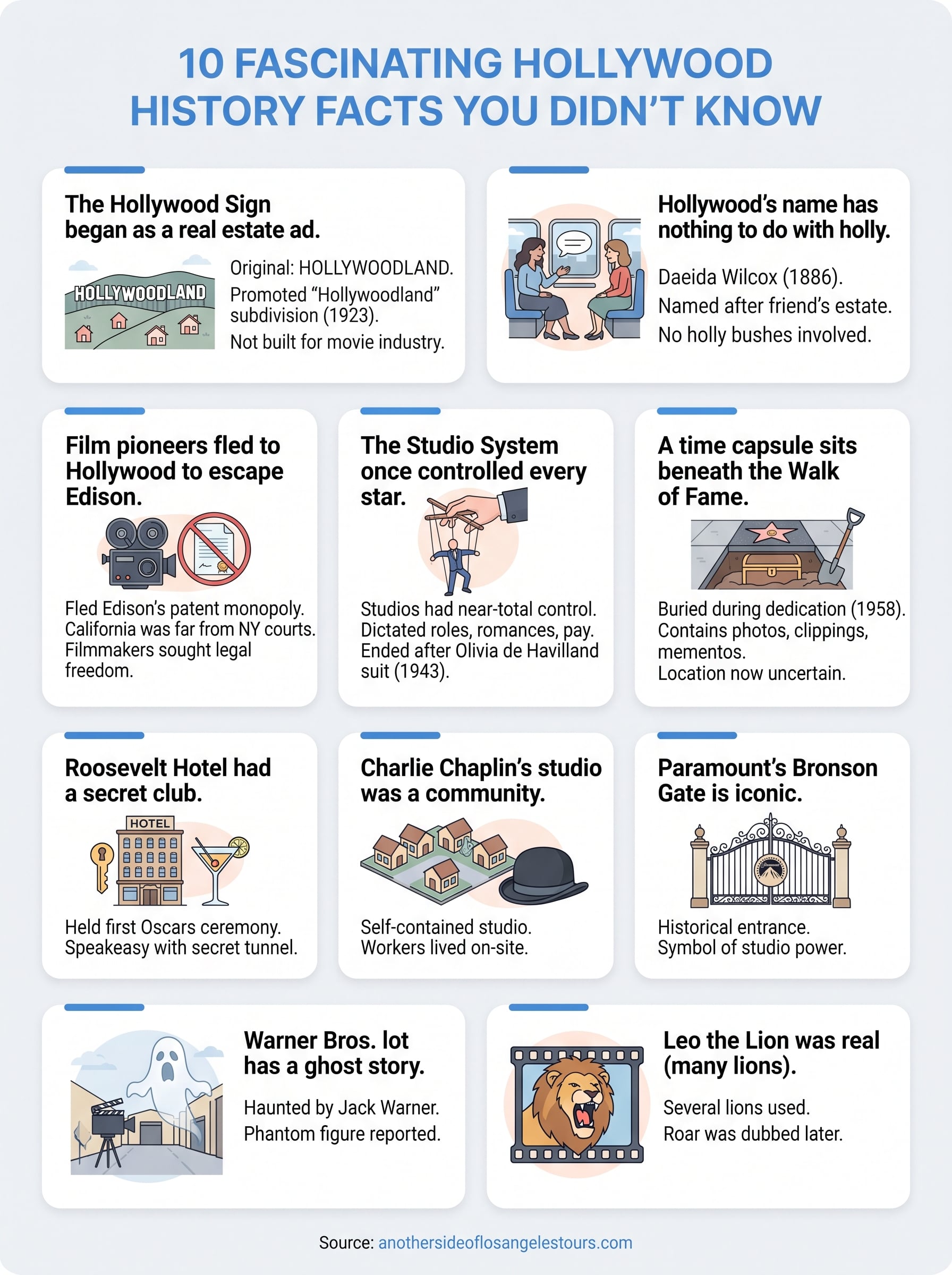
These ten stories only scratch the surface of what happened on these streets before the cameras rolled and long after. Every corner of Hollywood carries a piece of history that guidebooks skip, from buried time capsules to patent wars that pushed filmmakers west. Reading about it gets you partway there, but standing on Sunset and Gower or looking up at those steel letters changes how you see the neighborhood entirely.
Our guides grew up with these stories and share the details that never make it into brochures, the kind of context that turns a walk down Hollywood Boulevard into something you’ll actually remember. A private tour puts you in front of these landmarks with someone who can answer the questions a plaque never will.
Ready to see it for yourself? Book a private tour of Hollywood and let a local guide walk you through the history behind every landmark you pass.