Most people recognize those nine white letters perched on Mount Lee, but few know the full history of Hollywood Sign, a story that starts with a real estate ad and ends with one of the most photographed landmarks on the planet. The sign wasn’t built to last. It was never meant to become a symbol of anything beyond a 1923 housing development called "Hollywoodland."
Over the past century, those letters have survived neglect, demolition threats, a rebranding, and multiple restorations. Each chapter reveals something about Los Angeles itself, its ambition, its reinvention, and its flair for turning the temporary into the iconic. It’s also one of the stories our guides at Another Side Tours love telling in person, with the sign in full view, during our Hollywood tours.
This article traces the sign’s complete timeline, from its origins as a hillside billboard to its current status as a protected cultural monument. You’ll learn who built it, who saved it, and how it earned its place in American pop culture.
Why the Hollywood Sign became a global symbol
Few landmarks earn global recognition without intention, and the Hollywood Sign is the clearest example of that. The history of Hollywood Sign shows that its cultural weight built slowly, driven by film industry growth in the hills below and decades of media exposure that turned those letters into shorthand for ambition, fame, and reinvention.
The sign became a symbol not because anyone planned it, but because the entertainment industry turned the surrounding hills into the most watched landscape in American culture.
The film industry did the heavy lifting
Hollywood’s rise as the center of American filmmaking gave the sign its meaning before it was even preserved. By the 1930s and 1940s, studios like Paramount, Warner Bros., and MGM were producing films seen by millions worldwide. The hills behind the letters appeared in promotional materials, film backdrops, and newsreels, quietly cementing the sign’s association with the movies.
Film and television kept reinforcing that connection through the second half of the 20th century. You could watch a scene set in Los Angeles and spot those letters in the background, and audiences everywhere decoded the visual immediately. Repeated exposure across global media built recognition that no marketing budget could have manufactured.
Why visibility matters
The sign sits at 1,710 feet above sea level on Mount Lee, making it visible from large portions of the Los Angeles basin on clear days. That physical presence means you can see it from freeways, neighborhoods, and hiking trails, giving it daily relevance that most monuments never achieve.
Visibility plus cultural context equals permanence. The sign is not tucked away in a museum. It sits outdoors, in plain view, as a working piece of the city’s identity year after year.
1923: Hollywoodland goes up on Mount Lee
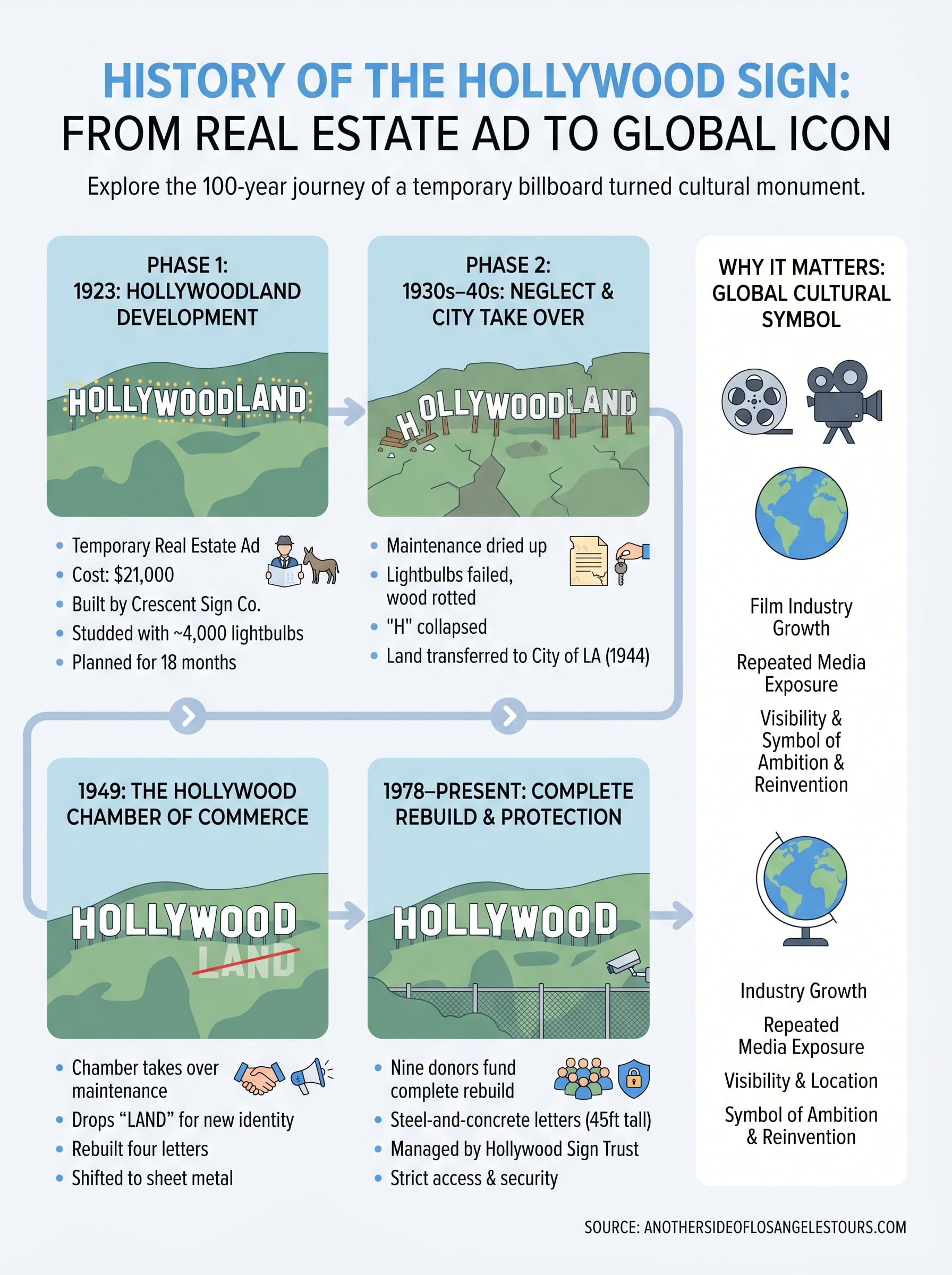
The history of Hollywood Sign starts not with Hollywood, but with real estate. In July 1923, developer S.H. Woodruff and the Crescent Sign Company erected a large hillside advertisement to promote a new residential subdivision called "Hollywoodland" in the hills above Los Angeles. The sign was never meant to outlast the sales campaign.
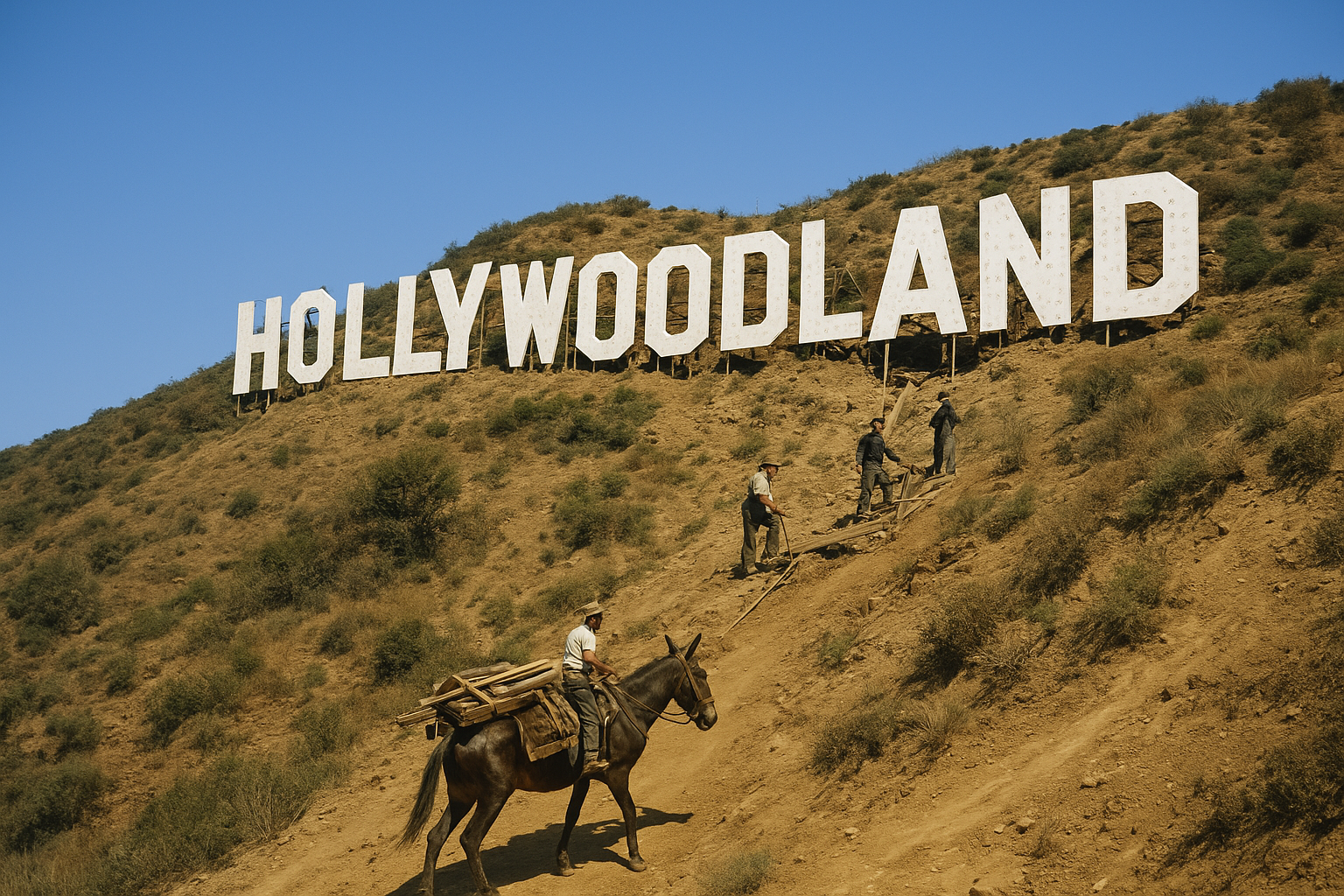
The original sign was a temporary billboard, each letter standing 30 feet wide and 50 feet tall, studded with roughly 4,000 lightbulbs that flashed in sequence through the night.
Who built it and why
Harry Chandler, publisher of the Los Angeles Times and co-investor in the Hollywoodland development, backed the project. His goal was simple: sell lots to buyers looking for upscale homes with views of the city. The sign cost around $21,000 to construct, which was a significant investment for what everyone assumed would be a short-term marketing tool.
Workers hauled materials up unpaved hillside paths using mules to reach the Mount Lee site. The construction itself took considerable effort for a sign that planners expected to stand for no more than 18 months. That timeline turned out to be wildly off.
1930s–1940s: decay, drama, and city ownership
After the Hollywoodland development sold its lots, the sign’s original purpose disappeared. Maintenance funding dried up through the 1930s, and the structure began falling apart fast. The lightbulbs stopped working, letters tilted, and wooden frames rotted steadily in the California sun.
By the late 1940s, the H had collapsed entirely, leaving the sign reading "OLLYWOODLAND."
How the city took over
The history of Hollywood Sign takes a critical turn in 1944, when the Hollywoodland Realty Company transferred the land to the City of Los Angeles. The city accepted the property but showed little urgency in maintaining the sign itself, and the letters continued to deteriorate with no clear plan in place.
City ownership brought stability to the land but not to the structure. Whether to restore or demolish those crumbling letters remained an open question for years.
A death that reshaped the story
In 1932, a young actress named Peg Entwistle climbed to the top of the letter H and died there, a tragedy that gave the sign a darker cultural dimension far beyond its real estate origins. That story attached itself permanently to Hollywood lore, and if you visit today, guides still reference it as one of the sign’s most defining chapters.
1949: the Chamber saves it and drops LAND
The Hollywood Chamber of Commerce stepped in during 1949 and changed the history of Hollywood Sign permanently. The Chamber struck a deal with the city to take over maintenance, but only for the portion of the sign that read "Hollywood." Dropping the word "LAND" erased the last direct reference to the original real estate project.
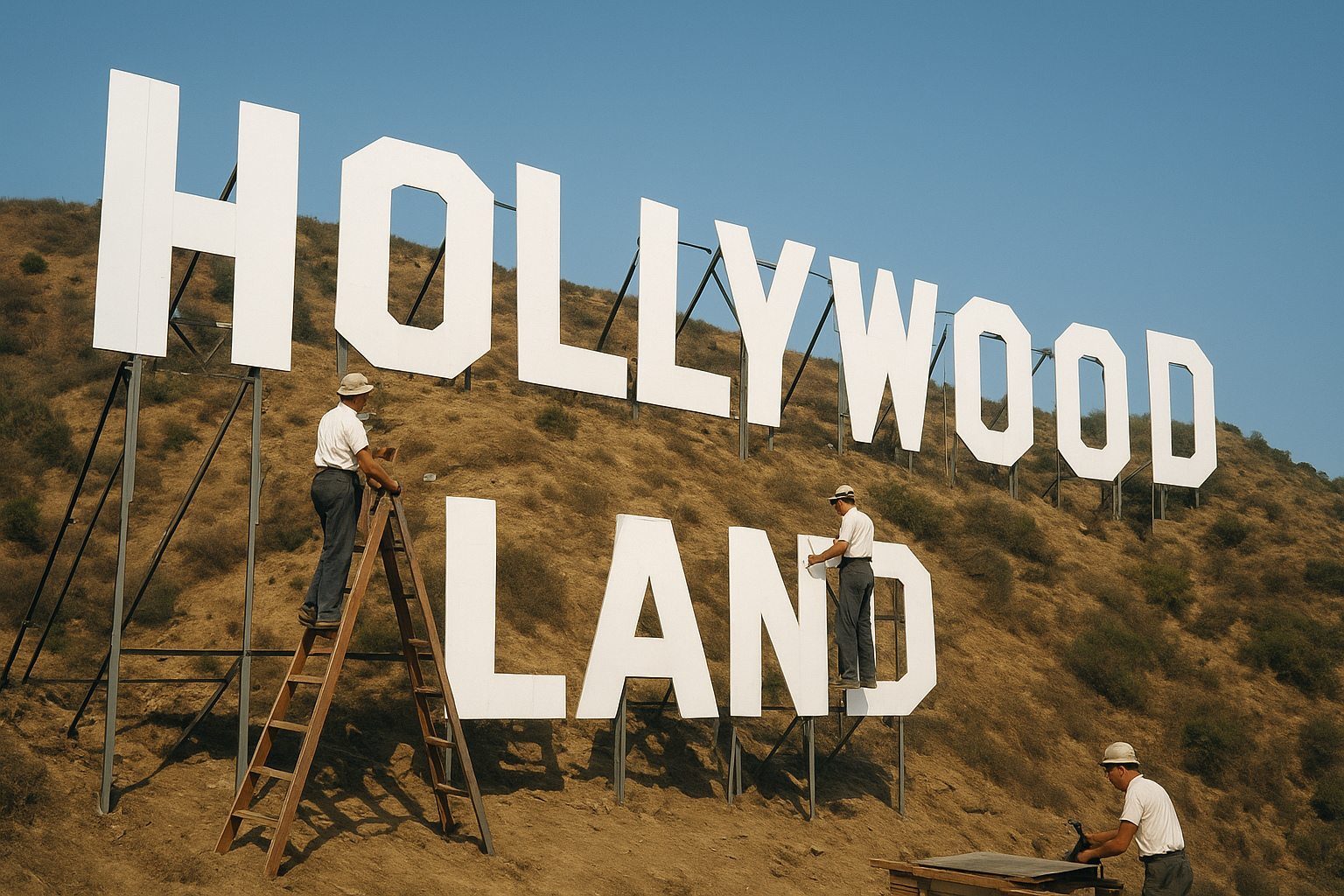
That single decision transformed a deteriorating advertisement into a civic landmark with a name that matched the neighborhood and the industry it overlooked.
What the restoration changed
Workers tore down the original rotting structure and rebuilt four of the nine letters using new materials. The project didn’t restore every letter perfectly, but sheet metal replaced the original wooden frames, giving the structure more durability than anything the 1923 version offered.
Removing "LAND" also gave the sign a new cultural identity tied to Hollywood as a place rather than a subdivision. You can trace nearly every later preservation effort back to this moment, when the sign stopped being a billboard and started being a symbol worth protecting on its own terms.
1978 to today: rebuild, pranks, preservation
By the mid-1970s, the history of Hollywood Sign faced another crisis. The 1949 sheet metal letters had deteriorated badly again, and the city lacked the funds to fix them. A group of nine donors, each contributing $27,700, sponsored one letter apiece in 1978 to fund a complete replacement. Alice Cooper paid for the letter O in memory of Groucho Marx, giving the rebuild a distinctly Hollywood flavor.
That 1978 restoration produced the steel-and-concrete letters you see today, each standing 45 feet tall and anchored with far more permanence than anything that came before.
Famous pranks that made headlines
Pranksters discovered early on that rearranging or altering the letters generated massive media attention. The most repeated stunt involved covering portions of letters to spell out alternate words during events like the 1987 Rose Bowl and various cultural moments. Each incident forced city officials to take security and access controls more seriously over time.
How preservation works today
The Hollywood Sign Trust, established in 1978, now manages the landmark and controls access to the surrounding land. You cannot legally approach the sign directly, and surveillance cameras plus park rangers actively patrol the area. Donations through the Trust fund ongoing maintenance, keeping those letters stable for every visitor who spots them from the city below.
Make the history real on your LA trip
Reading the history of Hollywood Sign gives you context that most visitors never get. You now know the sign started as a temporary real estate billboard, nearly fell apart twice, lost four letters to a rebranding, and survived through two major donor campaigns and a dedicated preservation trust. That background changes what you see when those nine white letters finally come into view from the city below.
Seeing the sign during a guided Los Angeles tour adds another layer entirely. Your guide points out the best vantage points, explains the restoration timeline, and connects the sign to the broader story of how Hollywood became a global cultural center. You leave with something more valuable than a photo: actual understanding of what you’re looking at and why it matters.
Book a Los Angeles sightseeing tour with Another Side Tours and experience the sign with expert local context built in from guides who know this city inside and out.