You're probably doing what most first-time visitors do. You leave Beverly Hills after brunch, pass through Hollywood, angle toward Downtown, then end the day near Santa Monica or Venice. Somewhere between the palm-lined boulevards and the freeway overpasses, the walls start talking.
Not politely, either.
They shout in color, in code, in portraits, in names, in tributes, in protest. Some pieces feel polished enough for a museum. Others look raw, territorial, and fleeting. If you're smart, you pause before treating all of it the same. Graffiti art in Los Angeles rewards curiosity, but it punishes lazy assumptions.
That's why a curated approach matters. LA is sprawling, traffic is real, parking can kill momentum, and the best walls aren't always where glossy travel lists send you. If you want the city to make sense, you need context as much as coordinates.
Table of Contents
- Beyond the Billboards Welcome to LA's Living Art Gallery
- From Vandalism to Veneration The Story of LA Graffiti
- A Curated Map to Los Angeles Street Art Hotspots
- Viewing Etiquette and Photography Tips for Art Lovers
- Finding Current Murals and Pop-Up Art Events
- The Ultimate Upgrade Why a Private Tour Is Worth It
- Your LA Graffiti Art Questions Answered
Beyond the Billboards Welcome to LA's Living Art Gallery
Your first clue that Los Angeles takes wall art seriously comes when the city stops behaving like a postcard and starts feeling like a manuscript. A warehouse side in the Arts District carries one story. A sun-faded alley wall off Melrose carries another. A stretch near Venice feels looser, weirder, more improvisational. None of it sits still for long.
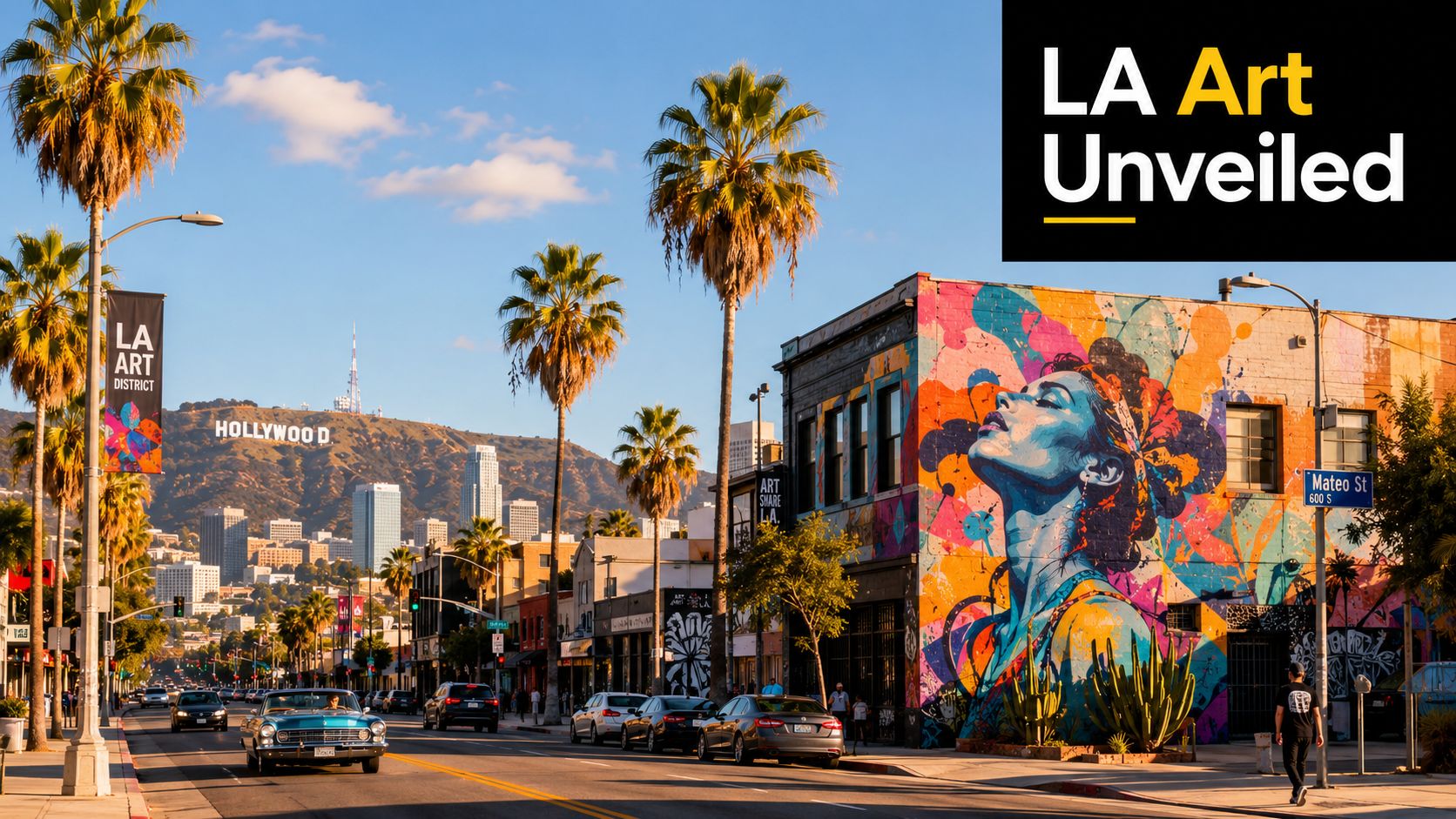
If you've only known LA through the Hollywood Sign, Rodeo Drive, Malibu sunsets, or a polished stop at Griffith Observatory, this side of the city can feel like a surprise. It shouldn't. The walls are part of the main story, not a side attraction.
Why the walls matter
Street art here isn't decoration slapped onto blank surfaces to make them more photogenic. It's one of the clearest ways to understand how Los Angeles thinks about identity, neighborhood pride, memory, fame, grief, and reinvention. That's the main attraction for families, couples, corporate groups, and first-time visitors who want more than a checklist.
Some cities preserve their history behind glass. Los Angeles leaves a lot of it out in the open.
A mural can honor a local hero. A handstyle can mark presence. A collaboration can soften a hard industrial block. Even the tension between what lasts and what gets painted over tells you something about the city.
What visitors get wrong
Most visitors move too fast. They see a striking wall from the car, snap one quick photo, and keep going to the next major attraction. That's how you miss the point. Graffiti art in Los Angeles isn't best understood as isolated masterpieces. It works as a sequence.
That's also why neighborhoods matter more than random pins on a map. You want a route with rhythm, not a scavenger hunt with bad parking. If your ideal day pairs urban art with a more cinematic view of the city, a local favorite is the Beyond Billboards hiking experience, which helps visitors connect LA's visual culture with the setting that shaped it.
From Vandalism to Veneration The Story of LA Graffiti
Los Angeles has never had a simple relationship with graffiti. That's part of what makes it worth your time. The city celebrates murals, exports street artists to the global art world, and still spends enormous energy erasing markings it considers blight.
That contradiction isn't accidental. It's the backbone of the scene.
In one year, residents submitted 343,246 graffiti removal requests, the highest in five years, and the city had to clear an area equivalent to a square mile, according to reporting on graffiti removal activity in Los Angeles. If you want to understand LA, start there. This is a city where visual expression is constant, contested, and impossible to ignore.
The raw roots still matter
Older Angelenos remember when graffiti was discussed almost entirely as a nuisance problem. Tags spread fast, crews claimed space, and public officials responded with cleanup and enforcement. That history still shapes how many residents react when they see fresh paint on a wall.
But stopping the story there is lazy.
A lot of what visitors now admire as iconic urban art grew out of that same visual language. Scale improved. Technique matured. Property owners got smarter. Neighborhoods started recognizing that the right wall, in the right hands, can create identity instead of chaos.
How LA gave murals a formal path
Los Angeles eventually built a legal framework for murals, and that matters more than most tourists realize. The city's Mural Ordinance and registration process requires a neighborhood involvement meeting as the initial step, so nearby residents are notified before a mural moves forward.
That requirement says a lot about LA at its best. Good public art here doesn't just land on a wall. It enters a conversation with the block around it.
Practical rule: If a mural feels integrated into the street instead of imposed on it, that's usually because someone did the community work first.
What changed, and what didn't
The style evolved. The tension didn't.
Commissioned pieces can now anchor a neighborhood's identity, draw gallery traffic, and become must-stop visuals for visitors moving between Hollywood, Downtown, and the coast. At the same time, unsanctioned writing still appears overnight and still triggers cleanup crews. That push and pull is the true story of graffiti art in Los Angeles.
Don't reduce it to “good murals” versus “bad graffiti.” That's too neat, and LA has never been neat.
A Curated Map to Los Angeles Street Art Hotspots
Los Angeles is too big for random wandering. If you want a satisfying art day, choose neighborhoods with distinct personalities and build your route around mood, not mileage.
The scale alone should push you toward a curated plan. Los Angeles has 2,387 documented street art masterpieces, making it the world's largest urban art community according to Street Art Cities' Los Angeles map. That same source notes that the Arts District is a major hub, with entire blocks densely covered in murals and graffiti art. In plain English, there's far too much to see well if you're improvising from your phone in traffic.
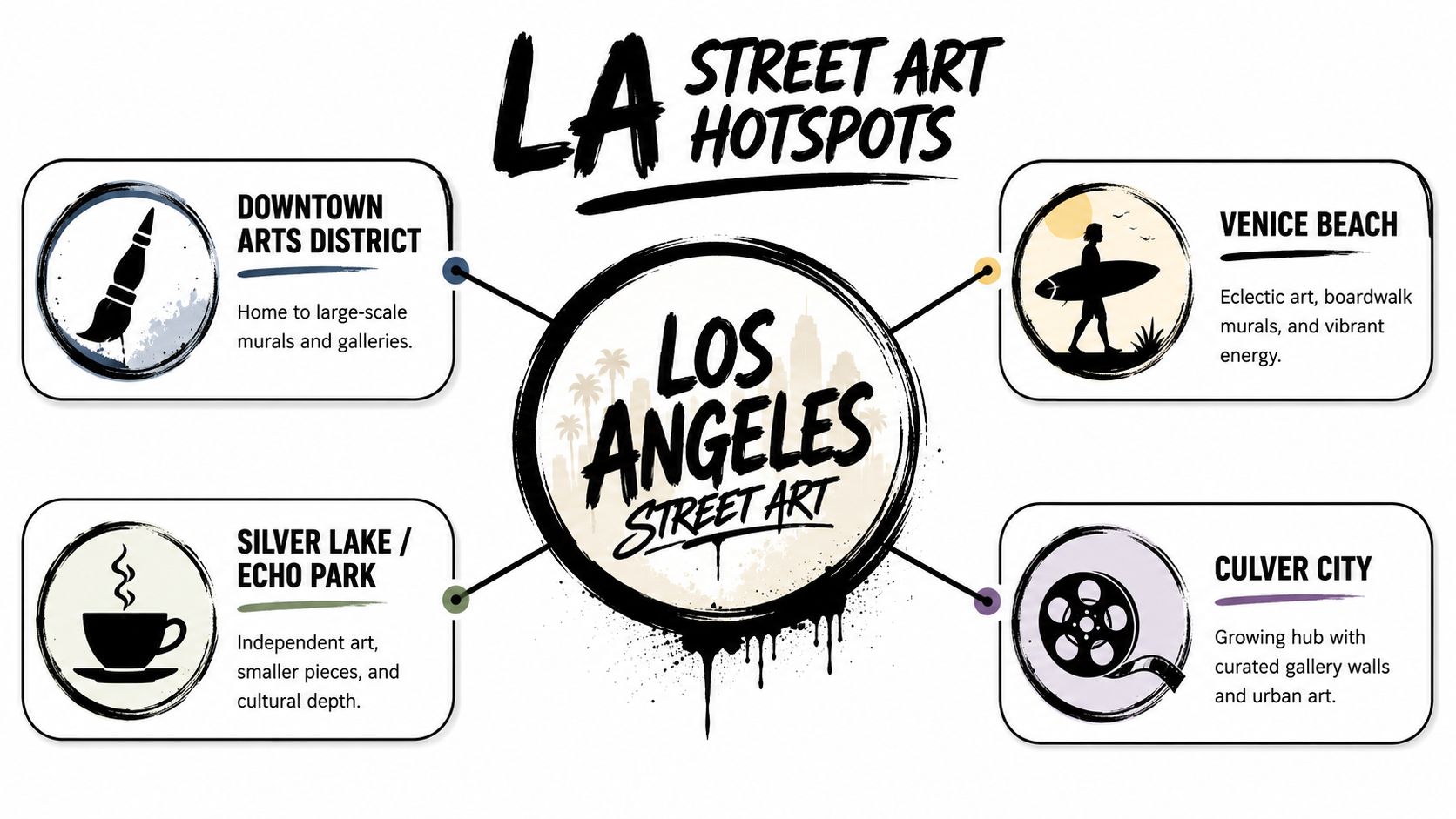
Downtown Arts District
Start here if you want impact. This is the neighborhood that delivers scale, density, and that unmistakable industrial LA backdrop of converted warehouses, rail-adjacent streets, and walls that seem made for aerosol.
The best way to do the Arts District is slowly. Walk a few blocks. Look up. Then look again. Good pieces hide in plain sight because the area trains your eye quickly. What first feels overwhelming starts reading like a layered archive.
For a more focused route through the neighborhood, the 18th Arts District experience is a strong reference point for travelers who want to understand the area rather than just photograph it.
Venice Beach
Venice doesn't present art the way Downtown does. It performs it.
Here, murals, boardwalk energy, skate culture, storefront creativity, and beach personality all collide. You don't come to Venice for polished uniformity. You come for eccentricity, improvisation, and that mix of spectacle and sincerity that only Venice can pull off.
Best for:
- Couples: The visual texture is playful and easy to pair with an oceanfront afternoon.
- Families: There's enough movement, color, and people-watching to keep everyone engaged.
- Content creators: Venice gives you layered backgrounds without trying too hard.
Silver Lake and Echo Park
If the Arts District is loud, Silver Lake and Echo Park are more conversational. You'll find pieces that feel embedded in neighborhood life rather than staged for broad attention. Cafés, side streets, smaller walls, community-driven visuals, and a stronger sense of local rhythm define the experience.
I recommend this area for visitors who like cultural depth over spectacle. It's ideal if your trip already includes design-forward hotels, low-key dinners, and a less obvious version of LA.
Go here when you want the city to feel lived-in, not packaged.
Culver City
Culver City surprises people. They expect studios, polished dining, and creative-office energy. They don't always expect strong urban art. That's their mistake.
The area offers a more curated feel, with walls that often sit comfortably beside galleries, production spaces, and refined commercial corridors. If your itinerary already includes Westside highlights like Santa Monica, Beverly Hills, or even Malibu later in the day, Culver City fits beautifully.
How to choose your route
Use this quick guide:
| Neighborhood | Best For | Why It Works |
|---|---|---|
| Downtown Arts District | First-timers, art lovers, photographers | Highest density and strongest visual payoff |
| Venice Beach | Families, couples, social content | Energy, variety, and coastal character |
| Silver Lake / Echo Park | Repeat visitors, culturally curious travelers | Independent feel and neighborhood texture |
| Culver City | Westside itineraries, corporate groups | Easy pairing with polished LA experiences |
Viewing Etiquette and Photography Tips for Art Lovers
The fastest way to look like a tourist in the wrong way is to treat every painted wall as interchangeable content. Don't do that. Some works are public-facing murals created to be seen, discussed, and photographed. Others exist inside a different code.
That distinction matters in Los Angeles. According to FindMASA's Los Angeles street art overview, the city has over 238 officially mapped murals, while 70% of Los Angeles graffiti is classified as vandalism. If you're a visitor, especially one traveling with children, clients, or out-of-town guests, you need to understand that not every wall invites the same behavior.
Know what you're looking at
A commissioned mural usually signals itself. It often occupies a prominent wall, shows intentional composition at full scale, and sits comfortably within the surrounding business or residential environment. It's public art.
Illegal tagging or unsanctioned work can carry cultural meaning too, but that doesn't mean it's your stage set. Don't lean on gates, climb barriers, block loading areas, or wander into private spaces for a better angle.
Better manners, better photos
You don't need expensive gear to photograph graffiti art in Los Angeles well. You need timing and restraint.
- Go early: Morning light is usually kinder on large walls, especially if you want cleaner color and fewer people in frame.
- Step back first: Shoot wide before chasing details. Many LA murals are designed to interact with the entire building face.
- Watch the edges: Power lines, parked cars, and street signs can add context or clutter. Decide intentionally.
- Respect residents: If a mural sits near homes or active storefronts, keep voices down and don't turn the sidewalk into your private set.
- Don't touch the work: That includes walls, doors, and adjacent surfaces.
The best street art photos don't just show paint. They show placement, scale, and the neighborhood energy around the piece.
Smart etiquette for premium travelers
If you're planning a luxury day across Hollywood, Beverly Hills, Santa Monica, and Downtown, keep wardrobe and pacing in mind. Comfortable shoes matter more than fashion fantasy when you're hopping in and out for photo stops. Bring water. Keep valuables close. And if you're traveling with kids, set expectations early. Art neighborhoods are rewarding, but they're still real neighborhoods.
Finding Current Murals and Pop-Up Art Events
Street art in LA changes fast. The wall you bookmarked months ago might be gone, partially painted over, restored, or surrounded by construction when you arrive. That's normal. The city refreshes itself in public.
That's why I tell visitors to stop relying on static “best murals” lists. Use live signals instead.
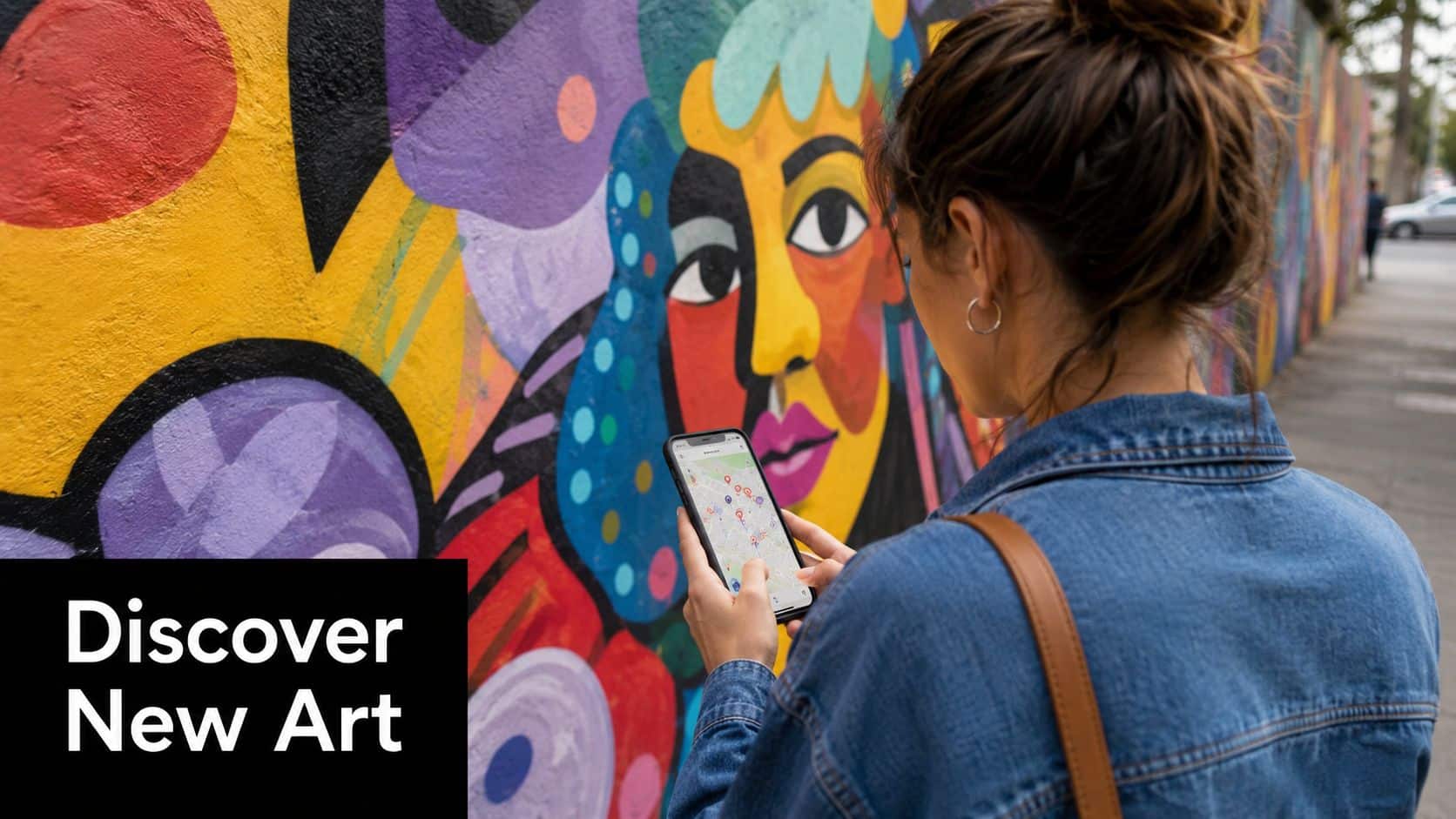
What to check before you go
Follow working artists, neighborhood galleries, and local creative spaces on Instagram. Search by neighborhood rather than by generic citywide tags. Look at Stories, not just polished grid posts. Stories tell you what's active now.
Also pay attention to community art calendars and event pages tied to openings, live painting sessions, and temporary installations. If you're curious about how these short-run events are organized, this practical pop-up event guide is useful because it breaks down the mechanics behind temporary art experiences that often shape what visitors can access.
What's worth your energy
Don't chase everything. Focus on three categories:
- Fresh walls: New pieces often generate the most neighborhood conversation.
- Artist appearances: If an artist is painting live or speaking nearby, you'll understand far more than you would from a drive-by.
- Short-run exhibitions: Temporary shows can create access to styles or artists that aren't usually easy for casual visitors to encounter.
Why this frustrates visitors
Doing this well takes constant monitoring. That's the part people underestimate. You're on vacation. You don't want to spend your breakfast in Santa Monica cross-checking posts, addresses, closures, and whether a mural still exists.
The best current-art day in Los Angeles usually belongs to the person who did the homework yesterday, not the traveler searching in real time.
The Ultimate Upgrade Why a Private Tour Is Worth It
DIY sounds romantic until LA starts acting like LA. Then you're circling for parking, recalculating routes, wondering whether a promising wall is in a worthwhile pocket or a dead end, and losing an hour between stops that looked close on a map.
A private tour fixes the part of Los Angeles that most visitors mismanage. Logistics.
For first-time travelers, that means less stress crossing the city from Beverly Hills or Hollywood into Downtown. For families, it means less time negotiating curbside confusion with tired kids. For couples, it means cleaner pacing and better photo opportunities. For corporate groups, it means nobody has to pretend that coordinating caravans is a team-building activity.
Comparing Your Street Art Exploration Options
| Factor | Self-Guided Exploration | Private Tour with Another Side of LA |
|---|---|---|
| Planning | You build the route and hope it flows | Route is curated for timing, neighborhood logic, and guest interests |
| Transportation | You handle driving, rideshares, or parking | You travel comfortably without managing the city yourself |
| Context | You read plaques, posts, or random reviews | A local guide explains symbolism, artists, and neighborhood history |
| Time use | Much of the day disappears into navigation | More of the day goes to actual viewing |
| Comfort | Heat, walking fatigue, and stop-start logistics add up | Climate-controlled pacing feels polished and easy |
| Group experience | Hard to keep everyone engaged at once | Families, couples, and corporate groups stay on the same page |
| Photography | You guess where to stop and when | A guide helps you hit photogenic walls at the right moments |
| Safety and etiquette | You make judgment calls in unfamiliar areas | You move with someone who knows the local rhythm |
Why premium travelers feel the difference
Luxury isn't just a nicer vehicle. It's friction removed.
A proper private experience lets you pair street art with iconic LA stops without turning the day into a transportation problem. You can start near Hollywood, loop through Downtown, continue west toward Santa Monica or Venice, and still have energy for dinner. That matters if you want a full Los Angeles day instead of a fragmented one.
It also changes the quality of what you notice. When someone else is handling timing and street-level judgment, you actually see the city. You pay attention to murals, neighborhood shifts, architecture, and the subtleties between legal public art and transient marks.
My recommendation
If graffiti art is one piece of a broader LA visit, book private. If graffiti art is the main event, definitely book private.
The city is too spread out and too visually dense to reward amateur logistics. A white-glove option like private Los Angeles touring makes the experience smoother, sharper, and more intelligent. That's especially true for guests who expect VIP service, polished timing, and local judgment they can trust.
Your LA Graffiti Art Questions Answered
Can tourists legally make their own graffiti in Los Angeles
Not in any reliable year-round public way. According to reporting on the LA edition of the "Beyond the Streets" experience, there are no permanent, visitor-accessible legal tagging zones open year-round in Los Angeles, and participation opportunities are limited to short-term ticketed events such as that exhibit, as noted in this overview of legal visitor graffiti options in LA. If you want a hands-on experience, check current temporary events before your trip.
What's the best area for first-time visitors
The Downtown Arts District is the strongest first stop if you want concentration and impact. Venice works beautifully if you want your art day to feel more relaxed, social, and coastal. Silver Lake and Echo Park are better for travelers who prefer neighborhood texture over headline visuals.
Is graffiti art in Los Angeles family-friendly
Often, yes. But curate carefully. Some areas are perfect for families in daylight, especially when paired with nearby dining and easy restroom stops. Others are better for adults who don't mind a rougher urban texture. Timing matters. Daytime is the smart play for family groups.
What should I wear for a street art day
Dress for walking and temperature shifts. Comfortable shoes are essential. Sunglasses help. Bring water. If you're pairing murals with Beverly Hills lunch, Hollywood sightseeing, or a Santa Monica sunset, choose layers that can move between polished and practical.
Is it safe to explore on your own
Sometimes. But “safe enough” isn't the same as smooth, informed, or efficient. LA blocks change quickly. A street that feels lively at one hour can feel empty later. If you don't know the city, don't improvise aggressively. Keep your route tight, stay aware, and don't wander into private or industrial areas chasing a mural you saw online.
When should I go
Clear daylight wins. Morning usually gives you better light, easier parking, and calmer sidewalks. If you're building a larger day that includes Griffith Observatory, Hollywood, Malibu, or Venice, start with art earlier and leave the coast or scenic overlooks for later.
If you want graffiti art in Los Angeles to feel less like guesswork and more like a smooth, high-touch city experience, book with Another Side Of Los Angeles Tours. Their private touring style works especially well for first-time visitors, families, couples, and corporate groups who want expert local guidance, polished logistics, and a day that connects murals, neighborhoods, and iconic Los Angeles sights without wasting time in traffic or settling for generic stops.