You've probably seen the Hollywood Sign in photos so often that it feels easy to visit, like a quick stop between Hollywood Boulevard and lunch in Beverly Hills. In truth, it's more useful and more interesting. The sign is a hillside landmark shaped by geography, weather, access rules, and parking realities, so a good visit is less about “getting there” and more about choosing the right viewpoint, the right time, and the right pace for your group.
That's why these facts about Hollywood Sign matter for families, couples, first-time visitors, corporate groups, and luxury travelers who want the day to feel polished instead of rushed. Once you understand where the sign sits, which overlooks are worth your time, and when the light cooperates, the whole experience gets easier to plan. It also becomes much simpler to weave the sign into a full Los Angeles day with Griffith Observatory, Beverly Hills, Santa Monica, Venice, Malibu, or another meaningful stop, especially if you're using a private route with Another Side Of Los Angeles Tours to handle timing and logistics.
Table of Contents
- 1. The Hollywood Sign Isn't Actually on Hollywood Boulevard
- 2. The Best Photo Spots Depend on Knowing the Right Vantage Point
- 3. The Sign Began as a Real Estate Billboard, Not a Movie Icon
- 4. Griffith Park Helps Turn the Sign Into a Real Day
- 5. Access Routes and Hiking Choices Reward Planning
- 6. Visibility Changes with Season, Weather, and Air Quality
- 7. Respecting Boundaries Protects the Landmark and the Neighborhood
- 8. A Little Gear Makes the Visit Better Than Most People Expect
- 8-Point Comparison of Hollywood Sign Facts
- Make the Sign Part of a Better Los Angeles Day
1. The Hollywood Sign Isn't Actually on Hollywood Boulevard
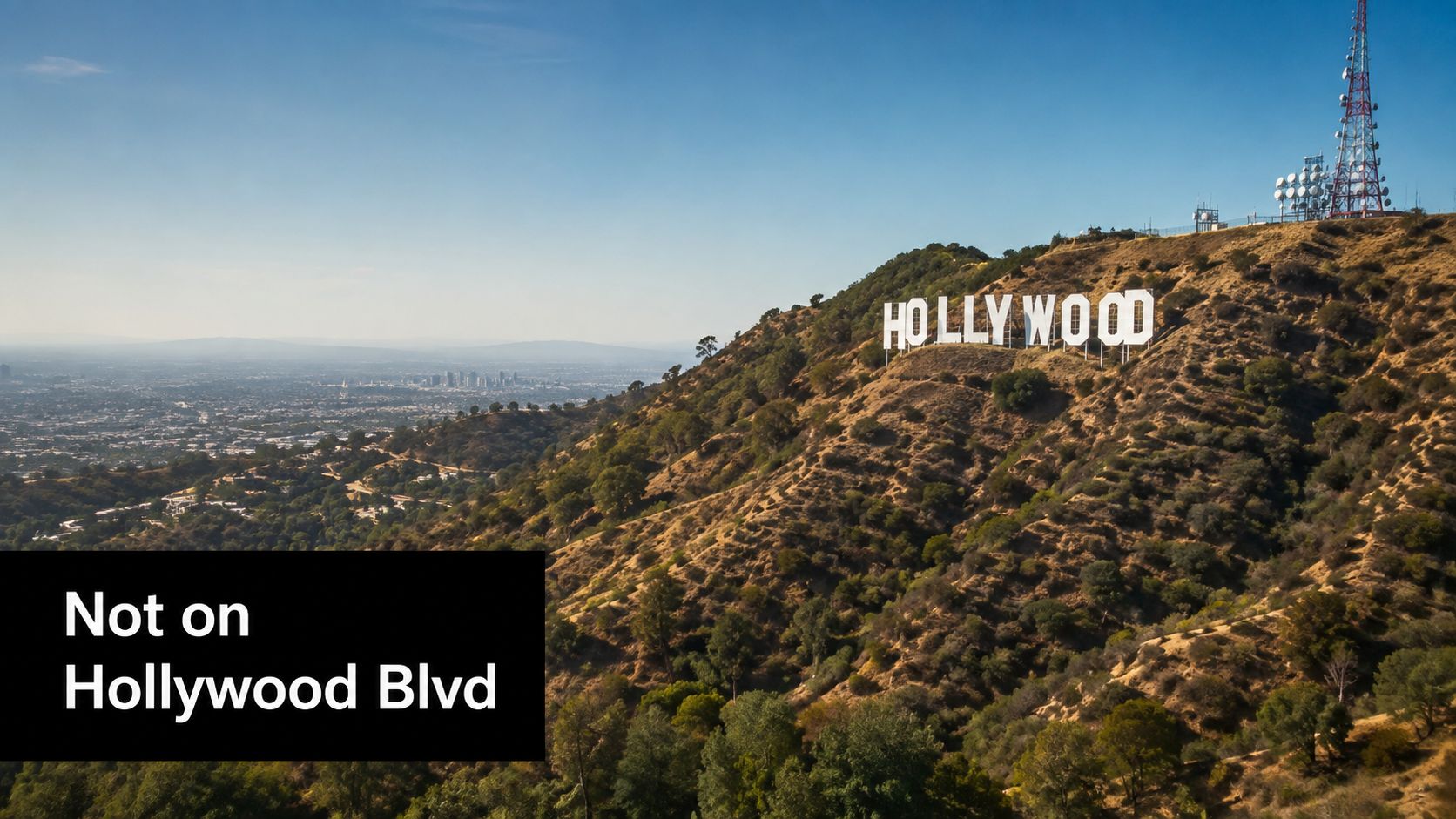
The first mistake most visitors make is assuming the sign rises directly above the Walk of Fame. It doesn't. The Hollywood Sign sits high in the Hollywood Hills, and that separation is exactly why it feels dramatic in photos and inconvenient in practice.
That distance changes how you should think about the stop. You're not walking out of a theater district and popping up to the letters in five minutes. You're planning a hillside visit, which means roads, hills, trail access, and parking all matter if you want the experience to stay relaxed.
Why the location changes your itinerary
The cleanest way to approach the sign is to treat it as part of the Hollywood Hills, not part of the boulevard. That framing helps families avoid exhausting detours, helps couples keep the day romantic instead of frustrating, and helps corporate groups stay on schedule. It also makes Griffith Observatory pairing feel natural, because both sit in the same hillside story rather than separate sides of the city.
Practical rule: if your plan starts with “we'll just walk over,” you're already behind.
For visitors who want an easy, well-paced version of the day, a private route with Another Side Of Los Angeles Tours usually makes more sense than improvising on the fly. Guides can place you at the right overlook, keep the group moving efficiently, and skip the awkward guesswork that comes with trying to piece together a hillside visit on your own. That matters even more if you're combining the sign with Hollywood, Beverly Hills, or Griffith Observatory in one itinerary.
The best results usually come from pairing the sign with a broader neighborhood loop. That gives you a real Los Angeles day, not just a photo stop that eats the rest of your schedule.
2. The Best Photo Spots Depend on Knowing the Right Vantage Point
A solid Hollywood Sign photo starts with choosing the right angle before you even leave the car. The sign sits high on the slope, so a viewpoint that works for one group can feel cramped, distant, or too crowded for another. Understanding the sign's origin adds weight to every photo you take. see the Hollywood Sign history for the full story.
Lake Hollywood Park gives a softer setting with trees and open space, Bronson Canyon feels more tucked away, and the Griffith Observatory area gives you a wider city backdrop behind the sign. Each spot changes the mood of the shot. One gives you a clean, family-friendly frame. Another feels quieter and more local. A third adds the scale of Los Angeles behind the landmark.
What works for different kinds of visitors
Families usually do best at public viewpoints that are easy to reach and do not ask kids to handle a long walk first. Couples often prefer a place where they can stay a while without getting pushed aside by heavier foot traffic. Content creators and photographers usually want a clearer line of sight, fewer distractions in the frame, and enough space to adjust without rushing. A local guide helps with that because the right overlook is often the one that saves time and avoids trial and error.
Morning light can make the sign easier to photograph, and it often means fewer people around the popular pullouts. The trade-off is simple. Early visits are calmer, but you may give up some flexibility if the rest of your day is already packed. If you want the sign to read clearly in the frame, a broader overlook works well. If you want a tighter composition, choose a position that brings the hillside closer and keeps background clutter down.
For a deeper local planning angle, the best photo spots in Los Angeles guide is a useful complement to this stop. If your trip centers on photos, a few small choices make a real difference, including a phone tripod, a steady hand, or a telephoto lens for tighter framing. The practical photography basics in this street photography tips piece translate well here too, especially if you are trying to catch the sign without fighting glare, shadows, or a busy foreground.
A better viewpoint usually matters more than a longer hike. For travelers who want the sign, the city view, and a smooth schedule in one outing, a guided photo-focused trip with Another Side Of Los Angeles Tours can remove a lot of guesswork without turning the stop into a rushed photo grab.
3. The Sign Began as a Real Estate Billboard, Not a Movie Icon
One of the most useful facts about Hollywood Sign is that it was never built to be a movie symbol. It began in 1923 as “HOLLYWOODLAND,” a temporary real-estate billboard for a housing development in the Hollywood Hills. The original installation was large, with 13 letters each about 50 feet tall, and the full word stretched about 450 feet across the hillside, using roughly 4,000 light bulbs so the message could light in sequence. The project cost about $21,000, and it was intended to last only 18 months. Hollywood Sign history
That origin changes how the landmark feels when you see it in person. It wasn't created as public art or an entertainment shrine. It was a sales tool, and a very ambitious one.
Why that history matters at the overlook
The story explains why the sign sits where it does, why its scale still feels surprising, and why the name evolution matters. It's a reminder that many Los Angeles landmarks started as commercial projects before they became cultural symbols. The Hollywood Sign is one of the clearest examples of that shift.
The official history page from the sign's preservation organization frames the early story similarly, noting the developer-backed origins and the $21,000 construction cost in 1923. A sign is born That matters on a visit because the landmark becomes more interesting once you understand it as a piece of Los Angeles development history, not just a backdrop.
If you like hearing those layers on the ground, ask a guide to connect the housing campaign, the hillside location, and the later symbolism. The difference is immediate. A basic photo stop becomes a small history lesson about how Los Angeles markets itself, reinvents itself, and keeps those images alive.
The private-tour version of this story works well because you can hear it while you're moving through the city instead of reading about it after the fact. Another Side Of Los Angeles Tours often fits well here for visitors who want context without giving up comfort or pace.
4. Griffith Park Helps Turn the Sign Into a Real Day
A Griffith Park day can start at Mulholland Drive, where the sign sits in view against the Cahuenga Pass before you move into the park's shade. That simple shift changes the visit. Pairing the sign with Griffith Park turns a quick photo stop into a fuller outing with scenery, walking options, and an easier route back.
Griffith Park gives the sign context that a single overlook cannot. Griffith Observatory adds a broader city view, nearby trails add movement, and a scenic drive through the hills can tie the stops together without making the day feel rushed. For first-time visitors, that mix helps the sign feel connected to the city instead of isolated from it.
A few route combinations that work well
- Morning hike and city view day: start with a sign view, then move into Griffith Observatory for the broader skyline.
- Family-friendly hillside day: choose an easy public viewpoint, then add a picnic and a slower observatory visit.
- Style-conscious city day: combine the sign with Hollywood, Beverly Hills, and a sunset stop elsewhere in the city.
The trade-off is simple. A tighter route keeps the day efficient, while a more layered plan gives you shade, pauses, and better chances to enjoy the view without feeling hurried. That matters when the group includes people with different energy levels or different ideas about what makes a good Los Angeles day.
A private itinerary helps when the group does not move at the same pace. Some travelers want history and context, others want photos, and others want the least amount of uphill walking possible. A concierge-style plan lets the route fit the group instead of forcing everyone into the same rhythm.
The best Hollywood Sign days feel balanced, not packed.
That balance matters for corporate groups too. A well-shaped route keeps people interested without turning the outing into a logistics exercise. It also helps couples and families save energy for whatever comes next, whether that means lunch in Los Feliz, an evening in West Hollywood, or a coastal extension to Santa Monica or Venice later on.
For a custom sequence that handles the geography intelligently, Another Side Of Los Angeles Tours is often a practical option. The value is not just transportation. It is the ability to connect the sign with the rest of the day in a way that feels considered and easy to follow.
5. Access Routes and Hiking Choices Reward Planning
A good Hollywood Sign visit starts with choosing the right access point for your group. Some routes keep the day light and easy, some put you closer to the hillside, and some ask for more time and more uphill effort than visitors expect.
Lake Hollywood Park usually works well for the gentlest public-facing view, Bronson Canyon gives the outing a more hike-oriented feel, and Mount Lee routes suit visitors who want the closest uphill challenge. The better choice depends on fitness, crowd tolerance, parking plans, and how much of the day you want to spend on the trail.
The hiking guidance from Griffith Park also makes one point clear. The sign is best reached via marked trailhead routes inside Griffith Park, not by cutting through residential neighborhoods. Griffith Park hiking routes That keeps the visit safer and more relaxed, especially when the group is unfamiliar with the area.
If you are capturing the hike for a vlog, this step-by-step vlog guide covers framing, audio, and pacing for trail footage.
What seasoned visitors do differently
They start early, especially on weekdays, and they treat parking as part of the plan instead of a last-minute detail. They also leave room for the walk, a few pauses, and more than one angle on the sign. A visit usually feels better when you are not rushing straight to one photo and back out again.
A little preparation changes the whole outing. Better shoes help on uneven ground, water matters more than many first-time visitors expect, and a route that looks short on a map can feel different once the incline begins. That is where a private itinerary can earn its keep, because it lets the route match the group's pace instead of forcing everyone into the same rhythm.
Don't try to solve access by cutting through residential streets. It creates problems fast.
That is one reason a guided approach can be worth the investment. Another Side Of Los Angeles Tours handles route selection, keeps the group away from the most frustrating bottlenecks, and removes a lot of the stop-start feeling that comes with DIY planning. For families, corporate groups, and visitors with limited time, that practical help can make the outing feel organized instead of exhausting.
If the sign is part of a broader LA day, the route matters even more. A thoughtful itinerary can connect the hillside visit with Hollywood, Beverly Hills, or a later coastal stop without making the day feel scattered.
6. Visibility Changes with Season, Weather, and Air Quality
The Hollywood Sign can look crisp and cinematic one hour, then hazy the next. That's one of the most common disappointments for first-time visitors, especially when marine layer fog, smog, or general haze sits over the city. Los Angeles weather is part of the experience here, not just background noise.
A winter morning often gives you the clearest result, while summer afternoons can feel soft and dusty. Early visits usually improve your odds, and checking conditions before you go is the most practical habit you can adopt.
How to plan around the sky, not against it
If photography matters, build in flexibility. A fixed-time visit on a day with poor visibility can leave you with a weak image and a rushed mood. If you have a choice, choose an early slot and be ready to pivot if conditions shift.
Air quality and visibility forecasts are worth checking before the trip. AirNow.gov is a sensible starting point, and planning tools such as PhotoPills can help you understand how the sun will sit relative to the sign. The point isn't to over-engineer the outing. It's to avoid showing up at the worst possible moment for light.
Here's a useful local rule. If the skyline looks flat from lower ground, the hillside view probably won't be spectacular either. That's why guides who watch conditions before departure are so useful. When the morning is clear, you go for the sign. When it isn't, you redirect to a better Griffith Park or city alternative and still salvage the day.
That adaptability is part of what makes Another Side Of Los Angeles Tours appealing for visitors who don't want to gamble on visibility. A guide who can read the weather, the light, and the road conditions adds real value in a city where the view changes fast.
7. Respecting Boundaries Protects the Landmark and the Neighborhood
This is the practical truth behind many Hollywood Sign mistakes. The sign is fenced off, the surrounding land is protected, and nearby neighborhoods are private residential areas. That means the right way to see it is from designated public areas and legal trail or overlook access, not by wandering into places that look convenient on a map.
The access guidance available to visitors is clear enough on the point that unauthorized approach can lead to police involvement or detention. Visitor guidance on Hollywood Sign access For the guest, that means the difference between a memorable stop and a bad afternoon is often just one decision about where to stand.
What responsible visiting looks like
- Stay on marked trails and public paths.
- Use only legal viewpoints for photos.
- Keep noise down near residential parking areas.
- Pack out everything you bring in.
- Leave drones out unless you have explicit permission.
The preservation side matters too. A historical account of the sign notes that the original structure had decayed by the 1970s, leading to a rebuild backed by supporters such as Hugh Hefner, Alice Cooper, and Gene Autry, and one source says the sign was last lit in 2000 for the millennium celebration. Visitor Center Hollywood fun facts Those details are a reminder that the sign survives because people took restoration seriously.
For visitors, the cleanest approach is simple. Use the public access points, respect the neighborhood, and don't chase a shortcut that creates risk for you and inconvenience for everyone else. That's also where a private guide helps, because a good guide knows the boundaries and keeps the group in the right places without making the experience feel restrictive.
8. A Little Gear Makes the Visit Better Than Most People Expect
A lot of visitors underestimate the Hollywood Hills. They see a famous sign and assume the outing will be a short, easy photo stop. Then the sun, incline, and uneven ground turn a relaxed afternoon into a tired one.
The simplest improvement is also the most effective. Dress for movement, not for the parking lot selfie. Comfortable shoes, layered clothing, water, and sun protection all make the experience easier, especially if your plan includes any walking, trail viewing, or uphill segments.
Small decisions that change the experience
- Wear real walking shoes. Uneven ground and trail surfaces are not friendly to dress shoes or flimsy sandals.
- Carry more water than you think you need. Heat and elevation add up quickly.
- Bring sunscreen and reapply it. The exposure in the hills is stronger than many visitors expect.
- Pack a snack. A granola bar or fruit can help if your group is stretching the visit longer than expected.
- Download offline maps. Cell service can be inconsistent once you're in the hills.
You can also make the visit smoother by planning for the weather rather than assuming it'll feel the same all day. Mornings can be cool, middays can be hot, and evenings often bring a breeze. That's especially relevant for families with kids and for groups that include people who don't hike regularly.
Good gear doesn't make the Hollywood Sign more “serious,” it just keeps the visit comfortable enough to enjoy.
If you want the practical version without carrying the burden yourself, a guided outing with Another Side Of Los Angeles Tours is a smart fit. The guides bring the pace, the route knowledge, and the comfort layer that many first-time visitors don't realize they'll need until they're already on the hillside.
8-Point Comparison of Hollywood Sign Facts
| Item | 🔄 Complexity | ⚡ Resources | 📊 Expected outcomes | 💡 Ideal use cases | ⭐ Key advantages |
|---|---|---|---|---|---|
| The Hollywood Sign Isn't Actually On Hollywood Boulevard | Moderate, requires route planning and transport | Car/ride-share, guided tour or 1–3 hr hike; maps/parking | Efficient itinerary, fewer safety/trespass issues | First-time visitors planning LA logistics | ⭐⭐ Dramatic views; avoids crowded Blvd viewpoints |
| The Best Photo Spots Require Knowing Hidden Vantage Points | High, needs local knowledge and navigation | Local guide or scouting time, varied lenses/tripod, short hikes | Unique, high-quality photos with fewer people | Photographers, content creators, repeat visitors | ⭐⭐⭐ Distinct perspectives and superior lighting opportunities |
| The Sign Has a Fascinating Restoration and Sponsorship History | Low, informational, no special logistics | Time to read guides/tour commentary | Deeper appreciation and storytelling value | History buffs, guided tours, educators | ⭐⭐ Cultural context; engaging narratives for visitors |
| Griffith Park, Bundling Attractions, and Designing a Coherent Visit | Moderate–High, itinerary design and timing | Full day, transport, possible admission (Observatory), maps | Cohesive visit, time efficiency, varied experiences | Families, full-day tourists, mix-interest groups | ⭐⭐⭐ Maximizes time; combines nature, science, and Hollywood |
| Access Roads and Hiking Routes Require Strategic Planning to Avoid Crowds | Moderate, route selection and timing decisions | Parking apps, offline maps, appropriate footwear | Reduced crowds, better parking and photo conditions | Hikers, flexible visitors, those avoiding peak times | ⭐⭐ Multiple route options tailored to fitness and timing |
| The Sign's Visibility Depends on Season, Weather, and Air Quality | Moderate, requires monitoring forecasts | AQI/weather apps, flexible schedule, early arrival | Improved visibility and photo quality when timed well | Photographers and visit planners prioritizing views | ⭐⭐ Better planning → clearer views; avoids disappointment |
| Respect Property, Boundaries, and Park Rules to Protect This Iconic Landmark | Low, rule compliance and situational awareness | Knowledge of park rules, permits for commercial use | Incident-free visits and preserved access for all | All visitors; drone operators; commercial photographers | ⭐⭐ Legal compliance; protects landmark and neighborhood |
| Bring Appropriate Gear and Prepare for Conditions Most Casual Visitors Underestimate | Low–Moderate, packing and basic prep | Hiking boots, 2L+ water, sunscreen, layers, charger, tripod | Safer, more comfortable, longer and more productive visits | Hikers, families, photographers, longer-stay visitors | ⭐⭐⭐ Enhanced safety, comfort, and photo quality |
Make the Sign Part of a Better Los Angeles Day
The best way to visit the Hollywood Sign is to choose the version that fits your day, not the version that looks easiest on a map. If you're traveling with kids, a public viewpoint or gentle walk can be the right call. If you care more about photos, a quieter vantage point and better light will matter more than a famous trail name. If you're short on time, the smartest move is to treat the sign as one stop in a larger route instead of trying to make it the whole day.
The same logic applies to weather, terrain, and the rest of Los Angeles. Clear mornings reward early starts, while haze and marine layer can make a later visit feel underwhelming. Griffith Observatory pairs naturally with the sign, and so do Hollywood, Beverly Hills, Santa Monica, Venice, and Malibu if you want the day to feel complete instead of fragmented. The most polished itineraries leave room for traffic, parking, and a meal, because those details are what separate a decent outing from a memorable one.
Respect for the landmark matters just as much as timing. Stay on public access points, keep to marked routes, and treat the nearby neighborhoods with the same courtesy you'd expect at home. That approach protects the view for everyone and keeps your visit calm, legal, and easier to enjoy.
For many guests, a private experience is the most useful option when the day needs to feel effortless. Another Side Of Los Angeles Tours is especially relevant for families, couples, corporate groups, and first-time visitors who want flexible pacing, local photography guidance, and a concierge-style route that fits the city. If you want to turn the Hollywood Sign into part of a well-run Los Angeles day, read our Sunset Boulevard review for more planning context and then shape your route around the viewpoints and neighborhoods that matter most to you.
If you want a smoother, better-paced Hollywood Sign visit, Another Side Of Los Angeles Tours can help you plan the route, timing, and photo stops around your group's interests. Visit Another Side Of Los Angeles Tours to build a private Los Angeles itinerary that connects the sign with Griffith Observatory, Beverly Hills, Hollywood, or the coast in a way that feels easy from start to finish.