A private driver pulled up beside a wall covered in color, and the first thing most guests notice is how quickly Downtown Los Angeles stops feeling like a transit zone and starts feeling like a gallery. That's the charm of downtown LA street art, it's not hidden behind velvet ropes, it's woven into the blocks, alleys, and loading docks of the city's creative core. If you want the best version of it, go with a plan, go with daylight, and go with someone who knows which walls are worth your time.
Table of Contents
- 1. The Arts District, LA's Vibrant Street Art Epicenter
- 1. The Arts District, LA's Vibrant Street Art Epicenter
- 2. The Broad Museum Wall and Surrounding Downtown Galleries District
- 3. Wynwood-Style Alley Art, Passage Murals and Hidden Gem Walls
- 4. The Flower District, Wall Project and Pedestrian-Friendly Corridor
- 5. The Warehouse District, East 4th and 5th Street Corridor and Industrial Canvas
- 6. Little Tokyo Gateway and Cultural Mural Corridors
- 7. The Factory Contemporary, Building 101 and Arts Complex Street Art Integration
- 8. Skid Row Walls and Social Commentary Murals, Respectful Cultural Context
- Downtown LA Street Art, 8-Site Comparison
- Your Private Tour of LA's Street Art Awaits
1. The Arts District, LA's Vibrant Street Art Epicenter
The Arts District is the neighborhood people mean when they talk about Downtown Los Angeles as an open-air art stop. Walk one block here and the mood changes fast. Former warehouse streets turn into a gallery route, and the murals feel larger, sharper, and more layered than what you usually find in the rest of the city. That is why I send guests here first when they want the strongest street art payoff with the least guesswork.
The smartest private-tour route starts near the Container Yard and continues through the surrounding warehouse blocks, where the walls stay active with large-scale work. You will want to focus on Traction Avenue, Mateo Street, Alameda Street, and 3rd and 4th Streets street-art district guidance. This is the cluster that gives the district its reputation, and it rewards a slow walk more than a rushed drive-by. If you want a reference point before you go, use the Arts District walking tour map to orient yourself, then spend your time where the walls hold the strongest pieces.
The district has more than 100 murals and is widely described as the densest concentration of street art in the city Arts District overview. That density matters because it creates constant visual competition, which pushes artists to go bigger and bolder. It also means you do not need to hunt for one hidden wall. The area gives you wall after wall, all within a compact walkable grid.
What to prioritize first
Start with the biggest murals before you get distracted by side alleys and smaller tags. The broad warehouse walls carry the neighborhood's strongest statement pieces, and they photograph best when you give them space in the frame. Go in daylight, but not at peak glare, since the flat surfaces can wash out color. Mid-morning or late afternoon usually gives you cleaner contrast and better texture on painted brick and corrugated metal.
For photos, step back farther than you think you need to. A lot of visitors stand too close and lose the scale that makes this district special. If you want a cleaner composition, look for corners where a mural meets a loading dock or a long sidewalk line, then shoot from an angle instead of straight on. That lets the art feel integrated with the neighborhood instead of flattened into a snapshot.
Food and coffee breaks are easy here, so the visit can stay relaxed. The point is to move slowly, notice details, and let the district do the work. If you want to bring that same visual energy home, you can also browse urban canvas prints and keep the look going after the trip.
1. The Arts District, LA's Vibrant Street Art Epicenter
This is the neighborhood people mean when they say Downtown has become an open-air art destination. The Arts District sits east of the main commercial core, and the city's own arts-and-culture reporting shows why it matters, the residential population grew from 27,849 in 2000 to more than 80,000 today, with a projection to top 200,000 by 2040 and 36,000 residential units currently under construction or proposed DTLA Arts & Culture report. That density changes everything, more foot traffic, more visual competition, and more reason for murals to be big, bold, and worth a slow walk.
The best private-tour route starts around the Container Yard, then moves through the surrounding warehouse blocks where walls stay busy with large-scale work. You'll see why locals treat this area like the city's most reliable mural cluster, especially around Traction Avenue, Mateo Street, Alameda Street, and 3rd and 4th Streets street-art district guidance. The district also has more than 100 murals and is widely described as the densest concentration of street art in the city Arts District overview.
What to prioritize first
A seasoned guide will point out the major names quickly, then slow the pace where the texture really matters. Look for Shepard Fairey for political edge, Mear One for monumental geometry and figure work, and Victor Ving for detailed character-driven scenes. If you're booking a private outing with Another Side Of Los Angeles Tours, the Arts District walking tour keeps the route tight and efficient, which is exactly what you want in a neighborhood this dense.
Practical rule: book Tuesday through Thursday between 10 AM and 2 PM if you want softer light, fewer crowds, and better photo conditions.
Bring comfortable shoes, a charger, and patience for detours into coffee shops and galleries. The best visits here aren't rushed, they're paced like a proper concierge experience, with time to pause, compare styles, and hear why one wall survived while another got painted over.
2. The Broad Museum Wall and Surrounding Downtown Galleries District
Just south of the Arts District, the visual energy shifts from warehouse grit to a more polished downtown art circuit. The Broad anchors that change, and the surrounding blocks feel curated rather than improvised, which is useful if you want street art without losing the comfort of a central cultural district. Visitors often pair murals with a museum stop, then let the rest of the afternoon unfold around galleries, architecture, and walkable public space.
A private guide should treat this area as a crossover stop, not just a photo location. The walls around the museum and nearby alleys often mix commissioned pieces with rotating urban work, so the experience feels cleaner and more contemporary than the rawer Arts District blocks. For many first-time visitors, that makes it an ideal introduction to downtown LA street art, because you get the city's creative vocabulary in a setting that also works for couples, families, and corporate groups looking for something more refined.
If you want the smoothest day, combine the neighborhood with a museum visit and lunch before the streets get crowded. Grand Central Market is the obvious nearby anchor, and it pairs well with a walking route that includes gallery facades, broad sidewalks, and enough room for a guide to explain what you're seeing without the pressure of a packed alley. For guests booking a downtown-focused experience, Another Side Of Los Angeles Tours can fold this stop into a private route that feels polished instead of improvised.
How to time it
The strongest rhythm here is the monthly gallery energy tied to the second Thursday of each month, when open-studio activity adds movement and conversation to the area DTLA Arts & Culture report hub. That matters because street art never feels isolated in this district, it's surrounded by institutions that help visitors understand how the city has embraced public-facing art as part of its mainstream culture.
Arrive with a charged phone and a flexible schedule, because this is the kind of stop where a single block can turn into three.
3. Wynwood-Style Alley Art, Passage Murals and Hidden Gem Walls
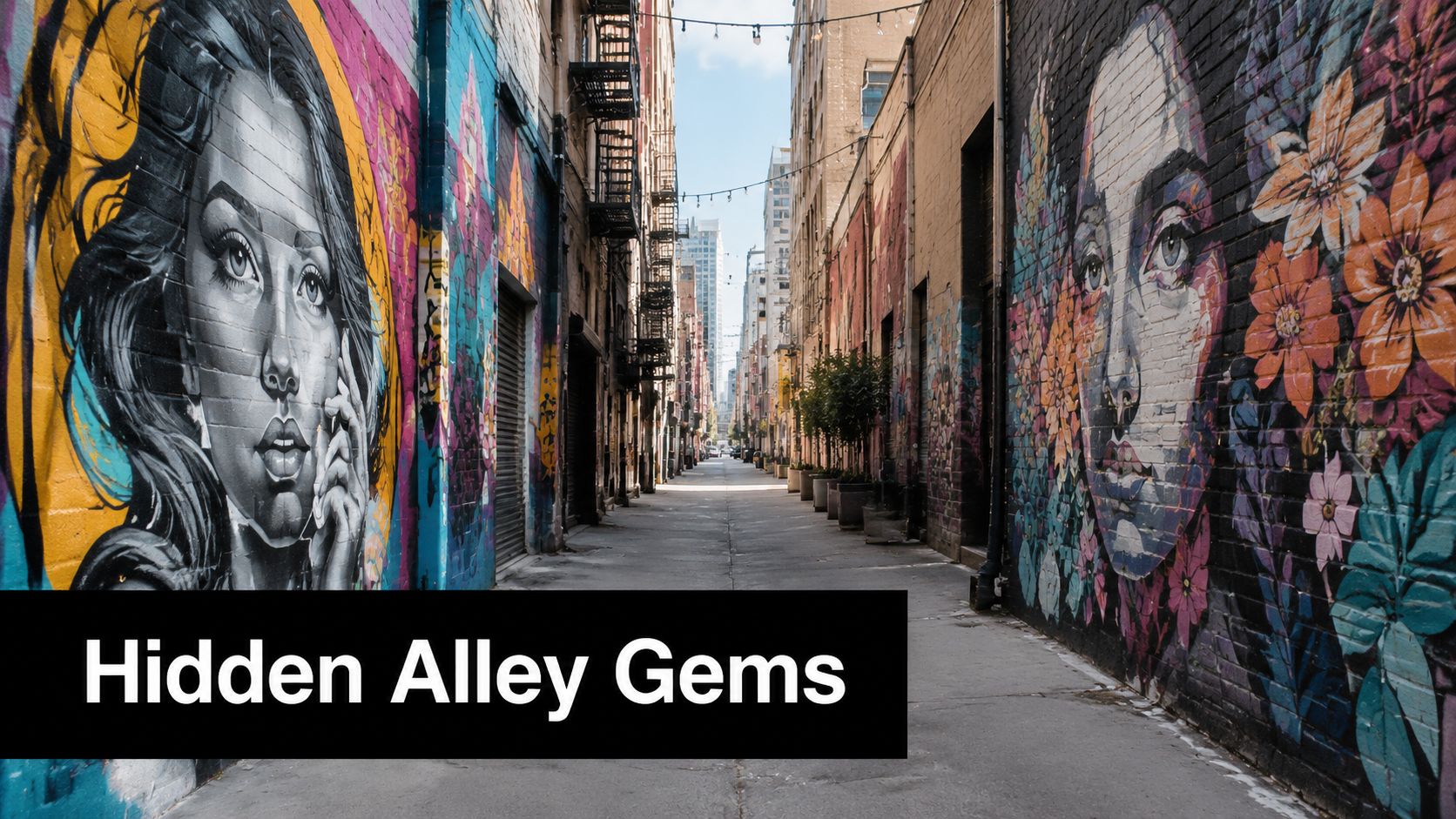
Downtown's most rewarding surprises are often the least obvious ones. Tucked between active storefronts, loading areas, and side passages, these narrow walls give you the closest thing LA has to a discovery-based mural hunt, and they're exactly where a private guide earns their keep. Unlike the headline walls that every visitor can find on a map, these pieces depend on timing, local familiarity, and a willingness to slow down.
The appeal is intimacy. You're not standing in front of a famous facade with a dozen people waiting for the same photo, you're in a passage where the art feels immediate and local. That can mean collaborative crew work, character pieces, or rotating murals that reflect the neighborhood's current mood, and it's one reason many travelers prefer a guided daytime walk over trying to assemble a route on their own. The city's own street-art environment is active enough that visibility matters, and hidden passages tend to reward guests who know where to look.
Here's how I'd handle this with clients who want a premium experience:
- Go in daylight only. Alleys are not where you improvise after dark.
- Ask about work in progress. Seeing a fresh mural mid-creation is often better than only photographing a finished wall.
- Bring a wide-angle lens or use panorama mode. Narrow passages need a different framing approach.
- Respect working artists. If someone is painting and you photograph their wall, tipping or buying something nearby is the right move.
The right tour company keeps you out of guesswork territory. Another Side Of Los Angeles Tours can build that into a safe, curated walk, which is especially useful for couples, families, or content creators who want authentic images without wandering into the wrong block.
4. The Flower District, Wall Project and Pedestrian-Friendly Corridor
The Flower District offers a quieter, more local version of downtown LA street art, and that is exactly why it belongs on a private itinerary. Centered around the 700 block of Wall Street, it combines murals with wholesale flowers, plants, and the early-morning rhythm of a real working district. If you want art surrounded by daily commerce instead of tourist noise, this is a smart stop.
The appeal comes from contrast. Older brick buildings carry the murals, while vendors, cafés, and plant stalls keep the street active without tipping it into chaos. That balance suits visitors who want an intimate outing, especially families and couples who prefer a route that feels relaxed and polished. Early light also changes the mood here, giving the blocks a softer look than much of downtown.
Best way to do it
Go early on a weekday morning, ideally 7 to 10 AM, when the flower market is active and the light still works well for photos. Dress in layers, because the temperature can shift quickly, and do not skip breakfast. This is a strong place to start with coffee, browse a vendor stop, and let the district set an easy pace. If you are with a private guide, ask about the wholesale flower trade, because the neighborhood's background adds more depth than a fast photo stop.
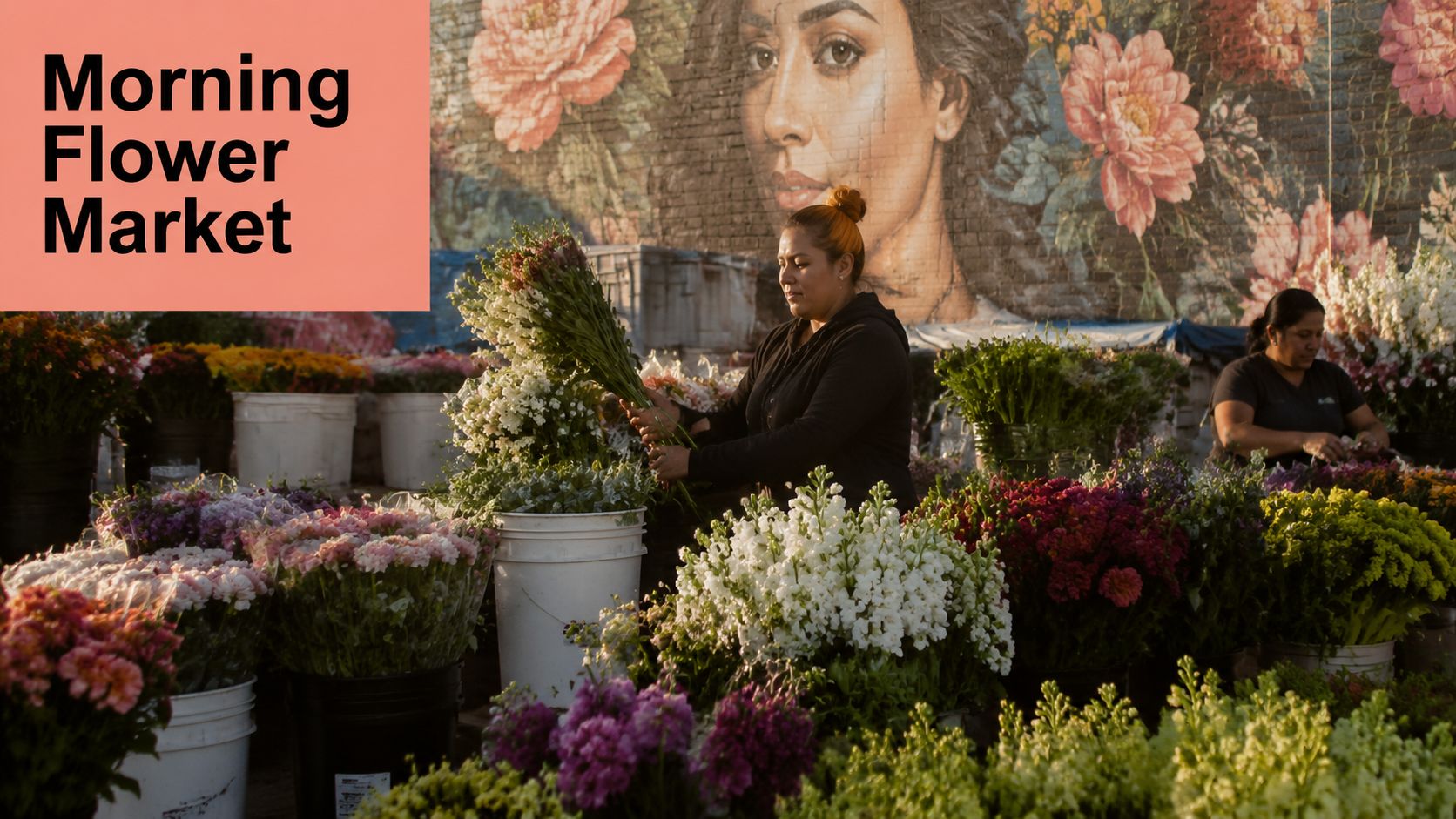
The result feels curated rather than crowded. It also works well as a contrast stop within a larger Los Angeles day, since the calmer pace makes it easy to fit into a private itinerary that later includes Beverly Hills, Hollywood, or Santa Monica.
5. The Warehouse District, East 4th and 5th Street Corridor and Industrial Canvas
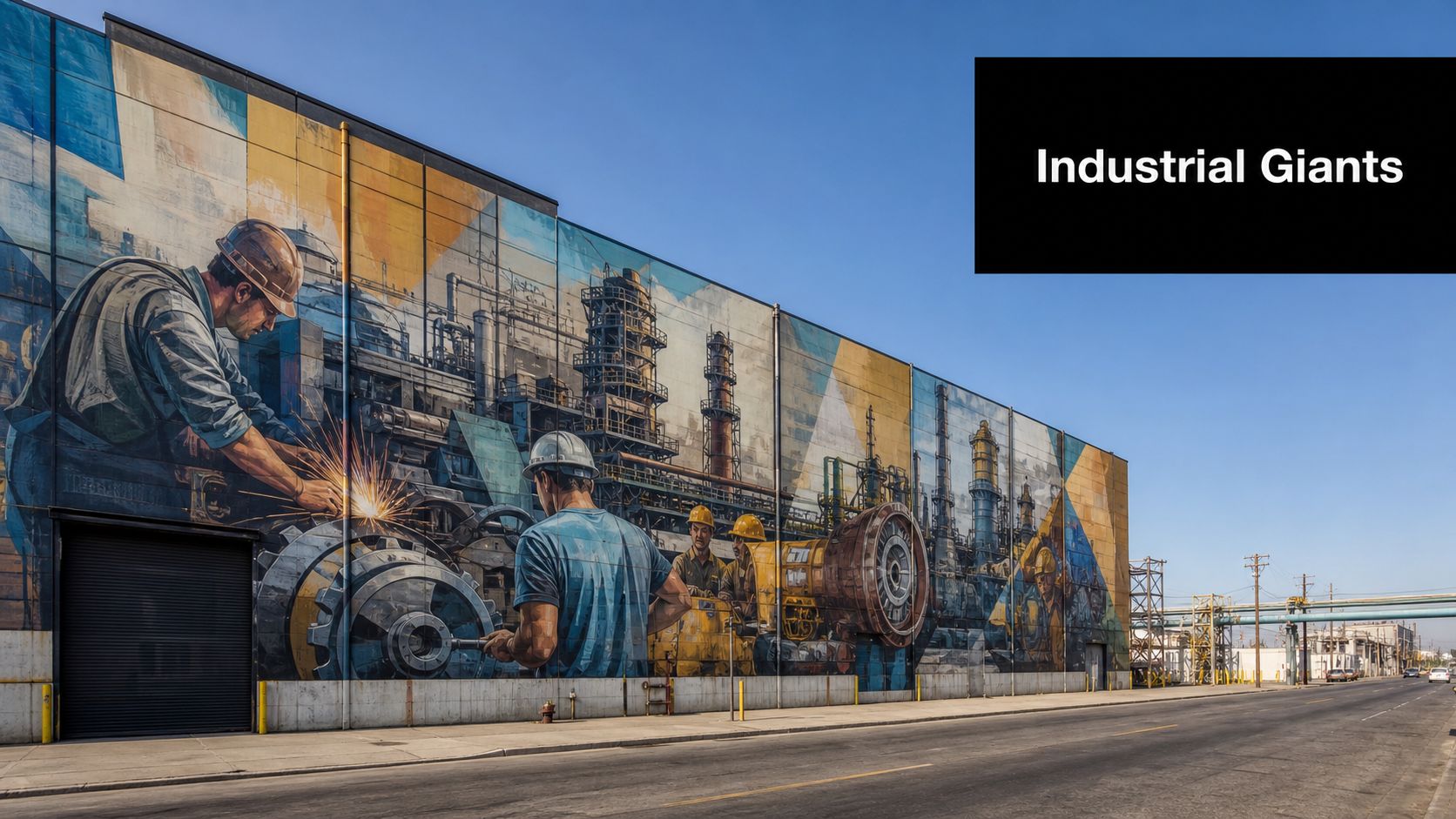
Head farther east and the murals get bigger, rougher, and more architectural. The Warehouse District is where downtown's industrial scale shows up in the art itself, with walls so large they can swallow a building facade whole. This is not a casual wandering zone, it's a destination for guests who want to understand how downtown LA street art stretches beyond the obvious tourist blocks.
The scale changes the experience. Pieces here often rise several stories, so you don't just look at them, you back away, cross the street, and look again from a distance to understand the composition. That's why a guide with local knowledge matters, especially in an area that's shifting with redevelopment. The neighborhood's changes are part of the story, and the most valuable stops are the ones that still feel current when you arrive.
What makes this stop worth the detour
- Massive surfaces: warehouse facades create room for ambitious work that wouldn't fit in tighter streets.
- Technical variety: large murals here often show real spray-paint control, not just scale for scale's sake.
- Better viewing angles: you need time to step back and assess the piece as a whole.
- Guided transport helps: this zone isn't the kind of place I'd ask guests to cover on foot from the main downtown core.
For luxury travelers and corporate groups, the appeal is comfort plus impact. You can arrive by vehicle, move efficiently between walls, and still get the raw industrial atmosphere that defines this side of the city. If you want that handled cleanly, a private downtown experience through Another Side Of Los Angeles Tours is the right fit, especially when time is limited and the goal is to see the strongest pieces without wandering.
6. Little Tokyo Gateway and Cultural Mural Corridors
The border between the Arts District and Little Tokyo is where street art becomes cultural storytelling. The murals here celebrate Japanese-American heritage, Asian artistic traditions, and the layered identity of a neighborhood that has helped shape downtown's character for generations. These are not decorative fillers. They're public-facing works with historical weight, and they deserve a guide who can explain what's on the wall.
I like this stop for guests who want context as much as aesthetics. The area near 1st Street and Central Avenue offers some of the most meaningful cultural murals downtown, and the surrounding restaurants and institutions make it easy to turn a short viewing stop into a full afternoon. If you're planning a family outing or hosting visitors from out of town, this is one of the best ways to show that street art in Los Angeles is tied to community memory, not just style.
Practical rule: pair the murals with a meal in Little Tokyo, then add the Japanese American National Museum if you want the visual story to feel complete.
That combination creates a better understanding of the neighborhood than a stand-alone mural hunt ever could. Afternoon light also works well here, so the photography is strong without being harsh. For travelers who want to see the city with a polished, culturally aware guide, this is exactly the kind of stop that belongs in a private downtown route rather than an overscheduled self-drive day.
7. The Factory Contemporary, Building 101 and Arts Complex Street Art Integration
This stop shows the polished side of downtown LA street art. The murals and installations sit inside the architecture rather than fighting it, so the whole complex feels intentional, edited, and easy to read. For visitors who want a comfortable, climate-controlled version of the scene without losing the point of it, this is one of the cleanest options in the district.
The value is how clearly the space explains the relationship between commissioning, design, and public art. You can see how creative identity keeps evolving inside modern real estate, not only on old warehouse walls. That makes this stop a smart choice for corporate groups, design-focused travelers, and anyone who prefers structure over scavenger-hunt energy. It also gives a useful contrast to the more spontaneous parts of downtown LA street art, because you can compare raw mural culture with integrated urban art in the same day.
A guide or staff member who can identify the commissioned artists makes the visit far more worthwhile. If there is an opening or event, go then, because the mood changes as soon as the building becomes active. A private route through this zone gives you time to look closely without feeling rushed, and it fits neatly into a broader LA itinerary that might also include Hollywood, Beverly Hills, or a family-friendly coast day in Santa Monica or Venice.
For travelers who want legitimacy, comfort, and a route that still feels local, this is the stop to choose. If you want visual reference for a similar corridor feel, see this graffiti hallway template on Aicut.
8. Skid Row Walls and Social Commentary Murals, Respectful Cultural Context
Skid Row is not a place for casual tourism, and it should never be treated like a backdrop for edgy photos. The murals here speak directly to homelessness, inequality, police reform, and systemic injustice, which means the art needs to be approached with care, context, and a guide who understands the neighborhood. The point is not to look at hardship from a distance, it's to understand how artists use public walls to document reality and speak for communities that are often ignored.
Street art in Los Angeles becomes visibly political. The work feels sharper, more urgent, and more connected to lived experience than what many visitors expect from a mural tour. That's exactly why a professional guide matters so much, and why companies with established community relationships are the right choice. Another Side Of Los Angeles Tours is one option that can frame the experience responsibly, which is essential if you want to engage with the neighborhood in a way that respects dignity and safety.
How to approach it correctly
- Go in daylight only. This is essential.
- Travel with a guide, not independently. Context and routing matter here.
- Show up to learn. This is not a voyeuristic stop.
- Keep photography secondary. The message comes before the image.
That approach turns a difficult neighborhood into a meaningful educational experience. For travelers used to Beverly Hills polish or Santa Monica ease, this stop can be challenging, but it's also the one most likely to stay with you. If your goal is a thoughtful private tour that treats Los Angeles as a real city, not a set, this is part of the story.
Downtown LA Street Art, 8-Site Comparison
| Location | Complexity 🔄 | Resources ⚡ | Expected Outcome 📊 | Ideal Use Cases 💡 | Key Advantages ⭐ |
|---|---|---|---|---|---|
| The Arts District: LA's Vibrant Street Art Epicenter | Medium 🔄, walkable, evolving scene | Low–Med ⚡, 2–3 hrs, transit or paid parking | High 📊, dense, photogenic murals and cultural narratives | Content creators, first-time visitors, creative corporate groups 💡 | High quality ⭐⭐⭐, concentrated, authentic community art |
| The Broad Museum Wall & Surrounding Galleries District | Low–Med 🔄, curated, museum-adjacent | Med ⚡, possible museum tickets, paid lots | High 📊, polished, institution-backed works with gallery context | Fine-art enthusiasts, corporate groups, luxury travelers 💡 | Very high quality ⭐⭐⭐⭐, museum legitimacy + street culture |
| Wynwood-Style Alley Art (Passage Murals & Hidden Gem Walls) | High 🔄, requires local knowledge/guide | Low–Med ⚡, walking; guide recommended | High 📊, intimate, narrative-driven discoveries | Adventurous visitors, creators seeking authentic moments 💡 | High quality ⭐⭐⭐, intimate, authentic, low-tourist density |
| The Flower District (Wall Project & Pedestrian Corridor) | Low 🔄, pedestrian-friendly, market timing matters | Low ⚡, early-morning visit, minimal transit | Med–High 📊, unique sensory mix of flowers + murals | Photographers, early risers, nature lovers, families 💡 | High quality ⭐⭐⭐, unique juxtaposition of market & art |
| The Warehouse District (East 4th/5th Corridor & Industrial Canvas) | Med–High 🔄, less walkable, industrial terrain | Med–High ⚡, transport recommended, wide-angle gear | High 📊, monumental scale, dramatic visual impact | Serious art enthusiasts, photographers, drone/film creators 💡 | Very high quality ⭐⭐⭐⭐, massive, technically ambitious murals |
| Little Tokyo Gateway & Cultural Mural Corridors | Low 🔄, compact, culturally focused | Low ⚡, walkable, near cultural institutions | High 📊, culturally rich, historically informed artworks | Cultural tourism, families, educational groups 💡 | High quality ⭐⭐⭐, meaningful community context and symbolism |
| The Factory Contemporary (Building 101 & Arts Complex) | Low 🔄, curated, built-into architecture | Med ⚡, gallery access, events, amenities | High 📊, polished, well-maintained installations | Corporate teams, luxury travelers, accessibility-minded groups 💡 | Very high quality ⭐⭐⭐⭐, curated integration, comfort and professionalism |
| Skid Row Walls & Social Commentary Murals | High 🔄, guided-only, sensitive context | Med ⚡, experienced guides, daytime-only | Very high 📊, profound, educational, emotionally powerful | Socially conscious travelers, educators, advocates 💡 | Very high quality ⭐⭐⭐⭐, powerful social impact and authentic voices |
Your Private Tour of LA's Street Art Awaits
Downtown LA's street art is a living, shifting museum, and the best visits come from knowing where to stand, when to go, and what each wall is saying. The city's own data shows how fast this district keeps growing, and the mural changes right along with it, which is why a private guide makes such a difference DTLA Arts & Culture report. You get less guesswork, more access, and a route shaped around your pace instead of someone else's checklist.
A curated day also helps you see the cultural tension that makes downtown LA street art worth the time in the first place. Some blocks are polished and tourist-friendly, some are raw and politically charged, and some are best understood only when a local explains the neighborhood history behind them. That mix is exactly what makes the area special, and it's also why private touring feels so much more rewarding than trying to explore the district alone.
At Another Side Of Los Angeles Tours, the focus is on clear routing, local insight, and premium service that fits families, couples, corporate groups, and first-time visitors who want the city to feel easy. If you're ready to see the murals, hear the stories, and move through Los Angeles with confidence, visit Another Side Of Los Angeles Tours and plan a private street art outing that feels custom from start to finish.