Hollywood crime scenes are best understood as historical places, not entertainment props. This route follows seven documented locations or neighborhood corridors, while separating exact historical settings from rebuilt addresses and exterior-only viewpoints. The stories include unresolved cases, public tragedies, trespass incidents, and neighborhood histories, so respectful behavior matters: visit in daylight where possible, protect residents' privacy, expect traffic, and never assume a famous address remains publicly accessible.
A well-planned day can place difficult history alongside the wider Los Angeles experience. Another Side Of Los Angeles Tours can combine true-crime context with Beverly Hills, Hollywood, Santa Monica, Venice, Malibu, Griffith Observatory, architecture, and scenic viewpoints. That flexibility suits first-time visitors, couples, families, corporate groups, and private travelers who want a polished itinerary without turning tragedy into spectacle.
Table of Contents
- 1. The Cecil Hotel in Downtown Los Angeles
- 2. The Black Dahlia Murder Site on Short E Street
- 3. The Hollywood Sign and Mulholland Drive
- 4. The Playboy Mansion in Holmby Hills
- 5. The O.J. Simpson Estate in Brentwood
- 6. The Hollywood Roosevelt Hotel in the Walk of Fame Historic District
- 7. The Wonderland Avenue Murders in Laurel Canyon
- 7 Hollywood Crime Scene Sites Compared
- Build a Responsible Hollywood History Route
1. The Cecil Hotel in Downtown Los Angeles
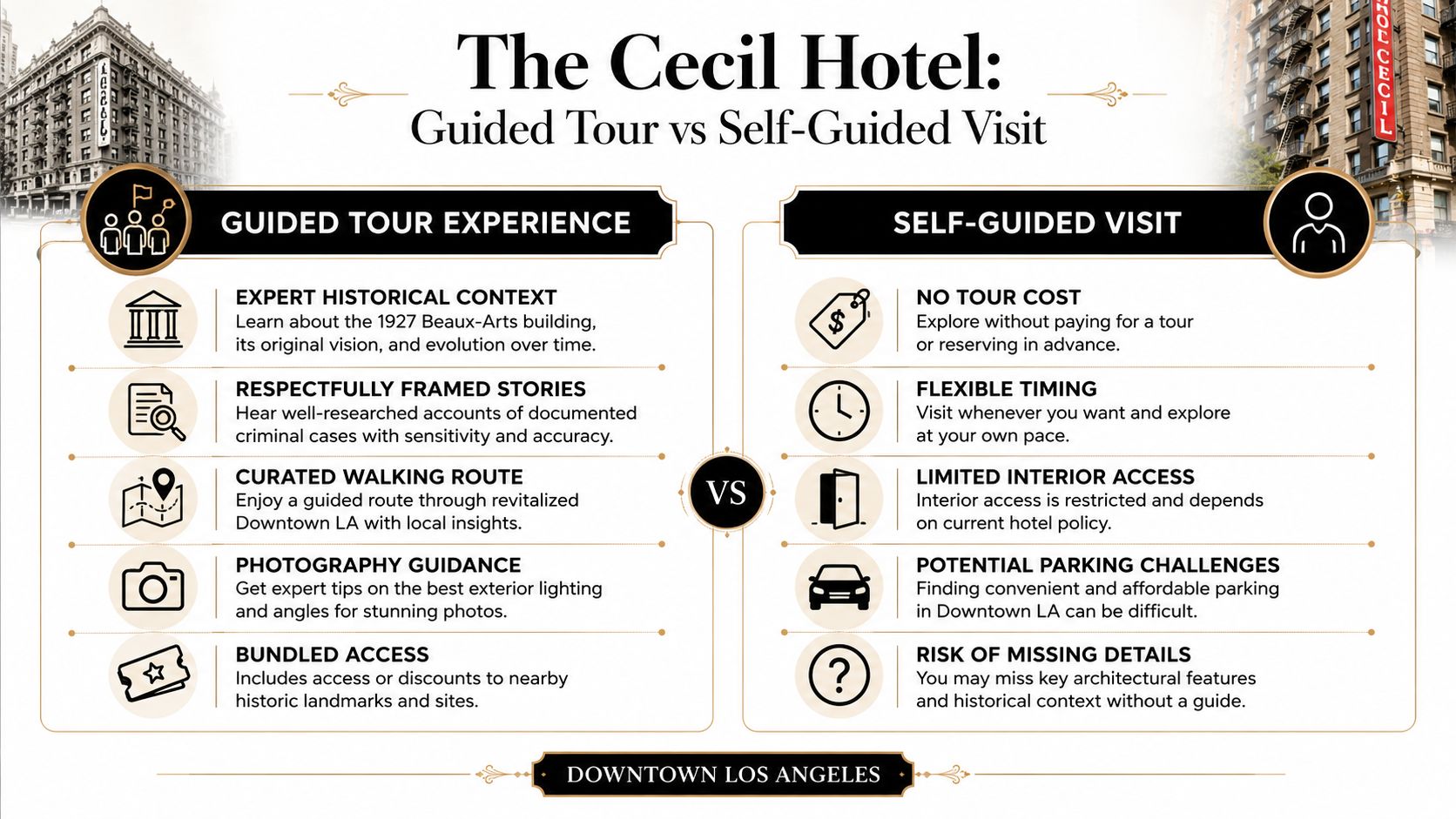
The Cecil Hotel is one of Downtown Los Angeles's most recognizable addresses, and its history is inseparable from the changing character of the surrounding district. The building opened in 1927 and later became internationally associated with the disappearance and death of Elisa Lam, whose case reached a global true-crime audience through documentaries and extensive news coverage.
The building's reputation also draws on older stories of deaths, disappearances, and criminal activity. Richard Ramirez, known as the “Night Stalker,” was reportedly associated with the hotel during the 1980s, but responsible storytelling requires a distinction between documented reporting, later retellings, and speculation. Visitors shouldn't treat the property as a haunted attraction or attempt to enter restricted areas.
Architecture, context, and access
The Cecil works best as an exterior-focused stop within a larger Downtown itinerary. Afternoon light can bring out the building's Beaux-Arts character, while the surrounding streets offer a useful contrast between historic architecture and the district's continuing change. A guide can place the address alongside nearby landmarks such as the Million Dollar Theater and Bradbury Building, rather than reducing Downtown to one notorious hotel.
Practical rule: The respectful visit is observational. Stay on public sidewalks, avoid photographing private individuals, and let the guide explain what's known without embellishment.
Comfortable walking shoes help, especially when the stop is paired with a broader Downtown Los Angeles walking tour. A private guide also makes it easier to adjust the pace for families, older guests, or corporate groups who want architectural context alongside the darker history.
2. The Black Dahlia Murder Site on Short E Street
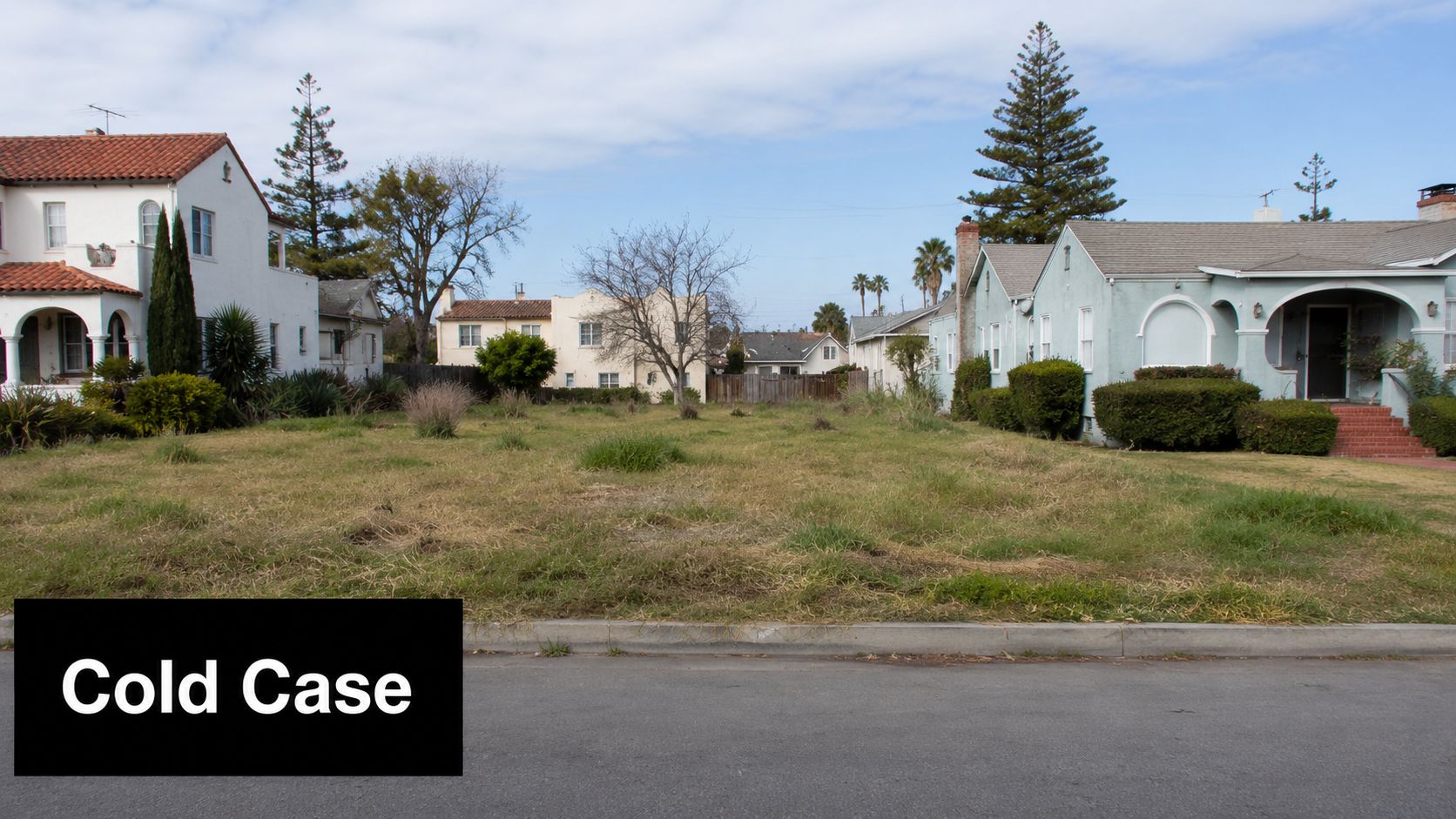
Elizabeth Short's 1947 murder, remembered through the media nickname “Black Dahlia,” remains one of Los Angeles's most enduring unsolved cases. Her body was discovered at a vacant lot on Short E Street, now East 39th Street, in a part of the city that has changed substantially since the investigation. The historical location matters because it shows how a case once framed through sensational headlines became part of the city's broader history of policing, journalism, and gendered media coverage.
The site should never be approached as a theatrical set. It's a residential environment, and the surrounding homes belong to people who didn't choose to become part of a true-crime itinerary. A daytime exterior visit gives guests a clearer sense of the neighborhood's scale and street pattern while avoiding the intrusion and poor visibility of a late-night stop.
Reading the case without exploiting it
A responsible guide centers Short's humanity rather than repeating lurid details. The conversation can include the investigation's place in postwar Los Angeles, the way newspapers shaped public fear, and the difference between evidence and theories that accumulated later. Guests interested in architecture can also pair the stop with mid-century neighborhoods, allowing the area to be understood as a living community rather than a frozen crime scene.
Bring a camera only for respectful street-level or architectural photography, and don't point it toward residents or private interiors. Plan enough time to absorb the location's weight. This isn't a quick photo opportunity, and it may not suit children or guests who prefer lighter sightseeing.
A private vehicle or carefully paced walking plan is useful here because the site doesn't offer a conventional visitor facility. The guide can also connect the case to Downtown, historic neighborhoods, and the wider evolution of Los Angeles without presenting speculation as fact.
3. The Hollywood Sign and Mulholland Drive
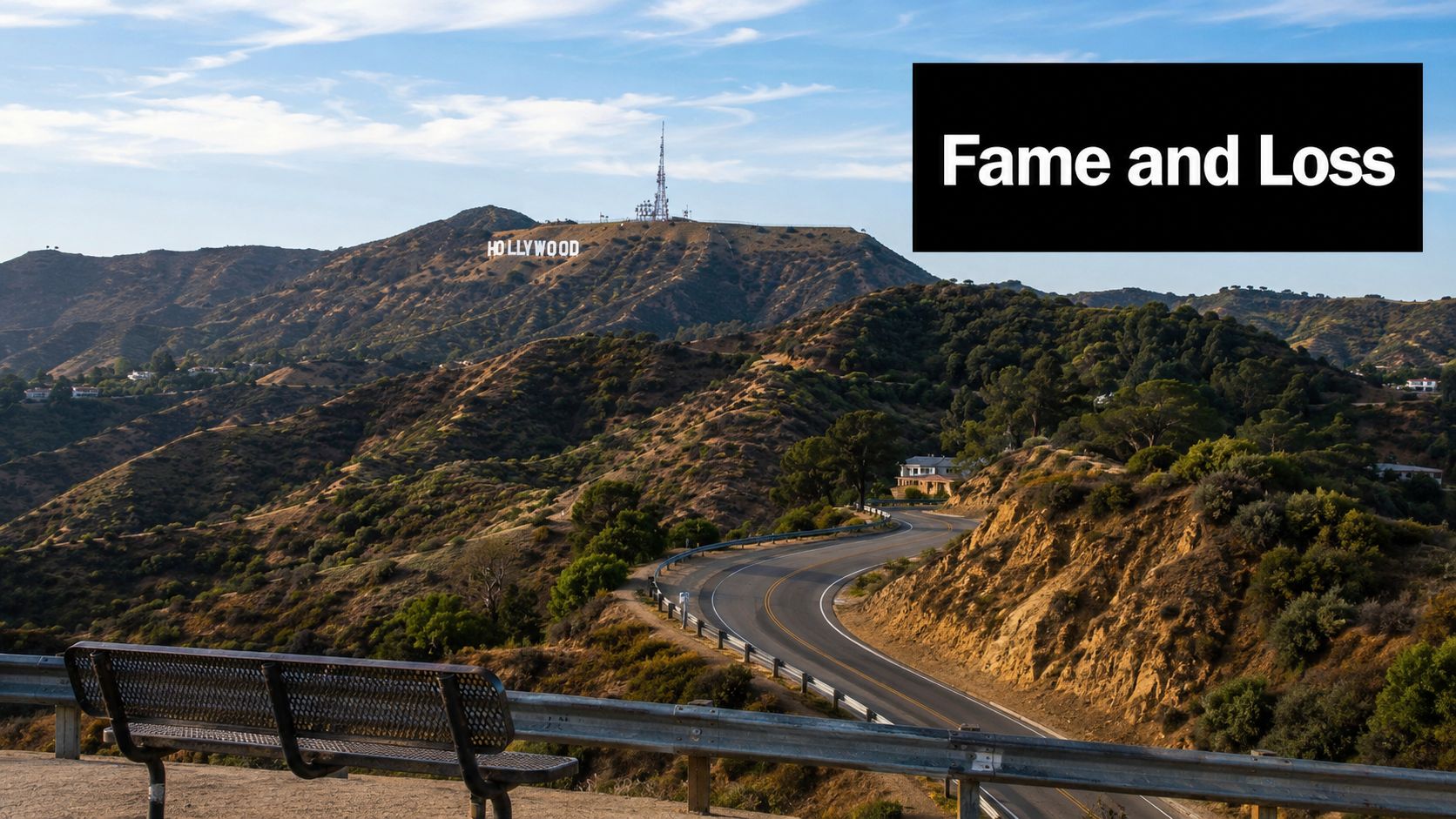
The Hollywood Sign and Mulholland Drive corridor combine spectacular scenery with a more complicated history of celebrity, risk, and public attention. The area attracts visitors for its views, but ridge roads and landmark infrastructure also demand practical judgment. The Hollywood Sign itself is restricted property, protected by gates and sensors, and entering the property is treated as trespassing. Climbing the sign can carry penalties of up to six months in jail and a fine of up to $1,000, as reported by ABC7's coverage of sign arrests and restrictions.
The sign has repeatedly attracted trespassers. In 2017, a man climbed Mount Lee at about 3 a.m., scaled the sign's ladders, and draped tarps over the two “O” letters so the landmark read “Hollyweed.” Officials announced additional security measures afterward, according to ABC7's report on the incident.
Scenic viewpoints, not dangerous access
Mulholland Drive is best experienced through legal viewpoints and planned stops. Stories involving celebrity deaths, collisions, and alleged suicides should be handled with care, especially when an exact location is uncertain or the setting has changed. A guide can distinguish verified history from broad celebrity lore while keeping the focus on the architecture and the human cost behind the headlines.
Schedule this portion around sunrise or sunset if the itinerary allows, but remember that higher areas can feel cooler and more exposed than expected. Wear layers, bring water and sunscreen, and avoid pulling over wherever traffic or road markings make stopping unsafe. A private vehicle allows the driver to choose lawful viewpoints and adjust the route for weather, mobility, or motion sensitivity.
For orientation and landmark context, consult these facts about the Hollywood Sign. The route pairs naturally with Griffith Observatory, mid-century homes, and a scenic drive through the Hollywood Hills. One short stop can become a fuller Los Angeles experience when the guide gives the surroundings time to speak for themselves.
4. The Playboy Mansion in Holmby Hills
The Playboy Mansion is more useful as a study in celebrity culture, privacy, and power than as a simple crime-scene stop. Hugh Hefner's former estate became a symbol of lavish parties and postwar sexual culture, while stories connected to the property have included deaths, overdoses, allegations, and accounts of addiction and mental-health struggles. Those subjects involve real people, so a polished tour should avoid treating rumor as proof or reducing guests and residents to caricatures.
The Gothic-Tudor exterior sits within Holmby Hills, a neighborhood defined by large estates, mature landscaping, and a strong expectation of privacy. The property is not a public attraction in the ordinary sense. Visitors should remain on public roads and sidewalks, avoid photographing residents, and accept that exterior visibility may vary with landscaping, construction, or security.
Place the mansion in its neighborhood
Holmby Hills becomes more legible when the mansion is paired with a broader architectural drive through Beverly Hills or Bel Air. The contrast between grand estates, discreet gates, and public celebrity mythology creates a more informative picture than a stop focused only on scandal. Morning light can work well for exterior photography, provided the group stays within lawful public viewpoints.
A private guide can also help frame the property's cultural role without glorifying its excesses. For families, that may mean a more measured architectural discussion. Couples or corporate groups may prefer a conversation about changing ideas of privacy, fame, and media exposure.
A responsible visit doesn't ask a private neighborhood to perform its past. It uses the public streets to understand how celebrity culture shaped Los Angeles.
The mansion can fit naturally into a private route that includes Beverly Hills, Rodeo Drive, Bel Air, and other notable architecture. That balance keeps the itinerary engaging while respecting the people who live beyond the gates.
5. The O.J. Simpson Estate in Brentwood
The murders of Nicole Brown Simpson and Ronald Goldman in 1994 became a defining American criminal case, not because the location is a conventional visitor attraction, but because the proceedings changed public conversations about celebrity, race, justice, evidence, and media ethics. Nicole Brown Simpson's Brentwood home was the setting associated with the murders, but the original residence has been demolished and rebuilt. That fact makes the stop an exercise in historical geography rather than an opportunity to view an intact crime scene.
The case remains especially sensitive because the victims' lives and families can disappear behind the fame of the defendant and the spectacle of the trial. A guide should keep the focus on Nicole Brown Simpson and Ronald Goldman, the legal process, and the neighborhood's evolution, not gossip or unsupported theories.
A neighborhood history with legal context
The 1995 trial was watched by approximately 95 million Americans, according to the historical account included in the case brief. That figure helps explain the case's extraordinary media reach, but it doesn't make the site public property. Guests should not linger outside homes, photograph residents, or expect access beyond public streets.
Brentwood also rewards a broader residential architecture route. Quiet streets, landscaping, and the contrast between public attention and private life help explain why the case became such a powerful symbol of media saturation. Guests who want deeper context may connect the story with legal education, DNA evidence, jury selection, and the changing language of televised trials.
The subject isn't suitable for every traveler, particularly young children or guests seeking light celebrity sightseeing. A private itinerary gives the guide room to establish the tone, answer questions carefully, and move on if the conversation becomes uncomfortable. For guests interested in the broader celebrity scene, the stop can be paired with the California Celebrity Homes Tour while keeping the Brentwood segment grounded in documented history.
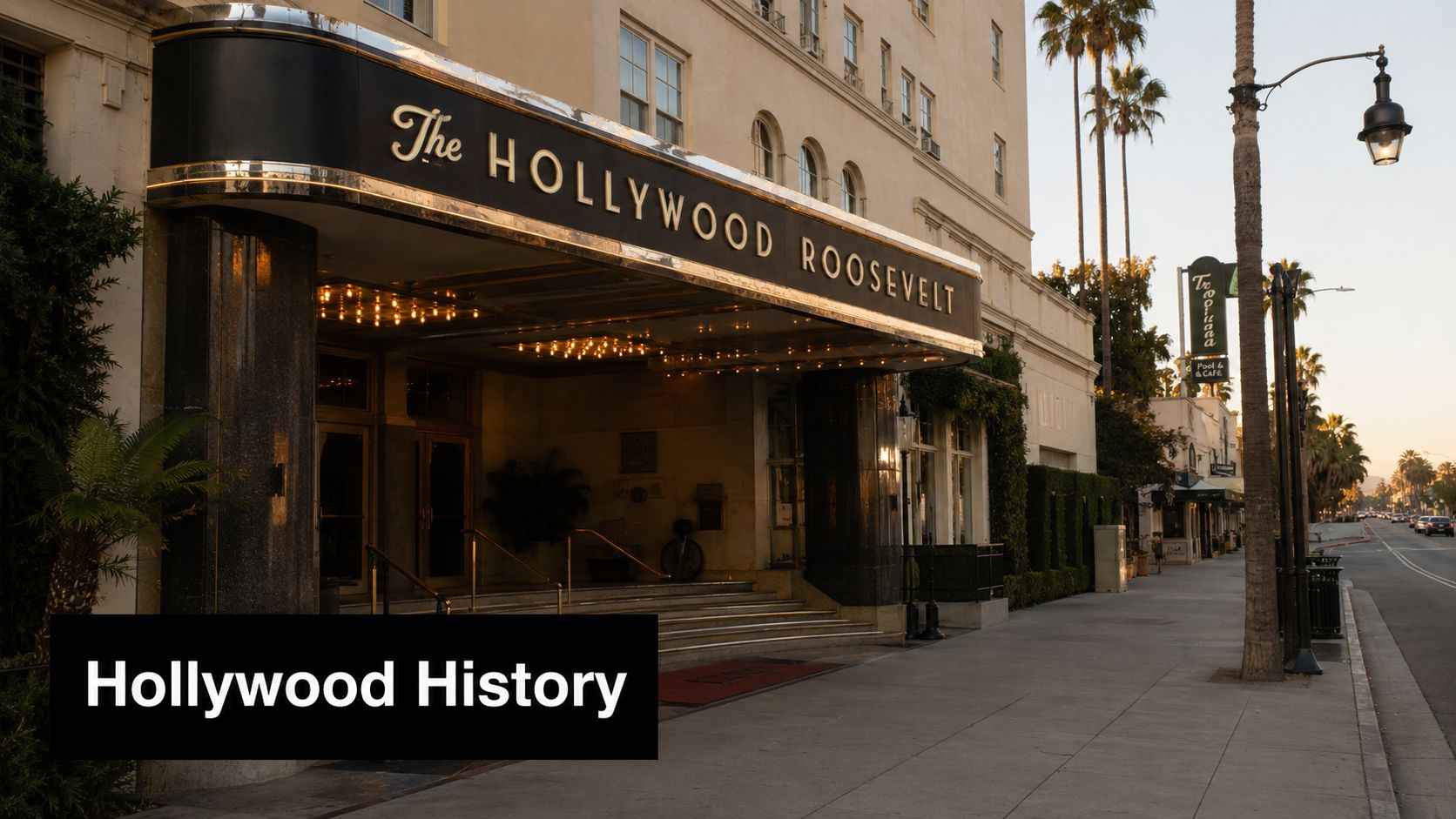
6. The Hollywood Roosevelt Hotel in the Walk of Fame Historic District
The Hollywood Roosevelt Hotel opened in 1927 and became one of the central settings of Hollywood's golden age. Its association with Academy Awards celebrations from 1929 through 1943, Art Deco interiors, legendary parties, and entertainment-industry history makes it significant before any darker story enters the conversation.
The hotel has also accumulated accounts of deaths, alleged overdoses, and tragedies involving guests. Some stories concern young performers and starlets whose deaths were officially described as accidental but later questioned. Those accounts require careful wording. A guide should identify what was documented, what remains disputed, and what has been amplified by decades of Hollywood folklore.
A landmark first, a dark-history stop second
The Roosevelt works particularly well as an architecture and cultural-history anchor. Guests can explore the Walk of Fame district, Hollywood Boulevard, and nearby historic theaters, then consider how the hotel's glamour existed alongside exploitation, vulnerability, and private tragedy. The pool and lobby areas carry strong visual associations, but interior access depends on hotel policies and the day's schedule.
Visit early or later in the day to avoid the busiest boulevard conditions. Comfortable shoes matter because the surrounding district is best understood at street level, while a private guide can manage timing around traffic, hotel access, and photography. Requesting a look at Cinéma Bar may be appropriate when the schedule and hotel rules permit.
Ask before entering: Historic hotels remain working properties. Treat staff directions, guest privacy, and access policies as part of the experience.
Golden-hour exterior photography can be rewarding, but the strongest visit is the one that leaves room for context. A guide can connect the Roosevelt to the studio era, the Walk of Fame, Grauman's Chinese Theatre, and the changing public face of Hollywood.
7. The Wonderland Avenue Murders in Laurel Canyon
The Wonderland Avenue murders belong to Laurel Canyon's darker history, but the neighborhood can't be reduced to one brutal case. In 1981, Billy DeVerell, Barbara Richardson, Joy Miller, and Ron Launius were murdered in a home invasion connected to drug trafficking and organized-crime allegations. The case also involved John Holmes, whose alleged role has remained controversial despite his claims of innocence and later portrayals in films and documentaries.
The exact residential setting should be treated as a private place, not a sightseeing prop. Laurel Canyon's winding roads, narrow approaches, and residential character make daylight travel preferable. Visitors shouldn't stop in unsafe locations, trespass, or photograph homes and residents for social content.
The canyon beyond the headlines
A thoughtful route places the murders within Laurel Canyon's artistic and bohemian history. That context matters because the neighborhood's identity predates and outlasts the case. Music history, hillside architecture, dense vegetation, and the proximity of the Hollywood Hills create a richer understanding of why the area has attracted both artists and mythmakers.
This is a mature subject, and it may not suit children or guests uncomfortable with violent crime. A guide should acknowledge unresolved elements without presenting theories as established fact, name the victims, and avoid turning alleged celebrity involvement into the main attraction. Allow time for conversation rather than rushing through a list of shocking details.
For practical planning, combine Laurel Canyon with the Hollywood Sign, Griffith Observatory, or a broader Hollywood Hills drive. Private transportation helps with route changes and reduces the pressure to traverse steep, winding streets while distracted. The result is a sober neighborhood history experience, not a hunt for a sensational photo.
7 Hollywood Crime Scene Sites Compared
| Location | Implementation complexity 🔄 | Resource requirements ⚡ | Expected outcomes 📊 | Ideal use cases 💡 | Key advantages ⭐ |
|---|---|---|---|---|---|
| The Cecil Hotel – Downtown Los Angeles | Medium, sensitive true‑crime topics; interior access often restricted | Low–Medium, walking route, trained guide, parking/logistics considerations | High engagement; strong photography opportunities; layered historical context | True‑crime enthusiasts; architecture/history tours; content creators | Iconic Beaux‑Arts architecture + notorious history; respectful, contextual storytelling |
| The Black Dahlia Murder Site – Short E Street | Medium, emotionally heavy subject; site lacks physical markers | Low, urban stroll with archival research and knowledgeable guide | Deep historical and investigative insight; strong academic value | Historians, criminal‑justice students, documentary researchers | Extremely well‑documented cold case; influential in policing and media history |
| The Hollywood Sign & Mulholland Drive | Low–Medium, logistical driving/stops; traffic and motion sensitivity | Medium, vehicle access, route planning, timed vantage points | Panoramic views, photography focus, cultural reflection on fame/tragedy | Photographers, Hollywood history buffs, couples, mobility‑sensitive guests | Stunning vistas + diverse narratives (celebrity, mental health, architecture) |
| The Playboy Mansion – Holmby Hills | Medium, private property; exterior‑only access common | Low–Medium, street access, contextual research, gated‑community navigation | Cultural analysis of celebrity excess; high recognizability for audiences | Cultural historians, architecture enthusiasts, Hollywood aficionados | Instantly recognizable landmark with rich cultural and architectural context |
| The O.J. Simpson Estate – Brentwood | High, extremely sensitive; requires legal/ethical framing and guide training | Medium, careful scripting, well‑trained guides, neighborhood privacy respect | Deep legal/media analysis; potentially divisive but highly educational | Law students, journalists, media scholars, mature audiences | Pivotal 1990s case shaping media coverage and criminal‑justice discourse |
| The Hollywood Roosevelt Hotel – Walk of Fame Historic District | Medium, operational hotel with possible interior access limits | Low–Medium, central location, potential requests for lobby/bar access | Rich golden‑age Hollywood context; accessible architectural study | Film historians, architecture lovers, classic Hollywood tourists | Operational historic hotel with Art Deco interiors and strong cultural legacy |
| The Wonderland Avenue Murders – Laurel Canyon | High, extremely violent, unsolved elements; mature content only | Medium, extensive case research, sensitive narration, daylight routing | Compelling investigative narrative; explores organized crime and celebrity links | True‑crime researchers, criminology students, documentary filmmakers | Complex, well‑documented case with significant documentary treatments |
Build a Responsible Hollywood History Route
These seven locations work best when organized by geography and tone rather than visited as a rapid-fire checklist. A responsible itinerary gives each stop enough context, avoids private property, and leaves room for the city's architecture, scenery, and living neighborhoods.
Downtown walking route
Anchor the first route at the Cecil Hotel and combine it with Downtown's historic architecture. The exterior stop can lead into the Million Dollar Theater, Bradbury Building, historic streets, and a broader discussion of how Central Downtown has changed. Comfortable shoes are essential, and an afternoon schedule can provide useful exterior light without turning the visit into a late-night crime tour.
The Black Dahlia location requires a different rhythm. Because it sits in a residential setting and carries substantial emotional weight, daytime viewing and a quiet approach are preferable. A private guide can decide whether the stop belongs in the same day or deserves a separate neighborhood-focused route.
Central Hollywood and the hills
The Hollywood Roosevelt, Hollywood Boulevard, the Walk of Fame, the Hollywood Sign, Griffith Observatory, and Mulholland Drive can form a visually varied central route. Begin with the Roosevelt and boulevard architecture, then move toward legal viewpoints in the hills. Traffic and road conditions can change the order, so a private vehicle offers more flexibility than a rigid self-guided schedule.
Plan for daylight or golden-hour visits, but don't sacrifice safety for a photograph. Wear comfortable shoes, bring water, use sunscreen, and carry a light layer for higher areas. Guests prone to motion sensitivity should mention it before a Mulholland Drive segment, since winding roads can affect the pace and route.
Laurel Canyon, Holmby Hills, and Brentwood
A private vehicle itinerary can connect the Wonderland Avenue area with Holmby Hills and Brentwood, but the route should remain exterior-only where applicable. Laurel Canyon requires careful driving and mature subject matter. Holmby Hills requires privacy and restraint. Brentwood requires special sensitivity because the original Simpson residence has been demolished and rebuilt, and the surrounding homes are private.
No one should trespass, enter restricted Hollywood Sign property, photograph residents, or present speculation as fact. The best guide knows when to explain, when to correct a myth, and when to move on. That approach protects the dignity of victims and residents while giving travelers a more accurate understanding of Los Angeles.
Another Side Of Los Angeles Tours offers professionally trained local guides, climate-controlled transportation, relaxed pacing, custom routing, and VIP logistics for first-time visitors, families, couples, and groups. Those services make it possible to engage with difficult history respectfully while still including Beverly Hills, Santa Monica, Venice, Malibu, Griffith Observatory, scenic viewpoints, and iconic Hollywood experiences in one carefully planned day.
Another Side Of Los Angeles Tours can create a private Hollywood history route that pairs documented true crime with architecture, landmarks, and scenic Los Angeles neighborhoods. Visit Another Side Of Los Angeles Tours to plan a respectful itinerary with local guides, comfortable transportation, and routing suited to your group.