Los Angeles is a city that practically begs to be photographed. From golden-hour coastlines to neon-lit streets, the most photogenic places in Los Angeles reward you with shots that stop the scroll. But here’s the thing, the spots worth visiting aren’t always the ones you’ll find on the first page of a travel guide. Some of the best backdrops hide in plain sight, tucked between tourist-heavy intersections and overlooked neighborhoods.
At Another Side Tours, our local guides spend every day navigating this city’s most stunning corners, many of which double as incredible photo opportunities. We built this list from that firsthand knowledge, pulling together locations our guests consistently love and photograph. Whether you’re chasing iconic landmarks or lesser-known gems, you’ll walk away with images that actually capture what LA feels like.
Below, you’ll find 15 locations across the city that deliver on visual impact, with practical tips on when to visit, where to stand, and how to make each spot work for your feed. No filler, no obvious picks you’ve already seen a thousand times. Just real recommendations from people who know this city block by block.
1. Another Side Tours Instagram Photo Tour
If you want a structured way to hit the most photogenic places in Los Angeles without burning hours on logistics, the Another Side Tours Instagram photo tour is where to start. This guided experience takes you through carefully chosen locations built for great visuals, with a local expert who knows exactly where to stand and when the light works in your favor.
What you’ll capture on this tour
The tour covers a rotating selection of LA’s top visual spots, from iconic murals and architectural landmarks to street-level scenes you’d never find on your own. Your guide selects locations based on current conditions, so you won’t arrive at a wall that’s been painted over or a spot blocked by construction equipment. Expect a range of textures, scales, and color palettes that give your feed genuine variety rather than the same five angles everyone else posts.
Typical stops on the tour include:
- Bold street murals in the Arts District and surrounding neighborhoods
- Architectural landmarks with strong geometry and interesting light
- Colorful residential streets with distinctive character and local flavor
- Wide-angle city views that place you inside the LA landscape
Why a guided route beats guessing in LA
Los Angeles sprawls, and driving from spot to spot without a plan burns half your shooting day. A guided route removes that friction entirely. Your guide knows which parking situations work, which streets offer the cleanest sightlines, and how to sequence stops so your light stays consistent from start to finish.
The difference between a good photo tour and a great one comes down to timing and local knowledge, and a guide handles both.
You also skip the trial-and-error of finding the right angle at an unfamiliar location. Your guide has stood at each of these spots dozens of times and can position you correctly within seconds, which matters when golden hour only lasts 20 minutes.
Photo-friendly logistics and what to bring
Tours run in small groups or as fully private experiences, meaning you won’t compete with 30 other people for the same frame. Bring whatever camera you’re comfortable with; phone cameras, mirrorless systems, and DSLRs all perform well at these stops. Pack a portable charger if you shoot on your phone, since heavy camera use drains a battery faster than most people expect. Comfortable walking shoes are non-negotiable, as several stops involve short walks on uneven surfaces.
2. Griffith Observatory
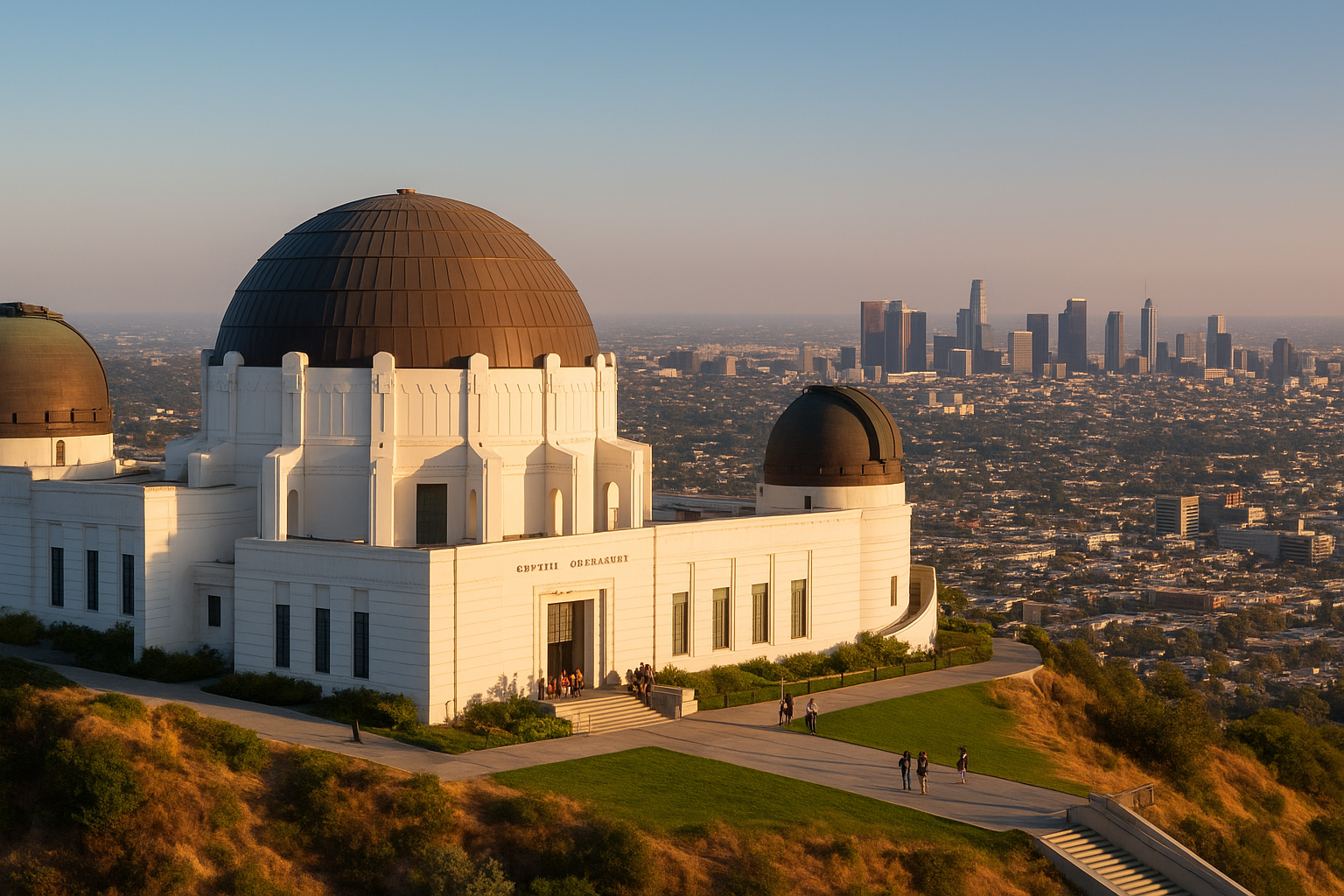
Griffith Observatory sits on the southern face of Mount Hollywood and delivers one of the most recognizable views in the entire city. The building itself is a stunning Art Deco structure with white domes and clean lines that photograph well from almost every direction.
What makes it photogenic
Your photos here gain two distinct subjects in one location: the building’s iconic white facade and the sprawling city below. From the front steps, the downtown LA skyline fills your background with scale and depth. The hillside setting wraps the scene in natural texture that flat city locations simply can’t match.
Best angles and classic shots
A few positions consistently deliver strong results. Stand on the east lawn with the dome overhead and look for the Hollywood Sign on the ridge behind you. For a city panorama, position yourself at the lower terrace railing and shoot west toward Century City. Both angles work well for portraits and wide environmental compositions.
Best time for light and fewer crowds
Arrive 30 minutes before sunset to catch warm light on the observatory’s white facade. Early weekday mornings give you the quietest grounds, which makes Griffith one of the most photogenic places in Los Angeles for clean, unobstructed frames.
Weekend midday visits bring peak crowds, so your best shots come from arriving early or timing sunset on a weekday.
Quick tips for parking and access
Observatory Road fills quickly on weekends, so consider the LADOT shuttle from the Greek Theatre parking area, which drops you near the entrance. Bring extra layers for the evening, since the hilltop cools down noticeably after the sun drops.
3. Lake Hollywood Park
Lake Hollywood Park sits in a quiet residential pocket just below the Hollywood Sign and consistently ranks among the most photogenic places in Los Angeles for a single, specific reason: it gives you one of the cleanest unobstructed views of the sign available anywhere in the city without a strenuous hike.
What makes it photogenic
The park offers a wide open lawn with the Hollywood Sign framed directly ahead, sitting at a distance that lets you fit the entire sign in the frame without distortion. Unlike trailhead views that put you too close or too far, this vantage point hits a natural focal sweet spot that works beautifully for both portrait orientation and wide landscape shots.
Best spots for a clean Hollywood Sign photo
Walk toward the far end of the parking lot and position yourself against the low fence line that faces the hillside. This angle eliminates most of the foreground clutter. For portraits, place your subject in the lower third of the frame and let the sign anchor the background. The reflection of the sign in the reservoir surface, visible from the right side of the path, adds a bonus composition option.
The fence line at the north end of the lot is the single most reliable spot for a clean Hollywood Sign frame in the entire park.
Best time for the clearest sign view
Morning light between 8 and 10 a.m. hits the sign from the east and reduces haze on the letters. Midday sun tends to wash out contrast on the white letters, so avoid the 11 a.m. to 2 p.m. window if sharp detail matters to you.
What to know before you go
The park has limited street parking on Lake Hollywood Drive, and spots fill fast on weekends. Arrive before 9 a.m. to secure a spot without circling. The park itself is free to enter and the walk from car to shooting position takes under five minutes.
4. Hollywood Bowl Overlook
The Hollywood Bowl overlook sits above the venue on a narrow stretch of Mulholland Highway and delivers a sweeping view of both the iconic amphitheater below and the Los Angeles basin stretching out to the horizon. It’s a compact spot that punches well above its weight as one of the most photogenic places in Los Angeles, especially when the city lights kick in after dark.
What makes it photogenic
The overlook gives you a bird’s-eye view of the Bowl’s shell structure framed against a massive urban backdrop. That combination of a recognizable landmark in the foreground with the sprawling city behind it creates a depth and scale that few single viewpoints in LA can match. Elevated angles like this tend to compress the scene beautifully, making the city feel both enormous and intimate at the same time.
Best viewpoint locations
Pull over at the designated turnout on Mulholland Highway just past the Highland Avenue intersection heading west. The railing along the road gives you a clear sightline down into the Bowl and across the valley. Shooting from a slightly lower position against the guardrail reduces lens flare from overhead and keeps your horizon line clean.
Best time for skyline glow
Arrive 30 to 45 minutes after sunset when the city lights begin to overtake the fading sky. This blue-hour window produces a natural balance between ambient light and the glowing city grid below that no filter can fully replicate.
Blue hour at this overlook consistently outperforms both golden hour and full darkness for cityscape photos.
Safety and parking tips
The turnout fits only two or three cars at a time, so arrive early or be prepared to wait. Stay behind the guardrail at all times since the drop-off on the hillside side is steep and uneven.
5. The Getty Center
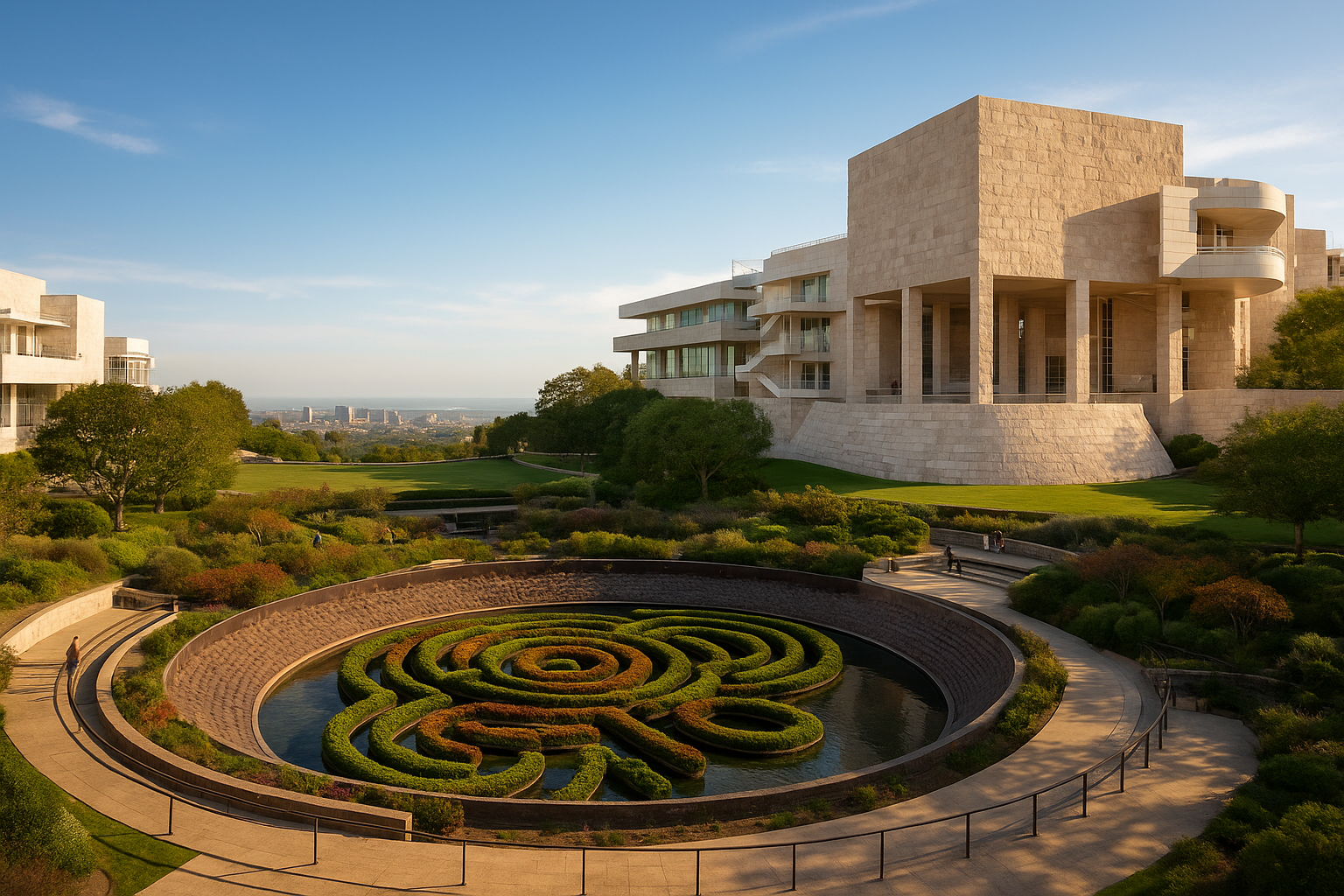
The Getty Center sits on a hilltop in Brentwood and earns its spot among the most photogenic places in Los Angeles through a combination of Richard Meier’s travertine architecture, sculpted gardens, and sweeping city views. Few museum campuses anywhere put precision design and natural landscape this close together in a single location.
What makes it photogenic
The elevated position gives you unobstructed sightlines stretching from downtown to the Pacific on clear days. Almost every surface on the campus was designed with visual intention, which means strong compositions appear around nearly every corner. The contrast between the pale stone buildings and the blue California sky creates a clean, graphic quality that photographs consistently well across all lighting conditions.
Best locations for architecture and garden shots
The Central Garden, designed by Robert Irwin, features layered circular planting beds that form strong leading lines when photographed from above. Shoot from the upper walkway looking down into the garden to capture the full radial design in a single wide frame.
The Central Garden from the upper bridge is one of the most underused architectural shots at any museum campus in the country.
Best time for golden hour views
Arrive two hours before sunset to catch warm light hitting the travertine walls. That late afternoon sun shifts the stone from cool gray to a rich amber tone that outperforms anything you’ll capture during midday hours.
Entry, parking, and photo rules
Admission to the Getty is free, but parking runs $20 per vehicle. A short tram ride connects the parking structure to the hilltop campus. Commercial photography requires prior approval, but personal shooting is permitted throughout the grounds without restriction.
6. LACMA Urban Light
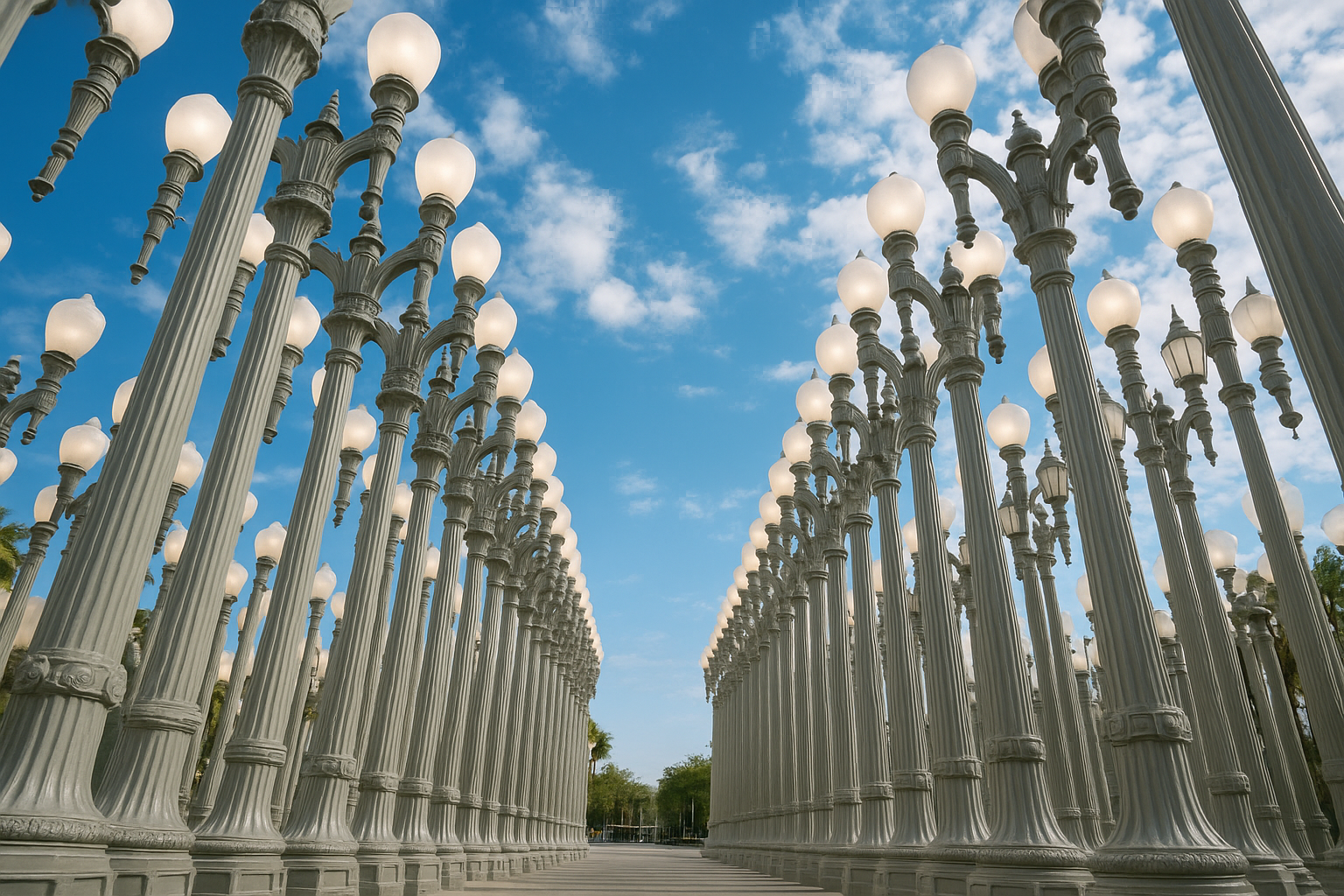
LACMA’s Urban Light installation sits at the museum’s Wilshire Boulevard entrance and ranks among the most photogenic places in Los Angeles for both day and night photography. Chris Burden’s sculpture arranges 202 restored antique street lamps in a grid formation that creates repeating patterns, dramatic perspective lines, and a scale that consistently surprises first-time visitors.
What makes it photogenic
The lamp posts create strong geometric symmetry that draws the eye deep into the frame and rewards compositions from almost any position within the grid. The sheer density of the cast-iron columns means every angle produces a layered, textural photo with built-in depth and structure that flat or single-subject locations simply cannot replicate.
Best compositions for the lamp posts
Walk into the center of the grid and shoot outward toward Wilshire to capture the full repetition of the columns. Alternatively, crouch low and shoot upward to emphasize the height and scale of the installation against the sky, which works particularly well on partly cloudy days when the sky adds visual contrast.
A low angle from the center row consistently produces the most dramatic sense of scale within the lamp grid.
Best time for day vs night photos
Late afternoon light softens shadows between the posts and adds warmth to the metal surfaces. After dark, the lit lamps produce a warm amber glow that turns the installation into one of the most recognizable nighttime subjects in the city.
Timing tips to avoid the longest lines
Visiting on weekday mornings gives you the clearest paths through the grid without other visitors crowding your frame. The installation is publicly accessible from the sidewalk at no cost, so you never need a museum ticket just to photograph it.
7. Walt Disney Concert Hall
Walt Disney Concert Hall stands in downtown LA as one of the most photogenic places in Los Angeles, and Frank Gehry’s stainless steel exterior makes it impossible to ignore. The building’s rippling, curved panels catch and scatter light in ways that change dramatically depending on where you stand and what time you arrive.
Best angles for the steel curves
The building rewards exploration on foot. Walk the full perimeter on Grand Avenue and Hope Street to discover how the curves shift from sweeping arcs to tight folds depending on your position. The corner of Grand and 1st Street gives you the most dramatic compression of the facade in a single frame, pulling multiple curved surfaces together without stepping back too far.
Shooting from the southeast corner at street level consistently captures the most dynamic overlap of steel panels in a single composition.
Best time to shoot to control reflections
Overcast days reduce harsh specular reflections off the steel and give you even, diffused light across the entire surface. On sunny days, shoot in the early morning before 9 a.m. when the sun sits low and casts long directional shadows that emphasize the texture and depth of each curve rather than blowing out the brightest panels entirely.
Photo etiquette and nearby add-ons
The building sits along public sidewalks, so personal photography is unrestricted from street level without any permit or fee. Commercial shoots require prior coordination with the venue directly. After finishing the exterior, the Broad Museum sits directly across Grand Avenue, giving you a second major architectural subject within a two-minute walk and turning the whole block into a productive shooting stretch.
8. The Broad
The Broad sits directly across from Walt Disney Concert Hall on Grand Avenue in downtown Los Angeles, making it one of the easiest double-header shoots in the city. The veil-and-vault architecture designed by Diller Scofidio + Renfro gives the building a distinctive honeycomb exterior that catches light in a completely different way than its steel-clad neighbor across the street.
What makes it photogenic
Few buildings among the most photogenic places in Los Angeles switch between architectural styles this effectively in a single visit. The white concrete veil facade creates a dense, layered texture that reads differently depending on your angle and the time of day, while the open plaza at street level gives you room to step back and work the full width of the building into your frame.
Best exterior and lobby shots
Position yourself on the plaza facing the main entrance to capture the facade’s full horizontal span. Inside, the lobby’s flowing white curves and high ceilings create a clean, minimal backdrop that works well for both architectural details and portrait compositions.
The lobby alone justifies a visit even if you skip the ticketed galleries entirely.
How to plan for popular indoor exhibits
Yayoi Kusama’s Infinity Mirrored Room remains one of the most sought-after shots inside any museum in the city, but access requires timed entry and advance reservations through the museum’s booking system. Plan your visit around exhibit availability rather than just operating hours.
Ticketing and line strategy
General admission to The Broad is free, but reservations are strongly recommended for weekend visits. Walk-in tickets release each morning at opening, so arriving at least 20 minutes before doors open gives you the best shot at securing a same-day entry without a long wait.
9. Angels Flight and Grand Central Market
Angels Flight is a historic funicular railway on Bunker Hill in downtown Los Angeles that packs more visual character into a single block than most neighborhoods manage across several streets. Pair it with the Grand Central Market directly next door, and you have two completely different photographic subjects within a one-minute walk of each other, making this pairing one of the most photogenic places in Los Angeles for a quick, high-yield shooting session.
Best shots on the funicular and tracks
Position yourself at the base of the tracks on Hill Street and shoot upward along the rails to capture the orange cars and the steep incline in a single compressed frame. The wooden cabin interiors also photograph well from the platform while passengers board, giving you a mix of architecture and movement in the same shot.
The upward angle from Hill Street compresses the track geometry in a way that makes the funicular look far taller than its actual 298-foot length.
Best food and texture shots next door
Grand Central Market rewards close-up and detail photography more than wide establishing shots. Walk through the stalls and focus on layered textures, vivid produce colors, and the handwritten signage that lines nearly every vendor booth. The overhead lighting inside creates warm, even exposure that flatters food subjects without harsh shadows.
Best time to avoid crowds
Arriving on a weekday before 10 a.m. gives you the cleanest shots at both locations. Weekend afternoons bring heavy foot traffic through the market and a consistent line for Angels Flight, which limits your ability to hold a position on the tracks long enough to work a composition properly.
10. The Bradbury Building
The Bradbury Building on South Broadway in downtown Los Angeles holds a place among the most photogenic places in Los Angeles that few interiors anywhere in the city can challenge. Built in 1893, this five-story Victorian commercial building pulls photographers in with a central atrium that floods with natural light and architectural detail at every level.
What makes it photogenic
The atrium interior delivers ornate cast-iron railings, open-cage elevators, and glazed skylight panels that pour diffused daylight down through the full height of the building. Every floor offers a new combination of ironwork geometry and warm light, and the layered balconies give your compositions a natural sense of depth and structure that most single-room interior shots never achieve.
Few interior locations in the city produce this level of geometric complexity in a single upward shot.
Best angles for stairs, railings, and light
Position yourself at the ground floor center and shoot straight up to capture all five balcony levels converging toward the skylight. Alternatively, climb to the second or third floor and shoot diagonally across the atrium to layer the railings and create a staggered sense of depth that rewards a wider focal length.
When you can actually get inside
The building is open to the public on weekday mornings, typically until around noon. Public access extends to the ground floor and one level up on the staircases, with the upper floors restricted to tenants.
Rules to follow so you don’t get turned away
No tripods are permitted inside the building, and security enforces this consistently. Keep your camera handheld and avoid blocking the entryway or tenant corridors during your visit.
11. Arts District Murals
The Arts District sits east of downtown Los Angeles and delivers one of the most concentrated collections of large-scale murals in the country. As one of the most photogenic places in Los Angeles, this neighborhood layers bold color, expressive street art, and industrial building facades into a walkable stretch that rewards photographers at nearly every corner.
Where to find the best walls fast
The highest density of murals runs along Mateo Street and the surrounding blocks between 3rd and 7th Streets. Walking this corridor gives you access to dozens of walls without backtracking or burning time on dead ends. The alley network near Traction Avenue also packs several well-maintained pieces close together, making it an efficient second stop once you’ve covered the main corridor.
Starting on Mateo Street and walking south gives you the most murals per block of any route in the entire neighborhood.
How to shoot murals without cars and clutter
Parked cars and utility boxes in front of murals are the most common obstacles you’ll face. Arriving early on a weekday morning reduces the number of vehicles blocking your frame significantly. Shoot from a slightly elevated position when possible, since shooting straight-on at street level often clips the bottom portion of the mural behind bumpers and side mirrors.
Etiquette for businesses and residents
Many of these murals sit on active commercial buildings, and the surrounding streets serve real working businesses throughout the day. Keep your shooting sessions respectful and brief near loading areas, and avoid blocking driveways or doorways while you set up a composition.
12. Santa Monica Pier
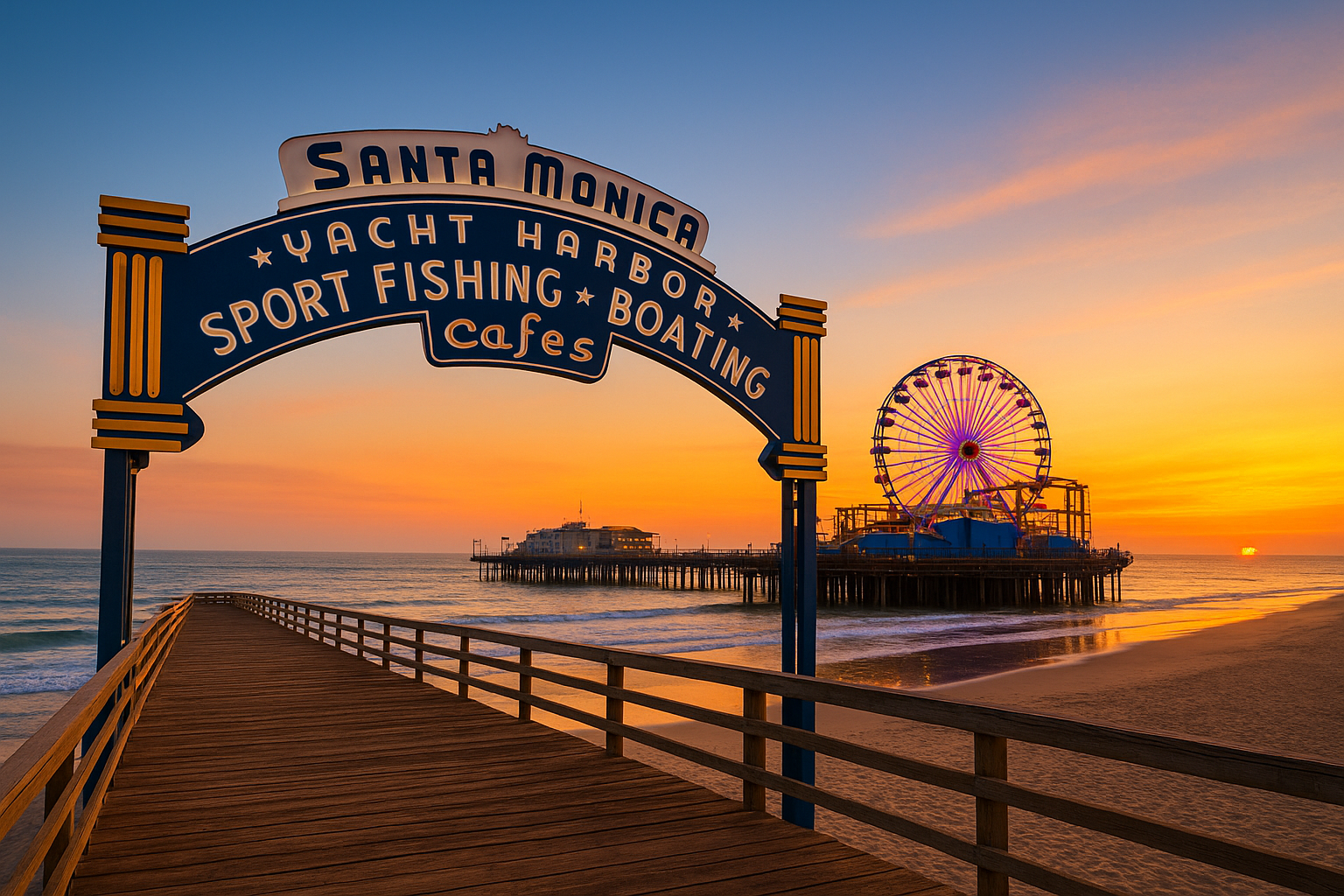
Santa Monica Pier stretches out over the Pacific Ocean at the end of Colorado Avenue and earns its place among the most photogenic places in Los Angeles through a combination of vintage architecture, ocean light, and iconic signage that few coastal locations anywhere in California can match in a single frame.
What makes it photogenic
The pier packs multiple distinct visual subjects into a compact area: the famous arched entrance sign, the Pacific Park Ferris wheel, the weathered wooden deck, and the open beach stretching in both directions. That variety means you can shoot for an hour without repeating an angle, which makes this location unusually productive compared to single-subject spots elsewhere in the city.
Best shots for the sign, ferris wheel, and beach
Position yourself on the beach below and to the south of the pier to capture the full structure with the ocean behind it. For the entrance sign alone, stand on Colorado Avenue just before the arch and shoot toward the water to frame the sign against the sky. The Ferris wheel photographs well from the pier deck itself, particularly when you use the wooden railing as a leading line pulling the eye toward the ride.
Shooting from the beach below the pier at low tide gives you wet sand reflections that double the visual impact of the entire structure.
Best time for sunset color
Arrive 30 to 40 minutes before sunset when the western sky begins to shift from yellow to orange behind the pier’s silhouette. The Ferris wheel lights activate at dusk and add a second layer of color to your frame once the natural light drops.
Tips for crowds and parking
Weekday mornings between 8 and 10 a.m. give you the clearest paths across the deck. The Santa Monica Pier parking structure on Lot 1 off Appian Way provides the closest access without competing for street spots along Ocean Avenue.
13. Venice Canals
The Venice Canals sit just a few blocks inland from Venice Beach and offer a side of LA that most visitors never find. These narrow waterways and arched footbridges create a quiet, residential neighborhood that ranks among the most photogenic places in Los Angeles precisely because it feels completely out of place with the surrounding city.
What makes it photogenic
Still water running between colorful cottages and lush garden plantings gives you reflection shots that most urban locations in LA simply cannot produce. The intimate, human-scale paths keep everything close, which creates portrait and architectural detail opportunities that wide cityscape views can never match.
Best bridges and reflections for photos
Each small wooden footbridge connecting both sides of the canal network gives you an elevated sightline over the water with the cottage-style homes framing both sides behind your subject. Shoot from the center of any bridge looking down the canal length to pull the longest reflection line and the widest range of residential color into a single frame.
The bridge closest to Eastern Canal Court consistently produces the cleanest symmetrical reflection on calm mornings.
Best time for quiet paths and clean frames
Early weekday mornings between 7 and 9 a.m. give you the stillest water and the fewest pedestrians on the narrow footpaths. Wind picks up later in the day and breaks apart reflections quickly, so arriving early makes a direct, measurable difference in image quality.
Neighborhood etiquette and safety tips
These canals run through a fully residential neighborhood, and the walking paths sit directly alongside private homes. Keep your shooting sessions brief near any residence and stay on the designated footpaths at all times to respect the people who actually live here.
14. Venice Beach Skatepark
Venice Beach Skatepark sits along the oceanfront path in Venice and ranks among the most photogenic places in Los Angeles for action and energy. The open-air concrete bowl and street course sit directly against the beach, giving you a rare combination of athletic movement, urban architecture, and Pacific Ocean backdrop in a single location.
Best angles for action shots
Position yourself above the bowl on the elevated viewing area to shoot downward into the action. This angle compresses the riders against the curved concrete walls and keeps the ocean visible in the upper portion of your frame. For a tighter shot, crouch at the edge of the flat ground level and use a longer focal length to isolate individual skaters coming off ramps without getting in the way of anyone riding.
The elevated viewing area gives you the most consistent sightlines without requiring you to move constantly as riders shift between sections of the course.
Best time to catch skaters and light
Late afternoon between 3 and 6 p.m. consistently delivers the heaviest skater traffic along with warm directional light that catches the texture of the concrete and the motion of riders. Weekends draw larger crowds of more experienced skaters, which increases your chances of capturing impressive tricks during a short session.
Respectful distance and gear tips
Stay behind the low barriers that separate spectators from the skating area and never step onto the course to reposition yourself. A telephoto lens in the 70-200mm range lets you fill the frame with action from a safe distance without crowding the skaters or creating a hazard.
15. El Matador State Beach
El Matador State Beach sits along the Malibu coastline roughly 35 miles northwest of downtown and qualifies as one of the most photogenic places in Los Angeles for raw coastal photography. The sea-carved rock formations, cave openings, and dramatic cliffs set this location apart from every flat, developed beach closer to the city.
What makes it photogenic
El Matador delivers natural coastal architecture that no urban location in LA can match. The combination of layered sandstone cliffs, isolated tidal rocks, and wave-cut arches creates a scene with genuine geological scale, where every angle rewards a wider focal length and a patient eye.
Best sea cave and rock formation shots
Position yourself at the base of the cliffs during low tide and shoot through the cave openings toward the open ocean horizon. Framing the Pacific through a sea arch produces a natural vignette that pulls all attention toward the water. Walk south along the shoreline to reach the largest standalone rock formations, which work well as foreground anchors in both portrait and landscape compositions.
Shooting through the sea arch at low tide toward the setting sun produces one of the strongest coastal compositions available on any beach in Southern California.
Best time for tide and sunset
Arrive during low tide in the late afternoon so you can access the caves safely without getting cut off by rising water. The sunset light strikes the sandstone cliffs from the west, shifting them from pale tan to deep orange within the last 45 minutes before dark.
What to know about access and stairs
A steep wooden staircase connects the parking lot to the beach, and the descent takes roughly two minutes on foot. The stairs get slippery after rain, so shoes with grip matter here. The roadside lot on PCH fills fast on weekends, so arriving before 9 a.m. gives you the best chance of parking without a long wait.
Your LA Shot List, Mapped
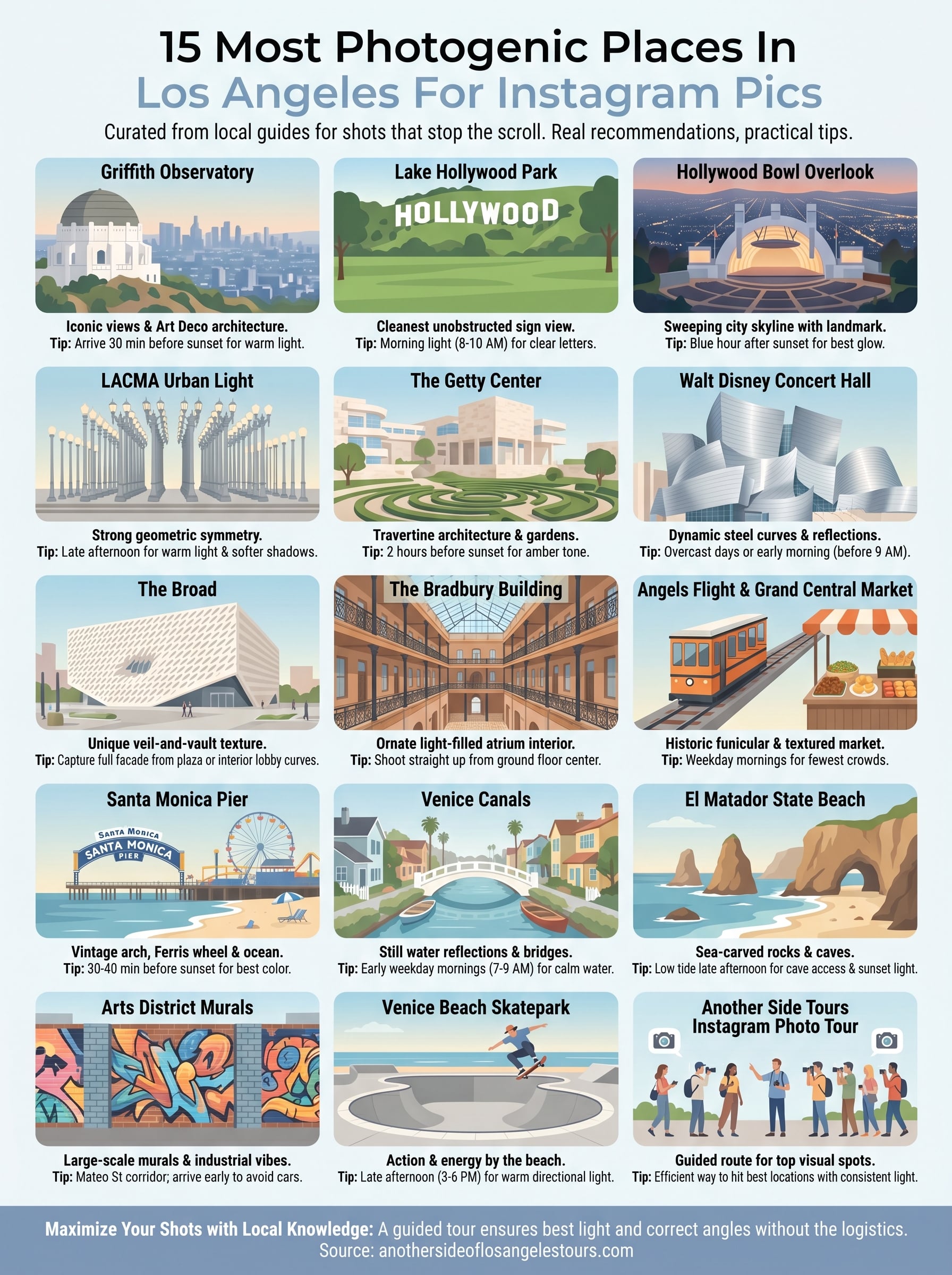
These 15 locations cover the full range of what makes LA worth photographing, from coastal cliffs and canal reflections to downtown architecture and open-air skateparks. Each spot rewards a different approach, and the best results consistently come from arriving at the right time with a clear plan for where to stand and what angle to work.
Working through the most photogenic places in Los Angeles on your own takes real time and local knowledge that most visitors simply don’t have during a short trip. A guided tour removes that guesswork entirely and puts you in front of the best light at the right angles without burning half your day on logistics, wrong turns, and parking headaches.
If you want expert guidance through LA’s best visual spots, book a private Los Angeles tour with a local guide who knows exactly where to position you and when to shoot.