West Hollywood packs more personality per square mile than almost anywhere else in LA. Spanning just 1.9 square miles between Hollywood and Beverly Hills, this city-within-a-city runs on its own rules, literally, since it’s an independent municipality with its own government. Whether you’re here for the restaurants, the nightlife, the shopping, or simply the people-watching, a solid West Hollywood neighborhood guide helps you zero in on what actually matters during your visit.
The thing about WeHo is that it’s not one place. The Sunset Strip feels nothing like the Avenues, and the Design District operates on a completely different wavelength than Boystown. Each pocket has its own rhythm, crowd, and reason to show up. Understanding these sub-neighborhoods is the difference between stumbling through LA and actually experiencing it, which is something we care about at Another Side Tours, where our local guides spend every day showing visitors the real character behind LA’s most iconic areas.
This guide breaks down West Hollywood’s distinct areas, standout restaurants, nightlife spots, and shopping streets so you can plan with confidence instead of guesswork. Whether you’re visiting for a weekend or scoping out a potential move, consider this your starting point for getting WeHo right.
Why West Hollywood feels different from the rest of LA
West Hollywood isn’t part of the City of Los Angeles. It incorporated as its own city in 1984, largely driven by its LGBTQ+ community and older residents who wanted stronger tenant protections and direct local representation. That decision still shapes everything here: the city funds its own programs, enforces its own ordinances, and has historically led California on progressive policy. When you walk these streets, you feel the result of decades of deliberate community-building rather than passive development.
West Hollywood’s independent status isn’t just a legal technicality; it directly explains why this 1.9-square-mile city has a cohesion and character that most LA neighborhoods never develop.
A community that built something intentional
The LGBTQ+ community didn’t just settle in West Hollywood; they shaped the city’s identity from the ground up. The rainbow crosswalks on Santa Monica Boulevard, the public art installations, the packed community events calendar – none of these happened by accident. WeHo actively invests in cultural programming and public space in ways that you notice the moment you arrive. This isn’t a neighborhood that happened to become interesting; it’s a place that made deliberate choices about what it wanted to be.
Residents here stay engaged. Local politics draw real participation, and the city responds with services and protections you rarely see at this scale. Rent stabilization, senior services, and strong small business support give WeHo a more stable, community-oriented feel compared to the churn you see in other trendy LA corridors.
The geography that concentrates everything
Part of what makes any west hollywood neighborhood guide worth reading is understanding the physical layout. The city is small enough to walk across in under 30 minutes, yet it contains the Sunset Strip, Santa Monica Boulevard, Melrose Avenue, and the Design District within that tight footprint. This density creates an energy that sprawling LA neighborhoods simply cannot replicate.
You don’t need a car to move between a rooftop bar, a gallery opening, and a late-night restaurant. That walkability, combined with the concentration of dining, retail, and entertainment, makes WeHo feel closer to a real urban neighborhood than most of Los Angeles ever manages. The compact scale forces interaction, and that interaction is exactly what builds the street-level culture that keeps people coming back.
Understand West Hollywood’s areas and micro-neighborhoods
WeHo’s small footprint makes it tempting to treat the whole city as one destination, but that approach will cost you time and energy. Each sub-neighborhood operates with its own crowd, atmosphere, and set of anchor spots. Knowing the layout before you arrive turns a confusing grid into a navigable, rewarding itinerary you can actually execute.
The Sunset Strip and northern edge
The Sunset Strip runs along Sunset Boulevard from Doheny Drive to Laurel Canyon and carries decades of rock music history. The Roxy, the Whisky a Go Go, and the Viper Room all sit within a short stretch. Today the Strip pulls a mix of rooftop bar crowds, hotel guests, and music fans, with upscale lounges filling the gaps between legendary venues.
- Best for: nightlife, live music, hotel stays, celebrity-spotting
- Key landmarks: Chateau Marmont, Comedy Store, Rainbow Bar and Grill
Santa Monica Boulevard and Boystown
Santa Monica Boulevard cuts through the city’s center and anchors WeHo’s LGBTQ+ identity. The stretch between La Cienega and Robertson concentrates the rainbow crosswalks, bars, and nightclubs that define the neighborhood’s character. No honest west hollywood neighborhood guide skips this corridor, because the energy here stays consistent year-round and reflects what makes WeHo distinct from every other part of LA.
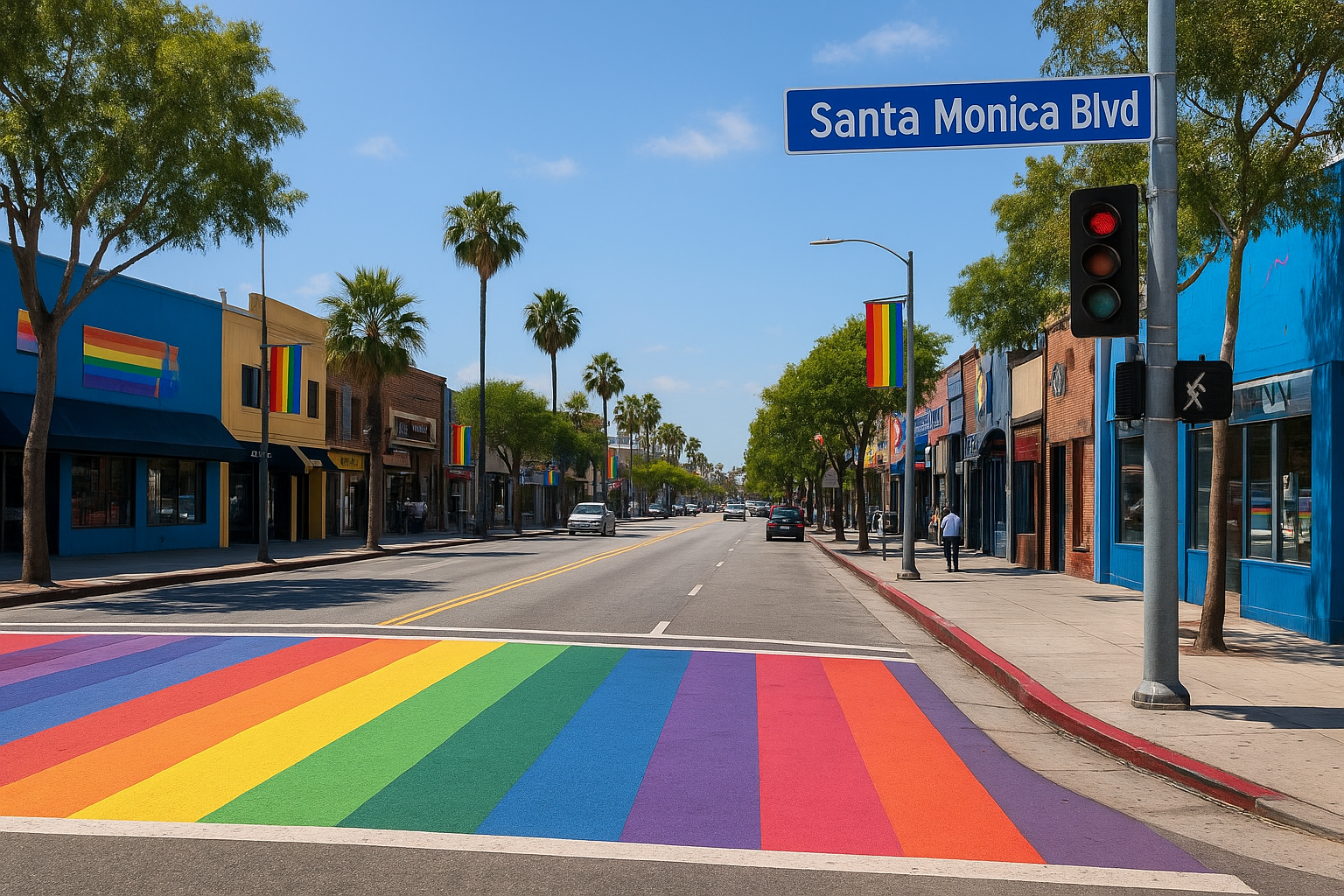
This stretch of Santa Monica Boulevard is where WeHo’s community identity shows up most directly, and it rewards visitors who take time to walk it rather than drive past.
Melrose and the southern avenues
South of Santa Monica, Melrose Avenue shifts the tone entirely toward shopping and dining. Robertson Boulevard and Beverly Boulevard layer in design showrooms, art galleries, and upscale restaurants, giving the southern edge of WeHo a quieter, more design-focused character that balances out the Strip’s intensity.
Eat and drink your way through WeHo
WeHo’s dining and drinking scene punches well above its size. Restaurants here range from casual neighborhood spots to chef-driven destinations that draw visitors from across the city, and you’ll find the density means you rarely need to walk more than a block to find your next option. Any useful west hollywood neighborhood guide has to spend serious time on food because eating and drinking well is genuinely one of the reasons people return.
Restaurants worth the wait
Santa Monica Boulevard and Melrose both carry strong restaurant corridors with different personalities. Craig’s on Melrose pulls a celebrity crowd and delivers on the hype with reliable American comfort food. Pump Restaurant, near the intersection of Santa Monica and Robertson, gives you upscale dining alongside an outdoor patio that’s easy to spend an evening on. Tesse on Sunset earns consistent praise for its French-influenced wine bar format, where you can build a full meal from smaller shared plates.
WeHo rewards visitors who walk the side streets between the main boulevards, where newer restaurants open regularly and competition keeps quality high.
- Craig’s: American comfort food, consistent celebrity crowd on Melrose
- Pump Restaurant: upscale patio dining near Robertson
- Tesse: wine-bar format with French-influenced small plates on Sunset
Where to drink in WeHo
The bar scene splits cleanly between the Sunset Strip’s hotel rooftops and lounges and the Santa Monica Boulevard corridor’s neighborhood bars. The Abbey remains WeHo’s most iconic drinking spot and functions as a genuine social hub year-round. For something calmer, the smaller bars along Robertson give you a quieter setting without sacrificing quality. Most spots run happy hour before 7pm, so arriving early stretches your budget and guarantees you a seat.
- The Abbey: WeHo’s anchor bar, welcoming crowd, strong cocktails
- Employees Only LA: cocktail-forward with a reliably late-night energy
- Bar Marmont: hotel bar attached to Chateau Marmont, worth the splurge
Do more than nightlife: design, culture, and outdoors
WeHo earns its reputation as a nightlife destination, but stopping there means missing half of what makes this city worth your time. The daytime version of West Hollywood runs on design, public art, and outdoor spaces that give you a completely different read on the neighborhood. Any honest west hollywood neighborhood guide needs to cover what happens before the sun goes down.
The Pacific Design Center and gallery scene
The Pacific Design Center on Melrose Avenue is the most visually striking building in WeHo and an easy landmark to orient yourself around. The complex houses hundreds of design showrooms and regularly hosts public events, exhibitions, and trade shows that are open to visitors. Surrounding blocks on Melrose and Beverly Boulevard carry independent galleries and design studios that shift the neighborhood’s tone away from nightlife entirely.
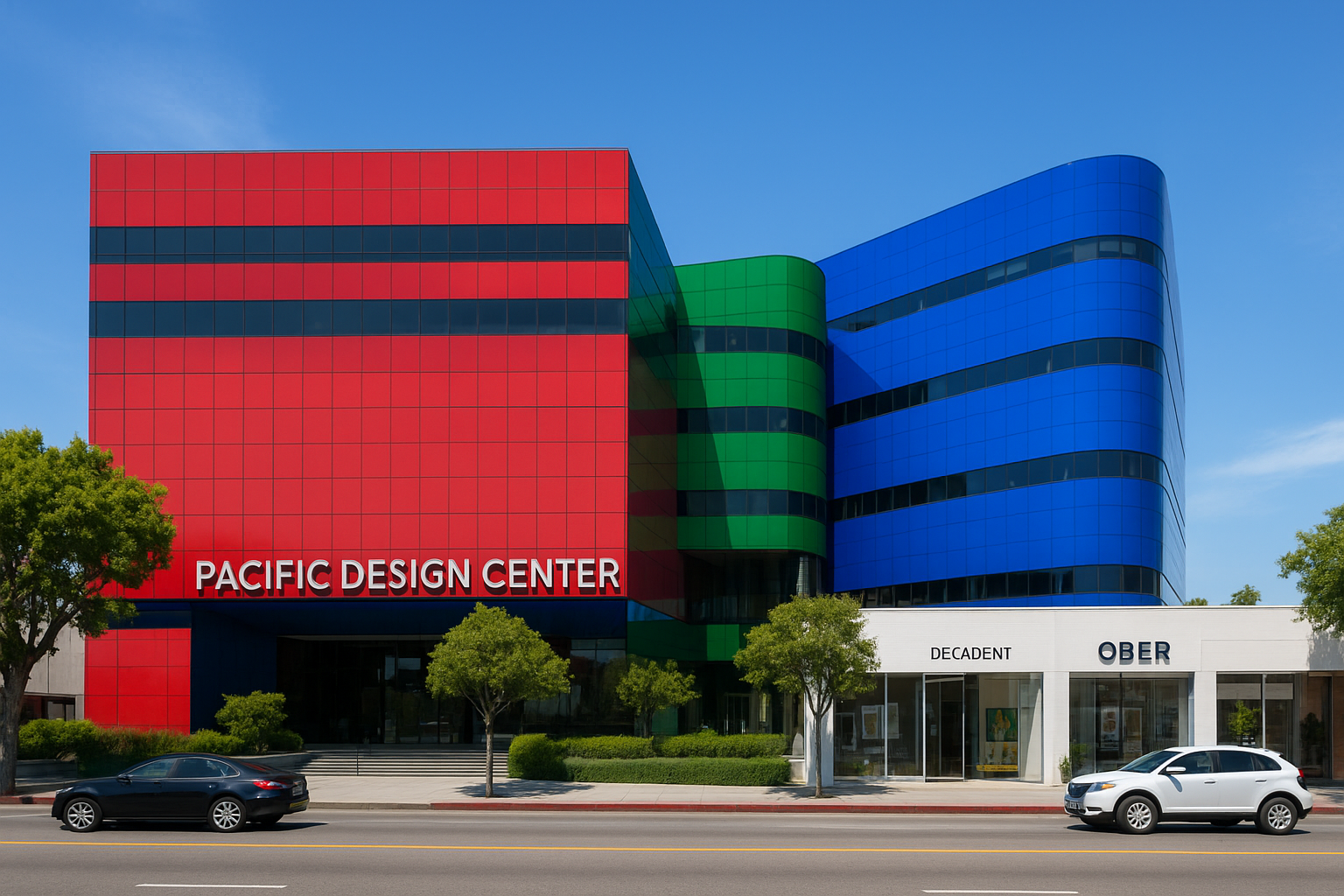
The Design District rewards slower exploration: walk the side streets between Robertson and La Cienega and you will find gallery openings, pop-up exhibitions, and concept stores that most visitors walk right past.
Green spaces and outdoor options
West Hollywood Park, located near San Vicente Boulevard, gives you a genuine community gathering space with a rooftop park above the city’s aquatic and recreation center. The park draws locals throughout the week and hosts outdoor events and fitness classes that fill up quickly on weekends. For longer walks, the stretch of Santa Monica Boulevard lined with trees and public art installations connects several neighborhoods in a single route.
- West Hollywood Park: rooftop green space, community events, pool access
- Santa Monica Boulevard corridor: walkable, public art, good for morning and evening movement
- Plummer Park: quieter option on the eastern edge of WeHo, shaded and local
Plan your visit: getting around, timing, and tips
WeHo’s compact layout makes it one of the more manageable parts of LA to navigate, but a few practical decisions before you arrive will save you real time. This west hollywood neighborhood guide works best when you pair it with a clear sense of how you’ll move through the city and when you’ll show up.
Getting around WeHo
You do not need a car inside West Hollywood. The city is walkable between most major points, and rideshare drop-off is straightforward throughout the Strip and Santa Monica Boulevard. The city also operates a free shuttle service called WeHo CityLine that runs along Santa Monica Boulevard and connects key stops, making it easy to move between Boystown, the Design District, and the western edge without paying for rides.
- WeHo CityLine: free, runs along Santa Monica Boulevard
- Rideshare: best option for Sunset Strip evenings when street parking disappears
- Walking: practical for moving between Robertson, Melrose, and Santa Monica in under 20 minutes
When to visit and timing tips
Spring and fall give you the most comfortable walking weather, with mild temperatures and shorter wait times at popular restaurants. Summer weekends concentrate the largest crowds along Santa Monica Boulevard and the Strip, so arriving early on those days or shifting to a weekday keeps the experience more manageable.
If you plan to cover multiple areas in one day, start at the Design District in the morning and move north toward the Strip in the evening; the natural progression matches how each area comes alive.
Happy hour windows before 7pm are your best tool for hitting top bars without competing for space.
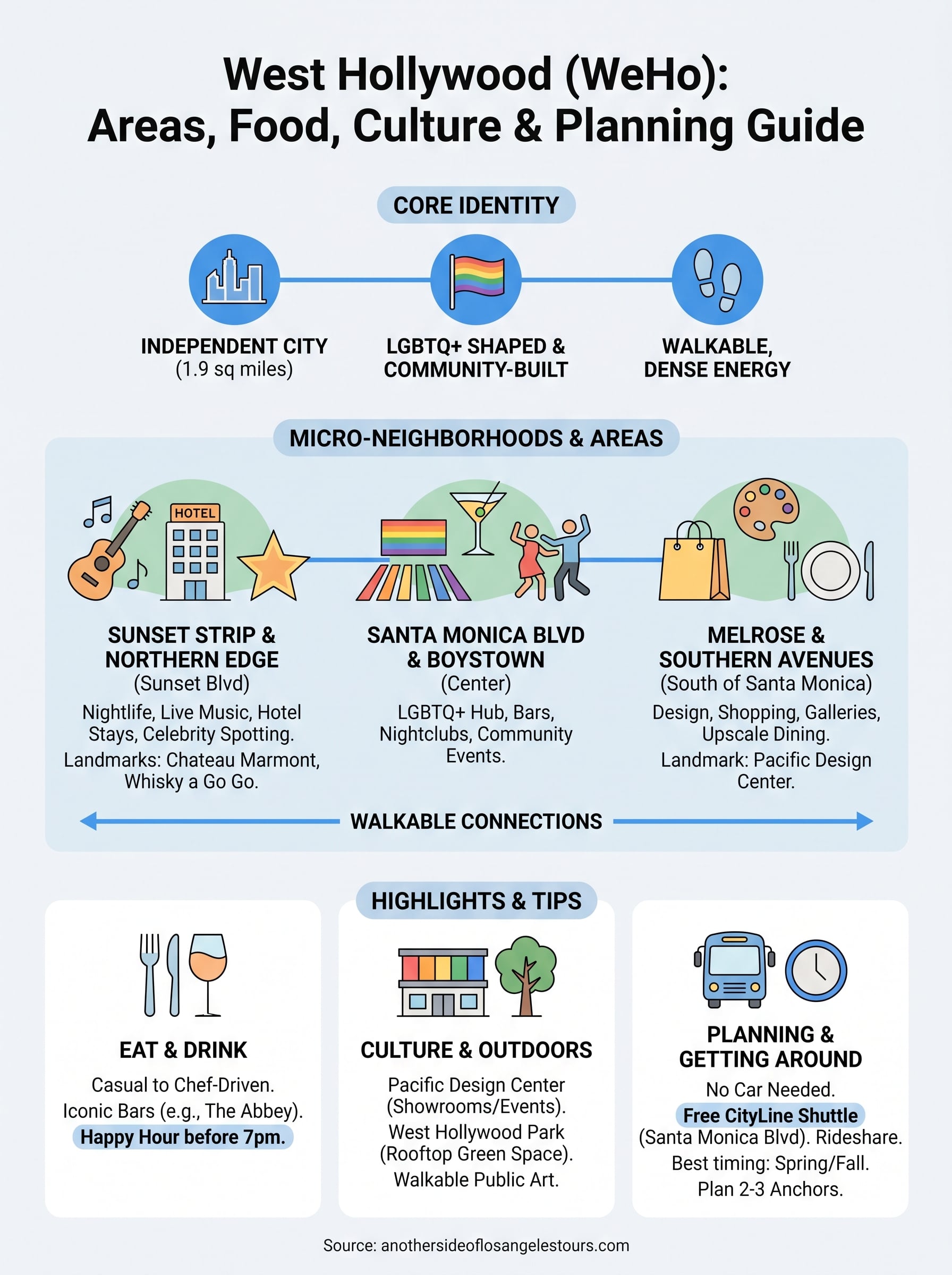
Your next steps in West Hollywood
You now have a solid west hollywood neighborhood guide to work from, covering the areas, food, nightlife, and practical logistics that actually shape a visit. WeHo rewards people who show up with a plan, and knowing where each sub-neighborhood starts and ends puts you ahead before you even leave your hotel.
Start by picking two or three anchors from this guide, whether that’s the Design District in the morning, Santa Monica Boulevard mid-day, or the Strip after dark, and build your day around those. Walking the blocks between your anchor points is where WeHo reveals itself, so leave room for detours.
If you want to go deeper into LA beyond WeHo, a guided tour gives you expert context that no article fully replaces. Our Los Angeles sightseeing tours pair you with local guides who know the city’s full story, so you leave with more than highlights.