You've landed in Los Angeles with a full battery, a clean memory card, and a shot list that looks effortless on paper. Then the city starts behaving like Los Angeles. The freeway slows to a crawl. The light turns harsh right when you reach the overlook. A crowd forms around the exact angle you saved to your phone. By the time you finally lift the camera, the moment you wanted is gone.
That's the gap most visitors underestimate. Great LA photos aren't just about finding the famous places. They're about arriving at the right time, approaching from the right side, carrying the right lens, and knowing when to leave a popular stop before it stops giving you anything useful. A polished Photography Tour Los Angeles experience solves the logistics as much as the creative side, which is why so many travelers choose a guided route instead of trying to piece it together on the fly.
Table of Contents
- Your Guide to an Unforgettable Los Angeles Photography Tour
- Beyond the Selfies What a Private LA Photo Tour Includes
- Group Tours vs A Bespoke Private Photography Experience
- LAs Most Photogenic Locations From Icons to Hidden Gems
- Sample Itineraries The Classic Coast and The Hollywood Dream
- Pro Tips for Capturing Stunning Photos in Los Angeles
- Booking Your Private Tour and What to Expect on the Day
Your Guide to an Unforgettable Los Angeles Photography Tour
Most first-time visitors begin with the same wish list. Hollywood Sign at sunset. Griffith Observatory with the skyline glowing. Rodeo Drive looking polished and cinematic. Santa Monica Pier with color and movement. The trouble isn't ambition. The trouble is sequencing. LA punishes bad timing fast.
That's exactly why photo tourism has become such a serious part of the city's travel mix. Photography tourism accounted for 18% of total Los Angeles tourism revenue in 2024, up 42% from 2020, and social media-focused photo tours drew over 65% of first-time visitors with itineraries averaging 4.5 hours according to Los Angeles photography tour market data on Viator. Visitors clearly want more than sightseeing. They want images that feel like the city they imagined.
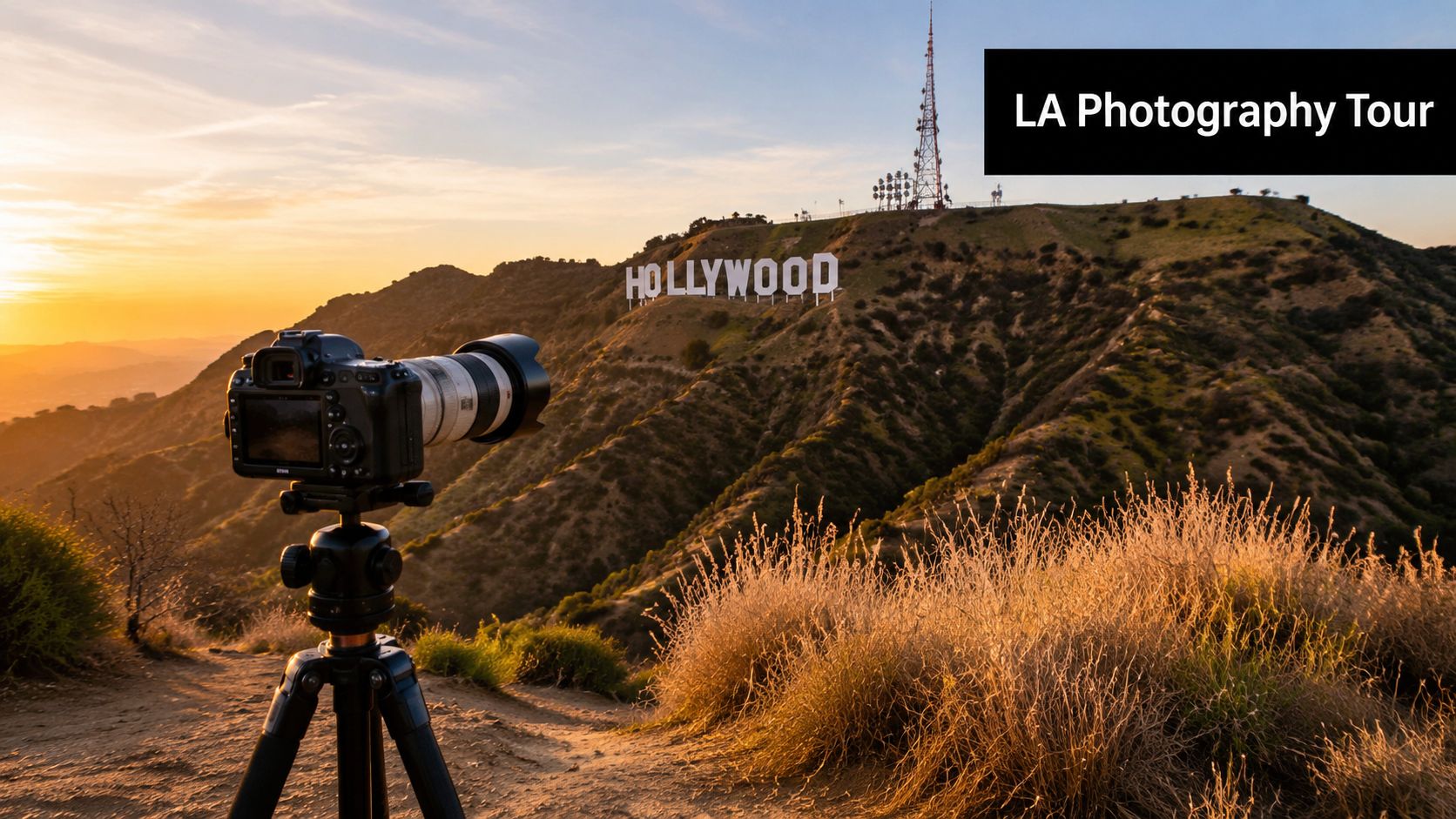
A private tour changes the day because someone else is tracking the moving parts. A guide knows when Beverly Hills looks elegant instead of flat, when Venice has atmosphere instead of visual clutter, and when Griffith gives you city lights without fighting shoulder-to-shoulder crowds. That matters for couples who want keepsake images, families who don't want children dragged through a long, unfocused day, and content creators who need variety without wasting hours in traffic.
Practical rule: In Los Angeles, the route is part of the photography. If the route is wrong, the images usually are too.
There's also a comfort piece people rarely mention. Many travelers want a few polished personal images but don't necessarily want to hire a full portrait session. For that, tools offering photorealistic portraits without a photographer can be a useful supplement before or after the trip, especially if you need clean profile or business images and want to save your in-person tour time for location work.
A thoughtful photography tour in Los Angeles doesn't just show you the city. It edits the city for you.
Beyond the Selfies What a Private LA Photo Tour Includes
A premium private photo tour isn't a car service with a few scenic stops. Done properly, it's part concierge, part location scout, part photo coach, and part logistics manager. The city feels easier because someone is making hundreds of small decisions on your behalf.
The guide is there to shape the day, not just narrate it
A good guide does more than point at landmarks. They read the light, watch the traffic pattern, judge whether a stop is worth staying at, and adjust for your group. If you're traveling with children, the pace shifts. If you're a couple wanting polished portraits, the route favors cleaner backdrops and less transitional downtime. If you're a corporate group, the day usually works better with smoother access, easier exits, and stops that accommodate different comfort levels with being photographed.
That local judgment is what separates a luxury outing from a standard sightseeing loop. You're not locked into a rigid list just because it's printed on a booking page.
Transportation matters more than people expect
Los Angeles is visually generous and logistically stubborn. The distance between “must-see” spots can look simple on a map and feel completely different in real time. A climate-controlled private vehicle changes the experience because it protects your energy. You're not searching for parking, carrying gear farther than necessary, or arriving already frustrated before the camera comes out.
For first-time visitors, this is often the hidden value. The city becomes legible. Hollywood, Beverly Hills, Santa Monica, Venice, and even Malibu can work beautifully in one overall plan, but only if the day is designed around access, not just aspiration.
A polished tour should feel calm. If you feel rushed all day, the itinerary is doing too much.
What's usually included in a high-touch experience
The exact details vary by operator, but the strongest private tours typically include a few core elements:
- Route planning around light: Stops are chosen for how they photograph at that time of day, not just because they're famous.
- Real-time photo guidance: Framing help, lens suggestions, and quick corrections on posture, angle, or camera settings.
- Flexible pacing: You can stay longer when a location is working and move on when it isn't.
- Pickup and return simplicity: Hotel pickup or a clean, easy meeting point reduces friction from the first minute.
- Mixed neighborhood character: Glamour in Beverly Hills, classic Hollywood energy, coastlines in Santa Monica and Venice, and quieter corners when the famous sites get repetitive.
If you're looking at providers, one option travelers often consider is Another Side Of Los Angeles Tours, which offers photography-focused city experiences built around iconic neighborhoods and guided transportation. The practical appeal is straightforward. It bundles route planning, local context, and photo-friendly timing into one service instead of leaving you to coordinate each piece yourself.
Group Tours vs A Bespoke Private Photography Experience
A lot of travelers compare a group tour and a private tour as if the only real difference is price. In practice, the bigger difference is control. Photography is timing-sensitive, and group formats usually don't give you much of it.
A standard group outing can still be enjoyable if your main goal is to see landmarks, take a few phone photos, and move along. But if you care about composition, crowd avoidance, family portraits that don't look hurried, or capturing a polished set of content in one day, the compromises start showing quickly.
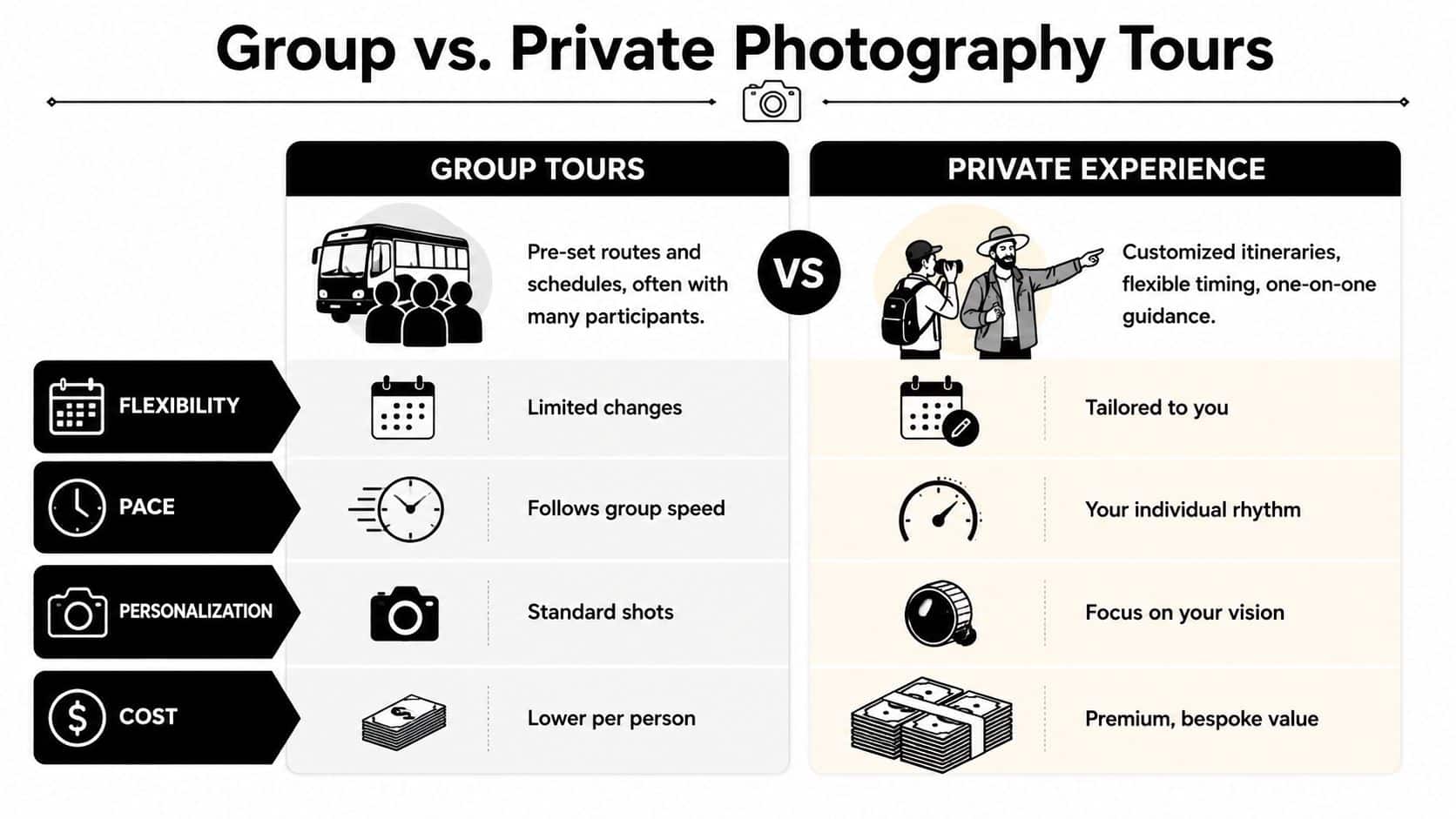
Premium private photography tours in Los Angeles can cost up to $800 for a half-day experience, with that price reflecting VIP service, expert guidance, and carefully curated itineraries for stronger images, as shown in private Los Angeles photography tour pricing on Tinggly. That won't suit every traveler. But for people who value time, comfort, and image quality, the pricing makes more sense when you look at what's being removed from the day: guesswork, waiting, unnecessary stops, and poor light decisions.
Where private service changes the outcome
Here's the clearest way to compare them.
| Feature | Standard Group Tour | Bespoke Private Tour |
|---|---|---|
| Itinerary | Fixed route with preset stops | Adjusted to your interests, pace, and light |
| Timing | Scheduled around the whole group | Built around when each location photographs well |
| Photo support | Limited, general guidance | One-on-one direction and real-time feedback |
| Pacing | Everyone moves together | You stay when a location is working |
| Crowd management | Harder to pivot quickly | Easier to reroute or change angles |
| Comfort | Shared experience, less flexibility | More privacy, quieter rhythm, easier family or couple travel |
| Value | Lower entry cost | Higher service level and stronger creative return |
The ROI isn't abstract. Families get everyone in the frame without asking strangers for help. Couples get images that feel considered instead of rushed. Content creators leave with variety rather than ten versions of the same stop. Corporate groups get a polished activity without the usual coordination headaches.
If the photo matters, flexibility matters first.
The other issue is creative sameness. Group tours often funnel everyone to the same obvious angles because they're managing volume and time. Private experiences can still include the landmarks people came to see, but they have room to chase detail, mood, architecture, movement, or cleaner compositions. That's where Los Angeles starts looking less like a checklist and more like a story.
LAs Most Photogenic Locations From Icons to Hidden Gems
The city's famous places earn their reputation. The problem is that many visitors approach them in the most crowded, least flattering way possible. A sharper Los Angeles photo day mixes icons with locations that give you breathing room and visual contrast.
Most LA photo tours still promote the same 5 to 7 must-visit spots, while 68% of professional travel photographers consider those locations overcrowded and creatively limiting. At the same time, demand for authentic, non-cliché tours has grown 45%, according to Los Angeles photography tour trends on GetYourGuide.
The classics still matter when you approach them well
Griffith Observatory gives you one of the city's most satisfying combinations: architecture, skyline, hills, and atmosphere. It's strongest when you treat it as a layered composition instead of a postcard. Work the railings, use the curves of the building, and don't always point straight at the skyline. Some of the best frames there are slightly off-axis.
Hollywood is rarely about perfection. It's about energy. The Walk of Fame can feel chaotic, but that chaos is part of the visual language. Tight crops, reflections in storefront glass, and details around historic theaters work better than trying to make the boulevard feel empty.
Beverly Hills and Rodeo Drive reward cleaner compositions. Texture, storefront symmetry, polished cars, and elegant facades can do the work there. Travelers who like luxury detail usually enjoy these stops more than they expect.
For travelers building a shortlist, this guide to the best photography spots in Los Angeles is a useful starting point.
Where the city starts looking less predictable
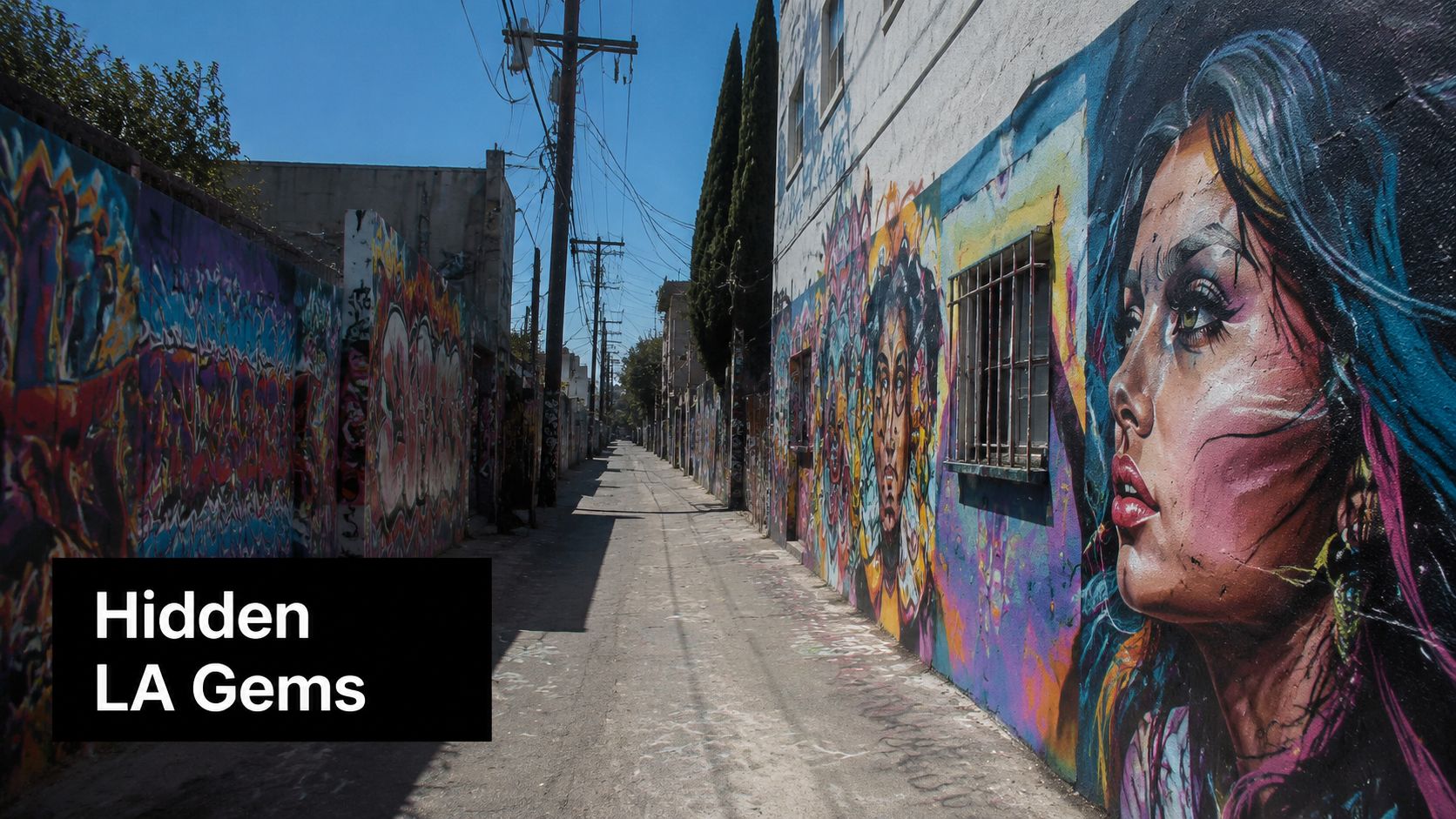
Santa Monica and Venice shouldn't be treated as interchangeable. Santa Monica Pier is graphic, colorful, and lively. It's great for movement, silhouettes, and layered beach scenes. Venice gives you more texture. Murals, skate culture, boardwalk characters, canals, and side streets offer much more variety if you're after a less polished, more editorial look.
Downtown is where many repeat visitors find a second version of LA. The Walt Disney Concert Hall is excellent for lines, reflected light, and abstract framing. The Arts District delivers walls, steel, murals, warehouse textures, and a more cinematic edge than visitors usually get from a standard sightseeing route.
This short video gives a feel for that visual range across the city.
Go where the city gives you contrast. One glamorous stop, one coastal stop, one gritty or architectural stop. That mix is what keeps a gallery from feeling repetitive.
Malibu belongs in the conversation too, especially for travelers who want space, softer visual noise, and a more open coastal palette. It photographs with a very different temperament than central LA, and that contrast can enhance a full-day private route.
Sample Itineraries The Classic Coast and The Hollywood Dream
The best itineraries don't try to cover everything. They connect neighborhoods that photograph well together and move with the light instead of fighting it. That's what turns a busy city into a smooth photography day.
The Classic Coast
This route works well for couples, families, and anyone who wants the softer side of Los Angeles. Start farther west, where Malibu offers room to breathe and cleaner coastal compositions. Early in the day, the shoreline can feel calm and spacious, especially if your goal is scenic imagery rather than spectacle.
From there, ease south toward Santa Monica for a more iconic California rhythm. The pier adds color, geometry, and motion. Then continue into Venice, where the mood shifts. Boardwalk energy, murals, skate culture, and canals create a more layered finish than many visitors expect.
A coastal route like this works because the visuals build naturally. Open shoreline. Classic beach town. Then personality and texture. Travelers comparing beach-focused options often find this overview of Los Angeles beach tours and coastal neighborhoods helpful when deciding how much of the day should lean scenic versus lively.
The Hollywood Dream
This route suits first-time visitors who want the Los Angeles people recognize instantly. Begin in Hollywood while the day still feels fresh and the area reads more clearly on camera. Historic facades, boulevard details, and recognizable landmarks are easiest to tackle before visual fatigue sets in.
By late morning or early afternoon, shift into Beverly Hills. That gives the day a cleaner middle section, with architecture, storefronts, palm-lined streets, and polished city detail. It also creates a useful tonal contrast after Hollywood's busier visual language.
The final act belongs in the hills. Griffith Observatory is a natural closer because the city starts looking cinematic as daylight softens. If the timing is right, you leave with skyline atmosphere instead of flat midday coverage.
The strongest LA itineraries don't chase more stops. They chase better transitions.
Private planning proves its worth. You're not just being driven from point to point. The day is being edited in real time so the city feels coherent, elegant, and photographically useful.
Pro Tips for Capturing Stunning Photos in Los Angeles
Los Angeles rewards preparedness. It also exposes weak planning very quickly. The right gear helps, but gear alone won't solve glare, crowds, or shifting light if you don't know when and how to use it.
Gear
Experienced tour photographers often recommend carrying two camera bodies with versatile lenses such as a 24-70mm and a 15-35mm, with a tripod for blue hour and night work and a polarizing filter to cut glare and improve skies, as shared in Jeff Cable's advice on photo tour gear.
That setup makes sense in Los Angeles because the city changes fast. One moment you're shooting tight details in Beverly Hills. Minutes later you need a wider frame for Griffith, Santa Monica, or the Disney Hall. Swapping lenses in the street is slower and less pleasant than most travelers expect, especially with traffic dust, crowds, and limited space.
If you're shooting on a phone, don't assume that means you should approach the day casually. Wipe the lens often. Use the widest and standard focal lengths more than the digital zoom. Pay attention to verticals around architecture and storefronts.
Timing
Blue hour is one of LA's most forgiving windows. During that brief period before sunrise or after sunset, guides often recommend underexposing by 1 to 1.3 stops for a moodier look, then compensating with shutter speed or ISO, which can climb into 1600 to 3200 on modern cameras while still producing strong results, according to Brian Brown's blue hour guide for Los Angeles travel photography.
That matters in this city because harsh daylight can flatten famous locations. Blue hour adds shape and atmosphere. Griffith Observatory, downtown streets, Venice, and parts of Beverly Hills all become more dimensional once the sun drops and the contrast softens.
Field note: If a landmark looks disappointing in hard sun, don't force it. Change the stop order or come back later.
For creators who want their trip gallery to feel more intentional across platforms, these ideas on how to boost social media engagement visually are useful because they focus on sequencing, visual storytelling, and consistency rather than random one-off images.
Technique and movement
At landmark stops, the easiest mistake is standing where everyone else stands. Move lower. Step wider. Use foreground objects. Let a palm, railing, car, or doorway create depth rather than clutter. In crowded areas, tighter compositions usually work better than trying to wait for a fully clear frame that may never come.
In places like Venice or Hollywood, embrace motion selectively. A still subject with movement around them often says more about the city than a static empty frame ever could. In Beverly Hills and Malibu, by contrast, cleaner and quieter compositions usually carry more elegance.
Booking Your Private Tour and What to Expect on the Day
A strong Los Angeles photo day is usually won or lost before the first frame. The difference is not camera gear. It is timing, routing, and knowing which stops belong together so you are not crossing the city at the worst possible hour for traffic or arriving at a landmark when the light is flat and the sidewalks are packed.
Booking goes better when you define the experience you want from the day. A family trying to cover Santa Monica and Hollywood has different pacing needs than a couple planning sunset portraits, and both need a different route than a corporate group that wants polished images without a long, tiring schedule.
A private operator can shape that around four practical details:
- Must-see areas: Hollywood, Beverly Hills, Santa Monica, Venice, Malibu, or Griffith Observatory.
- Group dynamic: Family, couple, executive team, first-time visitors, or content-focused travelers.
- Physical comfort: Walking tolerance, stroller needs, mobility concerns, and preferred stop length.
- Photo goals: Scenic overlooks, recognizable landmarks, lifestyle portraits, architecture, or a mixed gallery for social platforms and personal keepsakes.
That planning matters more in LA than visitors expect.
On the day itself, the best private tours feel calm and well paced. Pickup is prompt. The vehicle is comfortable. Water is on hand. Your guide is clear about how long each stop makes sense, when to shift locations, and when a famous spot is not worth forcing because the crowd or light is working against you.
That is where private service earns its value. Instead of spending the day hunting for parking, debating whether Venice still fits after Hollywood ran long, or realizing too late that sunset would have been better from a different overlook, you stay focused on the experience and the images. The route adjusts around real conditions. If the coast is socked in, a stronger city stop can replace it. If one location is delivering better frames than expected, the schedule can breathe.
For travelers who want a clearer sense of how these outings are organized, this guide to planning a Los Angeles private tour covers the decisions that make the day easier before you ever get in the car.
If your trip also includes the broader photography community, portfolio reviews may be worth adding to your LA plans. The Los Angeles Center of Photography has announced plans for Exposure 2026, scheduled for September 30 to October 2, 2026, with 20-minute private meetings and registration listed at $390 to $925 depending on the number of reviews, according to the Exposure 2026 event page at LACP.
A private day in Los Angeles should leave you with more than a full camera roll. It should leave you with a gallery that feels intentional, and with the sense that the city was handled properly from the start. If you want a polished, photo-friendly route through Hollywood, Beverly Hills, Santa Monica, Venice, Malibu, and beyond, explore the private experiences from Another Side Of Los Angeles Tours.