
Walk down Hollywood Boulevard and you will step over thousands of names before you find one you recognize. That raises an obvious question for a lot of visitors: how to get a star on Hollywood Walk of Fame, and who actually gets to decide? The honor looks random from the sidewalk, but it follows a strict process run by the Hollywood Chamber of Commerce, with real paperwork, real fees, and a real committee vote behind every name, a system rooted in the history of the Hollywood Walk of Fame.
If you have ever wondered how do stars get on the Hollywood Walk of Fame, the short answer is that a nomination has to come from someone else, usually a studio, publicist, or fan group, and it has to clear a selection committee before a $75,000 sponsorship fee even comes into play. There is no application form a celebrity fills out alone, and no amount of fame guarantees a spot the first time around.
In this guide, we break down the entire path from nomination to unveiling ceremony: who qualifies, what the committee actually looks for, how the voting works, and what it costs. We will also cover the timeline, since getting a Walk of Fame star rarely happens fast, and how to locate celebrity stars on a Hollywood map once you are walking the boulevard yourself.
What it takes to earn a star on the Walk of Fame
Every star on Hollywood Boulevard falls into one of five categories, and the committee treats each one differently. The Hollywood Chamber of Commerce runs the entire program, has managed the sidewalk since the first stars went down in 1960, and also decides if a star can ever be taken off the sidewalk. Before you even think about a nominator or a fee, you need to understand which lane your career fits into, because the bar for a recording artist looks nothing like the bar for a live theater performer.
The five recognized categories
Here is how the Chamber breaks down eligibility:
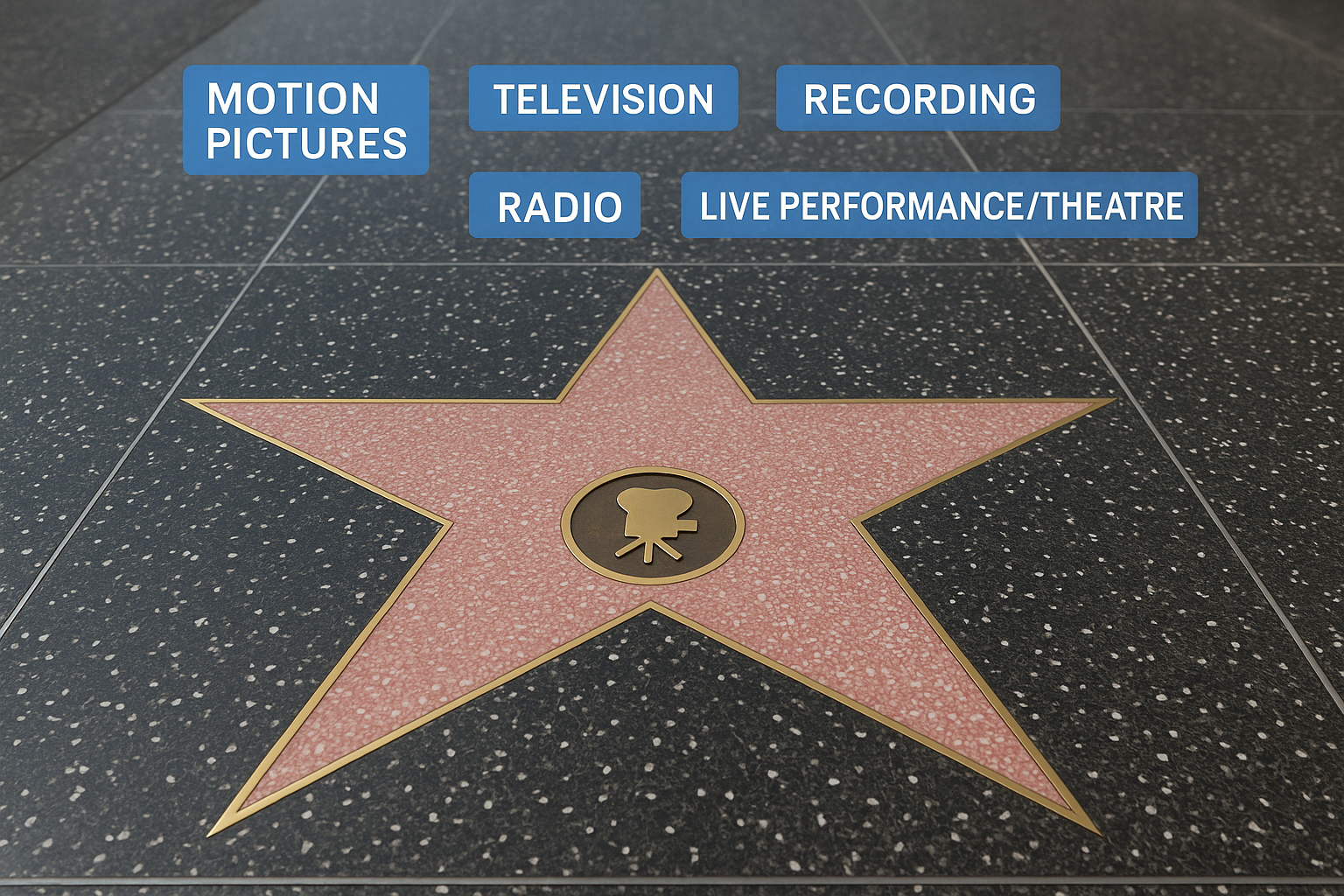
| Category | Covers |
|---|---|
| Motion Pictures | Film actors, directors, producers, writers |
| Television | TV performers, hosts, producers |
| Recording | Musicians, singers, songwriters |
| Radio | Radio personalities, broadcasters |
| Live Performance/Theatre | Stage actors, choreographers, live entertainers |
Some honorees, think Julie Andrews or Dolly Parton, qualify for stars in more than one category because their work spans film, television, and recording.
The core criteria the committee weighs
Professional achievement sits at the top of the list, but it’s not the only factor. The selection committee also looks at longevity in the industry, contributions to the local community, and any philanthropic work tied to Hollywood itself. A single hit song or one blockbuster movie rarely cuts it; the committee wants a body of work that spans years, not a single viral moment.
A star rewards a career, not a single credit.
Community involvement matters more than most people assume. Nominees who have supported local charities, mentored younger talent, or shown up for industry events tend to score better than someone with equal fame but no visible ties to Los Angeles. Understanding how do you get a Hollywood Walk of Fame star starts here, with a career the committee can point to as genuinely deserving, not just recognizable.
Step 1. Build a qualifying career
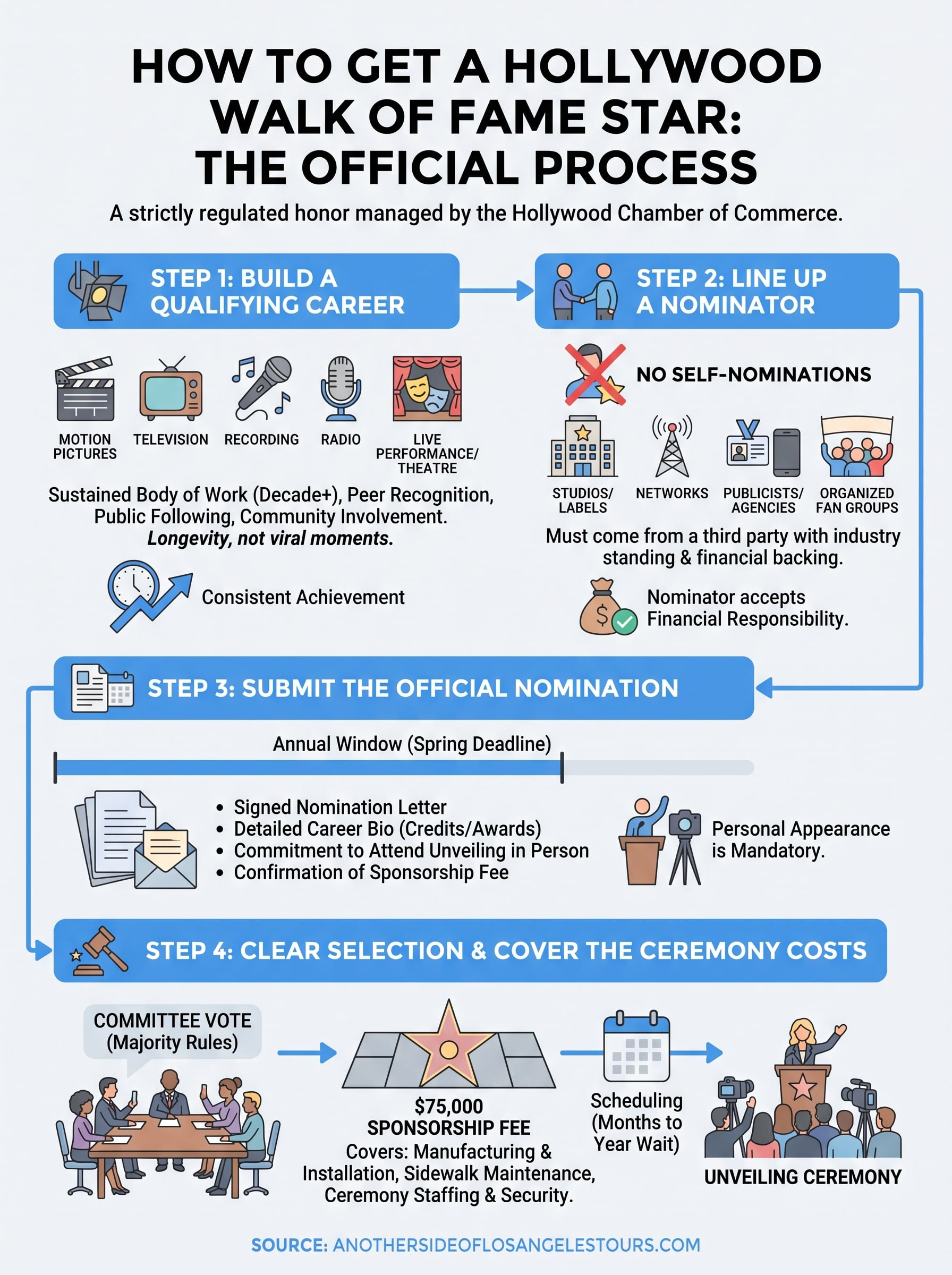
Getting a star starts years before anyone files paperwork. You need a sustained body of work in one of the five categories, not a single breakout moment, because the Hollywood Chamber of Commerce wants proof that your career has staying power. Think in terms of a decade or more of credits, awards, or chart positions, not a single hit.
What the committee actually checks
Reviewers look past headlines and dig into the record. They want to see:
- Consistent industry credits across multiple years or projects
- Recognition from peers, such as major award nominations or wins
- Evidence of a lasting public following, not a short-lived trend
- Contributions to the entertainment field beyond one role or single
Longevity, not virality, is what earns you a spot on the sidewalk.
Actors booking one lead role rarely qualify yet, and musicians with a single viral track almost never do. The strongest candidates already have name recognition tied to a specific category, whether that’s motion pictures, television, recording, radio, or live performance, and a public record long enough for a committee member to verify without guesswork. Build that record first. Everything else in this process, the nominator, the paperwork, the fee, only matters once your career already speaks for itself.
Step 2. Line up a nominator
Here’s the part that surprises most people: you cannot nominate yourself. The Hollywood Chamber of Commerce only accepts nominations from someone else on the honoree’s behalf, usually a manager, publicist, studio, network, or record label with a direct stake in that person’s career. Fan campaigns exist, but they carry far less weight than an official nominator with industry standing.
Finding the right nominator matters as much as the career itself. Studios and labels nominate their own talent all the time because they have the resources to cover the sponsorship fee and the motivation to promote the honoree. A fan committee can file a nomination too, but they need to show organized, credible support, not just a petition with a few thousand signatures.
Organizations that typically serve as nominators include:
- Film studios and production companies
- Record labels and music management firms
- Television networks
- Talent agencies and publicists
- Recognized fan clubs with a documented track record
Without a nominator willing to sponsor the fee, even the strongest career goes nowhere.
Once someone agrees to nominate, they take on financial responsibility if the nomination succeeds. That commitment matters, since the $75,000 fee isn’t optional once the committee says yes, and a nominator who backs out mid-process can stall the entire effort for years.
Step 3. Submit the official nomination
Once a nominator signs on, the actual paperwork moves fast compared to the years spent building a career. The nomination window opens once a year, typically in the spring, and the Hollywood Chamber of Commerce publishes a firm deadline on its site. Missing that window means waiting a full year for the next cycle, so nominators track the date closely.
What the nomination packet needs
The Chamber asks for specific documentation, not a general pitch. A complete submission usually includes:
- A signed nomination letter from the sponsoring nominator
- A career biography detailing credits across film, television, recording, radio, or live performance
- Evidence of the honoree’s willingness to attend the unveiling ceremony in person
- Confirmation that the nominator accepts financial responsibility for the sponsorship fee
A nomination without a personal appearance commitment rarely survives the committee’s first pass.
That attendance requirement trips up more nominations than people expect. The Chamber wants the honoree standing on the sidewalk for the ceremony, not sending a statement, because the event doubles as press coverage for the whole Walk of Fame program. Once the packet is complete, it goes to the selection committee for review, and that review is where most nominations either advance or quietly stall for another year.
Step 4. Clear selection and cover the ceremony costs
The selection committee meets once a year to review every completed packet, and it votes on each nominee individually. Committee members represent the five categories, so a recording industry veteran sits alongside someone with a television background, and a majority vote is what separates an approved nominee from one that waits another cycle. Rejections happen often, even to household names, so a first attempt failing is not unusual.

Approval only starts the clock on the money part of the process.
Once the committee says yes, the $75,000 sponsorship fee becomes due, and the nominator, not the honoree, typically pays it. That fee covers more than a plaque:
- Manufacturing and installing the terrazzo and brass star
- Sidewalk maintenance tied to the Walk of Fame program
- Staffing and logistics for the unveiling ceremony
- Security and barricades on Hollywood Boulevard that day
Scheduling comes next. The Chamber works with the honoree’s team to pick a ceremony date, often tied to a film release, album drop, or other career milestone that gives the event extra publicity. From approval to the actual unveiling, expect a wait of several months to over a year, depending on scheduling conflicts and how packed the ceremony calendar already is that season.
Spotting the stars for yourself
Now you know the real mechanics behind how to get a star on Hollywood Walk of Fame, from building a qualifying career to clearing committee votes and covering that $75,000 fee. It’s a slower, stricter process than most tourists assume, which makes finding the names you actually care about on Hollywood Boulevard more rewarding once you understand what each star represents.
Finding specific stars among thousands of names takes patience, and the sidewalk stretches over a mile with no obvious sorting system. Rather than wandering block by block hoping to stumble on your favorites, a guide who knows exactly where each name sits saves you hours and adds the backstory you won’t get from a plaque alone. If you want that context without the guesswork, book a private Los Angeles tour with VIP service and hotel pickup and let a local expert walk you straight to the stars that matter to you.