
Los Angeles is usually sold through its boulevards, rooftop views, studio lots, and beaches. Yet within reach of Beverly Hills, Hollywood, Santa Monica, and Malibu, water changes the character of a hike completely. It might appear as a seasonal waterfall in a shaded canyon, a creek that requires careful crossings, an alpine lake among granite ridges, or a tide pool revealed by the Pacific.
The right choice depends less on a simple “best trail” ranking than on the day you want to have. First-time visitors may prefer an accessible waterfall or an iconic Hollywood overlook. Families often need forgiving terrain and easy logistics. Couples and photographers may care more about sunset, reflections, or quiet interpretation, while corporate groups need a route that suits different abilities without losing the sense of occasion.
This guide pairs seven hiking trails with water and water-rich outings with practical details about seasonal flow, effort, parking, photography, and safety. For a more efficient day, Lounge Wagon for outdoor adventures offers useful background on preparing for outdoor excursions. Another Side Of Los Angeles Tours can also simplify transportation, timing, pacing, and local context for guests who want a private experience rather than another day of navigating LA traffic and trailhead uncertainty.
Table of Contents
- 1. Eaton Canyon Falls, San Gabriel Mountains' Jewel
- 2. Switzer Falls, A Hidden Alpine Escape in the San Gabriels
- 3. Runyon Canyon, Hollywood's Coastal-Adjacent Peak with Panoramic Views
- 4. Torrance Beach to Point Fermin Cove, Coastal Bluff Hiking and Ocean Access
- 5. Bridge to Nowhere, San Gabriel River Wilderness and Desert Canyon
- 6. Potato Mouth Creek and Blue Gentian Lake, Remote Alpine Lakes Experience
- 7. Torrey Pines State Natural Reserve, Dramatic Coastal Cliffs and Rare Ecosystem
- 7 Water-Featured Hiking Trails Comparison
- Choose the Water Experience That Fits Your LA Day
1. Eaton Canyon Falls, San Gabriel Mountains' Jewel
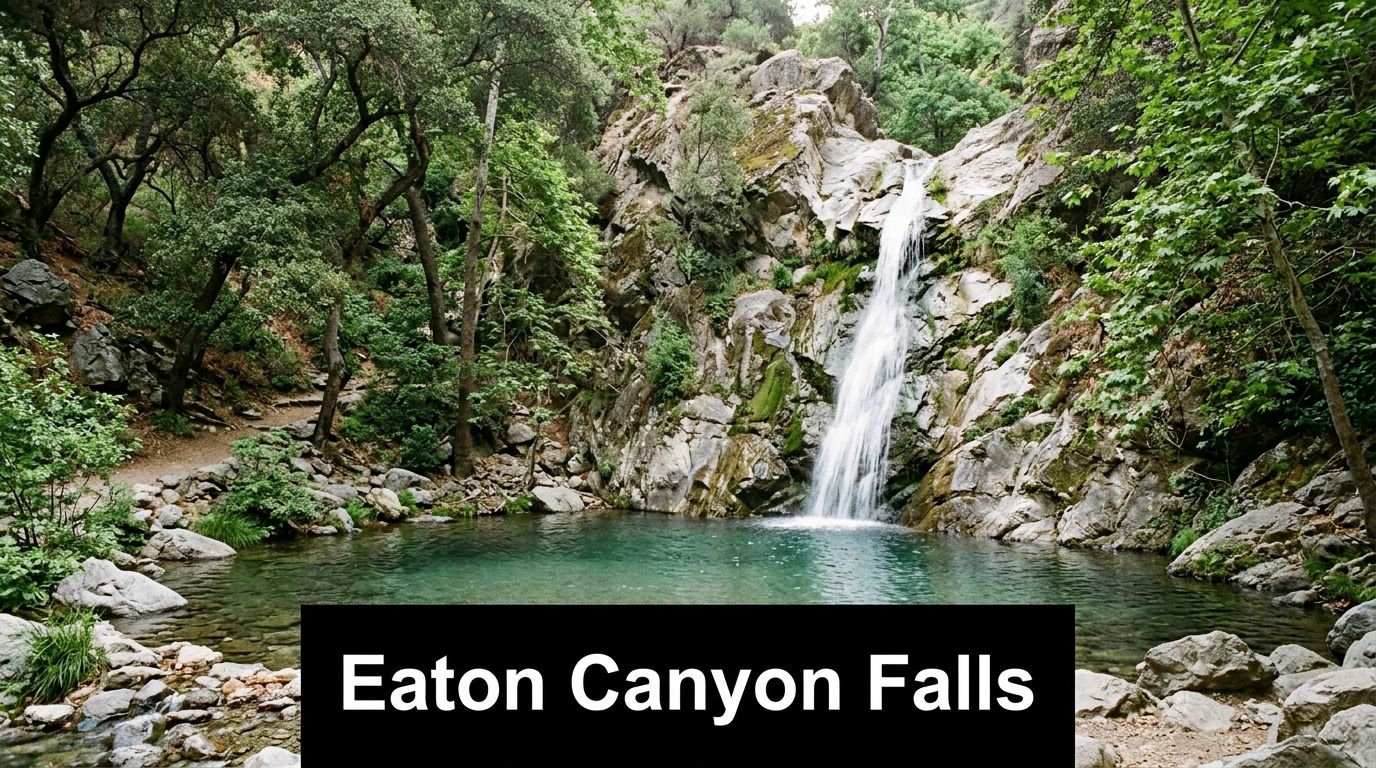
Eaton Canyon is one of the most approachable ways to add moving water to a Los Angeles itinerary. Set in the foothills above Pasadena, the route follows a shaded canyon through oak and sycamore woodland before reaching a waterfall framed by rock and seasonal pools. It feels removed from the city without demanding the commitment of a wilderness expedition.
The water experience changes with recent weather. Visit from November through April for the strongest seasonal flow, although conditions can vary and the stream should never be treated as guaranteed. After rain, the creek may create inviting pools and a more dramatic cascade, but wet rock also makes the final approach less forgiving. Sturdy shoes with reliable traction are a better choice than casual sneakers.
Best for families and first-time visitors
This is a strong introduction to the region for families, couples, and visitors who want a natural counterpoint to Pasadena architecture or a Los Angeles city tour. The canyon setting provides shade and visual variety, while the waterfall gives the outing a clear destination. It's also a good option for guests who want photographs without committing to a full-day mountain route.
Start before 8 AM on weekends to improve your chances of finding parking and to enjoy cooler temperatures. Bring water, sun protection, and a towel or change of clothes if wading is part of your plan. Keep children close around pools and slick rocks, and avoid treating the water's edge as a playground.
Practical rule: A waterfall hike is only as enjoyable as the return trip. Save energy for the walk out, especially after spending time around the falls.
Another Side Of Los Angeles Tours adds value here through door-to-trail transportation, flexible pacing, and interpretation that connects the San Gabriel foothills with Pasadena and the wider LA area. That's particularly useful for visitors staying in Beverly Hills or Hollywood who don't want to build their day around parking, navigation, and post-hike driving.
2. Switzer Falls, A Hidden Alpine Escape in the San Gabriels
Switzer Falls delivers a more rugged canyon atmosphere than Eaton Canyon. The route descends into a lush section of the San Gabriel Mountains where conifers, creek crossings, and shaded rock create an alpine feeling surprisingly close to Pasadena. The waterfall is the destination, but the journey matters just as much, especially for hikers who enjoy varied terrain rather than a straightforward walk.
Expect scrambling and route-finding. The trail's relationship with the creek can make footing and navigation less obvious, and waterproof or quick-dry footwear is more practical than polished trail shoes. The canyon can feel cool in shaded sections, while exposed portions warm quickly as the day develops.
What to bring and when to go
Arrive at 7 AM or earlier for the best chance of securing parking. Carry 2 to 3 liters of water for the outing, and bring a filter only if you understand how to treat natural water safely. Creek water can look pristine and still carry contaminants. Shenandoah National Park's drinking-water guidance illustrates the conservative standard hikers should follow: water from natural sources should be purified before drinking, cooking, handwashing, brushing teeth, or washing dishes, with options including boiling for at least two minutes, chemical treatment, or a portable filter. See the National Park Service guidance on drinking water before relying on any stream.
The best seasonal window depends on recent rainfall and trail reports rather than the calendar alone. More water can improve the waterfall experience but also make crossings more complicated. After significant rain, reconsider the route rather than assuming stronger flow automatically means a better outing.
Where a guide earns their place
Switzer Falls suits active couples, experienced families with older children, and small private groups looking for a genuine canyon adventure. It's less suitable for guests who want a polished sightseeing stop in dress clothes or a predictable path for a large corporate group.
A private guide can keep the day from becoming a navigation exercise. Another Side Of Los Angeles Tours can adjust the pace, identify sensible turnaround points, and combine the hike with Pasadena, Griffith Observatory, or a relaxed meal rather than forcing guests to solve every logistical detail themselves.
3. Runyon Canyon, Hollywood's Coastal-Adjacent Peak with Panoramic Views
A clear morning on Runyon Canyon can deliver Hollywood energy, rugged hillsides, and Pacific-facing views in one compact outing. The water experience is visual rather than physical, with the ocean appearing beyond the city on favorable days. That makes the trail useful for visitors who want a strong sense of Los Angeles without committing to a full-day wilderness hike.
Several loop options suit different abilities, though none is a casual stroll. Rocky, steep sections call for sturdy shoes, while exposed slopes offer little shade from sun and heat. Carry 2 to 3 liters of water and use sun protection, especially if you are visiting from a cooler climate.
The best time for the LA view
Arrive before 7 AM for cooler temperatures, lighter crowds, and a better chance of controlling your pace. Ride-share simplifies the approach, while Hollywood street parking requires careful attention to posted restrictions. Late afternoon can provide attractive light, but expect more heat, busier paths, and less flexibility.
Runyon also pairs well with nearby water activities, although they require a separate transfer. Guests interested in paddle boarding can review the PADL Hollywood Broadwalk location when planning a coastal extension to a Hollywood day.
For a structured itinerary, the Runyon Canyon hiking tour can connect the hike with the Hollywood Sign area, the Walk of Fame, Grauman's Chinese Theatre, or a private city route. This format suits couples and first-time visitors who want photographs and local context rather than an isolated trail walk. A private guide can also adjust the loop to the group's energy, identify worthwhile viewpoints, and keep the timing realistic.
The strongest photographs often come from pausing before the highest point. Let the skyline open up, then turn the camera toward the city, where the changing perspective gives the outing its distinctly Los Angeles character.
Families should choose a shorter loop and set expectations around heat, footing, and elevation. Corporate groups may use Runyon as an optional active component before a vehicle-based tour, since terrain and exposure can create a noticeable ability gap. Afterward, a climate-controlled vehicle gives guests time to recover before continuing through Beverly Hills, Santa Monica, Venice, or Malibu.
4. Torrance Beach to Point Fermin Cove, Coastal Bluff Hiking and Ocean Access
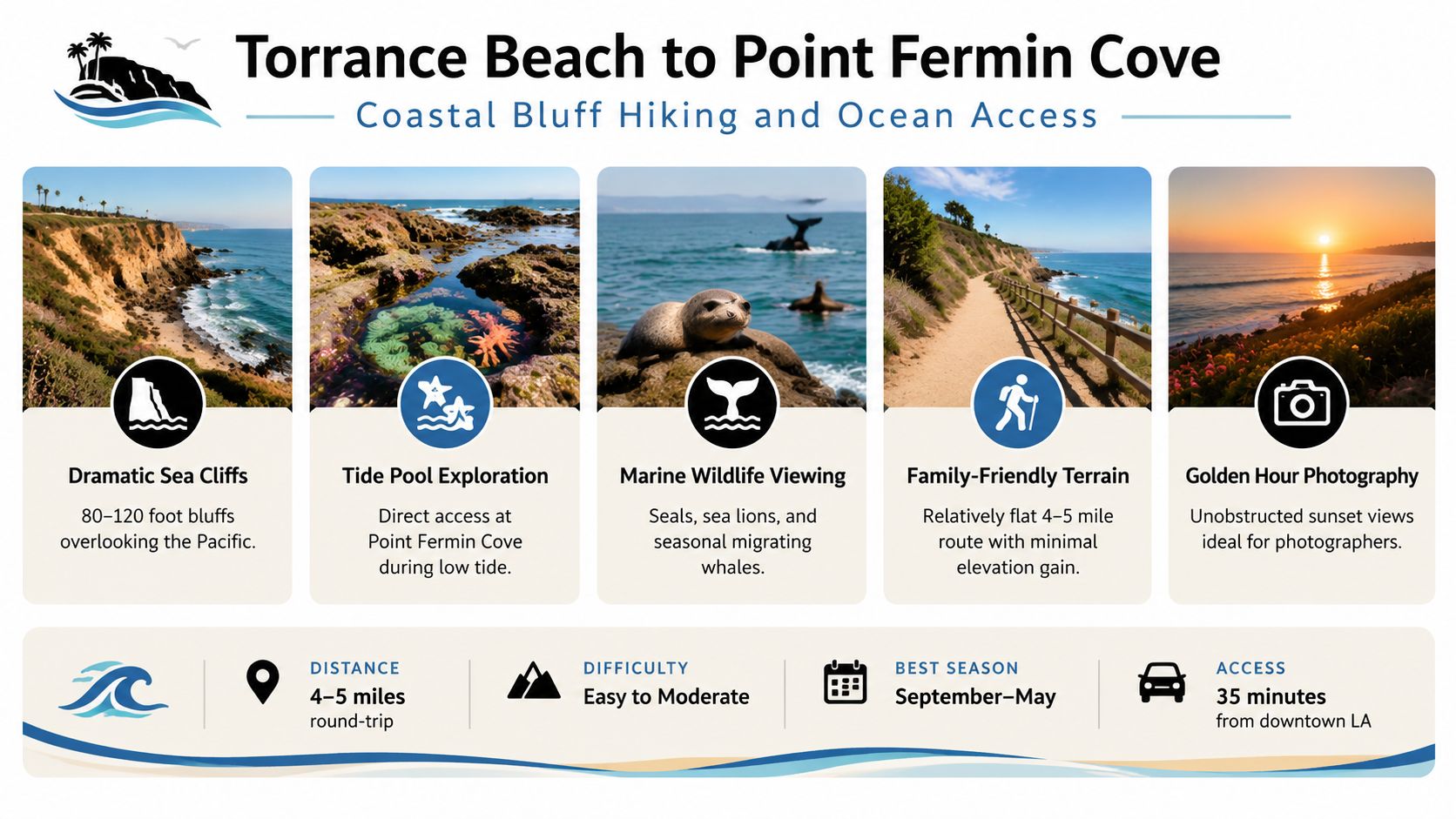
For a gentler water outing, the coastal route from Torrance Beach toward Point Fermin Cove shifts the focus from exertion to scenery. Bluffs, ocean access, tide pools, and marine wildlife create a relaxed Pacific experience, with terrain that's generally more comfortable for families and mixed-ability groups than a steep canyon trail.
Tides control the most rewarding part of the day. Plan around low tide if you want to explore tide pools, and wear water-resistant shoes that can handle wet rock. Even when the air feels warm in the city, ocean breezes can make the coast cool, so a light jacket belongs in the day bag.
Make the coastline work for your schedule
Allow 2 to 3 hours for a leisurely outing with time to stop, look for marine life, photograph the cliffs, and explore near the water. Starting at Torrance Beach and moving west toward Point Fermin creates a natural sunset direction, although visibility, cloud cover, and seasonal light will affect the final result. Avoid stepping onto unstable edges or disturbing tide-pool life. The ocean is scenic, but it also demands respect for changing conditions.
The route works well for couples who want a slower coastal afternoon and families who need frequent opportunities to pause. It's also a practical choice for a private group combining South Bay scenery with San Pedro attractions. Another Side Of Los Angeles Tours can connect the outing with the things to do in San Pedro, coordinating transport so guests aren't left managing separate parking plans at every stop.
Photography and private touring value
Morning light can produce cleaner visibility and gentler temperatures. Sunset offers warmer tones and a more cinematic Pacific backdrop, but it requires careful timing and a reliable return plan. A private guide can build in photo stops without making the entire group wait at every viewpoint, which is valuable for content creators, couples, and corporate guests with different interests.
For a first-time visitor, this is one of the best choices when “water” means access, atmosphere, and coastline rather than a waterfall destination.
5. Bridge to Nowhere, San Gabriel River Wilderness and Desert Canyon
Bridge to Nowhere is the most serious outing on this list. The route enters the San Gabriel River gorge for a remote desert-canyon experience centered on an abandoned concrete bridge from the 1930s. It's a demanding adventure, not a casual add-on between Hollywood and Beverly Hills.
The hike is a 10-mile round trip with repeated river crossings, boulder scrambling, and sections where wet feet are likely. Plan for 6 to 8 hours, start very early, and carry 3 to 4 liters of water along with high-calorie snacks. Waterproof boots can help, but hikers should still be prepared for water entering footwear. A reliable map or offline GPS is essential because the route's relationship with the river can make intuitive navigation unreliable.
Water level changes the entire risk profile
Avoid the route after rain and check the weather carefully before leaving. River crossings that seem manageable in dry conditions can become dangerous after storms, and the canyon offers limited room for improvisation. The National Park Service river and stream safety guidance recommends staying on established trails, keeping at least 6 feet from the water, and avoiding walking, playing, or climbing on rocks and logs near the edge because they can be slippery even when they look dry.
That advice applies broadly, but Bridge to Nowhere demands even more discipline. Don't use the bridge as a reason to take unnecessary risks around the river, and don't let a group's enthusiasm override a conservative turnaround decision.
Experienced hikers only: If weather, water level, navigation, or group fitness raises a question, choose another route. The bridge will still be there on a safer day.
Who should choose it
This is appropriate for experienced hikers traveling with a partner or group. It isn't the right choice for young children, casual footwear, a rushed schedule, or guests who want a polished sightseeing day. A private guide can help with logistics and interpretation, but a guided booking doesn't remove the need for appropriate fitness, equipment, and weather judgment.
For guests who want adventure without committing an entire day to a river gorge, Eaton Canyon, Switzer Falls, or a coastal route offers a more manageable alternative. The smart luxury decision is often choosing the experience that leaves the group energized rather than overwhelmed.
Before setting out, use the following visual reference to orient your coastal alternative and its nearby attractions.
6. Potato Mouth Creek and Blue Gentian Lake, Remote Alpine Lakes Experience
Potato Mouth Creek and Blue Gentian Lake offer the most alpine-feeling terrain in this Los Angeles-area roundup. The San Gabriel Mountains take on a Sierra-like character here, with high-elevation forest, granite ridgelines, and mountain lakes that reward hikers willing to trade convenience for remoteness.
This is a route for dedicated outdoor enthusiasts, not an impulsive sightseeing stop. Acclimatize with lower-altitude walks first, especially if you've arrived from near sea level or have spent the previous day moving between Santa Monica, Venice, Hollywood, and Malibu. Carry 2 to 3 liters of water plus electrolytes, bring layers, and start early to reduce exposure to afternoon storms.
Navigation matters more than the lake photograph
Trails in alpine terrain can become confusing around open slopes, rock, and branching routes. Carry a map and compass or a dependable GPS setup, and download information before leaving service areas. Don't rely on a single phone battery or a beautiful social-media image to tell you where the route goes.
The best access is generally from mid-June through September, but snow, storms, and trail conditions can shift the practical season. Water near the destination may look inviting, yet natural sources still require treatment. Never assume that a visible creek or lake eliminates the need to carry water for the approach and return.
The premium way to plan a demanding day
Blue Gentian Lake suits couples and small groups who want a true mountain objective and are comfortable with a long, focused day outdoors. It's less appropriate for a mixed corporate group or a family seeking easy nature access. A private touring company can help by separating the alpine outing from the main LA sightseeing day, arranging comfortable transport, and building a recovery stop into the itinerary.
Another Side Of Los Angeles Tours is particularly relevant when guests want a custom plan rather than a rigid schedule. The best itinerary might pair this hike with a quieter evening, while first-time visitors may prefer a lower-barrier trail followed by Griffith Observatory, Beverly Hills, or a Santa Monica sunset.
7. Torrey Pines State Natural Reserve, Dramatic Coastal Cliffs and Rare Ecosystem
Torrey Pines State Natural Reserve is a longer drive from Los Angeles, but it earns its place as a full-day coastal escape. The reserve protects the rare Torrey pine and rises above dramatic coastal bluffs, combining ocean views with unusual geology, native plant communities, and access to tide-pool areas.
The Guy Fleming Trail, 2.6 miles, offers an excellent overview of the reserve, though sandy and rocky terrain still calls for sturdy shoes. Carry 2 liters of water, use sun protection, and arrive between 8 and 9 AM for the best chance of finding parking. The reserve's exposed coastal environment can feel much warmer than the ocean horizon suggests, so a light layer and a hat are useful even on a mild day.
Time the tide, not just the drive
Low tide is the key planning variable if tide pools are part of the experience. Check conditions before leaving, and keep the reserve's conservation purpose in mind. Tide pools are living habitats, not decorative photo sets. Stay on appropriate paths, avoid handling wildlife, and never let a photograph pull you toward an unstable cliff edge.
Sunrise and morning light tend to produce softer conditions for walking and clearer coastal detail. Late-day light can be beautiful, but the longer drive back to Los Angeles makes an early start more comfortable for families and corporate groups.
A private itinerary can make the distance feel worthwhile by coordinating the reserve with other Southern California coastal stops. The Southern California beaches map can help frame the broader geography when planning a day that links the reserve with coastal viewpoints, beaches, or a return through Santa Monica and Malibu.
Torrey Pines is best for visitors who want ecology and ocean drama, not a quick waterfall photograph. It provides a memorable contrast to the city's built environment and works especially well for couples, photographers, and guests who've already seen the standard Hollywood highlights.
7 Water-Featured Hiking Trails Comparison
| Trail | 🔄 Complexity | ⚡ Resources (time / gear / parking) | 📊 Expected outcomes | 💡 Ideal use cases | ⭐ Key advantages |
|---|---|---|---|---|---|
| Eaton Canyon Falls – San Gabriel Mountains' Jewel | Easy–Moderate (3.2 mi, ~500 ft); well-maintained with mild creek crossings | ~30 min from downtown LA; parking fills on weekends; sturdy shoes, towel if wading | Scenic 40-ft waterfall, seasonal swimming holes, family-friendly photos | Family outings, beginner hikers, spring photography | Closest major waterfall to LA; accessible trailhead; year‑round stream |
| Switzer Falls – A Hidden Alpine Escape in the San Gabriels | Moderate–Strenuous (7.2 mi, ~1,000 ft); scrambling and multiple crossings | ~45 min from LA; very limited parking; waterproof/quick‑dry boots, 2–3L water | 50‑ft alpine waterfall, shaded conifer forest, reliable flow year‑round | Experienced hikers, photographers seeking solitude, cooling forest escape | Secluded alpine atmosphere; reliable water flow; excellent forest photography |
| Runyon Canyon – Hollywood's Coastal‑Adjacent Peak with Panoramic Views | Variable: Easy–Strenuous (2–5 mi; 300–800 ft) with multiple loop options | ~20 min from downtown; limited parking; bring 2–3L water and sun protection | Panoramic city and Pacific views, social atmosphere, fitness routes | Quick urban workout, sightseeing, first‑time visitors, social hikes | Central Hollywood access; flexible route choices; iconic views |
| Torrance Beach → Point Fermin Cove – Coastal Bluff & Tide Pools | Easy–Moderate (4–5 mi, minimal gain); flat bluff walking, tide‑dependent sections | ~35 min from LA; parking may be fee/limited; layers for wind, tide timing, water‑resistant shoes | Dramatic ocean cliffs, tide pools, marine wildlife viewing, sunset photos | Family coastal walks, tidepool exploration, golden‑hour photography | Direct Pacific access; marine wildlife and tidepool exploration; less crowded than mountain trails |
| Bridge to Nowhere – San Gabriel River Wilderness | Strenuous (10 mi, ~800 ft); technical terrain, multiple river crossings, route‑finding | ~50 min from LA; limited roadside parking; 3–4L water, waterproof boots, map/GPS | Remote canyon experience, historic 1930s bridge, high‑adventure photography | Experienced hikers seeking challenge and solitude | Unique historic landmark; dramatic gorge and adventurous river crossings |
| Potato Mouth Creek & Blue Gentian Lake – Remote Alpine Lakes | Moderate–Strenuous (8–10 mi; 1,200–1,500 ft); high altitude conditions | 60–90 min from LA; possible 4WD to trailhead; layers, acclimatize, 2–3L water | Pristine alpine lakes, subalpine forest, granite ridgelines, fewer crowds | Alpine acclimatization hikes, serious photographers, wilderness enthusiasts | Genuine alpine scenery near LA; crystal‑clear lakes and dramatic ridgelines |
| Torrey Pines State Natural Reserve – Coastal Cliffs & Rare Ecosystem | Easy–Moderate (2–6 mi; 200–500 ft); exposed coastal bluff trails | ~90 min from LA; state parking/day‑use fee; sun protection, tide timing | 300‑ft coastal bluffs, endemic Torrey pines, geological interpretation, tide pools | Botanical/geology education, coastal photography, full‑day coastal outing | Protected reserve with endemic species and dramatic coastal geology |
Choose the Water Experience That Fits Your LA Day
The best trail depends on the experience you want to remember. Choose Eaton Canyon if you want an approachable waterfall, a shaded canyon, and a manageable introduction to local hiking. It's the natural fit for families, first-time visitors, and guests who want to combine outdoor time with Pasadena or a broader Los Angeles itinerary.
Choose Switzer Falls when you want more canyon character and don't mind creek crossings, scrambling, and route-finding. It rewards hikers who enjoy a less predictable path, but it demands better footwear, more careful water planning, and a conservative approach after rain.
Runyon Canyon is the practical Hollywood choice. It doesn't offer a waterfall or stream, but it delivers the city's signature mix of hillside exertion, skyline views, and Pacific-facing atmosphere. It works beautifully as an active add-on to Hollywood, the Walk of Fame, Beverly Hills, or a Griffith Observatory visit, especially when a private vehicle can collect guests afterward.
For an easier coastal day, select Torrance Beach to Point Fermin Cove. Tides, ocean wind, and sunset timing matter more than elevation, making it a strong option for families, couples, photographers, and mixed-ability groups. It's also one of the easiest outings to pair with San Pedro or other South Bay stops.
Bridge to Nowhere belongs to experienced hikers who are prepared for a full day of river crossings, scrambling, navigation, and changing conditions. Blue Gentian Lake is the alpine choice for guests seeking mountain lakes and granite scenery, with acclimatization, layers, weather awareness, and navigation at the center of the plan. Torrey Pines makes the most sense as a full-day coastal escape when rare ecology, bluffs, tide pools, and ocean photography matter more than staying close to central LA.
Water availability is never a decorative detail. The Appalachian Trail Conservancy warns that springs and streams can dry in late summer and early fall, and that drought can eliminate sources. Its guidance on finding and treating trail water recommends checking with local clubs or managers and using recent crowd-sourced updates. A Pacific Crest Trail study also found that hikers rated water-source variability at a mean of 3.4 out of 5, while only 57% of intended thru-hikers finished their hikes, underscoring how water planning can shape route choice, safety, timing, and success. The 2019 Pacific Crest Trail study provides that context for long-distance hiking systems.
In LA, the same principle applies on a smaller scale. Flow, tides, heat, road access, parking, weather, and group ability should decide the route. A private itinerary through Another Side Of Los Angeles Tours can coordinate climate-controlled transportation, flexible pacing, local interpretation, and photo stops around Beverly Hills, Hollywood, Santa Monica, Venice, Malibu, or Griffith Observatory, so the hike feels like part of a thoughtfully designed day rather than a logistical interruption.
Another Side Of Los Angeles Tours offers private and small-group hiking experiences with local guides, comfortable transportation, and flexible pacing suited to families, couples, corporate groups, and first-time visitors. For help choosing between a waterfall, canyon, coastal route, or Hollywood hike, visit Another Side Of Los Angeles Tours and request an itinerary built around your group, timing, and preferred LA experience.