
You've just arrived in Los Angeles, the sun is bright, the Hollywood Sign is somewhere above the palm trees, and your family is wondering whether a “beginner” trail means an easy morning or an unexpected workout. Choosing the right route can make the difference between a relaxed highlight and a day spent searching for parking, running low on water, or navigating terrain that doesn't suit your group.
These hiking trails for beginners offer a welcoming introduction to the city's outdoor character, from Griffith Park and Malibu canyons to Pacific Palisades and the South Bay coast. Each route has a distinct personality, so you can choose a short viewpoint walk, a waterfall outing, a historic Hollywood setting, or a longer coastal stroll.
Hiking has become a major entry point into outdoor recreation. 63.4 million Americans hiked in 2024, representing 20.5% of the population aged six and older, and participation has nearly doubled since 2012, according to the Outdoor Industry Association hiking participation report. For visitors, that growth reinforces a useful point: beginner routes aren't an afterthought. They're often the best way to experience a destination without overcommitting your time or energy.
Table of Contents
- 1. Griffith Observatory to Mount Hollywood Loop
- 2. Solstice Canyon to Waterfall Trail
- 3. Runyon Canyon Trail
- 4. Bridge to Nowhere
- 5. Eaton Canyon Waterfall Trail
- 6. Will Rogers State Historic Park Inspiration Point Loop
- 7. Torrance Beach to Redondo Beach Coastal Bluff Path
- 8. Anza-Borrego Desert Slot Canyon Borrego Palm Canyon
- 8 Beginner-Friendly Hiking Trails Comparison
- Ready for Your LA Hiking Adventure?
1. Griffith Observatory to Mount Hollywood Loop
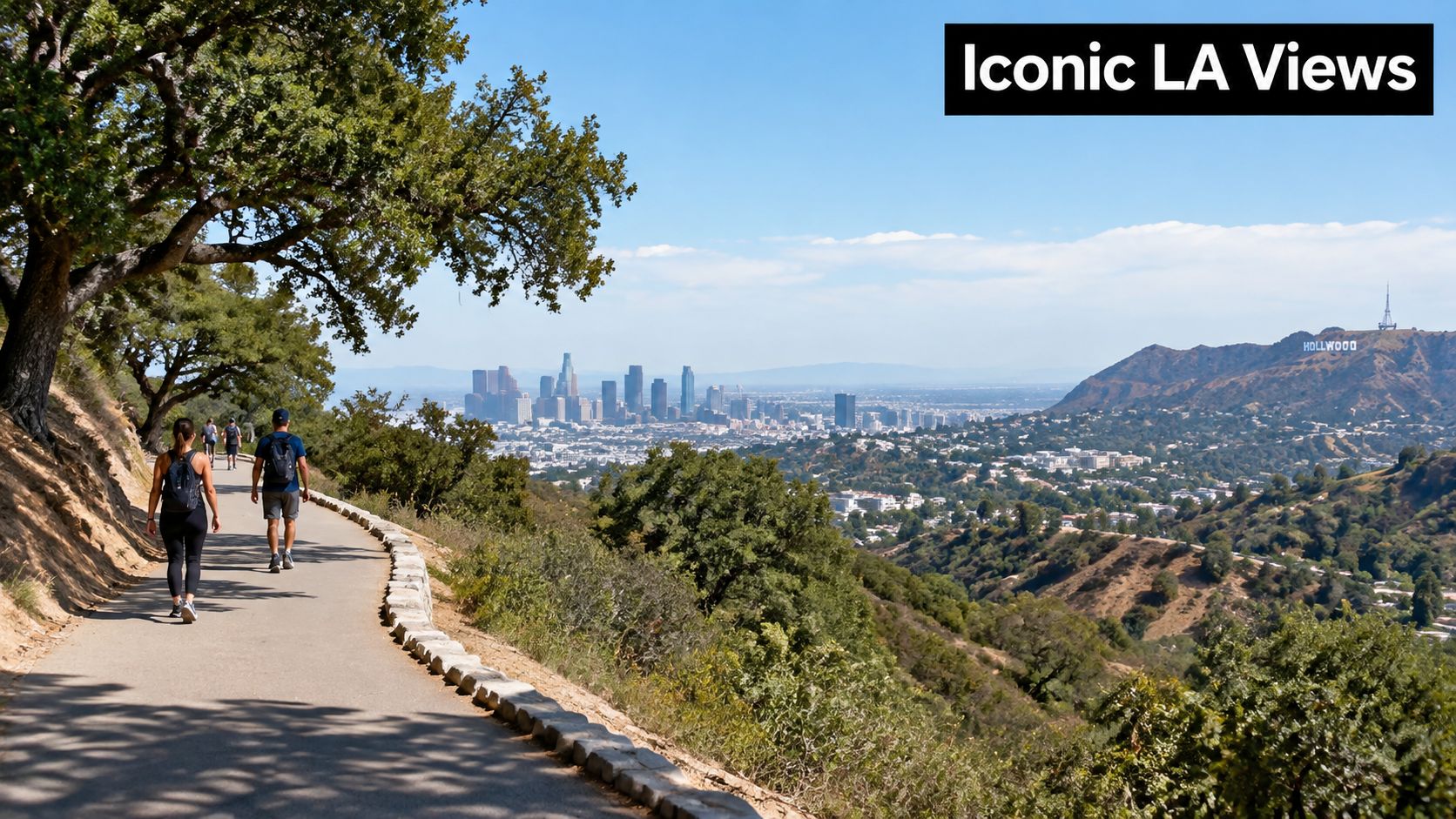
Griffith Observatory is one of the most rewarding places to begin exploring Los Angeles on foot. The approximately 1.3-mile loop combines manageable climbing with broad views toward the Hollywood Sign, downtown Los Angeles, and the surrounding chaparral-covered hills. It delivers the classic Los Angeles moment quickly, without requiring a full-day commitment.
The route passes through native vegetation and oak woodland, with open sections that make the skyline visible almost immediately. Families and first-time visitors usually appreciate the clear sense of place. You're doing more than walking through a park, you're seeing the city's landmarks arranged below you.
Make the morning work for you
Arrive before 9 AM if you want a better chance of convenient parking and a calmer start. Upper sections offer limited shade, so bring sunscreen and a hat, and carry plenty of water. Mornings can feel cool, while exposed slopes become much warmer later in the day, making light layers a sensible choice.
Fall and spring are especially comfortable seasons for this outing. After the walk, visit the Observatory, particularly if you're staying for late-day views and changing light over the city. The building adds context to what you've just seen, from the urban grid to the mountain ridges beyond it.
Practical rule: Choose the trail for the views, but plan the visit around parking, sun exposure, and the Observatory's hours.
A private Griffith Park experience can make this introduction smoother for families, couples, and corporate guests who want transportation, local storytelling, and a route matched to their pace. Explore Griffith Park hiking options before deciding whether to walk independently or arrange a guided morning.
2. Solstice Canyon to Waterfall Trail
Solstice Canyon offers a different kind of beginner hike. Instead of an open ridgeline and city panorama, you enter a Malibu canyon where shaded vegetation, seasonal water, and the remains of a mid-century modern home create a more layered experience. The approximately 3.2-mile out-and-back route feels like a small escape from the coast road.
The waterfall is seasonal, so expectations matter. Visit between December and March for the best chance of seeing stronger flow, while remembering that heavy rain can make creek crossings unsafe. The ruins add a memorable storytelling element, especially for visitors interested in architecture, local history, and the way Malibu's natural surroundings have changed.
Prepare for a damp return
Wear shoes with reliable grip. Creek crossings can become slippery, and the return walk climbs gently but steadily, which can feel more demanding after time spent exploring the canyon. Bring snacks and enough water for the outing, and leave room in your schedule for photographs around the ruins.
Weekend parking is easier if you arrive before 10 AM. That timing also gives families a quieter start before the trail becomes busier. If conditions have changed after rain, check current information before leaving rather than assuming a familiar route remains suitable.
The trade-off is simple. Solstice Canyon offers more shade and historical texture than many exposed Los Angeles hikes, but it requires more attention to footing and weather than a paved coastal path.
A first-time visitor often remembers the contrast here: Malibu's polished coastline outside the canyon, then a quiet trail leading to water and architectural remnants.
For guests who want the logistics handled, Los Angeles hiking tours can pair a suitable route with transportation and local interpretation. That's especially useful when a hike needs to fit around Malibu sightseeing, lunch, or a broader private itinerary.
3. Runyon Canyon Trail
Runyon Canyon is Los Angeles hiking in its most social form. Actors, residents, travelers, families, and fitness enthusiasts share the paths and fire roads, creating an atmosphere that feels less remote and more like an outdoor extension of Hollywood. The approximately 2-mile loop provides sweeping city views and a strong sense of the local scene.
It's a good choice for visitors who want a recognizable Los Angeles experience and don't mind a lively trail. It's less suitable for anyone expecting solitude, especially during popular morning periods. The exposed terrain also makes heat and sun a bigger concern than the route's short distance might suggest.
Pick the quieter approach
Arrive around 7 AM when possible. Early starts reduce heat exposure and usually make the experience more comfortable before the paths fill. Weekdays are preferable for guests who want space for conversation and photographs.
Bring water because there aren't water stations on the trail. Moisture-wicking clothing, sunscreen, and a hat are practical choices, particularly for visitors accustomed to cooler or more shaded hiking environments. If the main parking area is full, use legal nearby parking and walk to the entrance rather than treating residential streets as overflow without checking signs.
The right-side loop can feel less crowded than the main path, although conditions vary. Keep dogs leashed where required and stay attentive around other walkers, runners, and cyclists. A casual pace works better than trying to match the fitness level of the crowd.
Runyon is also an excellent setting for a private picnic-style outing. Another Side Of Los Angeles Tours offers a Runyon Canyon hiking tour for visitors who want the trail combined with local context and a more organized experience.
4. Bridge to Nowhere
The Bridge to Nowhere is the most adventurous entry on this list, even though the route is often described as approximately 4 miles out and back. It follows the East Fork San Gabriel River into the San Gabriel Mountains and ends at a historic steel bridge left behind after the canyon route was abandoned. The destination is unusual, photogenic, and far removed in character from Hollywood's urban trails.
This isn't the best first hike for every beginner. The route includes boulder hopping, creek crossings, and wet footing, so physical confidence and careful movement matter more than the distance suggests. Children may enjoy the splashing and novelty, but adults should assess whether everyone in the group can manage uneven surfaces without rushing.
Treat water crossings as the main feature
Water shoes or a second pair of shoes can make the experience more comfortable. A waterproof backpack cover protects phones, snacks, and extra layers, while a towel and change of clothes are helpful for families. Bring enough water for the full outing because you shouldn't assume that river water is a safe drinking source.
Start early for easier parking and a more relaxed pace. Check water levels before setting out, especially after heavy rain, because a crossing that looks manageable in dry conditions can become hazardous. Turn around if the river is moving too quickly or the group can't cross without losing balance.
The route's real difficulty is not the bridge. It's making good decisions at every crossing.
This trail works best for active couples, older children, and small groups that want a playful day in the mountains. It doesn't pair naturally with a tight Hollywood sightseeing schedule, and it demands more preparation than Griffith Park or a coastal bluff walk.
5. Eaton Canyon Waterfall Trail
Eaton Canyon is a popular family choice in Pasadena because the route combines a relatively gentle walk with a clear destination. The approximately 3-mile out-and-back trail leads through a shaded canyon toward a picturesque 40-foot waterfall, with pools and natural seating areas that invite a longer break.
The route feels approachable for first-time hikers, but “family-friendly” doesn't mean footwear is optional. Creek crossings can be slick, and wet rocks deserve slow, deliberate steps. After winter rain, the waterfall may be more impressive, but higher water can also make crossings unsafe.
Plan for time at the destination
Arrive early on weekends because parking can fill by mid-morning. Carry water and snacks, then treat the waterfall as a picnic pause rather than a quick turnaround. That rhythm works well for families, since younger hikers get a tangible reward and adults aren't forced to hurry through the canyon.
The route's appeal comes from variety. You begin with an easygoing canyon walk, encounter changing surfaces near the water, and finish in a more atmospheric setting than the trailhead suggests. It's a better option than a steep summit when the group wants nature without an all-day commitment.
Check conditions after storms and avoid entering crossings that look fast or deep. If a child or less-confident adult is uncomfortable, the best decision is to stop before the water rather than turn a pleasant outing into a test of nerve.
Eaton Canyon is also convenient for a Pasadena-focused day that includes historic neighborhoods, gardens, or a meal after the hike. A private vehicle and guide can keep the day comfortable without making the trail feel overproduced.
6. Will Rogers State Historic Park Inspiration Point Loop
At Will Rogers State Historic Park, the hike is inseparable from the setting. The approximately 2.2-mile loop moves through coastal canyon terrain and opens toward Pacific Ocean views, while the historic home connects the area to Los Angeles entertainment history. It's an elegant introduction for visitors who want scenery and culture in the same morning.
The trail is gently graded and generally well groomed, making it a natural fit for families, couples, and guests who prefer a polished park experience over rugged mountain terrain. Coastal breezes can change the temperature quickly, so layers are useful even when the forecast looks warm.
Add the house to the experience
Start early to avoid the strongest heat and busiest periods. Bring water because you shouldn't expect a refill station along the route. On a clear day, the ocean and city views are especially rewarding, while hazier conditions still leave the historic setting and canyon atmosphere intact.
Check opening hours before planning a visit to the Rogers home. Limited tour times can affect the order of your morning, and it's better to know the schedule before you begin rather than discovering that the house is closed after the hike.
This is one of the strongest options for travelers staying in Santa Monica, Beverly Hills, or Pacific Palisades. It can sit comfortably beside coastal sightseeing, a private drive through Brentwood, or a relaxed afternoon near the beach.
The best version of this outing doesn't rush from trail to landmark. It lets the landscape explain why this part of Los Angeles attracted artists, performers, and open-air living.
For a first-time visitor, the park offers a softer introduction to local hiking than more exposed Hollywood routes. You get ocean air, a manageable loop, and a story that makes the scenery feel connected to the city.
7. Torrance Beach to Redondo Beach Coastal Bluff Path
The South Bay coastal bluff path is the choice for beginners who prefer a walk rather than a traditional dirt hike. The approximately 5-mile route follows the coastline between Torrance Beach and Redondo Beach, with ocean views, paved sections, and a mostly level profile. Seniors, families, and travelers who want nature without a steep climb often find this format especially comfortable.
Start at Torrance Beach and head north toward Redondo. The route can be shaped around the group's energy, since you don't need to complete the full distance to enjoy the scenery. That flexibility is valuable for multigenerational groups and corporate outings where different fitness levels may be present.
Build in South Bay pleasures
Morning light is beautiful on the water, and earlier starts usually offer a calmer atmosphere. Bring sun protection, water, and a camera, then dress in layers because coastal breezes can shift throughout the walk. Unlike a canyon trail, this route gives you easy access to the beach-town rhythm, so the day can include coffee, lunch, or a relaxed stop near the harbor.
The main trade-off is exposure. You won't get the shade of Eaton Canyon or the woodland character of Griffith Park, so choose timing carefully on hot days. The reward is simplicity, accessible terrain, and an experience that feels distinctly Southern Californian.
Families can turn around whenever younger walkers tire. Couples may prefer the route around high tide or a supermoon, when the ocean scenes become more dramatic, but always keep a safe distance from bluff edges and respect posted access guidance.
This path pairs naturally with Santa Monica, Venice, and South Bay sightseeing. A private tour concierge can coordinate pickup, beach stops, and a flexible return rather than asking guests to manage separate parking and transportation arrangements.
8. Anza-Borrego Desert Slot Canyon Borrego Palm Canyon
Borrego Palm Canyon feels like another world. The approximately 3-mile out-and-back route descends into a desert canyon where rock walls narrow around the trail and a palm-shaded oasis creates a striking contrast to the arid surroundings. For Los Angeles visitors willing to make the drive, it offers a memorable alternative to the city's coastal and urban-adjacent hikes.
This is a beginner route only under the right conditions. Visit between October and March, and avoid treating summer as an adventurous challenge. Desert heat can become dangerous, while storms may affect access roads and canyon conditions.
Respect the desert schedule
Leave Los Angeles by 6 AM to create a reasonable hiking window and avoid the worst heat later in the day. Carry 3 to 4 liters of water per person, wear sturdy hiking shoes with good grip, and pack snacks and sunscreen. A headlamp is useful because slot sections can be shaded and dark, even during daylight.
Check road conditions before leaving. A long drive makes a closure especially frustrating, and desert storms can wash out access routes or change the canyon experience. The rocks may be slick, so slow down near uneven surfaces and don't assume a short distance means low consequence.
The route's appeal is visual variety. You begin in open desert, move through more confined rock formations, and reach palms and water in a setting that feels far removed from Beverly Hills, Hollywood, or Santa Monica.
This is best for adventurous couples, content creators, and small private groups with a full day available. It isn't the practical choice for a short city break, but it can become a standout custom excursion when the itinerary is designed around the desert rather than squeezed between other attractions.
8 Beginner-Friendly Hiking Trails Comparison
| Trail | 🔄 Complexity | ⚡ Time & Effort | 📊 Expected Outcomes (⭐) | Resource Requirements | 💡 Ideal Use Cases / Quick Tip |
|---|---|---|---|---|---|
| Griffith Observatory → Mount Hollywood Loop | Easy → Easy‑Moderate; paved, well‑maintained | 45–60 min; short, highly accessible | 360° city & Hollywood Sign views; iconic skyline, ⭐⭐⭐⭐ | Free Observatory parking, restrooms, bring 2L water, sunscreen | Great for first‑time visitors & families; arrive before 9 AM to beat crowds |
| Solstice Canyon → Waterfall Trail | Easy → Easy‑Moderate; creek‑side, minimal elevation | 1.5–2 hrs; quieter than city trails | Seasonal waterfall + mid‑century ruins; tranquil canyon, ⭐⭐⭐⭐ | Limited free parking, sturdy shoes for creek crossings, 2–3L water, no facilities | Best Dec–Mar for waterfall flow; arrive before 10 AM on weekends |
| Runyon Canyon Trail | Easy‑Moderate; dirt/fire roads, multiple route options | 1–1.5 hrs; very popular, limited parking | Panoramic Hollywood & city views; social, high‑energy vibe, ⭐⭐⭐ | Paid or street parking, 2–3L water, sun protection; dog‑friendly | Go very early or weekdays to avoid crowds; expect a lively atmosphere |
| Bridge to Nowhere (East Fork San Gabriel) | Easy‑Moderate with creek navigation and boulder hopping | 2–2.5 hrs; off‑the‑beaten‑path half‑day | Historic 1930s bridge, river walking, adventurous photos, ⭐⭐⭐⭐ | Water shoes/boots, 3L water, waterproof gear, no facilities; small dirt lot | Best mid‑week spring visit; check water levels before going |
| Eaton Canyon Waterfall Trail | Easy; well‑maintained, family‑friendly path | 1.5–2 hrs; reliable waterfall access | 40‑ft waterfall, shaded pools; excellent for families, ⭐⭐⭐⭐ | $5 day‑use fee, visitor center restrooms, 2L water, good shoes | Ideal gateway hike for kids; go early on weekends and after winter rains |
| Will Rogers State Historic Park, Inspiration Point Loop | Easy; groomed fire roads, historic site access | 1.5–2 hrs; coastal views, free parking | Ocean vistas + Will Rogers historic home; cultural & scenic, ⭐⭐⭐⭐ | Free parking, bring 2L water, check home tour hours | Pair hike with the home tour; weekdays are quieter |
| Torrance → Redondo Coastal Bluff Path | Easy (flat, mostly paved); highly accessible | 1.5–3 hrs depending on stops; flexible endpoints | Continuous Pacific Ocean views, beach‑town amenities, ⭐⭐⭐⭐ | Multiple free lots, sun protection, 2L water, layers for wind | Excellent for leisurely seaside walks and photography; start early for coffee stops |
| Anza‑Borrego / Borrego Palm Canyon (slot canyon) | Moderate; narrow slot, rock scrambling & balance needed | 2–3 hrs hiking + ~1.5 hr drive each way; full‑day trip | Dramatic slot canyon, palm oasis waterfall, unique geology, ⭐⭐⭐⭐ | 3–4L water, sturdy grippy boots, remote self‑sufficiency, free trailhead parking | Visit Nov–Mar only; leave LA early or overnight in Borrego Springs for a fuller experience |
Ready for Your LA Hiking Adventure?
The best beginner hike is the one that matches your group, timing, weather, and tolerance for logistical friction. A short viewpoint route may be perfect for first-time visitors with a packed Hollywood itinerary. A canyon walk can suit families who want shade and a destination, while a coastal bluff path may be the smarter choice for seniors, mixed-ability groups, or anyone who prefers paved sections and easy exits.
Distance alone doesn't define difficulty. A widely used beginner benchmark places easy routes under 3 miles round trip, often completed in 1 to 2 hours, on flat or gently rolling ground, as summarized in Parks Canada trail-rating guidance. Technical trail frameworks also describe easy terrain as having a gentle gradient, smooth surfaces, no obstacles, and no route-finding requirements, with average slope under 10% and no exposure risk, according to OutVentures' trail difficulty guidance. Those measures are useful starting points, but they don't replace checking surface conditions, weather, parking, closures, and exit options.
The National Park Service advises hikers to know their limits and avoid going farther than a safe distance, a principle that applies equally to a short Los Angeles outing. Its hiking safety guidance supports a conservative approach: turn back while the group is still comfortable, not after someone is exhausted.
Make preparation feel effortless
Before leaving, Washington Trails Association recommends making a plan that includes the route and driving directions to the trailhead, along with the 10 Essentials, including navigation, hydration, nutrition, insulation, firestarter, first aid, tools, illumination, sun protection, and shelter. The organization's hiking safety toolkit is a useful reference even for a local day hike.
Water needs vary by route and conditions. American Hiking Society offers a practical guideline of half a liter per hour in moderate temperatures and terrain in its 10 Essentials guidance. For exposed Los Angeles trails, desert routes, or warmer days, carry more than the minimum and make sure every person has access to water.
Trail quality also shapes the experience. In one survey of 545 trail users, 97% reported being satisfied or very satisfied, 95% rated trail conditions good or excellent, 81% rated signage and markings good to excellent, and 87% rated safety and security good to excellent in the McIntosh Run trail survey. The lesson for beginners is practical: clear wayfinding, sound surfaces, and a sense of safety matter as much as scenery.
Choose the right kind of support
Going independently works well when you're comfortable checking conditions, arranging parking, carrying supplies, and adjusting the plan. A private tour becomes valuable when your group includes first-time visitors, children, older travelers, corporate guests, or anyone who wants to enjoy the scenery without managing every transition.
Another Side Of Los Angeles Tours can combine beginner-friendly hiking with climate-controlled transportation, local stories, and nearby highlights such as the Hollywood Sign, Griffith Observatory, Beverly Hills, Santa Monica, Venice, or Malibu. The company offers private and small-group experiences, including guided hiking options around Griffith Park and Runyon Canyon, so the route can fit the day rather than dictate it.
For families, that may mean choosing a shorter walk and leaving time for a relaxed meal. For couples, it can mean adding a scenic overlook and a coastal sunset. For corporate groups, it can mean arranging a comfortable pace, clear meeting logistics, and a shared experience that doesn't require every participant to arrive with specialist gear.
The nine routes above also show why there's no single definition of a beginner hike. Griffith Observatory offers instant iconography. Solstice Canyon brings seasonal water and architecture. Runyon delivers Hollywood energy. Bridge to Nowhere adds creek crossings and adventure. Eaton Canyon offers a family-friendly waterfall setting. Will Rogers connects ocean views with history. Torrance and Redondo provide a flexible coastal walk. Borrego Palm Canyon rewards a carefully planned desert day.
Choose the trail that leaves room for enjoyment. If the route, transport, timing, and conditions are aligned, even a first hike can become one of the most memorable parts of a Los Angeles visit.
Another Side Of Los Angeles Tours offers guided hiking experiences, private sightseeing, and custom itineraries that connect beginner-friendly trails with Hollywood, Beverly Hills, Santa Monica, Venice, Malibu, and Griffith Observatory. Visit Another Side Of Los Angeles Tours to plan a polished Los Angeles outdoor experience with local storytelling, comfortable logistics, and a pace suited to your group.