Picking the best time to visit Los Angeles isn’t as simple as looking at a weather app. This city runs on tourist seasons, freeway traffic patterns, and hotel pricing quirks that catch most visitors off guard. If you’ve booked a trip based on sunny photos alone, you might land in the middle of a July crowd crush or a December parking nightmare near the beaches.
The short answer: late winter through early spring, roughly February to May, gives you mild weather, thinner crowds at places like Griffith Observatory and the Hollywood Sign, and noticeably better hotel rates. Fall shoulder months work well too, especially if you want warm days without summer’s tourist swarm. Peak summer looks great in photos but means packed attractions, gridlocked highways, and inflated prices almost everywhere.
Below, we break down what each season actually feels like on the ground, when crowd levels spike or drop at major landmarks, and how pricing shifts across hotels and tours throughout the year. We’ll also flag specific weeks worth avoiding and the sweet spots our guides recommend booking around, so you can plan a trip that matches how you actually want to experience LA.
Why the timing of your trip shapes your LA experience
Los Angeles doesn’t have one climate or one crowd pattern, it has a dozen of them running at once depending on the neighborhood and the week. Booking your trip without checking the calendar first is like showing up to a restaurant without a reservation on Valentine’s Day: technically possible, but you’re setting yourself up for a worse version of the experience everyone else is having. The date you pick determines whether you spend an afternoon at the Griffith Observatory with room to breathe or shuffling through a line that wraps around the parking lot, which is why it pays to plan a Griffith Observatory and Hollywood Sign outing around the calendar.
Traffic patterns rewrite your daily itinerary
Summer tourist traffic stacks directly on top of LA’s brutal local commuter patterns, and the result is freeway gridlock that can turn a 20-minute drive from Hollywood to Santa Monica into 90 minutes. Locals already dread the 405 and the 101 during standard rush hour windows of 7 to 10 a.m. and 3 to 7 p.m., but from June through August those windows stretch longer and start showing up on weekends too, since visitors are out sightseeing right alongside residents heading to work. Visit in April or October instead, and you’ll notice trips between neighborhoods take a fraction of the time, which means more hours actually spent at attractions instead of stuck in a rental car.
Timing your LA trip right buys you back hours you’d otherwise lose sitting in traffic.
Hotel and tour pricing swings hundreds of dollars
Demand drives price in this city more aggressively than in most tourist destinations, and hotel rates near the coast can shift by 40% or more between low and peak weeks. The same oceanfront room in Santa Monica that runs $180 a night in February can hit $320 during the last week of July.
| Season | Typical Hotel Rate Trend | Tour Demand |
|---|---|---|
| Winter (Dec-Feb) | Lowest, except holiday week | Low to moderate |
| Spring (Mar-May) | Moderate, rising in April | Moderate |
| Summer (Jun-Aug) | Highest of the year | Peak |
| Fall (Sep-Nov) | Moderate, dropping after October | Moderate |
Guided tours follow the same curve. Slots for popular options like our Hollywood and celebrity homes tours fill up weeks in advance during summer, while the same tour in March might have same-week availability at a friendlier rate.
Attraction crowds follow the school calendar, not just the weather
School vacation schedules matter more than most first-time visitors expect. Families flood attractions during the two weeks around spring break in March and again heavily from mid-June through late August, when kids are out of school nationwide. Independence Day week alone can double foot traffic at the Hollywood Walk of Fame compared to a random week in May. Knowing this lets you dodge the worst of it: visit the Universal Studios area on a Tuesday in late September instead of a Saturday in July, and you’ll walk right up to photo spots that otherwise require a 20-minute wait.
Microclimates mean "LA weather" is never one number
Much of what gets published about LA weather assumes the whole city behaves the same way, and it doesn’t. Coastal neighborhoods like Santa Monica and Venice get hit with "June gloom," a marine layer that keeps mornings overcast and 10 degrees cooler than inland spots like Downtown or Pasadena, sometimes lingering past noon. Rain, when it happens, arrives almost exclusively between November and March, and even then it’s usually a few hours rather than an all-day soak. Recognizing these microclimates before you pack means you bring layers for a beach morning and shorts for an afternoon in the Valley, rather than guessing based on a single forecast number that doesn’t apply everywhere you’re headed.
How to choose the right time for your visit
Picking a travel date for Los Angeles comes down to ranking your own priorities, because no single month wins on every category at once. Weather, budget, and crowd tolerance rarely peak together, so you need to decide upfront which one matters most to your trip before you lock in flights. A family chasing warm beach days will make a different call than a couple hunting for cheap hotel rates and empty photo spots.
Start with your must-do list
Questions worth answering before you check flight prices:
- Do you want warm ocean water, or just warm air? (Water stays chilly until August even when the sun feels like July.)
- Are you traveling with kids tied to a school calendar, or can you go whenever?
- Is a specific festival, concert, or event the reason for the trip?
- Would you rather pay less and deal with cooler mornings, or pay more for guaranteed sunshine?
- Do you want a private guided tour with flexible scheduling, or are you fine booking around a busy season?
Your answers point you toward a season fast. Someone chasing the lowest possible hotel rate should look at January or February. Someone who wants warm water for swimming should aim for August or September, even though hotel prices climb.
Match your travel style to a season
Budget travelers and photographers chasing empty landmark shots do best in the shoulder months, since crowds thin out at Griffith Observatory, the Getty, and the Walk of Fame without the weather turning genuinely cold. Families locked into summer break should target the first two weeks of June or the last week of August, right before and after the heaviest crush, rather than the Fourth of July stretch when everything from parking to restaurant wait times gets worse, and our guide to planning a family trip to Los Angeles walks through the rest. Luxury travelers with flexible dates get the best return booking December through February, since five-star hotels and premium experiences like a VIP city tour by private limousine often carry noticeably lower rates when demand drops citywide.
The right time to visit LA isn’t a single month, it’s whichever month matches what you actually came here to do.
Weigh trade-offs instead of hunting for a perfect month
No month gives you rock-bottom prices, thin crowds, and guaranteed sunshine all at once, so stop searching for that combination. October comes close, with warm days, manageable crowds, and rates that haven’t spiked yet, which is why our guides quietly consider it the best all-around pick. February offers the cheapest tour and hotel rates of the year but trades away a few degrees of warmth and the chance of a rainy afternoon. April splits the difference nicely for anyone who wants blooming jacaranda trees and mild weather without full summer pricing. Once you accept that every month involves a trade-off, choosing gets a lot easier: rank your top priority, check it against the seasonal patterns above, and book around that instead of waiting for conditions that never line up perfectly.
Los Angeles weather and crowds through the seasons
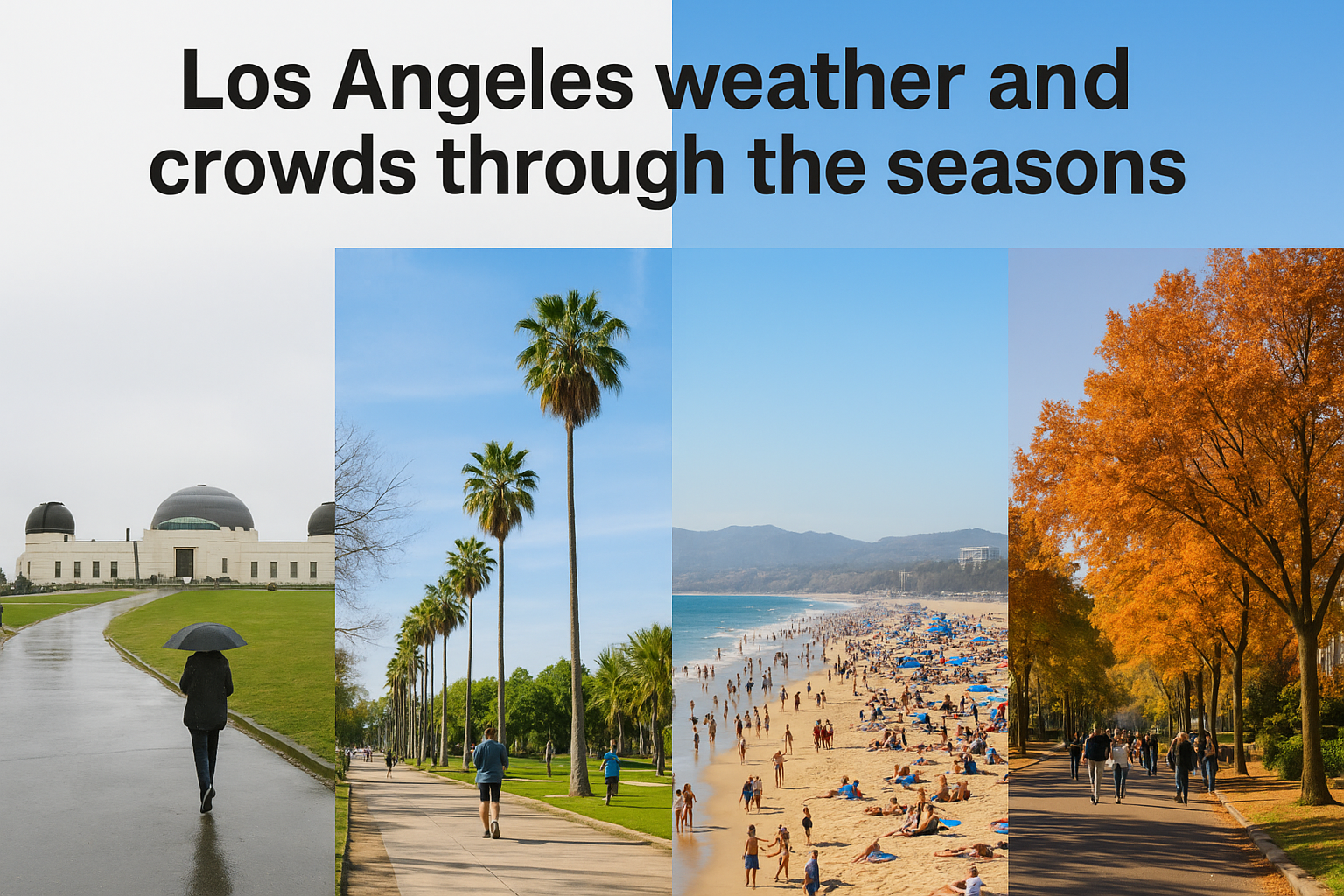
Los Angeles keeps a narrower temperature range than most cities, but that doesn’t mean every month feels the same on the ground. Crowd density shifts as much as temperature does, and the two rarely move together, so understanding both matters more than checking a single average high for the year.
Winter: cool, rainy, and quiet
December through February brings LA’s coolest and wettest stretch, with daytime highs sitting in the low 60s and most of the year’s rain falling during these three months. Attractions like the Getty Villa and Griffith Observatory sit nearly empty on weekdays, and hotel rates near the coast drop to their yearly low outside of the last week of December, when holiday travelers briefly push demand back up. Rain rarely lasts a full day here, so a drizzly morning often clears into a workable afternoon for outdoor plans.
Spring and fall: LA’s sweet spots
March through May and September through October deliver the mildest air of the year, typically 68 to 78 degrees, without the marine layer clinging to the coast as stubbornly as it does in early summer. Fall edges out spring slightly on crowd levels, since spring break travelers create a two-week bump in March that fall doesn’t have to contend with. Both seasons let you walk the Walk of Fame or ride an e-bike through Venice without dodging tour groups stacked three deep at every landmark.
Summer: peak heat and peak crowds
June brings the marine layer’s last stand, known locally as June gloom, which keeps mornings gray and cool along the coast well into the month even as inland neighborhoods bake, a quirk of LA summer weather and its microclimates worth knowing before you pack. July and August then flip that pattern entirely, pushing inland highs past 90 degrees while beach towns stay in the mid-70s, which is exactly why every visitor with a car heads toward Santa Monica and Venice on the same afternoons.
Summer gives you the warmest water and the thickest crowds at the exact same time, so pick your trade-off before you book.
| Season | Typical Daytime High | Rainfall | Crowd Level |
|—|—|—|
| Winter (Dec-Feb) | 60-65°F | Highest of the year | Low |
| Spring (Mar-May) | 68-75°F | Light | Moderate |
| Summer (Jun-Aug) | 75-95°F (varies by neighborhood) | Minimal | Highest |
| Fall (Sep-Nov) | 70-78°F | Light, increasing in November | Moderate |
Understanding this table matters more than memorizing a single average temperature for the city, because a 75-degree day in Pasadena and a 75-degree day in Santa Monica can feel completely different depending on the marine layer and the month. Anyone weighing the best time to visit Los Angeles against a specific itinerary should match the neighborhood they care about most against this seasonal breakdown rather than the citywide average alone.
Best months for beaches, budgets, and outdoor plans
Matching your trip to a specific activity, rather than a generic "good weather" window, gets you a much better answer than any single month can give on its own. Beach lovers, budget hunters, and hikers all want different things from the calendar, and Los Angeles happens to reward each group at a different time of year. Sorting your priorities first, then checking the months below, saves you from booking a trip built around the wrong season for what you actually plan to do.

Best months for beach days
Warm air shows up long before warm water does, which trips up a lot of first-time visitors who land in May expecting to swim. Ocean temperatures off Santa Monica and Venice stay in the low 60s through spring and don’t climb into swimmable territory until August and September, once the sun has had a full summer to heat the Pacific, which is a big part of timing a Venice Beach visit well. If you just want sand, sun, and a beach walk, April through June already delivers warm air and thinner crowds than July, and it helps to know which LA beaches are worth the drive. If you actually plan to get in the water, push your trip to late August or early September, right after the peak crowds thin out but before the ocean cools back down.
Best months for stretching your budget
Stretching your travel dollars in LA means avoiding the exact weeks everyone else wants to visit. January and February consistently post the lowest hotel rates of the year outside the last week of December, and guided tours often run promotional pricing during these slower months since demand drops off sharply after the holidays, which reshapes what a Los Angeles trip costs per day.
| Priority | Best Months | Why |
|---|---|---|
| Lowest hotel rates | January, February | Post-holiday lull in demand |
| Warm swimmable ocean | Late August, September | Water finally catches up to air temps |
| Best hiking weather | October, November | Cooler air, less haze, trails less crowded |
| Balanced value | April, October | Mild weather without peak-season pricing |
If your budget matters more than a tan, book January or February and skip the summer markup entirely.
Best months for hiking and outdoor plans
Outdoor plans in LA hinge on air quality and heat just as much as rainfall. Griffith Park, Runyon Canyon, and the trails above the Hollywood Sign turn brutal by midday once inland temperatures pass 90 degrees in July and August, and summer haze also cuts down the views from the top. October and November bring cooler air, clearer skies, and noticeably fewer people on the trail before sunset, which makes them the strongest pick for anyone planning a hike-heavy itinerary or a guided hike to the Hollywood Sign or Runyon Canyon. Travelers building outdoor time around one of our e-bike or Segway tours get the same benefit: fall’s milder temperatures make longer rides through Venice or Griffith Park far more comfortable than a July afternoon in direct sun.
Key festivals and events worth planning around
Some weeks in Los Angeles get crowded not because of weather or school breaks, but because a single event pulls in tens of thousands of extra visitors overnight. Major events can spike hotel rates and clog freeways just as badly as peak summer, so checking the local events calendar against your travel dates matters as much as checking the weather forecast.
The big events that reshape the calendar
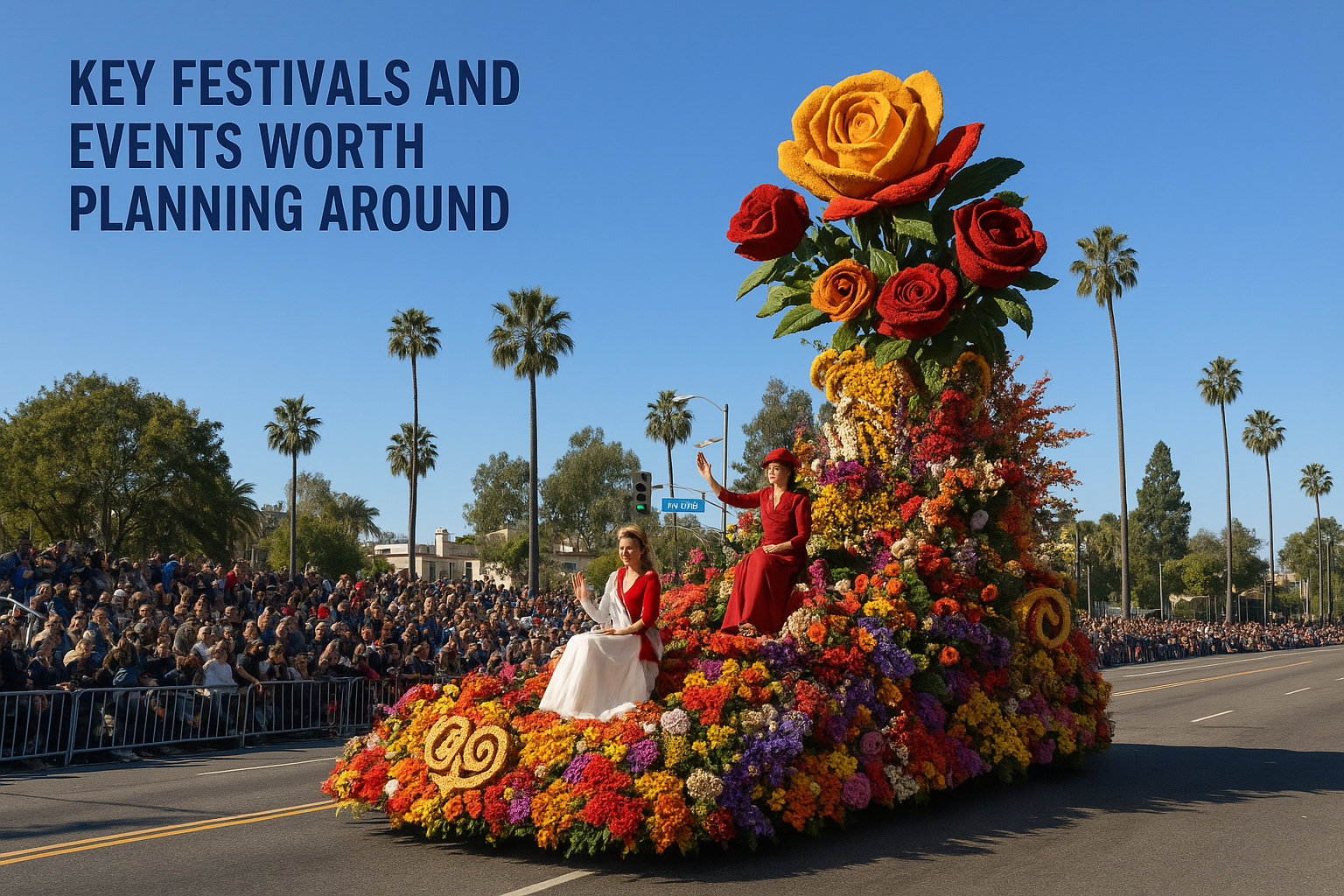
Certain dates on the LA calendar consistently drive up demand across the whole city, not just the neighborhood hosting the event. The Rose Parade and Rose Bowl on New Year’s Day in Los Angeles fill every hotel room in Pasadena and much of the Eastside for a full week beforehand. The Academy Awards in early March turns the Hollywood corridor into a security zone for several days, closing streets around the Dolby Theatre and pushing nearby hotel rates up sharply even for guests with nothing to do with the ceremony.
| Event | Typical Timing | Effect on Your Trip |
|---|---|---|
| Rose Parade / Rose Bowl | January 1 | Pasadena hotels booked solid a week out |
| Academy Awards | Early March | Hollywood street closures, rate spikes near the venue |
| LA Pride | June | Weston Hollywood packed, higher hotel demand |
| Sunset Strip Music Festival | August | West Hollywood traffic and noise increase |
| Hollywood Christmas Parade | Late November | Hollywood Boulevard closures, holiday crowd surge |
If your travel dates overlap a major LA event, budget extra time for traffic and book your hotel months earlier than you normally would.
Holiday season crowds sneak up on visitors
December catches a lot of first-time visitors off guard, since it looks like a quiet winter month on paper but actually brings a distinct crowd of its own. Holiday things to do in LA in December, from the Grand Park tree lighting to the Hollywood Christmas Parade, draw large local crowds in addition to tourists, and the week between Christmas and New Year’s pushes hotel rates back up close to summer levels even though the weather stays cool. Visitors chasing a genuinely quiet December should target the first two weeks of the month, well before the holiday rush and well after Thanksgiving travel settles down.
Booking around, not into, an event
Event weeks aren’t automatically a reason to avoid LA entirely, especially if you’re building your trip around one of them on purpose. A few practical moves make a real difference:
- Check the official event calendars for the Hollywood Chamber of Commerce and the city of Los Angeles before locking in dates
- Book hotels at least two months ahead if your trip overlaps a known event week
- Ask about private or semi-private tour options, since flexible scheduling on something like a Hollywood tour built around your day can dodge event-day street closures that fixed group tours can’t
- Add an extra 30 to 45 minutes to any drive that crosses through Hollywood, West Hollywood, or Pasadena during a known event window
Planning this way turns a potential scheduling headache into one more reason to pick your dates deliberately instead of by accident.
Tips for making the most of your trip any time of year
No matter which month you land on, a handful of habits make any LA trip smoother than showing up and winging it. Local know-how closes the gap between a good trip and a great one far more reliably than picking the statistically perfect week, since even the best month can go sideways with a bad itinerary. Whether you’re chasing the best months to visit Los Angeles or working around a fixed vacation date, these trip-planning tips from our local guides apply year-round.
Let a local guide handle the timing decisions
Guided tours solve half the timing puzzle before you even land, since your guide already knows which entrance to the Griffith Observatory has the shortest line at 10 a.m. or which Hollywood block clears out fastest after a matinee lets out. Booking one of our private guided tours means you skip the research phase entirely and let someone who drives these streets daily route you around the day’s worst traffic and the week’s biggest crowd. Semi-private and small group formats also give you flexibility a fixed bus tour can’t, since having your own local guide in Los Angeles means the schedule can shift an hour earlier if a heat wave rolls in or a street closure pops up.
A good local guide fixes bad timing faster than any amount of pre-trip research.
Pack for the weather you’ll actually get, not the postcard version
Sunny photos of LA rarely show the 58-degree morning fog rolling off the coast or the 95-degree afternoon waiting an hour inland. Packing smart means covering both ends of that swing:
- A light jacket or hoodie for coastal mornings and evenings, even in July
- Sunscreen rated SPF 30 or higher, since the UV index stays high year-round
- Comfortable walking shoes for hills around Griffith Park and uneven Hollywood Boulevard sidewalks
- A reusable water bottle, since inland heat dehydrates faster than most visitors expect
- Layers you can shed by midday once the marine layer burns off
Rain gear only matters between November and March, and even then a light jacket usually beats a full umbrella since LA showers rarely last long.
Build slack into your schedule no matter the season
Every season in Los Angeles throws at least one curveball, whether that’s a surprise June gloom morning, a random August heat spike, or a street closure for a parade you didn’t know was happening. Scheduling one buffer hour between major stops, rather than stacking your itinerary back to back, keeps a single delay from wrecking the rest of your day. Travelers who build this cushion into a trip almost always report a calmer, more enjoyable few days than those chasing a tightly packed checklist. Combine that buffer with a guide who already knows the city’s rhythms, and the exact week you picked matters a lot less than how well you planned around it.
Finding your perfect LA travel window
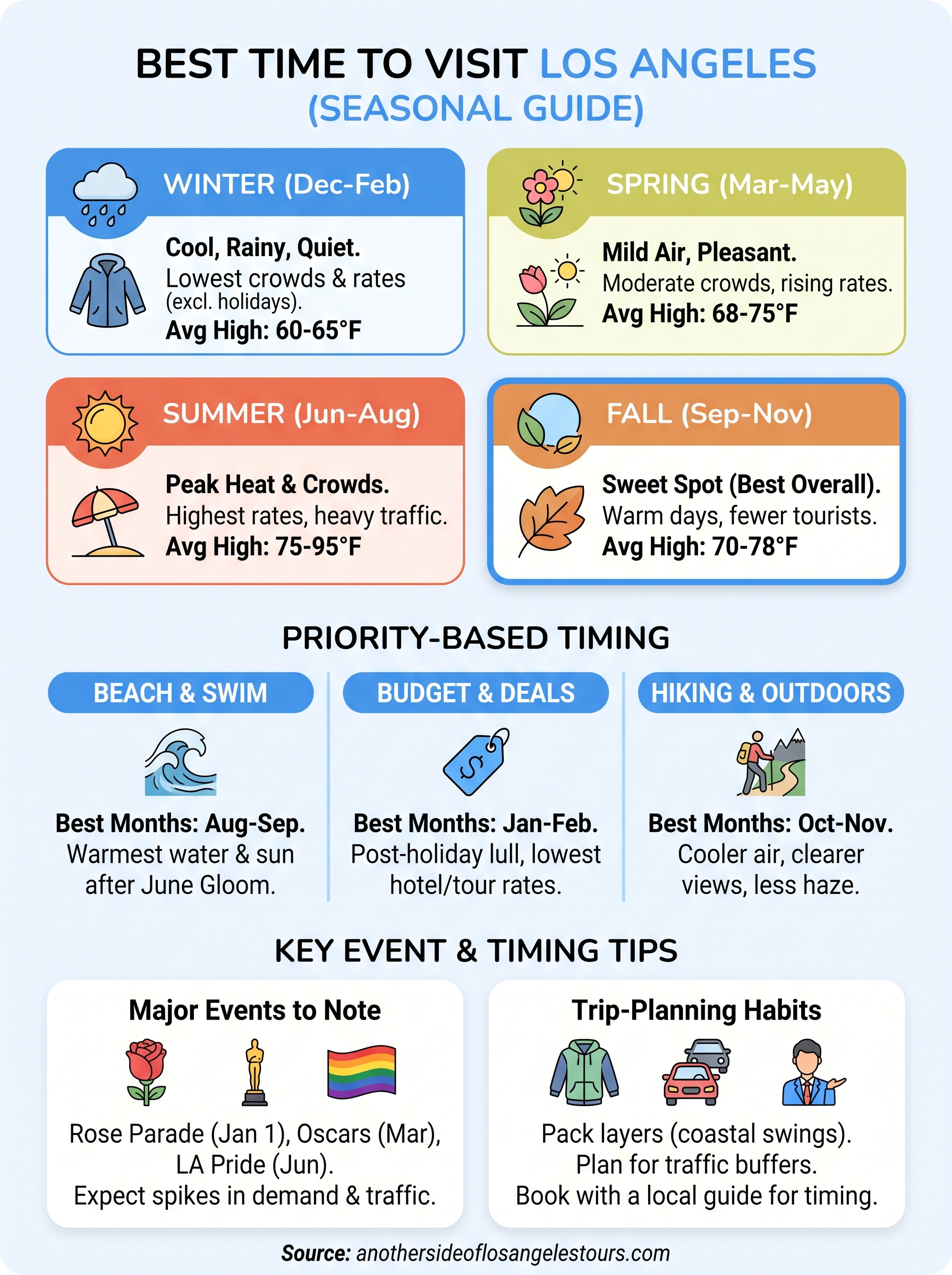
There’s no single best time to visit Los Angeles, only the month that fits what you actually want from the trip. Chasing warm ocean water points you toward late August. Chasing empty photo spots and cheap hotel rooms points you toward February. Chasing the easiest overall balance points you toward October, which is why our guides keep coming back to it.
Whatever month lands on your calendar, the weather and crowds only tell half the story. Trip planning gets a lot easier once you have someone local handling the routes, the timing, and the traffic dodges you’d otherwise learn the hard way. That’s exactly what a guide brings to the table, no matter the season you picked.
Ready to lock in your dates? Compare our private Los Angeles tours and let a local expert build your itinerary around the exact window you chose.