Downtown LA doesn’t get the credit it deserves. Most visitors fly straight to Hollywood or the beach and skip the neighborhood where the city actually started. That’s a mistake, because DTLA packs more history, architecture, and food into a few square miles than almost anywhere else in Southern California. If you’re searching for things to do in downtown Los Angeles CA, you’re standing at the edge of a district that rewards people who actually stop and look around instead of rushing through.
This guide answers exactly what to do in downtown Los Angeles whether you have an afternoon or a full weekend. You’ll find the landmarks worth your time, the neighborhoods locals actually recommend, and a few spots that never make the typical tourist lists.
We’ve spent years guiding visitors through this city, and DTLA consistently surprises people who expected a generic downtown skyline. Below are 14 stops covering Grand Central Market, the Arts District, Olvera Street, and rooftop bars with views worth the wait, organized so you can build a day that fits your pace and your interests without wasting time backtracking across the city.
1. Take a guided tour with a local expert
Downtown LA is dense with history, but most of that history is invisible unless someone points it out to you. The Bradbury Building looks like a random office lobby until a guide explains why filmmakers have shot there for decades. Olvera Street looks like a tourist market until you learn it marks the actual birthplace of the city. A guided walking tour of downtown LA solves this problem in a single afternoon instead of a week of guesswork.
What to expect
A good downtown tour moves on foot through the core historic blocks, covering stops like the Bradbury Building, Grand Central Market, Angels Flight, and the Historic Core’s old bank towers, while a local guide fills in the stories that don’t show up on plaques. Another Side Tours runs small-group and private tours through this exact stretch of the city, pairing architecture and film history with the kind of context you can’t get from a map app. Expect two to three hours of walking, frequent stops for photos, and a guide who answers questions instead of reciting a script.
A guide turns a walk past old buildings into a walk through the city’s actual origin story.
Who it’s perfect for
This option suits visitors who want the highlights of downtown without spending a day figuring out which blocks matter. First-time visitors, history buffs, and anyone traveling with family members who have different energy levels all do well here, since the guide sets a manageable pace and handles logistics. It’s also the right call if you’re short on time and want to hit several of the other items on this list, since a guide will naturally route you past Grand Central Market, Angels Flight, and the Bradbury Building in one loop. Groups of three or more get better per-person pricing, which makes this a smart pick for families or friends traveling together.
Hours, cost, and tips
Most guided tours of downtown LA run daily, with morning departures avoiding both the heat and the biggest crowds at Grand Central Market. Pricing for small-group walking tours typically starts around $75 per person, with private tours priced higher depending on group size and customization. Book your small-group walking tour in Los Angeles at least a few days ahead during peak travel season, since small-group slots fill fast on weekends. Wear real walking shoes. Downtown’s sidewalks and building interiors involve more distance and more stairs than people expect.
2. See world-class art at The Broad
The Broad sits right across from Walt Disney Concert Hall and holds one of the most talked-about contemporary art collections in the country. Founded by philanthropists Eli and Edythe Broad, the museum houses work from Jean-Michel Basquiat, Cindy Sherman, and Jeff Koons, but most visitors come specifically for Yayoi Kusama’s Infinity Mirror Rooms. General admission is free, which is rare for a collection this significant, though the Kusama rooms require a separate timed reservation that sells out fast.
What to expect
Plan on ninety minutes to two hours moving through three floors of rotating and permanent exhibits. The building itself, with its honeycomb exterior, is worth photographing before you even step inside. Same-day standby tickets are available, but lines form early, so booking online in advance saves real time.
Free admission to world-class art is rare enough that skipping The Broad in downtown LA feels like leaving money on the table.
Who it’s perfect for
This stop suits art lovers, photographers chasing an Instagram moment, and anyone traveling on a budget who still wants a genuinely impressive experience, and it belongs on any list of LA museums worth a visit. It’s less suited to visitors with very limited time, since the Kusama reservation system rewards planning ahead rather than walking in.
Hours, cost, and tips
The Broad is open Tuesday through Sunday, closed Mondays, with hours that extend later on Thursdays and weekends. Check the museum’s official site for current hours before you go. Reserve your free timed ticket online at least a few weeks out during peak tourist season, and grab a Kusama slot the moment your visit window opens.
3. Ride the historic Angels Flight Railway
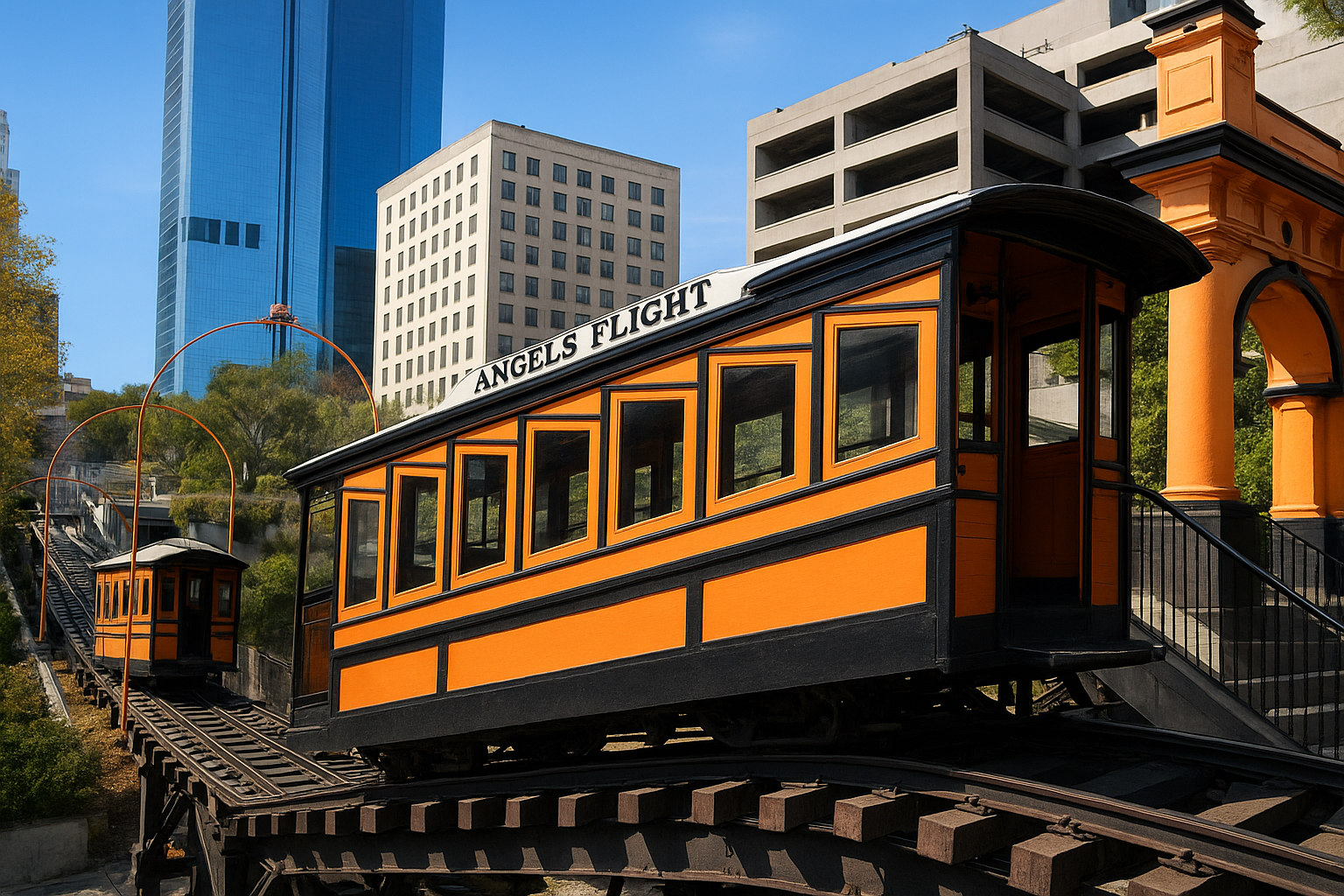
Angels Flight is the world’s shortest railway, a pair of orange funicular cars that have hauled people up and down Bunker Hill since 1901. It’s less a way to get around Los Angeles and more a piece of moving history, connecting California Plaza at the top to Grand Central Market at the bottom in about a minute. Angels Flight Railway survived closures, relocations, and even a fatal accident that shut it down for years, and its current run since 2017 makes it one of the most photographed small landmarks in the city.
What to expect
The ride itself lasts under a minute, but the view from the top platform over the Historic Core is worth lingering for. The cars themselves, named Olivet and Sinai, are original wooden vehicles restored to their early-1900s look, so you’re riding an actual antique rather than a replica.
One of the shortest rides in Los Angeles carries over a century of the city’s history in sixty seconds.
Who it’s perfect for
This stop suits photographers, history buffs, and anyone connecting a visit to Grand Central Market with a walk up to the Broad or Walt Disney Concert Hall. It’s a quick, low-effort addition rather than a destination on its own, so pair it with nearby stops instead of building a trip around it. Families with young kids tend to enjoy the novelty just as much as adults do.
Hours, cost, and tips
Angels Flight runs daily, though hours shift occasionally, so check the official Angels Flight site before visiting. A one-way ride costs $1, and you can pay with cash or tap a card at the turnstile. Ride it once each direction if you have the extra two minutes and a few spare coins.
4. Sample the flavors of Grand Central Market
Grand Central Market has fed downtown Los Angeles since 1917, and it still works the same way today: dozens of independent vendors packed under one roof, each one specializing in exactly one thing. Grand Central Market sits directly below Angels Flight, so pairing the two stops costs you almost no extra walking. You’ll find everything from decades-old Mexican stalls to newer additions serving ramen, tacos, and third-wave coffee, all sharing the same communal tables.
What to expect
Expect crowds, noise, and more good smells than you can chase down in one visit. Long-running vendors like Roast to Go and China Café sit next to newer names, and that mix of old and new is the market’s actual identity, not a marketing pitch.
Grand Central Market packs a century of Los Angeles food culture under one noisy, crowded, unmissable roof.
Who it’s perfect for
This stop suits food lovers, budget travelers, and anyone who wants lunch without committing to a sit-down restaurant, and it’s a natural anchor for a culinary tour of Los Angeles. It also works well for groups with different tastes, since everyone can order from a different stall and still eat together. Solo travelers looking for a low-key hour will find it easy to grab a seat and people-watch.
Hours, cost, and tips
The market opens daily around 8 a.m. and stays open into the evening, with individual vendor hours varying slightly. Meals run cheap by downtown standards, mostly between $8 and $15. Arrive before noon on weekdays to dodge the lunch rush, and bring cash since a few of the older stalls still prefer it.
5. Tour Walt Disney Concert Hall and the Music Center
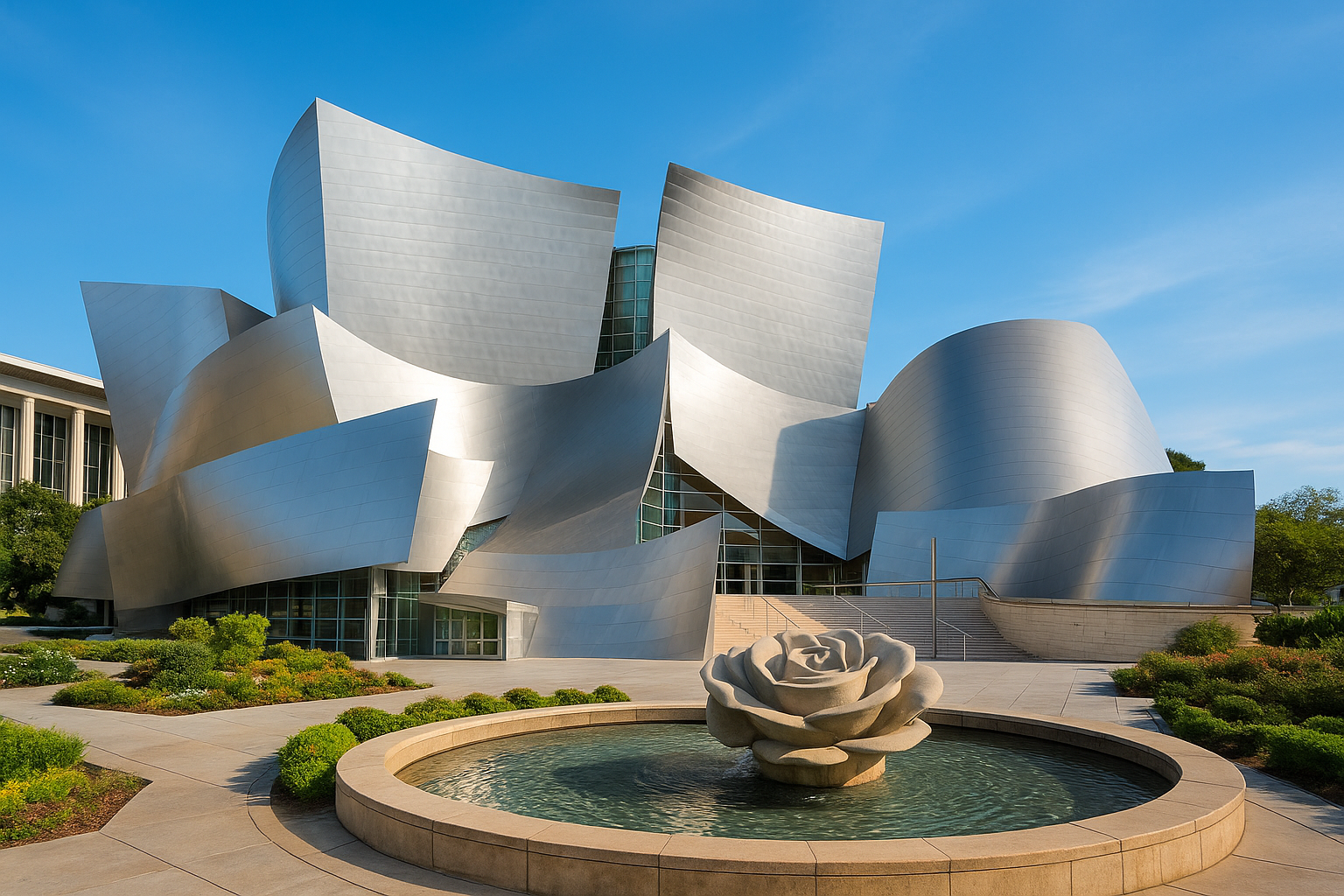
Frank Gehry’s stainless steel curves make Walt Disney Concert Hall one of the most recognizable buildings in Los Angeles, and it anchors the larger Music Center campus that includes the Ahmanson Theatre and the Dorothy Chandler Pavilion. Home to the LA Philharmonic, the hall is as much a sculpture as it is a concert venue, and the building rewards visitors whether or not you catch a performance.
What to expect
Self-guided tours let you wander the lobby, the outdoor gardens, and the rose-shaped fountain dedicated to Lillian Disney, all without a ticket. Guided tours go further, taking you inside the actual concert hall to see the wood-paneled interior and explain Gehry’s design choices. Either way, budget an hour to really take in the exterior from multiple angles, since the reflective panels change completely depending on where the sun sits.
Gehry’s building proves that a concert hall can be a landmark even for people who never buy a ticket.
Who it’s perfect for
Architecture fans and design lovers get the most out of this stop, especially anyone considering an architecture tour in Los Angeles, but it also works for music lovers planning an evening performance and want a reason to arrive early. Casual visitors short on time can still get real value from a quick fifteen-minute walk around the exterior gardens.
Hours, cost, and tips
Self-guided tours run daily and are free, though hours vary by day, so check the Music Center’s official site before visiting. Guided tours require advance reservations and a small fee. Evening visits pair well with dinner in the Arts District, where you can also detour past the murals of downtown LA, since the building lights up dramatically after dark.
6. Wander the streets of Little Tokyo
Little Tokyo has anchored Japanese American life in Los Angeles since the 1880s, making it one of only three remaining official Japantowns in the country. Little Tokyo sits just east of the Historic Core, packed into a few walkable blocks of temples, mochi shops, and family-run restaurants that have survived internment, redevelopment, and decades of change without losing their identity.
What to expect
Start at the Japanese American National Museum to understand the neighborhood’s history, then wander into the Japanese Village Plaza for shopping and snacks, one of many things to do in Japantown. Weller Court and the surrounding side streets hold some of the best ramen and okonomiyaki in the city, and the smell of fresh mochi from Fugetsu-Do, open since 1903, is reason enough to detour a block.
Little Tokyo condenses over a century of Japanese American history into a few blocks you can walk in an afternoon.
Who it’s perfect for
This stop suits food lovers, culture enthusiasts, and anyone who wants a break from downtown’s steel-and-glass architecture. Families do well here too, since the plaza’s shops and casual restaurants keep kids engaged without much walking. History-minded travelers should build in extra time for the museum, which goes deeper than a quick photo stop allows.
Hours, cost, and tips
Most shops and restaurants open by 11 a.m. and stay busy through dinner, with the Japanese American National Museum charging a modest admission fee and closing Mondays. Meals typically run $10 to $20 per person. Visit on a weekday afternoon to skip weekend crowds, and save room for dessert at Fugetsu-Do before you leave.
7. Get lost in The Last Bookstore
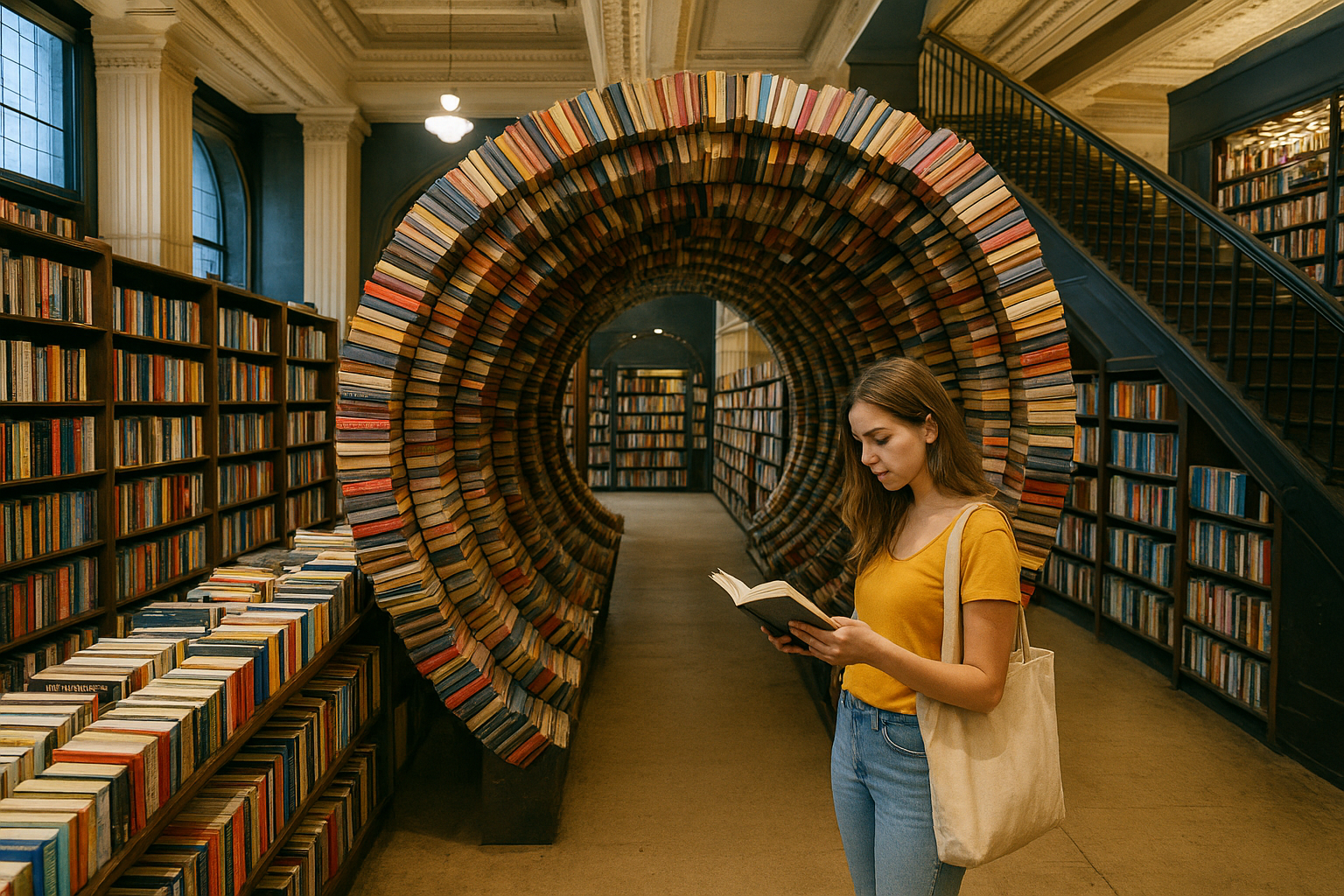
Housed inside a converted 1914 bank building, The Last Bookstore is one of the largest used and new bookstores in the country, and it looks the part. Vaulted ceilings, the old bank vault still standing in the back, and a spiral tunnel built entirely from paperbacks make this one of the most photographed things to do in downtown Los Angeles for anyone who loves books or just loves a good visual.
What to expect
Ground floor shelves hold new releases and bestsellers, but the real draw sits upstairs in the Labyrinth Books section, where vaulted bank rooms overflow with used titles sorted loosely by genre. Local artists sell prints and handmade goods in a small gallery tucked into a former vault, and the book tunnel and spiral archway draw a steady line of people waiting to snap a photo.
A bank vault full of paperbacks turns a bookstore into one of downtown’s most photographed rooms.
Who it’s perfect for
Readers, photographers hunting the city’s top spots for photos, and anyone who wants a slower, indoor break from downtown’s busier stops will linger here longest. It also works well on a hot afternoon or a rare rainy day, since you can spend an hour browsing without ever stepping back outside. Travelers building out a full day of what to do in downtown Los Angeles often use this as a midday reset between walking stops.
Hours, cost, and tips
The store opens daily, typically from 10 a.m. to 9 or 10 p.m. depending on the day. Browsing is free, though most people leave with at least one paperback in hand. Head upstairs early in the day to photograph the book tunnel without a crowd waiting behind you.
8. Catch a game or concert at Crypto.com Arena
Crypto.com Arena anchors the LA Live complex and hosts the Lakers, Clippers, Kings, and Sparks alongside major touring concerts and award shows. Crypto.com Arena sits a short walk from Grand Central Market and the Financial District, so it’s easy to fold into a downtown day rather than treating it as a separate trip. Even on nights without an event, the surrounding LA Live plaza stays lit up with restaurants, a movie theater, and enough energy to justify a stroll through.
What to expect
Game nights bring a packed, loud atmosphere that starts building well before tip-off, with fans filling the LA Live restaurants and bars beforehand. Concerts and award shows draw a different crowd but the same buzz, and the arena’s size keeps sightlines solid from most sections.
Nothing captures downtown LA’s energy after dark quite like a sold-out night at Crypto.com Arena.
Who it’s perfect for
Sports fans planning a trip around a Lakers or Kings game get the most obvious value here, but concertgoers chasing a big-name tour should check the schedule and the rest of LA’s live music venues too. This stop suits travelers who want an evening anchor for their day, since you can spend the afternoon exploring the Historic Core and end the night here.
Hours, cost, and tips
Event schedules vary by season, so check the official Crypto.com Arena site before booking anything else that day. Ticket prices swing widely depending on the event and seating, from budget nosebleeds to premium floor seats. Book parking in advance through the arena’s site, since nearby lots fill up fast and street parking disappears quickly on event nights.
9. Play and learn at the Grammy Museum
The Grammy Museum sits right inside LA Live, just steps from Crypto.com Arena, and it’s built for music fans who want more than glass cases full of memorabilia. The Grammy Museum covers four floors of interactive exhibits tracing every genre the Recording Academy honors, from hip hop to classical, with instruments you can actually play and vocal booths where you can record yourself. Rotating exhibits have featured everyone from Motown to Taylor Swift, so the collection changes enough to reward repeat visits.
What to expect
Expect hands-on stations rather than passive displays. You’ll mix a track at a DJ booth, test your range in a recording booth, and walk past stage outfits and handwritten lyrics from major artists. Budget ninety minutes to see everything without rushing.
A museum built around touchscreens and recording booths turns music history into something you actually do, not just look at.
Who it’s perfect for
Music lovers of every age do well here, and it’s one of the stronger things to do in downtown Los Angeles for families with kids who get bored in traditional museums. Pair it with a Crypto.com Arena event for an easy one-two evening, since both sit inside the same LA Live complex. Solo travelers and casual fans will still find plenty to hold their attention for an hour or more.
Hours, cost, and tips
The museum opens daily, typically from 10:30 a.m. to 6 p.m., with last entry an hour before closing. Adult admission runs around $20, with discounts for students, seniors, and kids. Buy tickets online ahead of a big concert night at the arena, since same-day walk-up lines get long fast.
10. Marvel at the Bradbury Building’s atrium
From the sidewalk, the Bradbury Building looks like an unremarkable 1893 brick office building. Step inside, though, and you’re standing in one of the most photographed interiors in Los Angeles: a five-story atrium of wrought iron railings, open cage elevators, and glazed brick walls that pull in soft light from a giant skylight overhead. Architect George Wyman designed it after supposedly consulting a Ouija board, and the result has appeared in dozens of films, most famously as the setting for the climactic scenes in Blade Runner.
What to expect
Public access is limited to the ground floor lobby and the first landing of the staircase, since the upper floors house working offices. Even that small footprint delivers a genuine wow moment, especially once the afternoon sun hits the ironwork just right.
A five-minute stop at the Bradbury Building delivers one of downtown’s biggest visual payoffs for almost no time invested.
Who it’s perfect for
Film buffs tracking down movie sets you can visit in LA, architecture fans, and photographers get the most out of this stop, and it slots naturally into a walk that includes Grand Central Market and Angels Flight since all three sit within a block of each other. It’s a quick add rather than a standalone destination, so treat it as a five-to-ten-minute detour, not a planned hour.
Hours, cost, and tips
The lobby is open to visitors daily during business hours, generally 9 a.m. to 6 p.m., and entry is free. Keep your visit brief and quiet, since real offices operate upstairs. Weekday mornings tend to be quieter than weekend afternoons, when tour groups and photographers cluster near the entrance.
11. Step back in time on Olvera Street
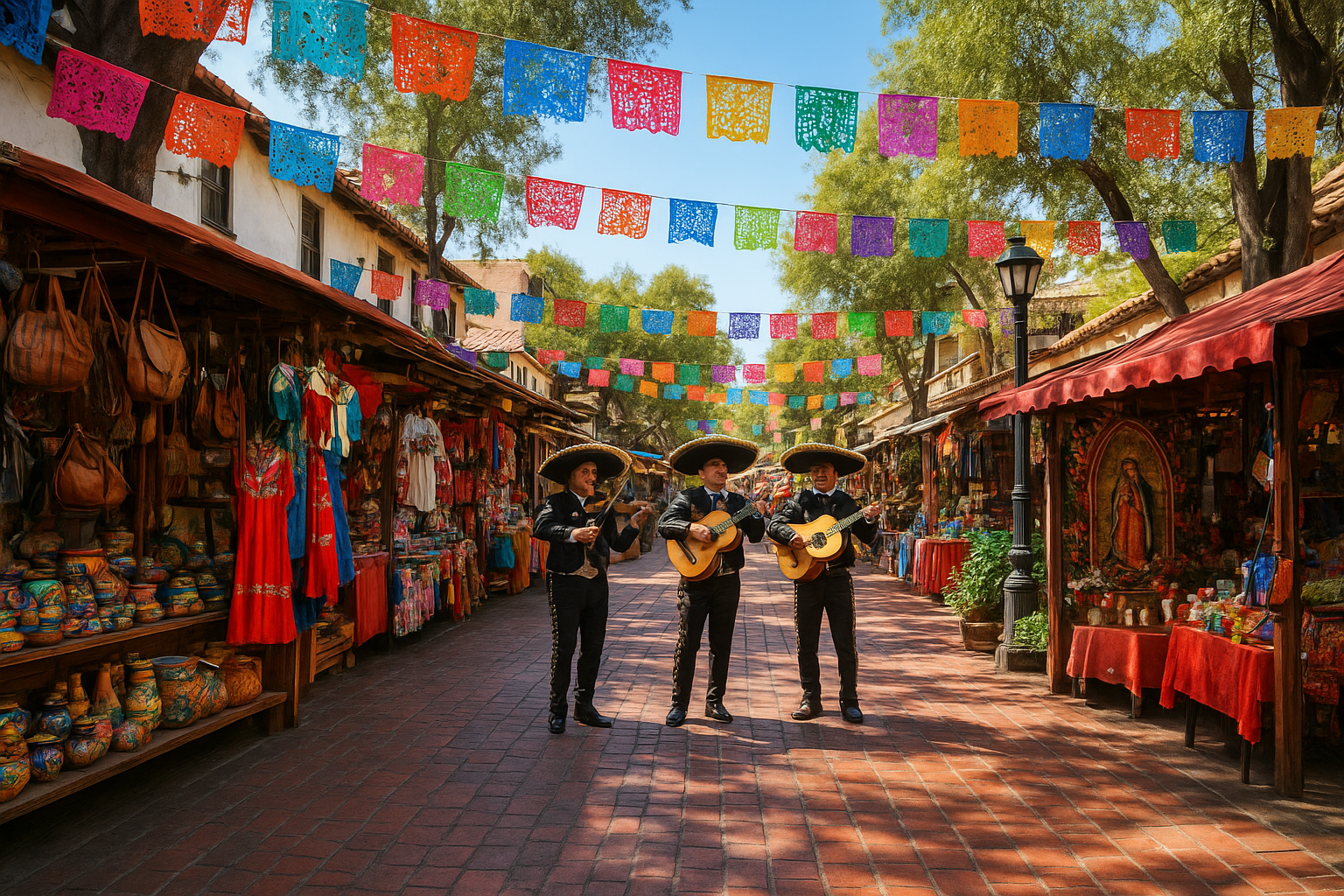
Olvera Street marks the actual birthplace of Los Angeles, a narrow brick pedestrian lane lined with colorful stalls that sits inside El Pueblo de Los Angeles Historic Monument. Olvera Street dates its current form to a 1930s restoration project, but the surrounding plaza traces back to the city’s 1781 founding, making this one of the oldest addresses in the entire city. Vendors sell leather goods, hand-painted pottery, and embroidered dresses from stalls that have operated for generations.
What to expect
Walk the full block and you’ll pass mariachi musicians, candle-lit shrines, and vendors calling out from stalls decorated with papel picado banners overhead. The Avila Adobe, LA’s oldest surviving house, sits just off the main lane and offers a free, quick look at how the original pueblo actually lived.
Olvera Street packs the literal founding of Los Angeles into one lively, colorful block you can walk in twenty minutes.
Who it’s perfect for
History lovers, families, and anyone curious about the city’s Mexican and Californio roots will get the most out of this stop. It also suits shoppers hunting for souvenirs with more character than the usual t-shirt stands, since many vendors sell handmade goods you won’t find elsewhere downtown. Pair it with nearby Union Station or Chinatown, both must-see landmarks in Los Angeles, for an easy half-day loop.
Hours, cost, and tips
Most stalls open by 10 a.m. and close by early evening, with weekends drawing bigger crowds and more street performers. Entry is free, and souvenirs range widely depending on the item. Visit around Mexican Independence Day or Cinco de Mayo if you want to catch the plaza’s biggest annual celebrations, but expect heavier crowds on those dates.
12. Shop till you drop in the Fashion District
Los Angeles built its garment industry on these blocks, and the Fashion District still runs on that same wholesale energy today. Nearly a hundred blocks packed with fabric shops, sample sales, and wholesale showrooms give shoppers access to deep discounts that retail stores upstream simply can’t match. Santee Alley anchors the whole scene, a chaotic outdoor market where vendors hawk clothing, accessories, and knockoff goods at prices that reward a little haggling.
What to expect
Expect crowds, noise, and stalls stacked floor to ceiling with everything from designer-inspired handbags to bolts of raw fabric for home sewers. Bargaining is normal here, so don’t take the first price a vendor quotes. Some buildings cater strictly to wholesale buyers, but plenty of storefronts along Santee Alley and Los Angeles Street welcome walk-in shoppers buying single items.
Santee Alley proves that Los Angeles still has a market where haggling actually gets you a better price.
Who it’s perfect for
Bargain hunters, fashion students, and anyone furnishing a wardrobe on a budget will find the most value here. It also suits crafters and small business owners scouting fabric or trim in bulk. Casual tourists looking for a quiet, curated shopping trip should probably skip this one for a mall instead.
Hours, cost, and tips
Most stalls open by 9 a.m. and wind down by early evening, with weekends drawing the biggest crowds. Prices vary wildly by vendor, so comparison shop before buying. Bring cash, since many stalls don’t take cards, and arrive early to avoid the worst of the midday crush.
13. Watch the sunset from a rooftop or observation deck
Downtown LA’s skyline looks flat from the street, but climb above it and the whole basin opens up, mountains on one side, ocean haze on the other, and a grid of lights that stretches for miles once the sun drops. A rooftop sunset is one of those things to do in downtown Los Angeles that costs almost nothing compared to what you get back in views, whether you pick a bar with a cover charge or a free public observation deck.
What to expect
OUE Skyspace at the US Bank Tower gives you the highest open-air deck downtown, complete with a glass slide if you want the adrenaline version of a view. Bars like Perch and The Rooftop at The Standard trade the ticket price for a drink minimum instead, with string lights and a lounge crowd that builds as the sun goes down.
The best skyline view in Los Angeles costs nothing more than the price of a drink or a single admission ticket.
Who it’s perfect for
Couples, photographers hunting the best viewpoints in Los Angeles, and anyone capping off a long day of walking will get the most out of this stop. It also works well for groups wanting a low-key evening that doesn’t require another meal reservation, since most rooftops serve light bites alongside drinks.
Hours, cost, and tips
Skyspace typically charges around $30 for adults and stays open into the evening; check the official Skyspace site for current hours. Rooftop bars usually skip an entry fee but expect a drink minimum, and arriving thirty minutes before sunset guarantees a spot at the railing before the crowd thickens.
Planning your downtown LA visit
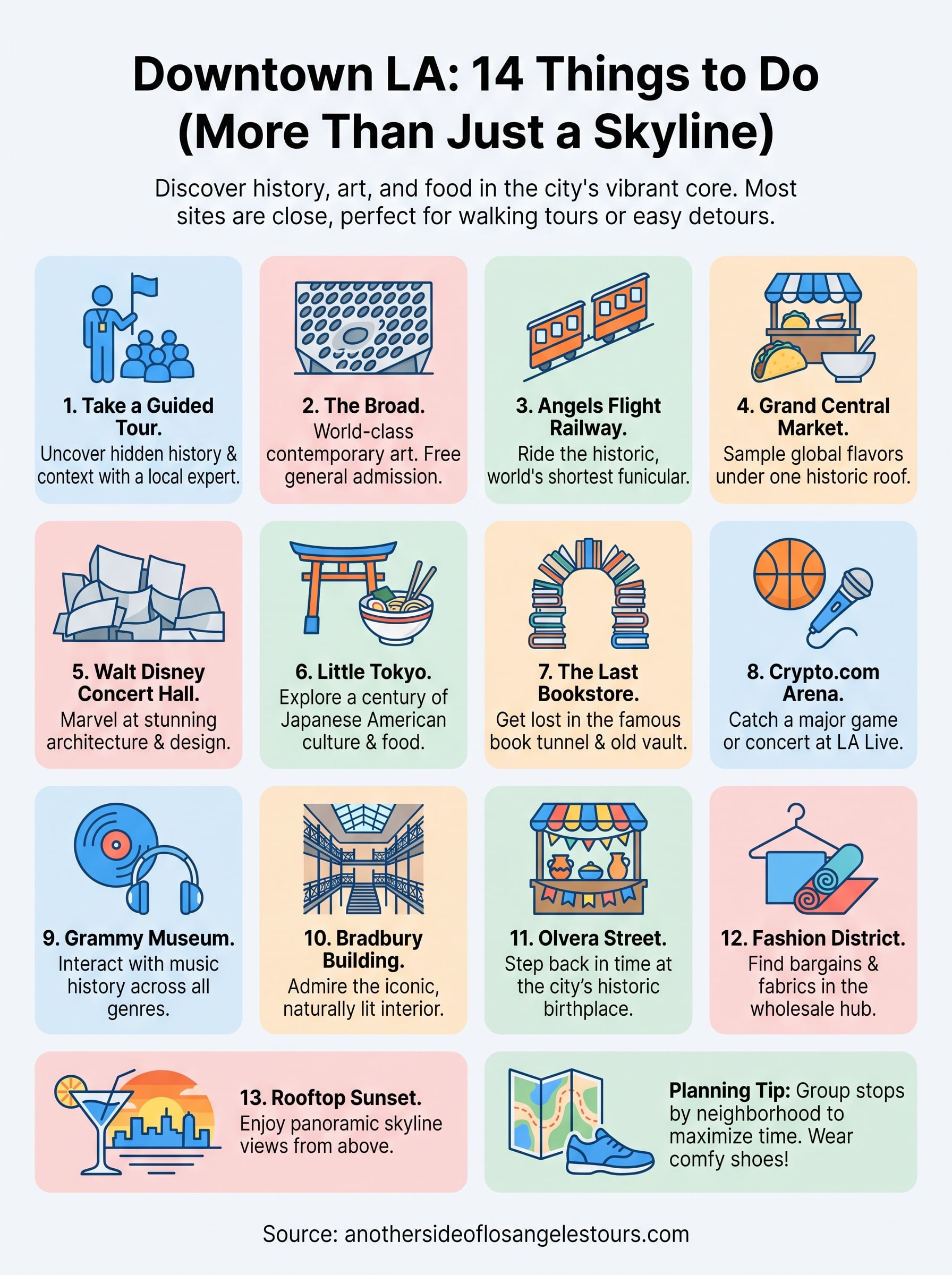
Fourteen stops sound like a lot, but downtown LA clusters tightly enough that you can knock out six or seven in a single day if you plan your route around neighborhoods instead of a random list. Group the Historic Core stops (Grand Central Market, Angels Flight, the Bradbury Building, The Last Bookstore) into one loop, save LA Live for an evening with a game or concert, and treat Little Tokyo and Olvera Street as their own half-day detours. Comfortable shoes matter more than any single attraction on this list, since you’ll cover more ground than the map suggests.
If you’d rather skip the routing headaches entirely, a guide can string these things to do in downtown Los Angeles into one smooth day built around your pace and interests. Book The Ultimate Downtown LA Tour and let someone else handle the logistics while you take in the history.