Hollywood’s identity lives in its streets. The famous streets in Hollywood aren’t just roads, they’re open-air museums packed with landmarks, history, and stories that most visitors walk right past without realizing what they’re standing on.
From the star-studded sidewalks of Hollywood Boulevard to the palm-lined curves of Sunset, each street has its own personality and a surprisingly deep backstory. Knowing where to go, and what to actually look for when you get there, is the difference between a forgettable drive-through and a real experience of the neighborhood.
At Another Side Tours, our local guides take people through these streets every day, sharing the context and hidden details that turn sightseeing into something worth remembering. We put this list together based on what our guests consistently love most and what we think every visitor should see. Here are five Hollywood streets that deserve your time, and exactly what to look for on each one.
1. Hollywood Boulevard
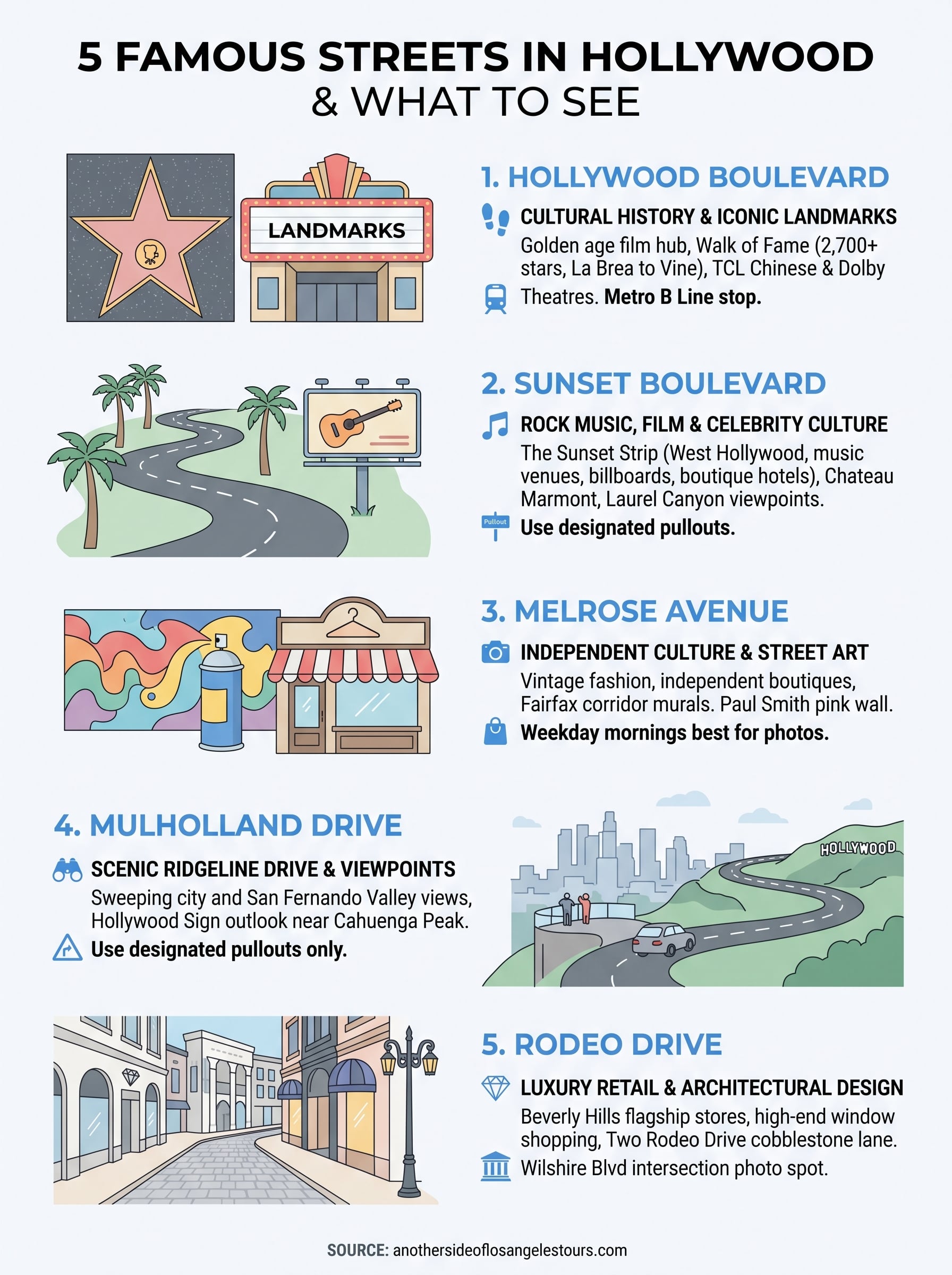
Hollywood Boulevard runs roughly east to west through the heart of Hollywood, and it packs more cultural history and iconic landmarks into a single stretch than almost any other street in Los Angeles. Walking it for the first time feels genuinely different from a typical city stroll, and knowing what to look for makes it even better.
What makes Hollywood Boulevard famous
Hollywood Boulevard built its reputation during the golden age of Hollywood in the 1920s and 1930s, when theaters, studios, and celebrity culture all converged in this one corridor. The street gave the entire film industry a physical address, and that identity has held for nearly a century. Today, it draws millions of visitors each year who come specifically to stand where movie history was made.
What to see on the Walk of Fame stretch
The most visited portion runs from La Brea Avenue to Vine Street, where you’ll find the bulk of the more than 2,700 stars embedded in the sidewalk. Each star honors a different entertainer across film, television, music, and radio. Take your time reading the names rather than just photographing the ground.
The Walk of Fame stretches for 1.3 miles, so wear comfortable shoes and plan at least 90 minutes if you want to cover it properly.
Must-stop landmarks and photo spots
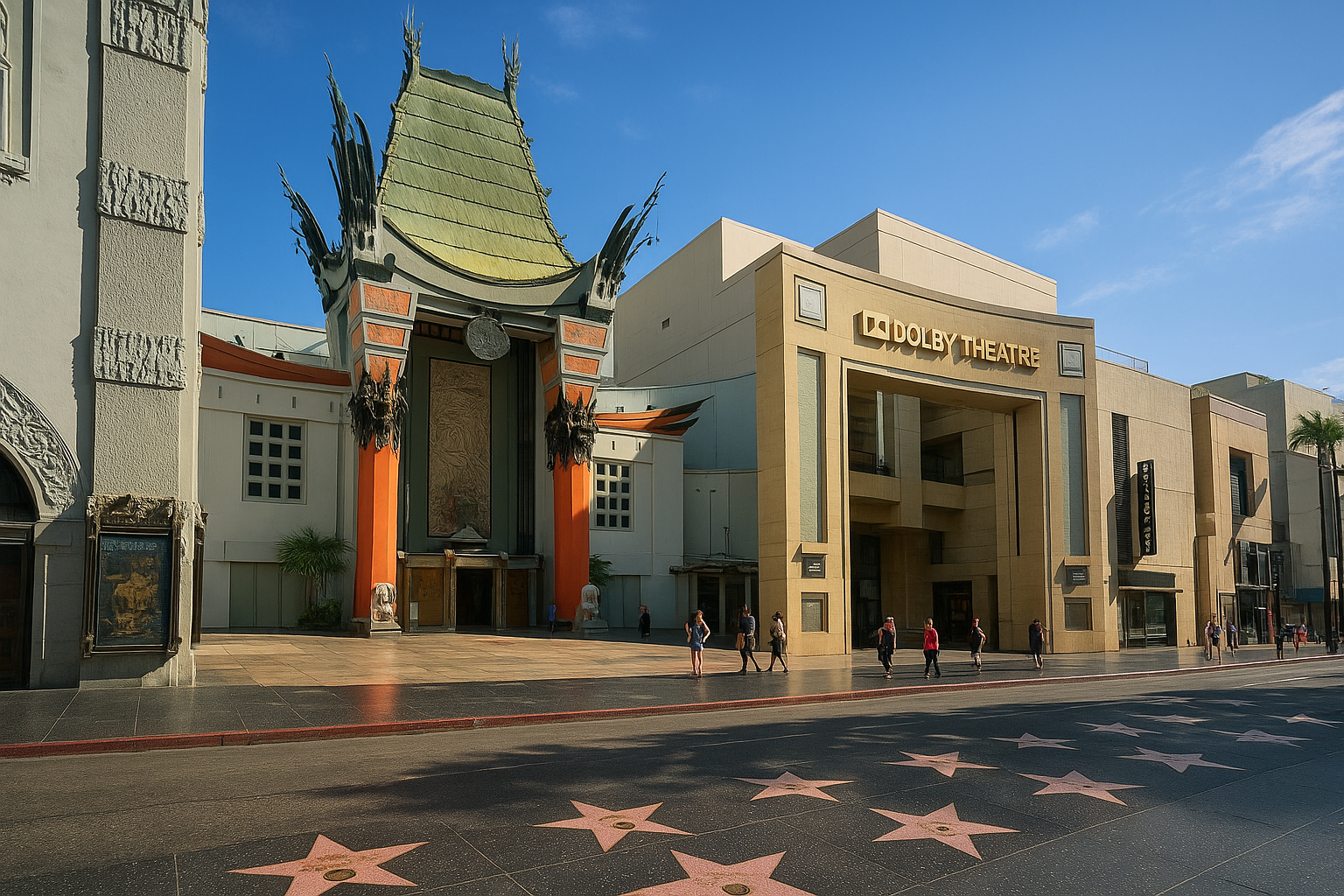
The TCL Chinese Theatre sits near the center of the action and lets you compare your hands and feet to celebrity imprints in the concrete forecourt. A short walk away, the Dolby Theatre hosts the Academy Awards every year and is worth stopping at even from the outside for the architecture alone.
Getting there, parking, and metro tips
The Metro B Line (Red Line) stops directly at Hollywood/Highland and Hollywood/Vine, making it the easiest and most affordable way to arrive without dealing with traffic. If you drive, street parking along the boulevard is limited, but Hollywood & Highland Center has a large parking structure with validated options for nearby businesses.
How to see Hollywood Boulevard with Another Side Tours
Our guided tours cover Hollywood Boulevard’s most significant stops with a local expert who explains what you’re actually looking at, not just what it is but why it matters. You leave with real context instead of a handful of photos you can’t fully explain.
2. Sunset Boulevard
Sunset Boulevard stretches nearly 22 miles from downtown Los Angeles to the Pacific Coast Highway, but its most culturally dense stretch runs through Hollywood and West Hollywood. This is one of the famous streets in Hollywood that rewards slowing down rather than just passing through.
What makes Sunset Boulevard famous
Sunset built its reputation through decades of rock music, film history, and celebrity culture. The Sunset Strip section, running through West Hollywood, housed legendary venues like the Whisky a Go Go and the Roxy, where acts like The Doors and Led Zeppelin performed for crowds in their prime years.
Best stops along the Sunset Strip
The Sunset Strip between Crescent Heights and Doheny Drive packs in iconic billboards, music venues, and boutique hotels worth slowing down for. Chateau Marmont, near the eastern edge of the Strip, has a long history tied to Hollywood royalty and is worth a look even from the street.
The Strip’s rotating billboard displays have become a form of public art that changes with the season and the industry.
Classic views and where to pull over safely
Use designated pullouts and parking lots rather than stopping on the shoulder. The stretch near Laurel Canyon Boulevard offers good sightlines and enough room to park briefly without creating a hazard.
Getting there, parking, and rideshare tips
Rideshare drop-off is the smartest option here since consistent street parking on Sunset is rare. Metered spots exist in pockets, but arriving without a car keeps the focus on what you’re actually seeing.
Smart add-ons nearby if you have extra time
Griffith Park sits a short drive east along Los Feliz Boulevard. If you head west, the Pacific Design Center in West Hollywood adds an architectural stop worth a quick look.
3. Melrose Avenue
Melrose Avenue runs through West Hollywood and the Fairfax District, and it holds a different energy from the more tourist-heavy famous streets in Hollywood. The street is known for independent culture, street art, and a creative retail scene that feels lived-in rather than staged.
What makes Melrose Avenue famous
Melrose built its reputation through vintage fashion, independent boutiques, and subcultural style that drew designers and collectors from the 1980s onward. The Fairfax corridor became a hub for street culture that still defines the block today.
Best blocks for shopping, murals, and vintage
The stretch between La Brea and Fairfax gives you the highest density of vintage shops, murals, and independent stores. Walking this section takes about 30 minutes at a relaxed pace and covers most of what makes Melrose worth visiting.
Top photo spots and what to know about crowds
The Paul Smith pink wall near La Brea gets crowded on weekends, so arriving before 10 a.m. gives you the best chance at a clean shot. Weekday mornings offer quieter sidewalks and better light across the whole stretch.
Early weekday visits let you enjoy the murals and storefronts without competing with weekend crowds.
Getting there, parking, and walking route tips
Street parking fills quickly after 11 a.m., so arriving early or using rideshare saves time. Park at one end of your target block and walk the full stretch rather than repositioning the car.
Where to eat and take a break nearby
Farmers Market at Third and Fairfax sits a few blocks south of Melrose and makes a natural endpoint for your walk. Several independent cafes on Melrose itself offer a quick stop without leaving the neighborhood.
4. Mulholland Drive
Mulholland Drive winds along the Santa Monica Mountains ridgeline and gives you a completely different perspective on Los Angeles. Unlike the other famous streets in Hollywood, this one rewards drivers who slow down and stop at the viewpoints rather than rushing through.
What makes Mulholland Drive famous
Mulholland earned its name from William Mulholland, the engineer who built the Los Angeles aqueduct, and its cultural reputation grew through film and television appearances spanning decades. Director David Lynch even named a film after it, which tells you something about the road’s hold on the city’s imagination.
The best viewpoints for city and sign views
The Mulholland Drive Overlook near Cahuenga Peak gives you one of the clearest sightlines to the Hollywood Sign without a full hike. Pull off at the designated turnouts along the ridgeline for sweeping views across both the city basin and the San Fernando Valley.
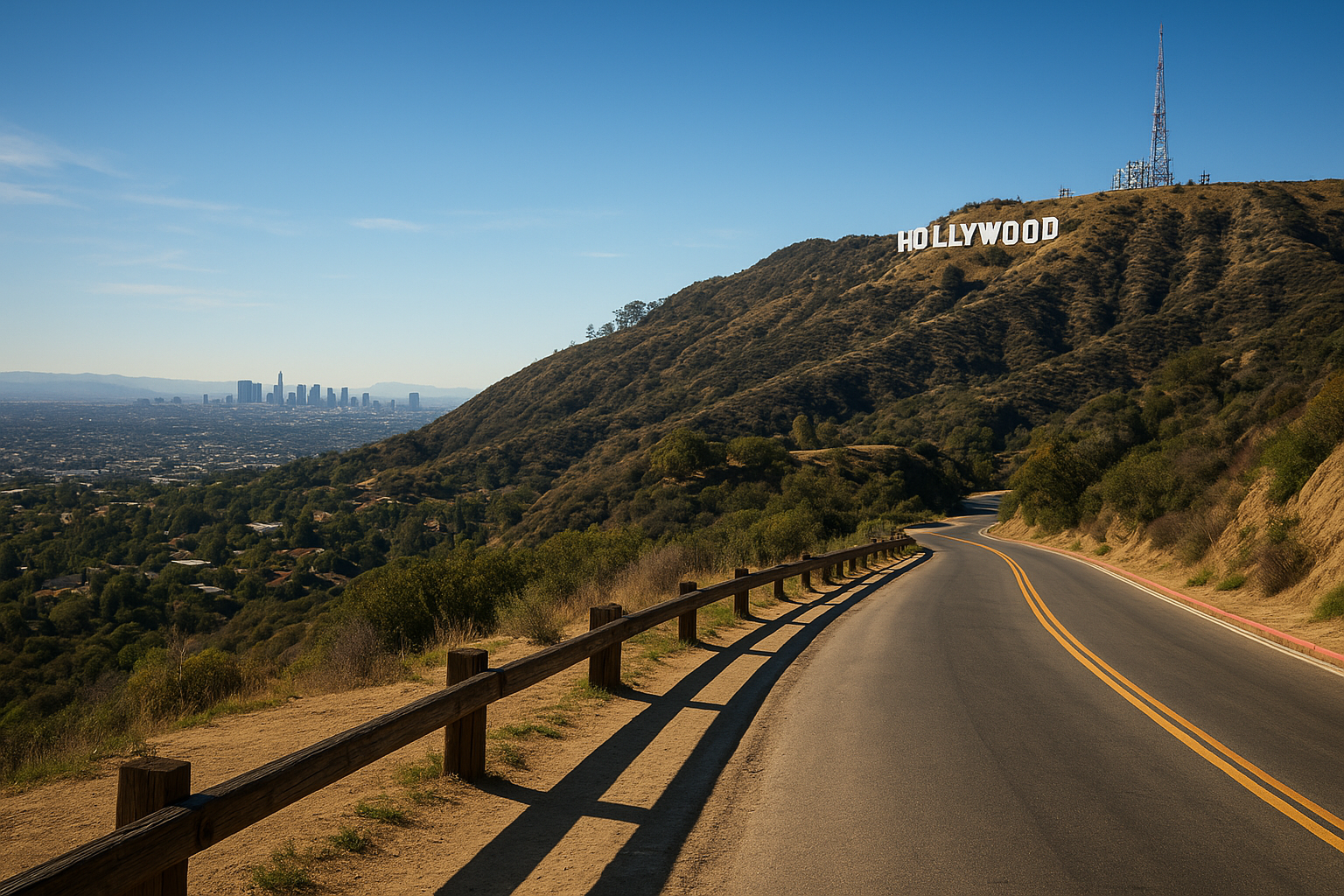
The overlook near Cahuenga Pass Road puts the city skyline and the Hollywood Sign in a single frame.
Where the drive changes and what to expect
Your drive transitions from paved and well-maintained road near Laurel Canyon to rougher, narrower terrain further west. Check which section you plan to cover before you go, since the western stretch requires more patience and a higher ground clearance.
Safety, driving, and lookout etiquette
Use designated pullouts only and keep your car fully off the travel lane. Blind curves appear frequently, and traffic moves faster than it looks from a standing position.
Easy hikes and scenic detours off Mulholland
Runyon Canyon Park connects near the eastern end and offers short accessible trails with strong city views that require nothing beyond comfortable shoes.
5. Rodeo Drive
Rodeo Drive sits in the heart of Beverly Hills and stands apart from the other famous streets in Hollywood as a place where luxury retail and architectural design combine into something genuinely worth seeing regardless of your budget.
What makes Rodeo Drive famous
Rodeo Drive became a global symbol of high-end retail through its concentration of flagship stores from brands like Gucci, Louis Vuitton, and Cartier. The street’s international reputation grew further through films like Pretty Woman, which drew lasting attention to its three-block retail core.
What to see even if you are not shopping
Even a window-shopping stroll delivers real visual value. The architectural variety across the storefronts is surprisingly diverse, and the street-level displays change regularly. Two Rodeo Drive, the cobblestone curved shopping lane at the south end, gives you a European street feel right in the middle of Beverly Hills.
Two Rodeo Drive offers one of the most photographed streetscapes in all of Los Angeles.
The best streets and corners for photos
The intersection of Rodeo Drive and Wilshire Boulevard gives you the full sweep of the street in a single frame. Shooting from the north end near Santa Monica Boulevard keeps backgrounds cleaner with less foot traffic in the way.
Getting there, parking, and walking route tips
Street parking is metered and limited, so using the Beverly Hills public parking structures on Dayton Way or Brighton Way puts you close without the frustration of circling the block.
Nearby sights to pair with Rodeo Drive
Beverly Gardens Park runs along Santa Monica Boulevard just north of Rodeo and includes the iconic Beverly Hills sign that most visitors photograph on their way through the neighborhood.
Wrap up and plan your route
These five famous streets in Hollywood each offer something distinct, and visiting all of them in a single trip is completely realistic with the right plan. Hollywood Boulevard and Rodeo Drive work well as anchors since they pack the most landmarks into walkable stretches. Sunset Boulevard and Mulholland Drive reward a slower pace, especially if you build in time at the viewpoints instead of rushing through.
Your best approach is to group nearby streets together and reduce backtracking. Melrose and Rodeo Drive sit close enough to combine in one afternoon, while Mulholland and Griffith Park make a natural morning pairing before the city heats up.
If you want a local expert to handle the logistics and fill in the stories behind what you’re seeing, our Los Angeles sightseeing tours cover the most significant stops across all of these streets. Book a tour and skip the guesswork entirely.